Cecil Sharp House, London Travel Guide
Historic Camden venue for English folk music, dance and archives, where concerts, classes and talks unfold inside a working cultural institution.
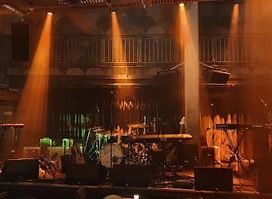
Cecil Sharp House is a 1930 folk arts centre in Camden, home to the English Folk Dance and Song Society and a major archive of songs, dance and research. Visits are usually event-led: concerts, classes, talks, dances, or library work rather than casual sightseeing. The building feels institutional and lived-in, with a heritage atmosphere, indoor halls, and occasional use of the café-bar and garden.
A brief summary to Cecil Sharp House
- 2 Regent's Park Rd, London, NW1 7AY, GB
- Click to display
- Click to display
- Duration: 0.5 to 3.5 hours
- Mid ranged
-
 Mixed
Mixed
- Mobile reception: 4 out of 5
- Monday 9 am-11 pm
- Tuesday 9 am-11 pm
- Wednesday 9 am-11 pm
- Thursday 9 am-11 pm
- Friday 9 am-11 pm
- Saturday 9 am-11 pm
- Sunday 9 am-11 pm

Know before you go
Hi, I'm Eve. Here are a few practical things to know before exploring Cecil Sharp House.
- Plan your visit around a scheduled event; this is a working venue, not a drop-in attraction with constant exhibits.
- Use public transport if possible, as parking is limited and local streets are controlled.
- If you need step-free access or accessible parking, check arrangements in advance because event setups can vary.
Do you manage this location?
Take control to get all the benefits, like improved information, better appearance, and stronger visibility across AI-powered discovery. Learn more about listing your business on Evendo
Activate your presenceOther nearby places you may find interesting
The closest places of the same kind, if this one is not quite what you had in mind.


Explore Cecil Sharp House on the Map
A handpicked selection of must-see spots near Cecil Sharp House, mapped for you.
Getting There
-
Underground
Camden Town or Chalk Farm are the most practical Tube options, with a short walk from either station.
-
Overground
Camden Road is workable but a little farther on foot, so it suits visitors who do not mind a longer approach.
-
Bus
Local buses on Regent’s Park Road provide a useful option if you are already travelling through north London.
-
Taxi or rideshare
A sensible choice for evening events or limited mobility, though journey times vary with London traffic.
For the on-the-go comforts that matter to you
-
 Restrooms
-
 Drink Options
-
 Food Options
-
 Seating Areas
-
 Sheltered Areas
-
 Trash Bins
-
 Information Boards
Discover more about Cecil Sharp House
What it is
Cecil Sharp House is a cultural centre, event venue, and specialist folk-music institution at 2 Regent’s Park Road in Camden. Opened in 1930, it was the first dedicated folk arts centre in the UK and remains the headquarters of the English Folk Dance and Song Society. It also houses the Vaughan Williams Memorial Library, a national archive for English folk music and dance. This is not a museum you drift through at leisure; it is a working venue with a clear purpose and a strong sense of continuity.How a visit feels
Most people come for a scheduled concert, dance, class, talk, or archive-related appointment. The experience is indoors and time-bound: you arrive, move into a hall or room, take part or watch, then leave. On event nights the building can feel lively and communal, with a mix of regulars, researchers, performers, and curious first-timers. At quieter times it feels more subdued, with the atmosphere shaped by the building’s history rather than by tourist traffic. If the café-bar or garden is open for an event, they add a brief pause before or after the programme, but the venue is primarily about what is happening inside the rooms.Setting and character
The house stands in a built-up part of north London near Regent’s Park and Primrose Hill, so the setting is urban rather than scenic. The architecture is historic and functional, with halls, classrooms, and library spaces arranged for use rather than display. Inside, the appeal lies in the scale of the rooms, the sense of an institution that has been active for decades, and the practical details of a venue that still supports performance and research. It is a good fit for travellers interested in English folk traditions, archival material, or London’s specialist cultural life.Why people go
Travellers visit for live folk programming, participatory dance, research access, and the chance to see a long-running cultural institution in use. It suits people who want more than a landmark photo stop: the value here is in attending something, not merely looking at it. The venue is especially relevant for cultural heritage, day trips, and event-based visits, and it can work well as part of an evening out in Camden. It is less suitable if you want a drop-in attraction with constant exhibits or a large amount of public space to explore.Practical expectations
Public transport is the easiest way to reach it, with Camden Town, Chalk Farm, and Camden Road all workable depending on your route. Walking from the stations is straightforward but not especially short, and parking is limited. The building is reported to have step-free access and lifts, which makes it more usable than many older London venues. Expect a mid-range spend if you attend an event, with costs varying by programme. The best visits are planned around a performance, class, or talk; without that, the building is more of a specialist cultural stop than a full sightseeing stop.












Your all‑in‑one travel companion app
Explore expert travel guides, compare and book tours, experiences, hotels, and more—all from the palm of your hand. Download now for seamless trip planning wherever your wanderlust takes you.


Explore More of London
Looking beyond Cecil Sharp House? Discover London for broader travel guides, local hot-spots, and regional highlights.
Explore London