
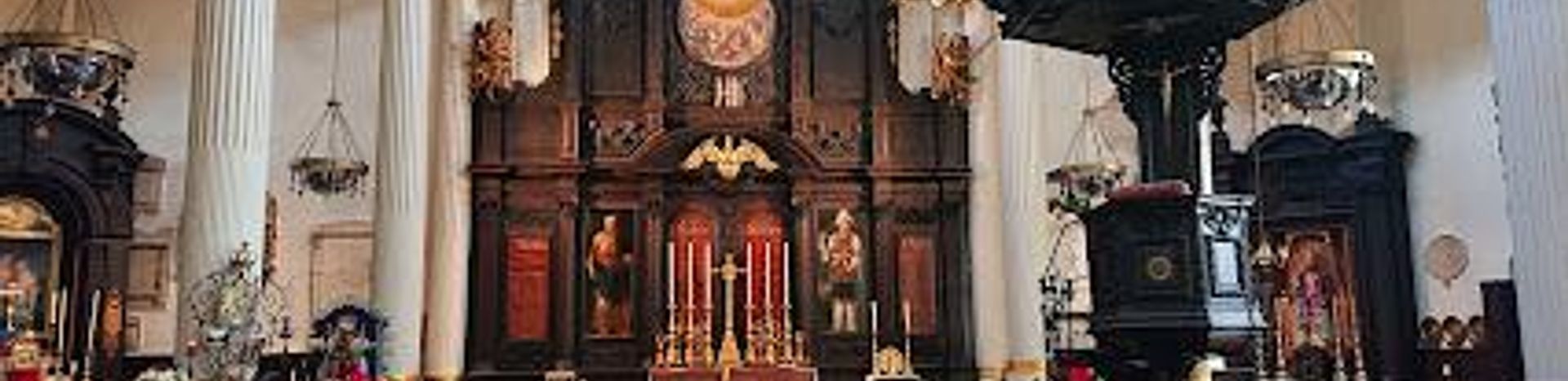
Church of Saint Magnus-the-Martyr
A historic sanctuary at the foot of London Bridge, where centuries of faith and city life converge in a Baroque masterpiece.
Tucked beside the northern end of London Bridge, St Magnus the Martyr is a striking Baroque church rebuilt by Sir Christopher Wren after the Great Fire of 1666. Its history stretches back to the 11th century, and today it stands as a serene sanctuary amid the bustle of the City. The church is famed for its neo-Baroque interior, its connection to the old London Bridge, and a remarkable 3D model of the medieval bridge inside. It’s a place where centuries of London’s story converge, from martyrs and pilgrims to fire wardens and guilds.
A brief summary to Church of Saint Magnus-the-Martyr
- Lower Thames St, London, EC3R 6DN, GB
- +442076264481
- Visit website
- Duration: 0.5 to 1.5 hours
- Free
-
 Indoor
- Mobile reception: 4 out of 5
- Tuesday 10 am-3 pm
- Wednesday 10 am-3 pm
- Thursday 10 am-3 pm
- Friday 10 am-3 pm
- Sunday 10:30 am-1:30 pm
Local tips
- Visit during weekday afternoons for a quieter experience and to fully appreciate the church’s peaceful atmosphere.
- Don’t miss the 3D model of the medieval London Bridge inside the church, a highlight for history enthusiasts.
- Check the church’s website for special services or events, which can offer a deeper insight into its Anglo-Catholic traditions.
- Take a moment to view the stained glass windows, especially the one depicting St Magnus holding a replica of his cathedral in Kirkwall.
- Look for the plaque outside commemorating the church’s role as the gateway to London via the old London Bridge.

For the on-the-go comforts that matter to you
- Restrooms
- Seating Areas
- Information Boards
Getting There
-
Walking
From Monument Underground Station, walk southeast along Lower Thames Street for about 5 minutes. The church is on your right, just before the northern end of London Bridge.
-
Bus
Take bus routes 15, 17, 21, 38, 40, 43, 78, or 149 to the Monument stop. From there, walk southeast along Lower Thames Street for about 5 minutes to reach the church.
-
Riverboat
Take a Thames Clipper to Tower Pier, then walk west along Lower Thames Street for about 10 minutes. The church is on your right, just before the northern end of London Bridge.
Church of Saint Magnus-the-Martyr location weather suitability
-
 Any Weather
Discover more about Church of Saint Magnus-the-Martyr
A Church at the Heart of London’s History
St Magnus the Martyr has stood at the northern end of London Bridge for over a thousand years, serving as a spiritual and civic landmark for generations. The current building, a masterpiece of Baroque architecture, was reconstructed by Sir Christopher Wren between 1671 and 1684 after the Great Fire of London destroyed its predecessor. The church’s location made it one of the first to fall to the flames, as the fire began just a few hundred yards away in Pudding Lane. Wren’s design, one of his most expensive parish church projects, features a soaring steeple and a graceful interior that reflects the grandeur of the era.Gateway to the City and Pilgrims’ Path
For centuries, St Magnus was the first church encountered by travelers crossing London Bridge into the City. Its position made it a bustling gateway, with the tower’s base once serving as a pedestrian entrance to the bridge. The churchyard was a lively thoroughfare, and the church itself became a meeting place for clergy and citizens. The chapel of St Thomas Becket, once at the center of the old bridge, was part of the parish, and pilgrims would gather here before setting out for Canterbury. The church’s connection to the bridge is commemorated by a detailed 3D model of the medieval London Bridge, displayed inside, which captures the vibrant life of the bridge in the 15th century.Architectural and Spiritual Legacy
The interior of St Magnus is a testament to Wren’s skill and vision. The neo-Baroque style, with its high altar, two-story reredos, and side chapels, creates a sense of grandeur and depth. The church is the guild church of the Worshipful Company of Fishmongers and the Worshipful Company of Plumbers, reflecting its ties to the trades of the area. The tomb of Miles Coverdale, the first translator of the Bible into English, is also here, adding to the church’s historical significance. The church’s atmosphere is one of quiet reverence, with stained glass windows and a black and white marble floor that invite contemplation.Stories of Martyrs and Miracles
St Magnus is dedicated to St Magnus the Martyr, Earl of Orkney, who was executed in 1118. His reputation for piety and gentleness led to his canonization, and his story is remembered in the church’s name and in its stained glass. The church has also been a witness to other dramatic events, including the conversion of 500 people to Catholicism in the 16th century and the burial of Thomas Farriner, the baker whose bakery sparked the Great Fire. The church’s history is a tapestry of faith, resilience, and community, woven through the centuries.A Place of Reflection and Discovery
Today, St Magnus the Martyr offers a peaceful retreat from the surrounding city. Visitors can explore the church’s rich history, admire its architecture, and view the 3D model of the old London Bridge. The church’s connection to the bridge, its guilds, and its martyrs makes it a unique destination for those interested in London’s past. Whether attending a service, admiring the stained glass, or simply sitting in quiet reflection, St Magnus provides a window into the soul of the City.For the vibe & atmosphere seeker
- Relaxing
- Tranquil
- Scenic
- Unique
For the design and aesthetic lover
- Vintage Styles
- Baroque
For the architecture buff
- Historic
- Landmarks
- Sacred Sites
For the view chaser and sunset hunter
- Iconic Views
- Panoramas
For the social media creator & influencer
- Photo Spots
- Aesthetic Corners
For the eco-conscious traveler
- Public-Transport Accessible
For the kind of experience you’re after
- Cultural Heritage
- Photowalk
- Meditation Spot
For how adventurous you want the journey to be
- Easy Access
Location Audience
- Family Friendly
- Senior Friendly
- Child Friendly
- Teen Friendly
- Wheelchair Access
- Solo Friendly
- Couple Friendly
- Solo Female Friendly
- Business Friendly


