Edith Cavell Memorial, London Travel Guide
Free Guide: A compact First World War memorial near Trafalgar Square, combining Edith Cavell’s story with a formal sculptural setting in central London.


A brief summary of Edith Cavell Memorial
A compact First World War memorial near Trafalgar Square, combining Edith Cavell’s story with a formal sculptural setting in central London.
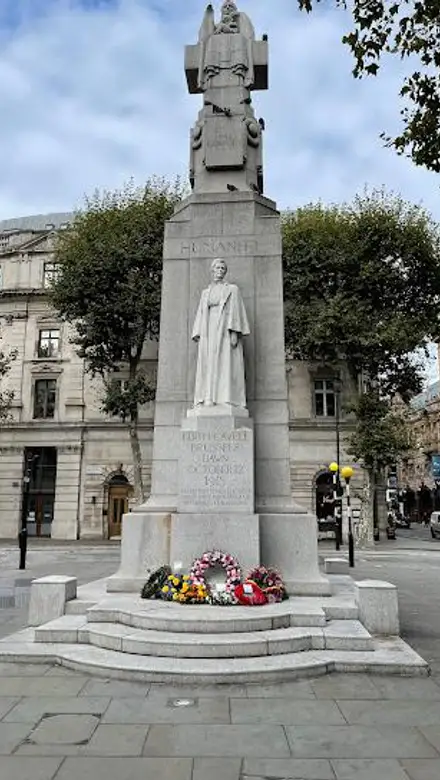
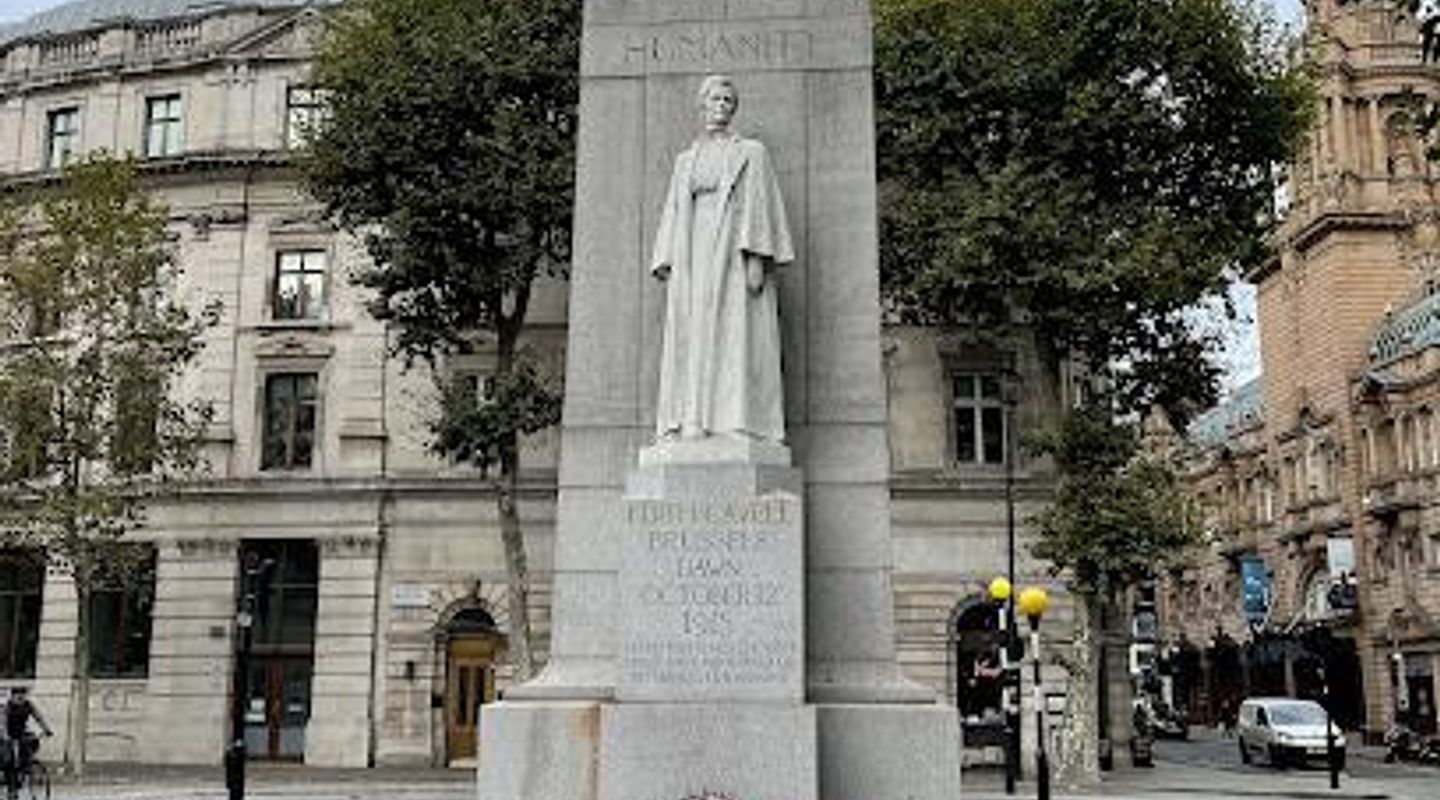
Just north of Trafalgar Square, the Edith Cavell Memorial is a small but striking First World War monument that rewards a brief, attentive stop. Its seated allegorical figures and memorial portrait create a more elaborate composition than a simple statue, and the setting in St Martin’s Place places it amid galleries, civic buildings, and steady pedestrian traffic. Most visitors pause to read, photograph, and move on.
On-site amenities
 Information boards
Opening hours
- Mon9 am–5 pm
- Tue9 am–5 pm
- Wed9 am–5 pm
- Thu9 am–5 pm
- Fri9 am–5 pm
- SatClosed
- SunClosed
Opening hours as listed on the venue’s Google Business Profile. Hours can change for services and special events, so check with the venue before you go.
- Address
- 10 St. Martin's Pl London
- Website
Getting there
Underground
Rail
Taxi or rideshare
On foot
Discover more about Edith Cavell Memorial
What it is
The Edith Cavell Memorial is an outdoor war memorial in St Martin’s Place, a few steps from Trafalgar Square and the National Portrait Gallery. Unveiled in 1920, it commemorates Edith Cavell, the British nurse executed in 1915 after helping Allied soldiers escape from occupied Belgium. The monument is more than a single figure: its sculptural arrangement includes allegorical elements that give it a formal, public-monument presence uncommon in smaller London memorials.It is best approached as a historical stop within a wider Westminster walk rather than as a destination that fills an afternoon. The memorial is free to view, street-level, and easy to combine with nearby galleries, squares, and ceremonial routes.
Atmosphere and setting
The setting is urban, exposed, and busy in the way central London often is. Traffic, pavements, and surrounding institutions frame the memorial, so the experience is shaped by the city rather than by a landscaped forecourt or park. That makes the monument feel direct and civic: you stand close to the stonework, read the inscription, and take in the details at arm’s length.The mood is respectful and reflective rather than solemn in an enclosed sense. People usually linger only briefly, but the site encourages a slower pace than the surrounding streets. It works well as a pause between larger attractions, especially if you are walking between Trafalgar Square, Whitehall, and the National Gallery district.
Why travellers stop here
Visitors come for the memorial’s historical significance, its connection to wartime remembrance, and its unusual sculptural composition. It appeals to travellers interested in public sculpture, nursing history, and early First World War commemoration. Because it is compact and open to the street, the visit is straightforward: approach, read, photograph, and continue.The memorial is also useful for short cultural itineraries. It suits a photowalk through central London, a day trip built around Westminster and Trafalgar Square, or a route linking major museums and civic landmarks. It is not a place for long dwell time, but it is memorable for the clarity of its subject and the density of history around it.
Practical expectations
Expect a short visit of around 5 to 10 minutes if you are simply viewing the monument, or 15 to 30 minutes if you are pairing it with nearby walking and reading. There are no dedicated visitor facilities at the memorial itself, so restrooms, seating, food, and shelter should be sought nearby. Public transport is the sensible way to arrive, with central stations such as Charing Cross, Leicester Square, or Embankment all workable starting points.Weather matters because the memorial is fully outdoors. Clear, mild days are best for lingering and photography; rain and wind make it a quick stop. The site is generally easy to access at street level, though pavement conditions and surrounding traffic can affect comfort. It is a modest monument, but one with a strong sense of place and a clear historical purpose.
Evendo Review Centre
 Google
Guest reviews
Best time to go
Quietest: Jan, Feb & Nov · before 6am or from 9pm
Busy times are Evendo estimates for a typical year, to help you plan. Actual crowds vary with events, school holidays and the weather.
Explore Edith Cavell Memorial on the map
A handpicked selection of must-see spots near Edith Cavell Memorial, mapped for you.
Get your free copy of our complete guide to Edith Cavell Memorial, delivered straight to you.
Everything on this page, from opening hours and how to get there to Eve’s tips and the best time to go, in one PDF you can read offline, print or share.
Already have an account? Sign in
Your Edith Cavell Memorial guide is ready.
We'll send it to · Not you? Sign out

Getting your guide ready…
We are putting together a fresh copy of the Edith Cavell Memorial guide. This can take up to a minute.
This can take a few moments. If your browser asks, choose Allow so the download can start. You'll find the guide in your Downloads folder.
Nothing happened? Download it again
Sorry, the guide is taking longer than usual. Please try again in a minute, or get it by email instead.
Unlock the best of Edith Cavell Memorial
Skip-the-line tickets, guided tours with entry, and walking tours of the area, booked in a few clicks.


Other nearby places you may find interesting
The closest places of the same kind, if this one is not quite what you had in mind.
-
-
-
-
-


Swipe for more places
More to explore near Edith Cavell Memorial

 Best experiences near Edith Cavell Memorial
 Best hotels near Edith Cavell Memorial
 Best landmarks near Edith Cavell Memorial
 Best attractions near Edith Cavell Memorial
 Best shops near Edith Cavell Memorial
 Best restaurants near Edith Cavell Memorial
 Best bars near Edith Cavell Memorial
Do you manage this location?
Take control to get all the benefits, like improved information, better appearance, and stronger visibility across AI-powered discovery.
Explore more

Explore more of London
Explore London: A city of iconic landmarks, rich history, vibrant culture, and endless attractions that cater to every taste, making it a must-visit destination.
Explore London
Explore more of United Kingdom
Discover the United Kingdom: A blend of rich history, stunning landscapes, and vibrant cities, offering a unique travel experience for every visitor.
Explore United Kingdom