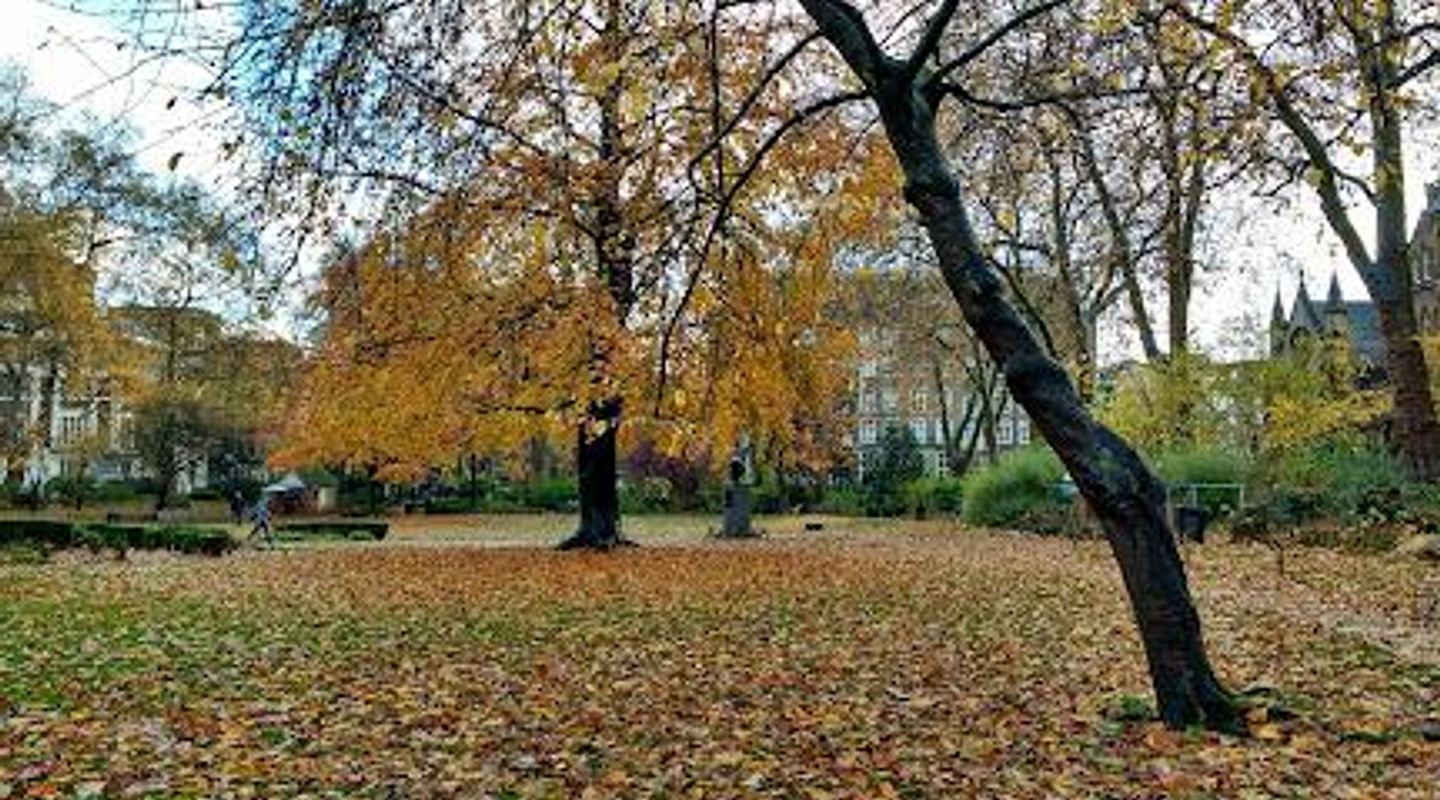
Gordon Sq, London Travel Guide
A compact Bloomsbury garden square with Georgian edges, university surroundings, and a calm, literary atmosphere between central London sights.
Gordon Square is a compact public garden in Bloomsbury, framed by Georgian terraces and university buildings. It is less a destination than a calm pause: benches, lawns, paths, and mature planting set the pace, while the surrounding district adds literary and academic context. Visitors come to sit, cross through, or pair it with nearby museums and campus streets.
A brief summary to Gordon Sq
- London, GB
- Duration: 0.25 to 2 hours
- Free
-
 Outdoor
- Mobile reception: 5 out of 5

Know before you go
Hi, I'm Eve. Here are a few practical things to know before exploring Gordon Sq.
- Treat it as a short stop rather than a standalone attraction; the square is at its best when folded into a Bloomsbury walk.
- Weekday lunchtime is the busiest period, when students and staff use the benches and lawns for quick breaks.
- Bring your own coffee or lunch if you want to linger, as on-site facilities are limited and nearby options are more reliable.
Do you manage this location?
Take control to get all the benefits, like improved information, better appearance, and stronger visibility across AI-powered discovery. Learn more about listing your business on Evendo
Activate your presenceOther nearby places you may find interesting
The closest places of the same kind, if this one is not quite what you had in mind.
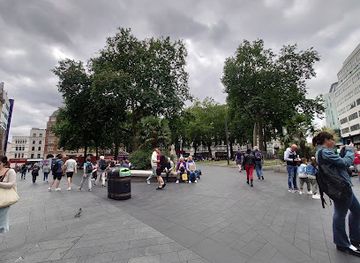

Explore Gordon Sq on the Map
A handpicked selection of must-see spots near Gordon Sq, mapped for you.
Unlock the Best of Gordon Sq
Buy tickets
-
No tickets available
Book tours with entry


Book tours without entry
-
No tours available
Getting There
-
Underground
Reach the Bloomsbury area by Tube, then walk a short distance; several central stations can work depending on your starting point and line changes.
-
Bus
Central London buses are practical for short hops into Bloomsbury, especially if you are combining the square with nearby museums or university buildings.
-
Taxi / Ride-hail
Useful for direct access with luggage or mobility needs, though traffic delays are common around peak commuting and lunchtime periods.
-
On foot or by bike
Once you are in central Bloomsbury, walking is the easiest option; cycling is possible, but surrounding roads can be busy and less comfortable for casual riders.
For the on-the-go comforts that matter to you
-
 Seating Areas
-
 Sheltered Areas
-
 Trash Bins
-
 Information Boards
Discover more about Gordon Sq
What it is
Gordon Square is a public garden square in Bloomsbury, central London, set within the Bedford Estate and University of London district. It is a small urban green space rather than a major attraction, and its appeal lies in scale, setting, and context. The square was laid out in the 19th century as part of Bloomsbury’s planned expansion, and it still reads as a formal city garden surrounded by institutional and residential buildings.Atmosphere and setting
The square feels quiet, academic, and measured. Paths, lawns, benches, and planting create a simple open-air room in the middle of dense London streets. There are no dramatic vistas or large landscape features; the interest comes from the Georgian edges, the mature trees, and the way the garden sits against university buildings and older terraces. On a good day it is a place for lunch, reading, or a brief reset between museum visits and campus walks.Why travellers stop here
People usually visit Gordon Square as part of a wider Bloomsbury itinerary. It works well as a short rest stop between the British Museum area, UCL, and the surrounding literary streets. The square also carries cultural resonance through its association with the Bloomsbury Group and with intellectual London more broadly. That history is present in the atmosphere rather than in monuments: the place feels lived-in, studied, and quietly public.How a visit unfolds
A typical visit is brief. You enter from the surrounding streets, cross the square, and either keep moving or sit for a while on a bench. Weekday lunchtime brings the most activity, with students, staff, and local workers using the space for a break. Outside those hours it is calmer, sometimes almost empty. In warm weather the lawns and seating areas are used more heavily; in rain or cold, the square becomes a pass-through. It is best approached with modest expectations: a pleasant green pause, not an event-filled park.Practical expectations
Facilities on the square itself are limited, so it is wise to treat nearby cafés, museums, and university buildings as the main source of toilets, food, and shelter. Access is straightforward on foot after arriving by Underground, bus, or taxi in central London. The square is easy to combine with other Bloomsbury sights, and most visitors will need only 15 to 60 minutes unless they are using it as a longer lunch stop or reading break.












Your all‑in‑one travel companion app
Explore expert travel guides, compare and book tours, experiences, hotels, and more—all from the palm of your hand. Download now for seamless trip planning wherever your wanderlust takes you.


Explore More of London
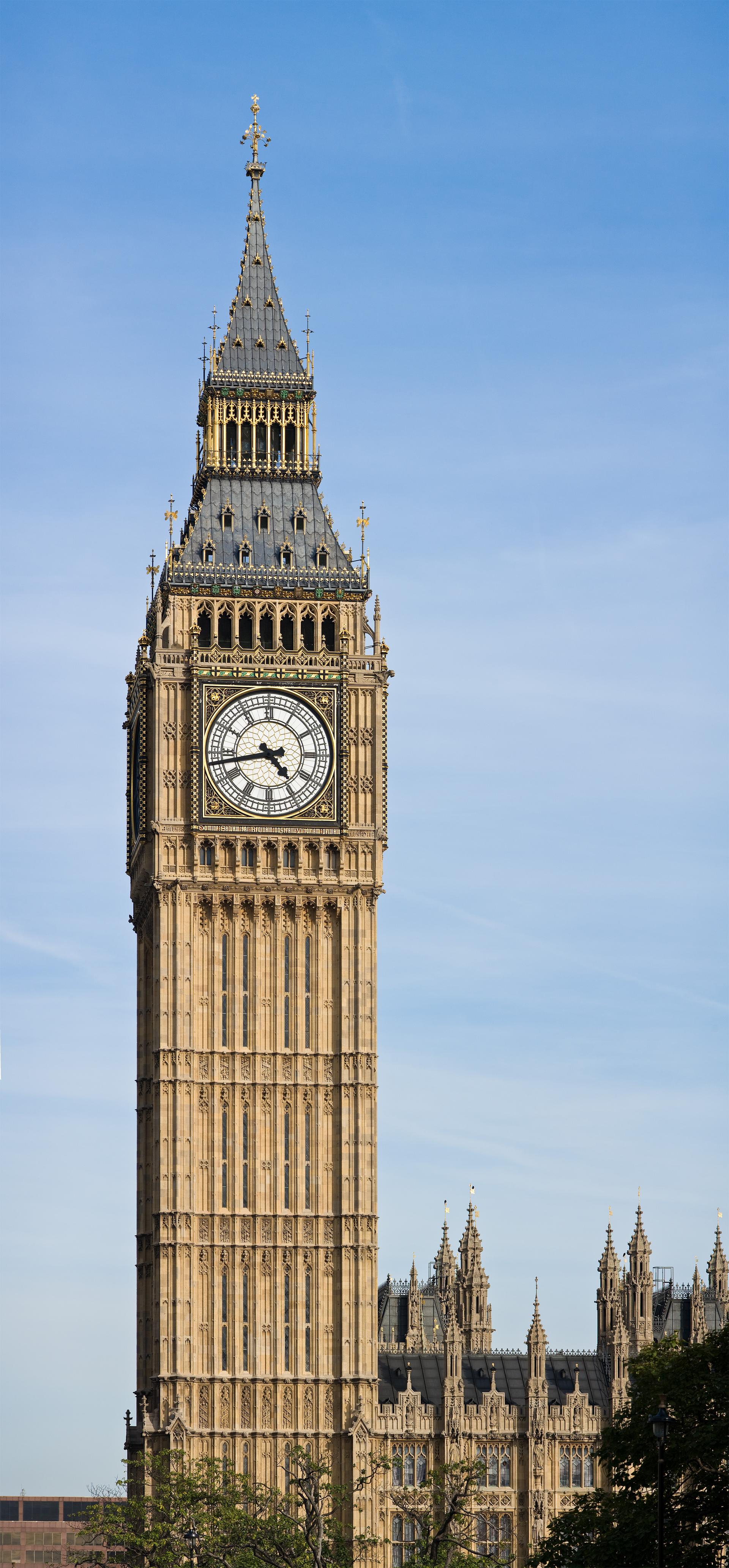
Looking beyond Gordon Sq? Discover London for broader travel guides, local hot-spots, and regional highlights.
Explore London