The Maughan Library, London Travel Guide
A former Victorian record office turned research library, with a circular reading room, exhibition chapel, and a calm central-London academic atmosphere.
The Maughan Library is King’s College London’s main research library, set inside a former Public Record Office on Chancery Lane. Visitors come for the building as much as the books: a vast circular reading room, stone interiors, and a former chapel now used for exhibitions. It is a working academic space, so the mood is quiet, orderly, and purposeful rather than touristy.
A brief summary to The Maughan Library
- Chancery Ln, London, WC2A 1LR, GB
- Click to display
- Click to display
- Duration: 0.25 to 3 hours
- Free
-
 Indoor
- Mobile reception: 4 out of 5
- Monday 9 am-7 pm
- Tuesday 9 am-7 pm
- Wednesday 9 am-7 pm
- Thursday 9 am-7 pm
- Friday 9 am-4 pm
- Saturday 10 am-6 pm
- Sunday 9 am-1 am

Know before you go
Hi, I'm Eve. Here are a few practical things to know before exploring The Maughan Library.
- Treat it as a working library first and a visitor stop second; access can be limited outside exhibitions or special open days.
- Keep your visit quiet and compact. The best impression comes from the main reading room, the stone interiors, and the former chapel.
- Use public transport if possible. Chancery Lane and the surrounding central-London streets are far easier than driving or parking.
Do you manage this location?
Take control to get all the benefits, like improved information, better appearance, and stronger visibility across AI-powered discovery. Learn more about listing your business on Evendo
Activate your presenceOther nearby places you may find interesting
The closest places of the same kind, if this one is not quite what you had in mind.



Explore The Maughan Library on the Map
A handpicked selection of must-see spots near The Maughan Library, mapped for you.
Unlock the Best of The Maughan Library
Buy tickets
-
No tickets available
Book tours with entry
-
No tours available
Book tours without entry

Getting There
-
Underground
Chancery Lane station on the Central line is the most practical stop, usually only a short walk away.
-
Bus
Several central London bus routes serve the Chancery Lane and Fleet Street area, making buses a workable low-cost option.
-
On foot
Walking from Holborn, the Strand, or Fleet Street is realistic and often quicker than using a taxi in traffic.
-
Taxi or rideshare
Possible, but usually slower and less efficient than rail-based transport because of congestion and limited parking.
For the on-the-go comforts that matter to you
-
 Restrooms
-
 Drink Options
-
 Drinking Water
-
 Food Options
-
 Seating Areas
-
 Sheltered Areas
-
 Trash Bins
-
 Information Boards
-
 Visitor Center
Discover more about The Maughan Library
What it is
The Maughan Library is King’s College London’s main research library, housed in a former Public Record Office on Chancery Lane in central London. Designed by Sir James Pennethorne and built in 1851, it was later adapted by the university after King’s acquired the building in 1998. The site matters less as a public attraction than as an example of Victorian institutional architecture put to a new academic use.What you see inside
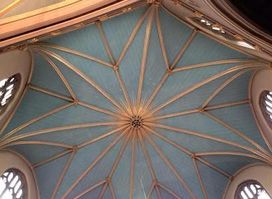
The building’s appeal is immediate once you step through security and into the interior volumes. A large circular reading room anchors the space, with high ceilings, stone surfaces, and the kind of controlled hush that comes from a working library. There are multiple floors and mezzanines, specialist study areas, and a former chapel that now serves as exhibition space. The atmosphere is formal but not forbidding: polished, ordered, and shaped by long hours of seated work.How a visit feels
Most people arrive to study, research, or attend an exhibition, and the visit usually unfolds in a practical sequence: entry check, movement through the library, then a longer stay at a desk or in an exhibition area. Casual visitors tend to spend less time here, focusing on the architecture and the sense of scale rather than on a list of sights. A short visit can be enough to take in the reading room and the heritage details, while a longer one suits anyone using the library for work. It is not a place for wandering at speed; the building encourages slower movement and quiet observation.Why travellers come
Travellers come here for academic heritage, interior architecture, and a rare chance to see a major London library that still functions as a place of study. Its setting in the Strand and Chancery Lane district adds context: this is a dense zone of legal, educational, and historic institutions, not a leisure quarter. The Maughan Library fits travellers who prefer buildings with real use and clear purpose. It is especially rewarding for architecture-minded visitors, photographers working in low-key indoor spaces, and anyone looking for a calm stop in central London.Practical expectations
This is an indoor, centrally located site with easy access by Underground, bus, or on foot from Holborn and the Strand. It is best treated as a short cultural stop unless you have a reason to stay longer. Public access is limited and may depend on exhibitions or special open days, so it should not be assumed to function like a museum. Facilities are good for a library: water fountains, Wi‑Fi, study support, a café area, and information points are part of the experience. The building is most active on weekdays and during term time, when the steady flow of students and researchers gives it its working rhythm.












Your all‑in‑one travel companion app
Explore expert travel guides, compare and book tours, experiences, hotels, and more—all from the palm of your hand. Download now for seamless trip planning wherever your wanderlust takes you.


Explore More of London
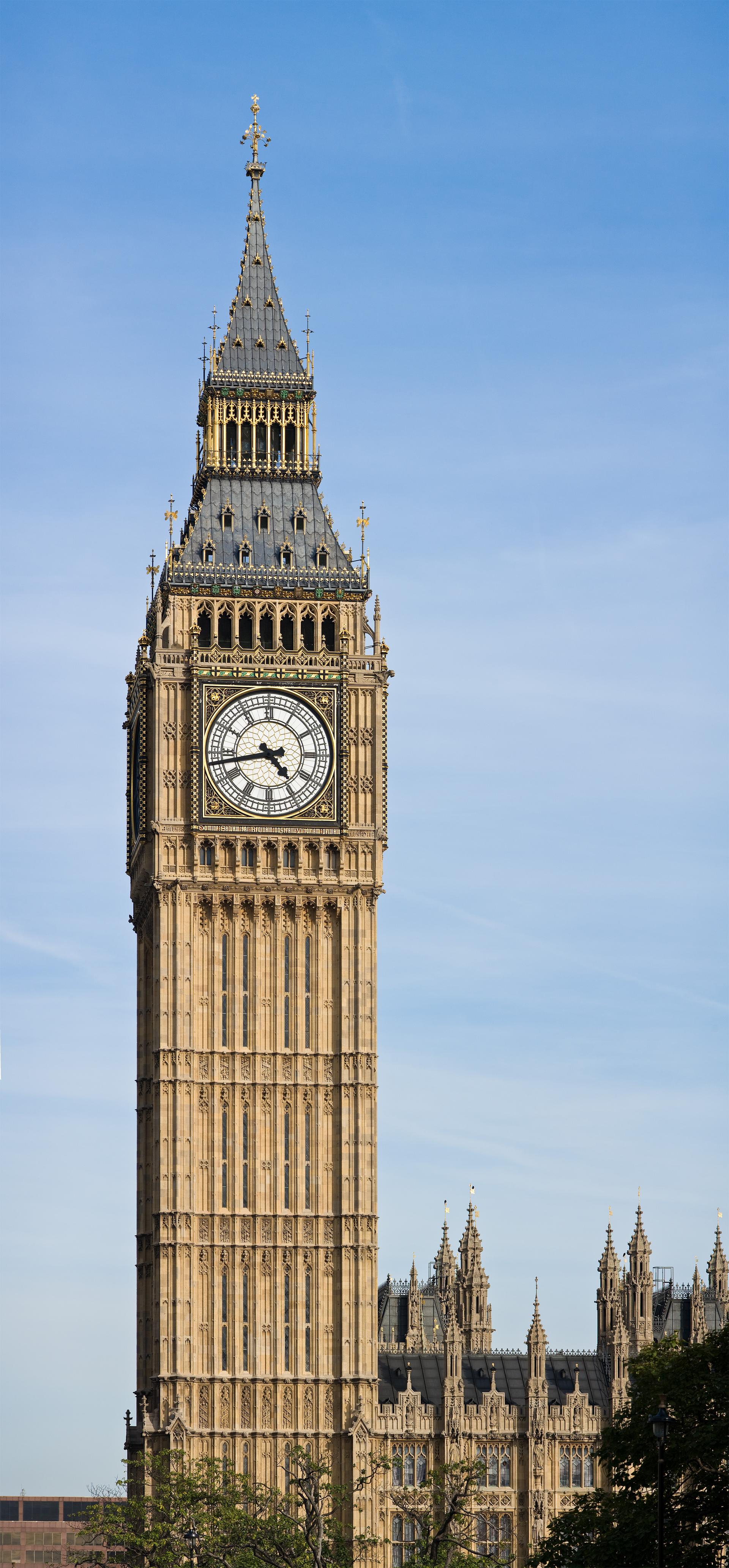
Looking beyond The Maughan Library? Discover London for broader travel guides, local hot-spots, and regional highlights.
Explore London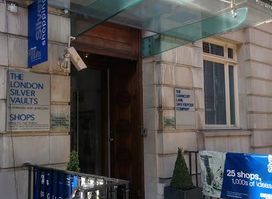
Discover the world’s largest collection of antique and contemporary silver in London’s historic subterranean shopping vaults beneath Chancery Lane.
An active City of London church with an octagonal interior, long history, and a calm, self-guided visit just off Fleet Street.