Trinity Square, London Travel Guide
Free Guide: A small Tower Hill garden with memorials, city views, and a restrained historic atmosphere beside the Tower of London.


A brief summary of Trinity Square
A small Tower Hill garden with memorials, city views, and a restrained historic atmosphere beside the Tower of London.
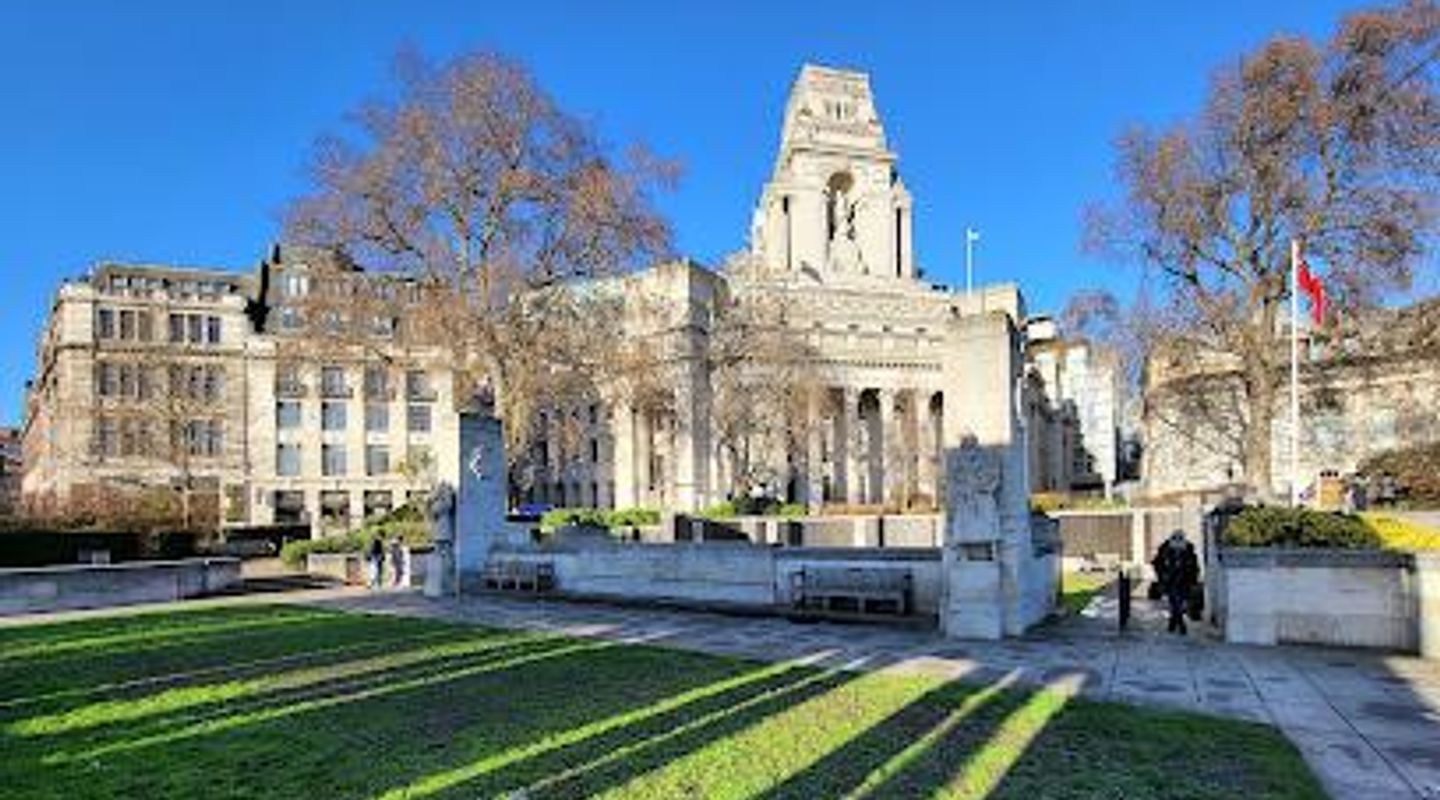
Trinity Square is a small historic garden and memorial space beside Tower Hill, best visited as part of a walk around the Tower of London area. It is not a full-scale attraction, but a brief, reflective stop with lawns, war memorials, and framed views through one of London’s densest heritage districts. The mood is formal, urban, and calm, with the city pressing close on every side.
On-site amenities
 Seating areas
 Trash bins
 Information boards
- Address
- London
Getting there
Underground
Rail
DLR
Bus
Discover more about Trinity Square
What it is
Trinity Square is a compact public square and garden in the City of London, set immediately beside Tower Hill and close to the Tower of London. It works less like a destination in its own right and more like a heritage pause point: a small open space where memorials, planting, and the surrounding historic streets come together. The square sits within a conservation-area setting and carries strong associations with maritime history, public memory, and the long, layered story of Tower Hill.
Atmosphere and setting
The space is small, formal, and exposed to the city around it. Lawns, memorials, and a few planted edges soften the hard lines of nearby roads and buildings, but this is still very much an urban square rather than a park. The appeal comes from contrast: a quiet patch of green set against one of London’s busiest heritage zones. On a clear day, the setting feels crisp and ordered, with sightlines toward the Tower of London area and the constant movement of people passing between landmarks, stations, and offices.
What visitors do here
Most people spend only a short time in Trinity Square. You might cross it on the way to Tower Hill, stop to read the memorials, or sit for a few minutes away from the traffic and tour groups. The memorial to those executed on the former Tower Hill scaffold gives the place a sober tone, and the square is well suited to visitors who want a quieter, more reflective layer to a Tower of London visit. It also works well for photography, especially if you are interested in urban heritage details rather than broad scenic views.
History and context
The square and gardens were created by Act of Parliament in 1797 and later restored in 2003. That long civic history matters because the place is not decorative filler; it is part of the City’s public memory landscape. Trinity Square also sits within a district shaped by medieval, Georgian, Victorian, and modern layers, so the experience is as much about reading the surrounding city as it is about the garden itself. The result is a small but dense historical setting, where memorials, conservation planning, and the Tower Hill backdrop all reinforce one another.
Practical expectations
Expect a short visit rather than a long stay. Ten to twenty minutes is enough for a quick walk-through, while half an hour lets you read the memorials and take in the surroundings at an unhurried pace. Facilities are basic, and this should not be treated as a full-service attraction. The square is best reached on foot or by public transport, and it fits naturally into a wider Tower Hill itinerary. In good weather it feels like a useful breathing space; in rain or wind, it becomes more of a pass-through than a place to linger.
Evendo Review Centre
 Google
Guest reviews
Best time to go
Quietest: Jan, Feb & Dec · before 6am or from 9pm
Busy times are Evendo estimates for a typical year, to help you plan. Actual crowds vary with events, school holidays and the weather.
Explore Trinity Square on the map
A handpicked selection of must-see spots near Trinity Square, mapped for you.
Get your free copy of our complete guide to Trinity Square, delivered straight to you.
Everything on this page, from opening hours and how to get there to Eve’s tips and the best time to go, in one PDF you can read offline, print or share.
Already have an account? Sign in
Your Trinity Square guide is ready.
We'll send it to · Not you? Sign out

Getting your guide ready…
We are putting together a fresh copy of the Trinity Square guide. This can take up to a minute.
This can take a few moments. If your browser asks, choose Allow so the download can start. You'll find the guide in your Downloads folder.
Nothing happened? Download it again
Sorry, the guide is taking longer than usual. Please try again in a minute, or get it by email instead.
Unlock the best of Trinity Square
Skip-the-line tickets, guided tours with entry, and walking tours of the area, booked in a few clicks.


Other nearby places you may find interesting
The closest places of the same kind, if this one is not quite what you had in mind.
-
-
-
-
-


Swipe for more places
More to explore near Trinity Square

 Best experiences near Trinity Square
 Best hotels near Trinity Square
 Best landmarks near Trinity Square
 Best attractions near Trinity Square
 Best shops near Trinity Square
 Best restaurants near Trinity Square
 Best bars near Trinity Square
Do you manage this location?
Take control to get all the benefits, like improved information, better appearance, and stronger visibility across AI-powered discovery.
Explore more

Explore more of London
Explore London: A city of iconic landmarks, rich history, vibrant culture, and endless attractions that cater to every taste, making it a must-visit destination.
Explore London
Explore more of United Kingdom
Discover the United Kingdom: A blend of rich history, stunning landscapes, and vibrant cities, offering a unique travel experience for every visitor.
Explore United Kingdom