Albert Bridge, London Travel Guide
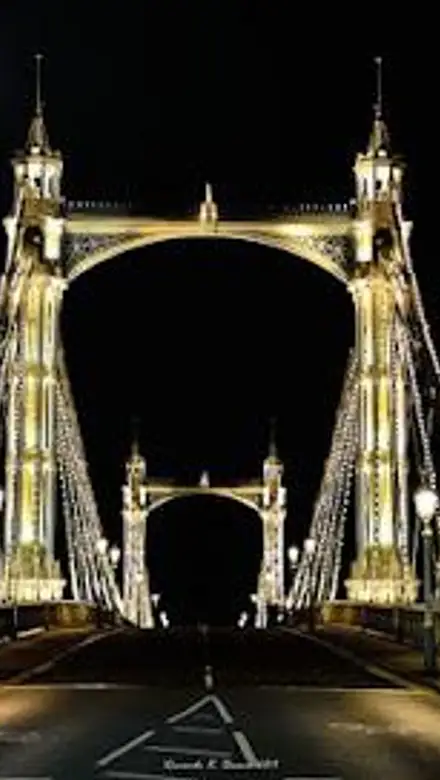
Free Guide: A delicate Victorian marvel spanning the Thames, Albert Bridge enchants with its pastel hues and shimmering lights, linking Chelsea and Battersea in timeless elegance.


A brief summary of Albert Bridge
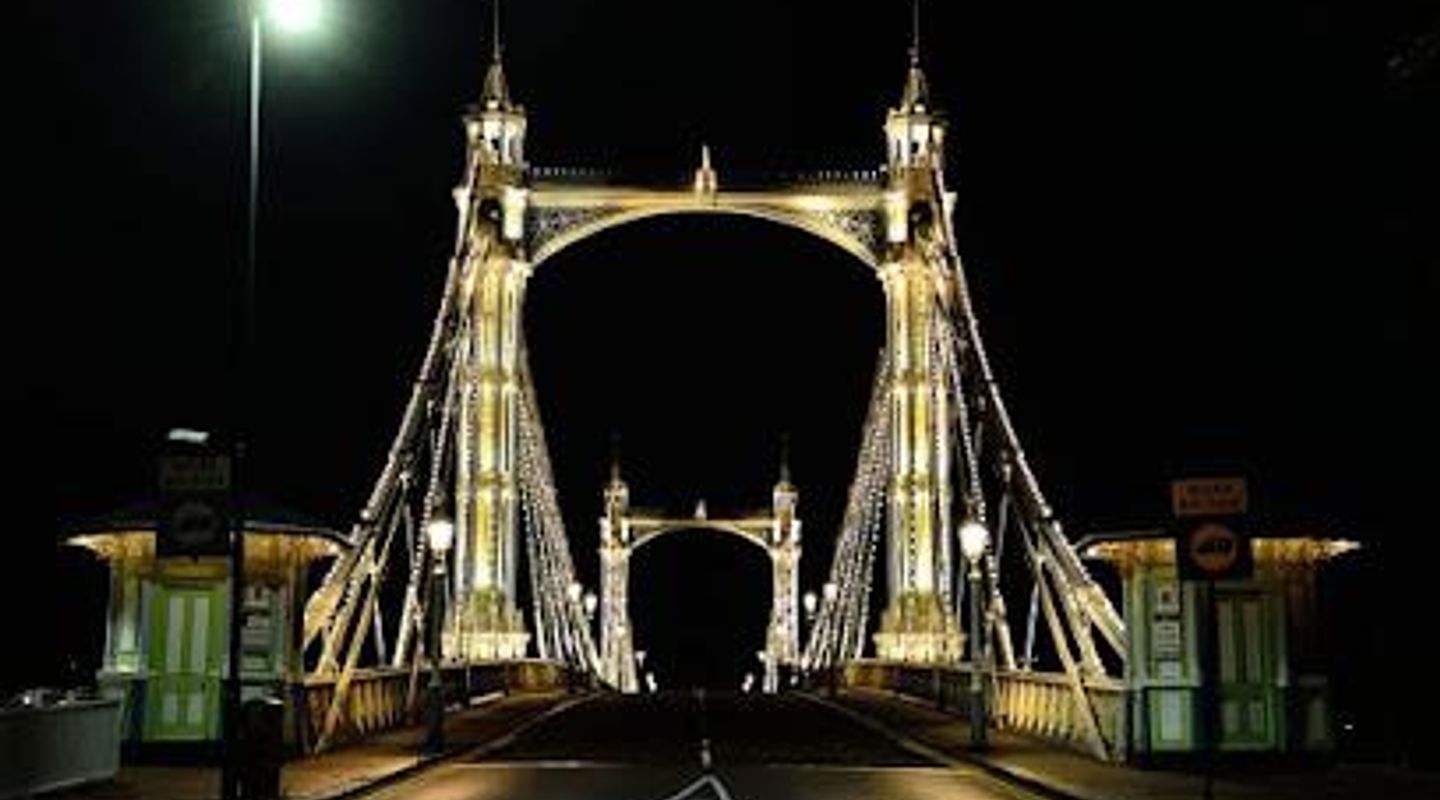
A delicate Victorian marvel spanning the Thames, Albert Bridge enchants with its pastel hues and shimmering lights, linking Chelsea and Battersea in timeless elegance.
Albert Bridge is a Grade II* listed historic bridge spanning the River Thames, connecting Chelsea and Battersea in London. Completed in 1873, it is renowned for its unique hybrid cable-stayed and suspension design, delicate structure, and distinctive pastel color scheme. Illuminated by thousands of lamps at night, the bridge carries light traffic and retains its original toll booths, symbolizing Victorian engineering and London's evolving urban landscape.
On-site amenities
 Seating areas
 Information boards
- Address
- London
Getting there
Public Transport
Bus
Taxi or Rideshare
Discover more about Albert Bridge
A Victorian Engineering Marvel with a Delicate Legacy
Albert Bridge was completed in 1873 after a challenging construction period that began in 1870. Designed by Rowland Mason Ordish, it employed his patented Ordish-Lefeuvre system—a hybrid cable-stayed design that was innovative yet ultimately delicate. The bridge’s ornate towers, cast iron cylindrical piers sunk into the riverbed, and timber deck reflect Victorian-era engineering ambition. Despite its elegance, the bridge was known as the “Trembling Lady” due to vibrations caused by pedestrian and traffic loads, necessitating signs instructing troops from nearby Chelsea Barracks to break step when crossing.
Historical Context and Urban Impact
The bridge was conceived to alleviate congestion on existing Thames crossings, particularly between Chelsea and Battersea, where the older Battersea Bridge was deteriorating. Prince Albert proposed the toll bridge in 1860, and after parliamentary approval in 1864, construction proceeded. Although intended as a toll bridge, tolls were abolished in 1879 when it passed into public ownership, but the original toll booths remain as a rare historical feature. The bridge’s location and design made it commercially unsuccessful as a toll crossing, reflecting the rapid urban growth and changing transport needs of London.
Structural Challenges and Preservation Efforts
Soon after opening, corrosion and structural weaknesses emerged. Sir Joseph Bazalgette strengthened the bridge in 1884 by adding steel chains and replacing wire cables with steel links. In 1972, two concrete piers were added to support the central span, converting it partially into a beam bridge. Despite multiple proposals to demolish or replace it, including plans in 1926 and the 1950s, local campaigns led by figures such as Sir John Betjeman preserved the bridge. Refurbishments in 2010-2011 included replacing the wooden deck and upgrading lighting to energy-efficient LEDs, maintaining its iconic twinkling night illumination.
Aesthetic and Cultural Significance
Albert Bridge is instantly recognizable by its pastel pink, blue, and green paintwork and its thousands of low-voltage lamps that create a shimmering effect after dark. It stands as one of London’s most picturesque river crossings and a cherished landmark symbolizing Victorian optimism and craftsmanship. The bridge’s delicate design and light traffic use contrast with the heavy modern demands on London’s transport network, giving it a unique charm and historical resonance.
Modern Role and Visitor Experience
Today, Albert Bridge carries light vehicular and pedestrian traffic between Chelsea and Battersea. Its narrow lanes and weight restrictions preserve its structural integrity, while the surrounding area offers scenic views of the Thames and nearby Battersea Park. The bridge’s illumination is part of the Illuminated River project, enhancing its nighttime appeal with environmentally sensitive LED lighting. Visitors can appreciate both its engineering heritage and its romantic, tranquil atmosphere, especially at dusk and night when it glows softly over the river.
Legacy of Resilience and Community Value
Albert Bridge’s survival through financial difficulties, structural challenges, and demolition threats reflects the community’s commitment to preserving London’s heritage. Its story intertwines with the development of Chelsea and Battersea, embodying the city’s transition from Victorian industrial optimism to modern urban identity. The bridge remains a testament to innovative engineering, aesthetic beauty, and the power of local advocacy in safeguarding historic landmarks.
Evendo Review Centre
 Google
Guest reviews
Best time to go
Quietest: Jan, Feb & Dec · before 6am or from 11pm
Busy times are Evendo estimates for a typical year, to help you plan. Actual crowds vary with events, school holidays and the weather.
Explore Albert Bridge on the map
A handpicked selection of must-see spots near Albert Bridge, mapped for you.
Get your free copy of our complete guide to Albert Bridge, delivered straight to you.
Everything on this page, from opening hours and how to get there to Eve’s tips and the best time to go, in one PDF you can read offline, print or share.
Already have an account? Sign in
Your Albert Bridge guide is ready.
We'll send it to · Not you? Sign out

Getting your guide ready…
We are putting together a fresh copy of the Albert Bridge guide. This can take up to a minute.
This can take a few moments. If your browser asks, choose Allow so the download can start. You'll find the guide in your Downloads folder.
Nothing happened? Download it again
Sorry, the guide is taking longer than usual. Please try again in a minute, or get it by email instead.
Unlock the best of Albert Bridge
Skip-the-line tickets, guided tours with entry, and walking tours of the area, booked in a few clicks.


Other nearby places you may find interesting
The closest places of the same kind, if this one is not quite what you had in mind.
-

-
-
-
-


Swipe for more places
More to explore near Albert Bridge

 Best experiences near Albert Bridge
 Best hotels near Albert Bridge
 Best landmarks near Albert Bridge
 Best attractions near Albert Bridge
 Best shops near Albert Bridge
 Best restaurants near Albert Bridge
 Best bars near Albert Bridge
Do you manage this location?
Take control to get all the benefits, like improved information, better appearance, and stronger visibility across AI-powered discovery.
Explore more

Explore more of London
Explore London: A city of iconic landmarks, rich history, vibrant culture, and endless attractions that cater to every taste, making it a must-visit destination.
Explore London
Explore more of United Kingdom
Discover the United Kingdom: A blend of rich history, stunning landscapes, and vibrant cities, offering a unique travel experience for every visitor.
Explore United Kingdom