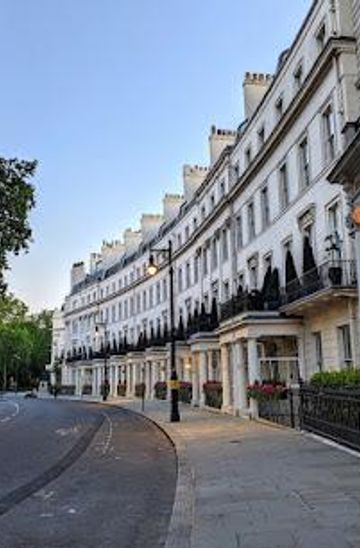
Belgrave Square: London's Grand 19th-Century Garden Square
Belgrave Square: A prestigious 19th-century garden square in London’s Belgravia, renowned for its elegant architecture and exclusive private gardens.
Belgrave Square, located in London’s prestigious Belgravia district, is a grand 19th-century garden square known for its elegant white stucco townhouses and exclusive private gardens. Designed in the 1820s by George Basevi under the direction of master builder Thomas Cubitt, it features four terraces and detached mansions, many now housing embassies and luxury residences. The square’s lush private garden, historic architecture, and storied past make it a symbol of London’s aristocratic heritage and architectural grandeur.
A brief summary to Belgrave Square
- London, GB
- Duration: 0.5 to 2 hours
- Mid ranged
-
 Outdoor
- Mobile reception: 5 out of 5
Local tips
- Access to Belgrave Square Garden is restricted to keyholders; check for public art installations visible from surrounding areas.
- Admire the architecture from the perimeter, noting the neoclassical details and uniform terraces designed by George Basevi.
- Visit nearby Belgravia to explore elegant streets and historic pubs that complement the square’s refined atmosphere.
- Learn about the square’s wartime history, including its use as a tank park during World War II.

Getting There
-
London Underground
Take the Victoria Line to Victoria Station, then walk approximately 15 minutes through Belgravia’s streets to reach Belgrave Square. The route is mostly flat and accessible, with frequent train services costing around £2.50–£5.00 depending on ticket type.
-
Bus
Use bus routes 11 or 211 from central London areas, alighting near Eaton Square. The walk to Belgrave Square is about 7 minutes on paved roads. Bus fares range from £1.75 to £2.50 with contactless payment.
-
Taxi or Ride-Hailing
A taxi or ride-hailing service from central London takes roughly 10–20 minutes depending on traffic. Expect fares between £10 and £20. Note that parking around Belgrave Square is extremely limited and often restricted to residents.
-
Walking
For those nearby, walking through Belgravia’s elegant streets offers a scenic and accessible approach to Belgrave Square, typically taking 10–20 minutes from landmarks like Buckingham Palace or Hyde Park Corner.
For the on-the-go comforts that matter to you
-
 Seating Areas
-
 Information Boards
Belgrave Square location weather suitability
-
 Any Weather
-
 Clear Skies
-
 Mild Temperatures
-
 Rain / Wet Weather
Discover more about Belgrave Square
Origins and Vision Behind Belgrave Square
Belgrave Square was conceived in the 1820s as the centerpiece of the Grosvenor Estate’s ambitious development of Belgravia, transforming marshy farmland into one of London’s most fashionable residential districts. The project was masterminded by the 2nd Earl Grosvenor, later the 1st Marquess of Westminster, who commissioned master builder Thomas Cubitt to execute the vision. Architect George Basevi designed the four grand terraces of white stuccoed houses, complemented by three detached mansions at the corners, creating a perfectly symmetrical and imposing square. By 1840, most residences were occupied, marking the rise of Belgrave Square as a prestigious address close to Buckingham Palace and Hyde Park Corner.Architectural Grandeur and Design Details
The architecture of Belgrave Square exemplifies neoclassical elegance and Georgian style, with fine detailing such as ornate window surrounds, wrought-iron railings, and stately pillars. The terraces each consist of eleven residences, except the southeast terrace with twelve, all unified in style yet retaining individual charm. Detached mansions offer additional architectural variety and grandeur. The buildings have been carefully preserved and restored, maintaining their historic façades while accommodating modern luxury interiors. The square’s design reflects the meticulous planning and craftsmanship of the early 19th century, offering a cohesive and timeless urban environment.Belgrave Square Garden: A Private Oasis
At the heart of the square lies Belgrave Square Garden, a two-hectare private communal garden listed as Grade II on the Register of Historic Parks and Gardens. This lush green space features mature plane trees dating back to the 1800s, wisteria-covered pergolas, rose bushes, and well-maintained lawns. Exclusive to keyholders, the garden includes amenities such as a tennis court and children’s play area, providing a tranquil retreat amidst the city bustle. The garden also hosts temporary public art installations, enriching the cultural experience for residents and visitors with access.Historical Significance and Notable Residents
Belgrave Square has long been associated with diplomatic and aristocratic prestige. Over the years, it has housed embassies of countries including Austria, Spain, Norway, Serbia, Romania, Portugal, and Germany. During World War I, the square served as a base for the St John Ambulance Brigade, and in World War II, it was used as a tank park and Red Cross supply depot. Post-war, many houses were converted into offices for charities and institutes before gradually reverting to luxury residences. The square has also been home to notable figures such as the Duke of Kent and William Lygon, 7th Earl Beauchamp, reflecting its enduring social prominence.Contemporary Character and Usage
Today, Belgrave Square blends its historic charm with modern prestige. The properties remain highly sought after, combining period façades with contemporary luxury interiors. The square’s embassies and private residences coexist alongside quiet, leafy streets, offering a unique blend of exclusivity and urban vitality. The private garden continues to be a key attraction, providing a peaceful green haven in central London. Belgrave Square stands as a testament to early 19th-century urban planning and architectural excellence, maintaining its status as one of London’s most distinguished addresses.Legacy of the Grosvenor Estate and Thomas Cubitt
The development of Belgrave Square epitomizes the vision and skill of the Grosvenor family and Thomas Cubitt, whose work shaped much of Belgravia. The square’s enduring symmetry, architectural cohesion, and integration of green space reflect a pioneering approach to urban design. This legacy continues under the stewardship of the Grosvenor Estate, which manages the area with a focus on preservation and exclusivity. Belgrave Square remains a symbol of London’s aristocratic heritage, architectural refinement, and the transformative power of 19th-century town planning.Explore the best of what Belgrave Square has to offer















More about London
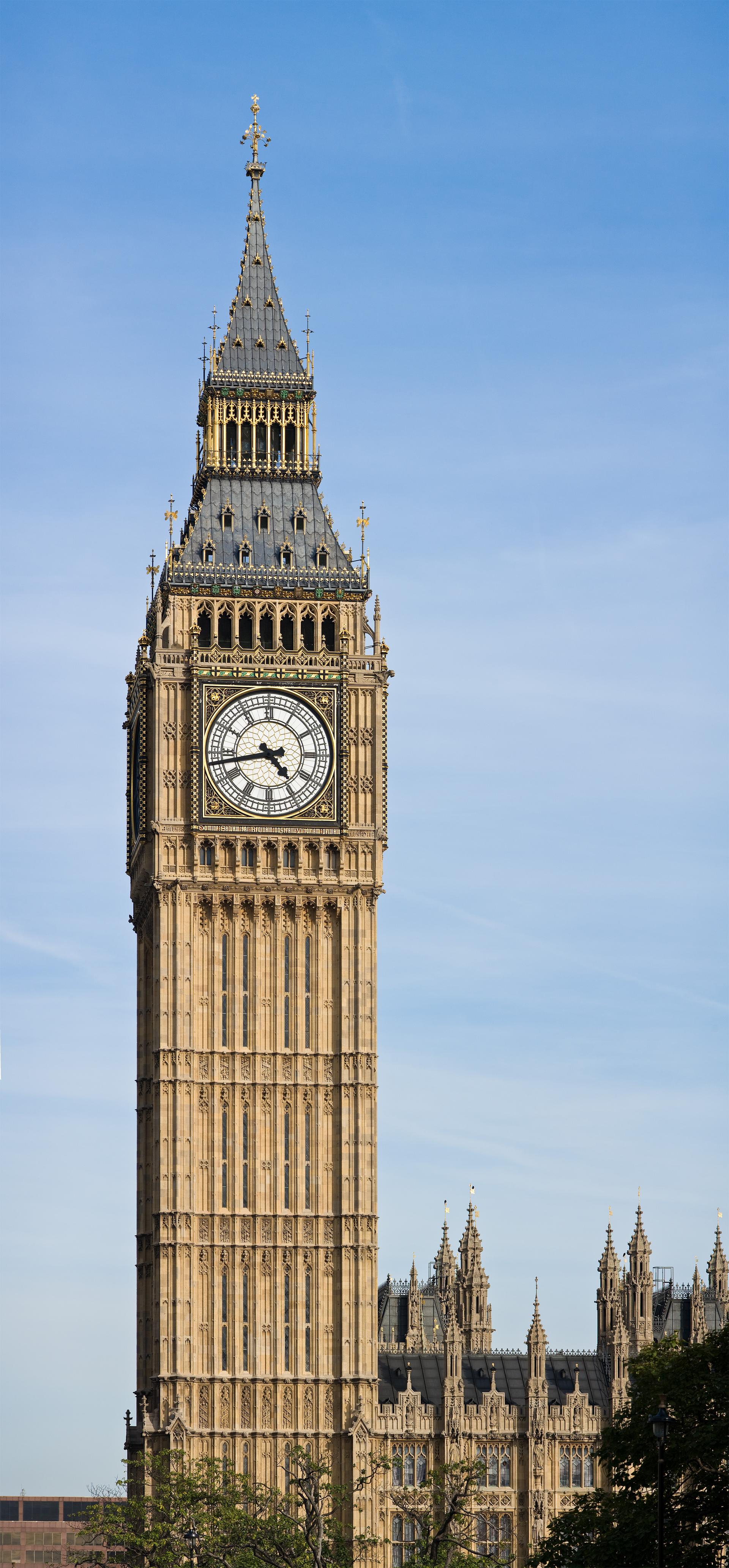
Explore London: A city of iconic landmarks, rich history, vibrant culture, and endless attractions that cater to every taste, making it a must-visit destination.
Tell me more about LondonWant to improve this location?
Activate this location now and let Evendo enhance its appearance, information, and visibility for millions of travellers.