Brompton Cemetery, London Travel Guide
Free Guide: Victorian garden cemetery where 205,000 souls rest amid classical architecture, wildflowers, and the stories of Britain's remarkable dead.


A brief summary of Brompton Cemetery
Victorian garden cemetery where 205,000 souls rest amid classical architecture, wildflowers, and the stories of Britain's remarkable dead.
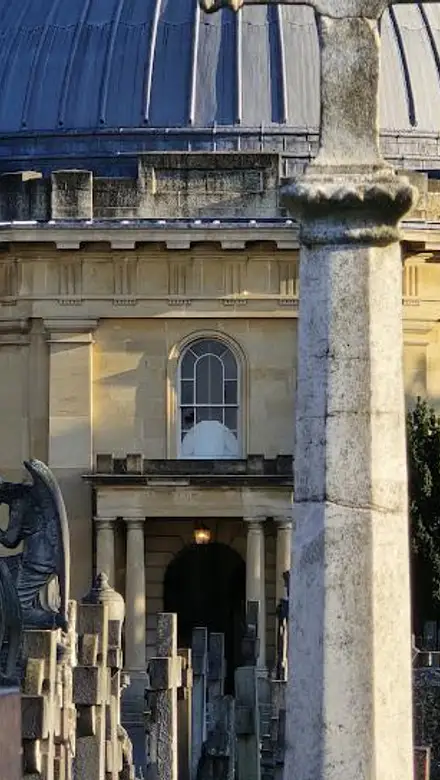
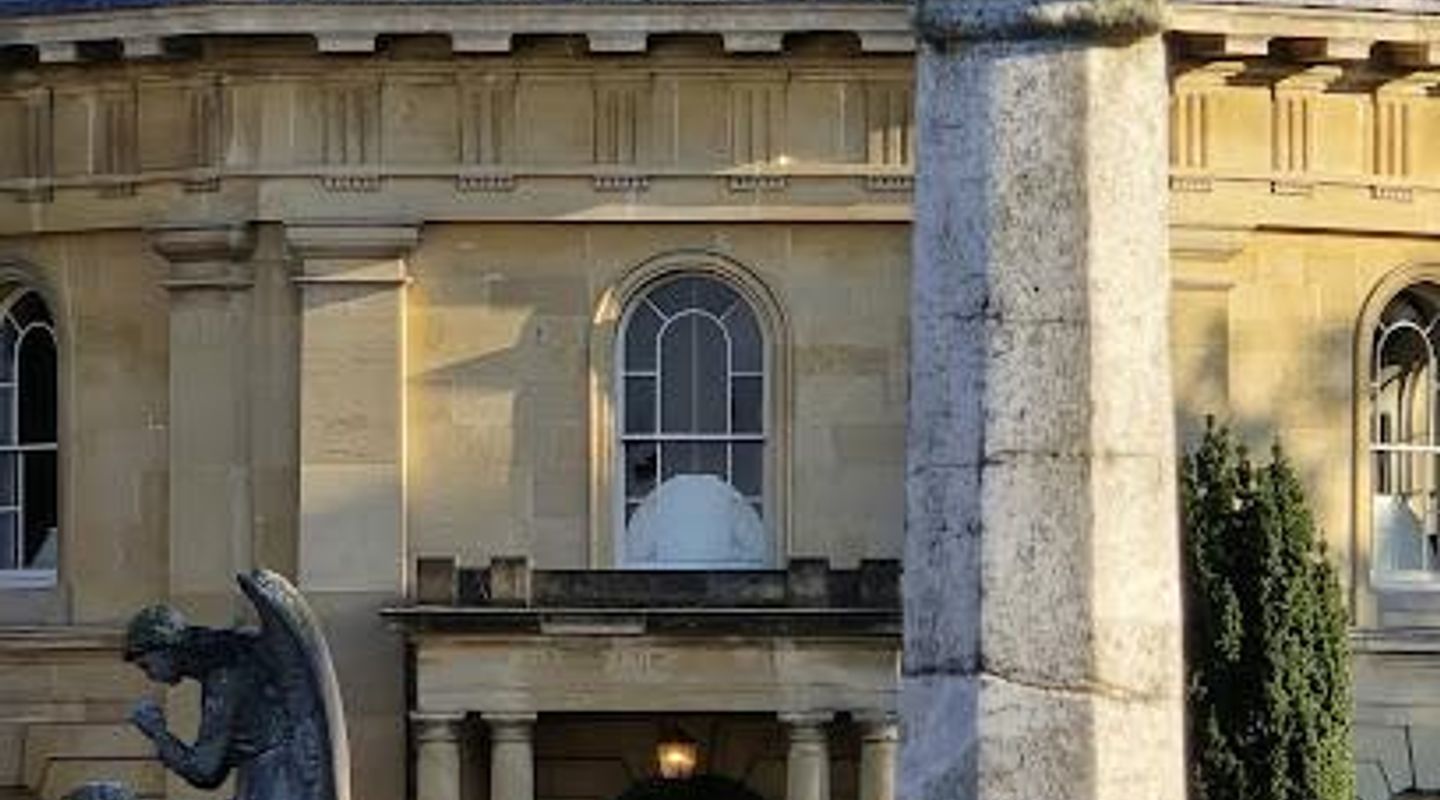
Brompton Cemetery is one of London's Magnificent Seven Victorian garden cemeteries, established in 1840 as a response to overcrowded churchyards. Spanning 40 acres in West Brompton, this Grade I listed site contains over 205,000 burials marked by 35,000 monuments ranging from simple headstones to elaborate mausolea. Designed by architect Benjamin Baud, the cemetery features a striking central avenue, classical colonnades inspired by St Peter's in Rome, and a sandstone domed chapel. Now managed by The Royal Parks as Britain's only Crown cemetery, it serves as both a historical landmark and thriving wildlife habitat.
On-site amenities
 Restrooms
 Drink options
 Food options
 Seating areas
 Information boards
 Visitor centre
Opening hours
- Every day7 am–4 pm
Opening hours as listed on the venue’s Google Business Profile. Hours can change for services and special events, so check with the venue before you go.
- Address
- Fulham Rd., London SW10 9UG
- Website
Getting there
Underground (Tube) and Bus
Taxi or Ride-Share
Walking from Chelsea
Bicycle
Discover more about Brompton Cemetery
A Victorian Solution to Urban Burial Crisis
By the early 19th century, London's rapid population growth had created a public health catastrophe. The city's churchyards, designed for modest medieval populations, had become grotesquely overcrowded burial pits that threatened the health of the living. Decomposing remains overflowed into streets, and the stench of death permeated inner-city neighbourhoods. In response, a visionary group of entrepreneurs and architects conceived an ambitious solution: the Magnificent Seven, a ring of seven large, landscaped cemeteries built around London's periphery between 1832 and 1841. Brompton Cemetery, established in 1840, became the most architecturally distinguished of these ventures and the only one to eventually pass into Crown ownership.
Architectural Grandeur and Design Innovation
Architect Benjamin Baud transformed a flat, featureless 40-acre expanse of former market gardens into an open-air cathedral of remembrance. His design created a 600-metre central avenue lined with stately lime trees, flanked by classical colonnades modelled on St Peter's Square in Rome. At the heart stands a modest sandstone domed chapel, completed in 1839, which anchors the entire composition. The colonnades, now Grade II* listed structures, frame the Great Circle and descend into catacombs originally conceived as an economical burial alternative. Though designed to accommodate thousands of coffin niches, only about 500 spaces were ever purchased, leaving vast underground chambers largely empty. The landscape design, created by renowned horticulturist J.C. Loudon, transformed the unpromising terrain into a garden as valuable for the living as for the dead, with winding pathways, mature trees, and carefully planted wildflowers creating an atmosphere of contemplative beauty.
Monuments of Memory and Artistic Expression
Within Brompton's 35,000 monuments lies a remarkable cross-section of Victorian society and artistic achievement. The cemetery became a canvas for the era's most ambitious memorial designs, reflecting the period's obsession with death, remembrance, and artistic expression. The Pre-Raphaelite artist Edward Burne-Jones designed the only tomb of his career here, a striking monument to Frederick Richards Leyland, a wealthy shipowner and art patron who died in 1892. Celtic crosses abound, reflecting the influence of the Oxford Movement and Catholic Revival that swept through Victorian Anglicanism. Memorials range from grieving angels and ivy-clad crosses to ornate mausolea adorned with hieroglyphics, such as the enigmatic tomb of Hannah Courtoy designed by Egyptologist Joseph Bonomi. The variety and ambition of these monuments create an undulating landscape of stone, each telling stories of lives lived, achievements celebrated, and losses mourned.
Resting Place of the Remarkable
Brompton Cemetery holds the remains of over 205,000 people from 40 different nationalities, including many whose contributions shaped modern Britain. Emmeline Pankhurst, the courageous leader of the suffragette movement, was buried here in 1928, just three weeks before women aged 21 and over gained the right to vote. Her simple Celtic cross marks one of the cemetery's most visited graves. Doctor John Snow, the epidemiologist who revolutionized public health by proving cholera was spread through contaminated water rather than miasmic air, rests here with a monument funded by grateful colleagues. The cemetery also contains the grave of Reginald Warneford, the first airman to shoot down a Zeppelin during World War I, commemorated with a striking memorial depicting his legendary feat. Racing driver Percy Lambert, who broke the 100 miles per hour speed record, lies beneath a broken column symbolizing a life cut short. Even Chief Long Wolf, an Oglala Sioux warrior who died while touring with Buffalo Bill's Wild West Show, was buried here before his remains were returned to South Dakota decades later.
Military Heritage and Commonwealth Service
From 1854 to 1939, Brompton served as London's District Military Cemetery, a role that left an indelible mark on its landscape. The Royal Hospital Chelsea maintains a plot in the north-west corner, marked by an obelisk monument. The Brigade of the Guards occupies its own section to the south. The cemetery contains 289 registered graves of Commonwealth service personnel from World War I and 79 from World War II, all maintained by the Commonwealth War Graves Commission. These military sections, though modest in scale compared to dedicated war cemeteries, represent a solemn commitment to honouring those who fell in service to the nation.
From Private Enterprise to Crown Property
Brompton's journey from private commercial venture to public institution reflects the complex economics of Victorian enterprise. Founded by Stephen Geary, an architect and entrepreneur who also established Highgate and Nunhead cemeteries, the cemetery was initially a profit-driven business. However, the grandiose architectural scheme proved vastly more expensive than anticipated, and shareholders failed to see the financial returns they expected. By the 1850s, the struggling company was forced to sell. Under the Metropolitan Interments Act of 1850, the government purchased Brompton, making it Britain's only Crown cemetery—a distinction it retains today. Since 1852, it has been managed by The Royal Parks under contract from the Secretary of State for Culture, Media and Sport, ensuring its preservation and maintenance as a public space.
A Living Sanctuary in Urban London
Today, Brompton Cemetery stands as a paradox: a place of death that thrums with life. The cemetery was closed to new burials in 1952, but since 1996 it has again accepted burials, allowing families to choose this historic setting for their loved ones. Beyond its role as a resting place, the cemetery has become an unexpected urban nature reserve. Its mature trees, wildflowers, and undisturbed grounds provide habitat for birds, butterflies, bats, and beetles. The Friends of Brompton Cemetery organize regular guided tours, including descents into the atmospheric catacombs where Victorian funeral flowers still rest beside long-forgotten coffins. A substantial renovation project between 2014 and 2018 uncovered hidden architectural details, including original Bath and York stone chapel flooring. The cemetery's Grade I listing protects its architectural and historical significance, ensuring that future generations can walk its avenues and contemplate the lives, achievements, and stories of those who rest within its bounds.
Evendo Review Centre
 Google
Guest reviews
Best time to go
Quietest: Jan, Feb & Dec · before 8am or from 4pm
Busy times are Evendo estimates for a typical year, to help you plan. Actual crowds vary with events, school holidays and the weather.
Explore Brompton Cemetery on the map
A handpicked selection of must-see spots near Brompton Cemetery, mapped for you.
Get your free copy of our complete guide to Brompton Cemetery, delivered straight to you.
Everything on this page, from opening hours and how to get there to Eve’s tips and the best time to go, in one PDF you can read offline, print or share.
Already have an account? Sign in
Your Brompton Cemetery guide is ready.
We'll send it to · Not you? Sign out

Getting your guide ready…
We are putting together a fresh copy of the Brompton Cemetery guide. This can take up to a minute.
This can take a few moments. If your browser asks, choose Allow so the download can start. You'll find the guide in your Downloads folder.
Nothing happened? Download it again
Sorry, the guide is taking longer than usual. Please try again in a minute, or get it by email instead.
Unlock the best of Brompton Cemetery
Skip-the-line tickets, guided tours with entry, and walking tours of the area, booked in a few clicks.

Other nearby places you may find interesting
The closest places of the same kind, if this one is not quite what you had in mind.
-

-
-
-
-


Swipe for more places
More to explore near Brompton Cemetery

 Best experiences near Brompton Cemetery
 Best hotels near Brompton Cemetery
 Best landmarks near Brompton Cemetery
 Best attractions near Brompton Cemetery
 Best shops near Brompton Cemetery
 Best restaurants near Brompton Cemetery
 Best bars near Brompton Cemetery
Do you manage this location?
Take control to get all the benefits, like improved information, better appearance, and stronger visibility across AI-powered discovery.
Explore more

Explore more of London
Explore London: A city of iconic landmarks, rich history, vibrant culture, and endless attractions that cater to every taste, making it a must-visit destination.
Explore London
Explore more of United Kingdom
Discover the United Kingdom: A blend of rich history, stunning landscapes, and vibrant cities, offering a unique travel experience for every visitor.
Explore United Kingdom