
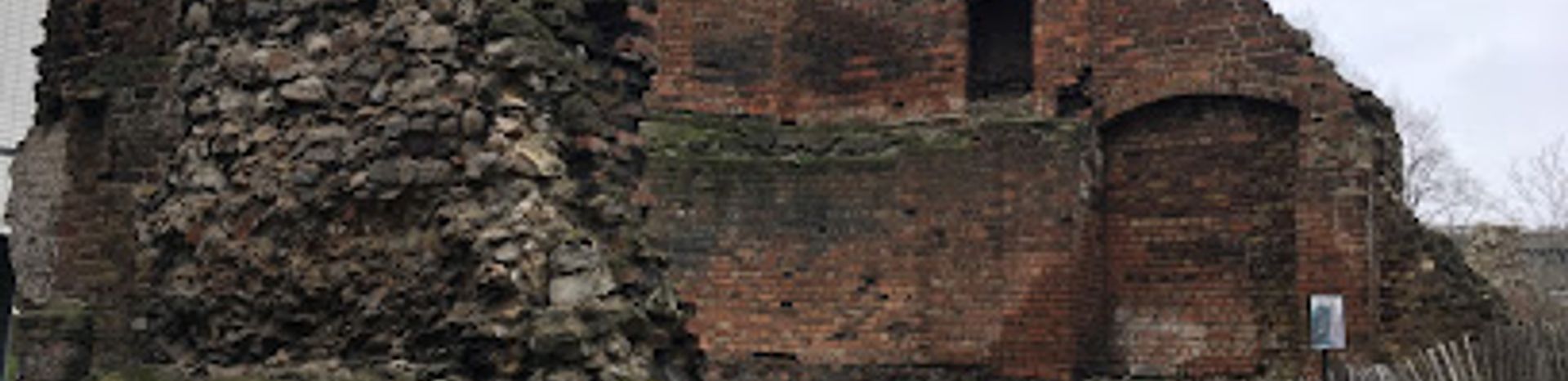
London City Wall - Bastion 14
Explore Bastion 14, a medieval bastion built on Roman foundations, revealing centuries of London’s ancient city defenses in the Barbican.
Bastion 14 is a well-preserved medieval defensive structure built atop the Roman foundations of London’s ancient city wall. Located in the Barbican area, it reveals layers of London's history from Roman Londinium through medieval fortifications to 19th-century urban development. The bastion was partially excavated in 1949, conserved with lime mortar and stainless steel supports, and stands as a Scheduled Monument reflecting London's evolving city defenses.
A brief summary to London City Wall - Bastion 14
- London, Barbican, GB
- Duration: 0.5 to 1.5 hours
- Free
-
 Outdoor
- Mobile reception: 4 out of 5
Local tips
- Respect the Scheduled Monument status by not climbing on or disturbing the structure.
- Visit during daylight hours to fully appreciate the masonry details and surrounding urban context.
- Combine your visit with a walk along the nearby sections of the London Wall and Barbican area.
- Look out for medieval arrow slits and the brick lining inside the bastion, remnants of its varied history.

For the on-the-go comforts that matter to you
- Information Boards
- Seating Areas
Getting There
-
Public Transport
Take the London Underground to Barbican Station, served by the Circle, Hammersmith & City, and Metropolitan lines. From the station, it is a 5-10 minute walk to Bastion 14. Tickets cost between £2.50 and £6 depending on travel zones and time.
-
Bus
Several London bus routes stop near the Barbican Centre, including routes 153, 4, and 56. Travel times vary from 15 to 30 minutes from central London. Single fares cost around £1.75 with contactless payment.
-
Walking
If you are staying nearby in the City of London or the Barbican area, Bastion 14 is accessible on foot via paved urban streets. Walking times range from 10 to 20 minutes depending on your starting point. The terrain is flat and wheelchair accessible.
London City Wall - Bastion 14 location weather suitability
-
 Any Weather
-
 Clear Skies
-
 Mild Temperatures
-
 Rain / Wet Weather
Discover more about London City Wall - Bastion 14
Ancient Foundations and Roman Origins
Bastion 14 forms part of the historic London City Wall, originally constructed by the Romans around AD 200 to protect Londinium, the strategically vital Roman port town. The Roman wall was a major defensive project, built to safeguard the city from northern tribes and invaders. Bastion 14 rests directly on these Roman foundations, demonstrating the continuity of London's defensive architecture from antiquity through the medieval period.Medieval Fortification and Adaptation
During the medieval era, the original Roman wall was reinforced with bastions like Bastion 14 to strengthen the city’s defenses. These bastions were built against the existing Roman wall, with Bastion 14 dated to the 13th century based on archaeological finds such as pottery. Though their military use was relatively short-lived, the bastions played a crucial role during periods of invasion threats, including the panic in 1386 when fears of a French invasion led to the mustering of garrisons along the wall.Transformation Through the Centuries
By the 19th century, Bastion 14 had been incorporated into surrounding buildings and was largely hidden from view. Its interior was lined with brickwork when it was used as part of a warehouse. The structure survived bombing during World War II, which revealed much of the bastion’s medieval masonry. Conservation efforts since then have included removing decayed mortar, rebedding stonework with lime mortar, and reinforcing the masonry with stainless steel supports to preserve the bastion as a Scheduled Monument.Archaeological Significance and Conservation
The bastion was excavated in 1949 by archaeologists who confirmed its medieval origins and connection to the Roman wall beneath. Conservation work has carefully preserved its stone and brick fabric, including the medieval arrow slits and eroded stonework. Temporary fencing protects the site’s archaeology, with plans for permanent fencing to safeguard this rare surviving fragment of London’s historic defenses.Setting and Visitor Experience
Situated in the Barbican area, Bastion 14 offers a tangible link to London’s layered past amidst a modern urban environment. The site is outdoors and can be viewed from nearby walkways, providing insight into the city’s evolution from Roman times through medieval fortification and industrial use. Visitors are encouraged to respect the monument and avoid climbing on the structure to help preserve its fragile fabric.Legacy of London’s City Walls
Bastion 14 is one of several surviving bastions along the line of the London City Wall, which once enclosed the medieval city with gates, towers, and water-gates. These fortifications reflect the city’s strategic importance and its adaptation to changing military and urban needs over centuries. Today, Bastion 14 stands as a historical landmark that connects Londoners and visitors alike to the city’s ancient and medieval heritage.For the vibe & atmosphere seeker
- Historic
- Tranquil
- Scenic
- Unique
For the design and aesthetic lover
- Rustic Designs
- Vintage Styles
For the architecture buff
- Historic
- Landmarks
For the view chaser and sunset hunter
- Iconic Views
For the social media creator & influencer
- Photo Spots
- Architectural Shots
For the eco-conscious traveler
- Protected Area
- Public-Transport Accessible
- Leave-No-Trace Critical
For the kind of experience you’re after
- Cultural Heritage
- Photowalk
- Day Trip
For how adventurous you want the journey to be
- Easy Access
Location Audience
- Family Friendly
- Senior Friendly
- Child Friendly
- Teen Friendly
- Wheelchair Access
- Solo Friendly
- Couple Friendly


