

Roupell St, London Travel Guide
Free Guide: A perfectly preserved Georgian time capsule where 1820s London lives on amid modern London's bustle.


A brief summary of Roupell St
A perfectly preserved Georgian time capsule where 1820s London lives on amid modern London's bustle.
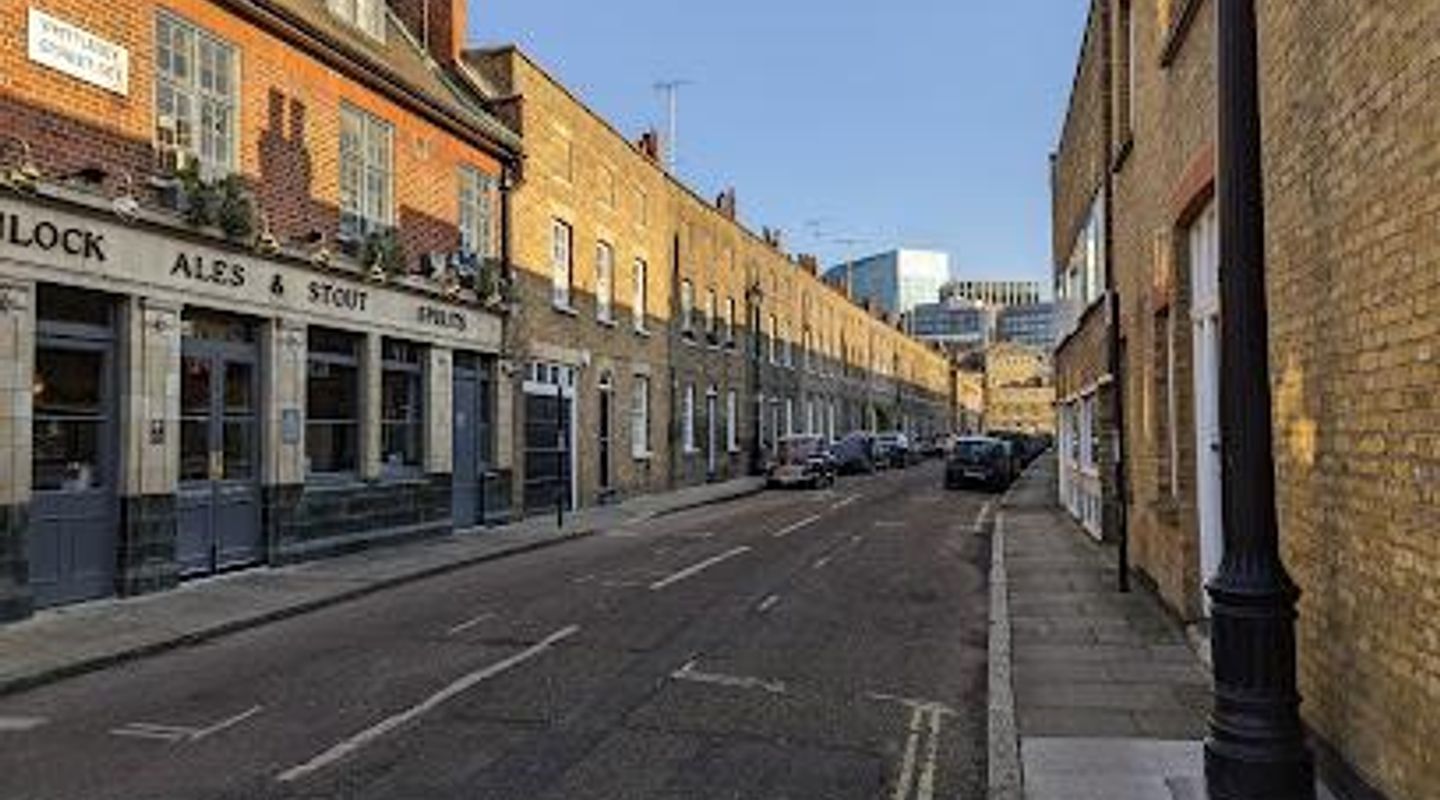
Roupell Street is a beautifully preserved Georgian conservation area in Lambeth, London, featuring rows of distinctive worker's cottages dating back to the 1820s. This time-capsule enclave of sooty brick terraces with brightly painted doors and period details has miraculously survived the Blitz and modern development. Located just steps from Waterloo Station, it remains one of London's most atmospheric and frequently filmed streets, beloved by photographers and history enthusiasts seeking an authentic glimpse of 19th-century London life.
On-site amenities
 Restrooms
 Drink options
 Food options
 Seating areas
 Information boards
- Address
- London
Getting there
Underground (Tube)
National Rail
Bus
Walking
Discover more about Roupell St
A Pocket of Preserved History
Roupell Street stands as one of London's most remarkable urban survivors—a complete conservation area of late Georgian worker's cottages that has endured over two centuries largely unchanged. Built beginning in 1824 by John Palmer Roupell, a gold refiner and property developer, the street and its neighbouring thoroughfares (Theed Street, Whittlesey Street, Cornwall Road, and Windmill Walk) were constructed on reclaimed marshland south of the Thames. What makes this enclave extraordinary is not merely its age, but the fact that it has weathered the railway expansions of the Victorian era, the devastating bombs of the London Blitz during World War II, and the relentless appetite of modern developers—all while remaining virtually untouched.The original residents were working-class Londoners: builders, joiners, printers, furniture makers, saddlers, blacksmiths, clothing makers, butchers, bakers, teachers, and nurses. These modest two-storey terraces, constructed of solid London brick with distinctive butterfly roofs and sturdy wooden frames, were designed for practicality rather than luxury. Remarkably, as many as 20 people once crowded into four-room houses, sharing communal spaces and outdoor facilities. Yet despite their humble origins and dense occupation, the buildings were well-constructed and have proven remarkably durable.
Architectural Character and Period Details
Walking through Roupell Street today feels like stepping through a portal into the 19th century. The streetscape is defined by uniform rows of sooty brick cottages punctuated by brightly painted front doors in jewel tones—deep blues, burgundies, and mauve hues that add unexpected colour to the austere facades. Period details abound: traditional cast-iron street lamps, boot scrapers embedded in doorsteps, ghost signs painted on walls, and metal insurance plates affixed to house walls—remnants of Victorian fire insurance schemes. The sawtooth rooflines, a signature feature of the conservation area, create a distinctive silhouette that has become instantly recognisable to filmmakers and photographers worldwide.The King's Arms pub, a Grade II listed Victorian establishment positioned at the junction of Roupell Street and Windmill Walk, anchors the community with its traditional village-pub atmosphere despite its proximity to central London's bustle. The pub retains nine real ale pumps and a back conservatory that has housed a Thai kitchen for over two decades. Corner shops and local businesses maintain the intimate, neighbourhood feel that distinguishes this enclave from the modern South Bank district surrounding it.
A Magnet for Cinema and Television
Roupell Street has become one of London's most prolific filming locations, with production crews returning dozens of times annually to capture its timeless aesthetic. The street's pristine period appearance requires minimal dressing for period dramas, making it an economical choice for filmmakers. Major productions filmed here include Call the Midwife, Doctor Who, Whitechapel, New Tricks, Slow Horses, EastEnders, Legend (the Kray twins film), and even James Bond's No Time to Die, in which Daniel Craig's 007 visits gadget-master Q at his home on the street. Mrs Harris Goes to Paris, though set in Battersea, was filmed on Roupell Street and at the King's Arms. The street's photogenic qualities have also made it a sensation on social media platforms, with its colourful doorways and vintage aesthetic generating countless Instagram and TikTok posts.
From Marshland to Modern Prosperity
The transformation of this location from swampland to thriving community reflects broader changes in London's geography and economy. The area was originally marshland until drainage in the 18th century. By 1767, the site was known as Halfpenny Hatch, a minor toll gate serving as a convenient cut-through between north-south routes. When John Roupell began development in the 1820s, he initially named the surrounding streets after himself and family members—John Street, Catherine Street, and Richard Street—though these were changed in the late 19th century to avoid postal confusion. Today, only Roupell Street retains the developer's name.What began as modest working-class housing has transformed dramatically. Contemporary property values have soared, and the street now houses millionaires in homes that once sheltered multiple families of ordinary labourers. This gentrification, while changing the social composition of the street, has paradoxically ensured meticulous maintenance and preservation of the historic fabric that might otherwise have deteriorated.
Resilience Through Crisis
The survival of Roupell Street through major historical disruptions underscores the durability of its construction and the determination of its community. A fire in 1829 threatened the nascent development but did not destroy it. The London Blitz of 1940–1941, which devastated much of South London, somehow spared this enclave entirely. Post-war redevelopment pressures, which transformed much of Lambeth and the South Bank, left Roupell Street untouched. This remarkable resilience has made the street a living museum of working-class London life, offering insights into how ordinary Londoners lived, worked, and built community in the 19th century.
Evendo Review Centre
 Google
Guest reviews
Best time to go
Quietest: Jan, Feb & Dec · before 6am or at 10pm
Busy times are Evendo estimates for a typical year, to help you plan. Actual crowds vary with events, school holidays and the weather.
Explore Roupell St on the map
A handpicked selection of must-see spots near Roupell St, mapped for you.
Get your free copy of our complete guide to Roupell St, delivered straight to you.
Everything on this page, from opening hours and how to get there to Eve’s tips and the best time to go, in one PDF you can read offline, print or share.
Already have an account? Sign in
Your Roupell St guide is ready.
We'll send it to · Not you? Sign out

Getting your guide ready…
We are putting together a fresh copy of the Roupell St guide. This can take up to a minute.
This can take a few moments. If your browser asks, choose Allow so the download can start. You'll find the guide in your Downloads folder.
Nothing happened? Download it again
Sorry, the guide is taking longer than usual. Please try again in a minute, or get it by email instead.
Unlock the best of Roupell St
Skip-the-line tickets, guided tours with entry, and walking tours of the area, booked in a few clicks.
 Tour with entry
City & Secrets: Explore London's Hidden Gems
from $82.24 Tour with entry
Private City & Secrets: Explore London's Hidden Gems
from $537.73 Tour with entry
Private Sin & Salvation: River Thames Bike Tour
from $537.73 Tour with entry
Private London Gin Safari: A Spirited, Juniper-Fuelled Jaunt
from $885.67
Other nearby places you may find interesting
The closest places of the same kind, if this one is not quite what you had in mind.
-

-
-
-
-


Swipe for more places
More to explore near Roupell St

 Best experiences near Roupell St
 Best hotels near Roupell St
 Best landmarks near Roupell St
 Best attractions near Roupell St
 Best shops near Roupell St
 Best restaurants near Roupell St
 Best bars near Roupell St
Do you manage this location?
Take control to get all the benefits, like improved information, better appearance, and stronger visibility across AI-powered discovery.
Explore more

Explore more of London
Explore London: A city of iconic landmarks, rich history, vibrant culture, and endless attractions that cater to every taste, making it a must-visit destination.
Explore London
Explore more of United Kingdom
Discover the United Kingdom: A blend of rich history, stunning landscapes, and vibrant cities, offering a unique travel experience for every visitor.
Explore United Kingdom
