

Speke Monument, London Travel Guide
Free Guide: A Victorian obelisk in Kensington Gardens honouring explorer John Hanning Speke, who identified Lake Victoria as the source of the Nile.


A brief summary of Speke Monument
A Victorian obelisk in Kensington Gardens honouring explorer John Hanning Speke, who identified Lake Victoria as the source of the Nile.
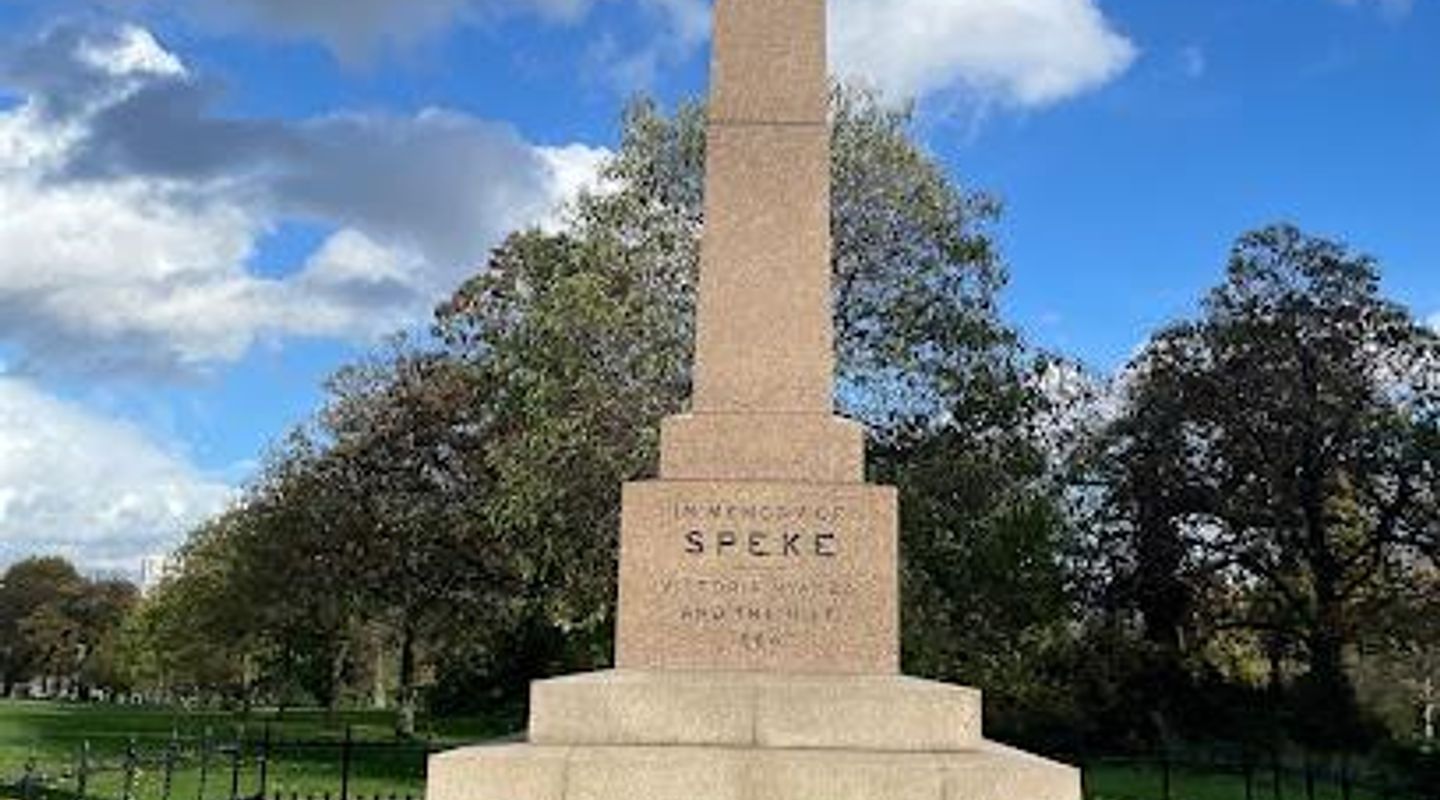
Standing quietly in Kensington Gardens, the Speke Monument is a red granite obelisk honouring Victorian explorer John Hanning Speke, famed for identifying Lake Victoria as the source of the Nile. Erected in 1866, this understated memorial commemorates a pivotal moment in African exploration, set within London’s elegant royal park. Though modest in appearance, it carries the weight of imperial ambition, scientific debate, and a controversial legacy that continues to resonate in the history of exploration.
On-site amenities
 Restrooms
 Drinking water
 Seating areas
 Trash bins
 Information boards
- Address
- London W2 4RU
- Phone
- Website
Getting there
Underground
Bus
Walking
Discover more about Speke Monument
A Quiet Tribute to a Controversial Explorer
In a leafy corner of Kensington Gardens, near the junction of Lancaster Walk and Budges Walk, stands a tall red granite obelisk dedicated to Captain John Hanning Speke. A Victorian-era officer and explorer, Speke is best known for his role in identifying Lake Victoria as the source of the White Nile, one of the great geographical puzzles of the 19th century. The monument, designed by architect Philip Hardwick and constructed from polished Aberdeen granite, was funded by public subscription and sponsored by Sir Roderick Murchison of the Royal Geographical Society. Erected in 1866, two years after Speke’s untimely death, it serves as a formal recognition of his African expeditions and his place in the history of exploration.
The Story Behind the Stone
Speke’s fame rests on his 1858 expedition with Richard Burton into East Africa, during which he became the first European to see Lake Victoria, which he named in honour of Queen Victoria. On a later journey with James Grant, he confirmed the lake’s northern outflow as the Nile’s source, a claim that sparked fierce debate, particularly with Burton, who disputed the finding. The controversy reached its peak just before Speke’s death in 1864, when he was fatally shot by his own gun during a partridge shoot, the day before a scheduled public debate with Burton. Whether the incident was an accident or suicide remains a matter of historical discussion, adding a layer of intrigue to the monument’s solemn presence.
Design and Inscription
The monument itself is a simple, dignified obelisk, typical of Victorian memorial style, with a restrained inscription on its front: “In memory of Speke / Victoria Nyanza and the Nile, 1864.” Notably, the original wording did not explicitly credit Speke as the discoverer of the Nile’s source, reflecting the cautious stance of the time. That omission was later addressed in 1995, when the Friends of Hyde Park and Kensington Gardens installed a ground-level plaque that clearly states his role: John Hanning Speke, explorer who discovered Lake Victoria and identified its northern outlet as the source of the Nile. This addition provides crucial context for modern visitors, turning the monument into a more complete historical marker.
Place in Kensington Gardens
Situated within the tranquil expanse of Kensington Gardens, the Speke Monument shares the landscape with other notable features such as the Albert Memorial, the Italian Gardens, and the Diana Princess of Wales Memorial Playground. Its location, away from the main thoroughfares, gives it a contemplative, almost hidden quality, inviting quiet reflection rather than grand spectacle. The surrounding park setting, with its tree-lined paths and open lawns, contrasts with the monument’s imperial associations, offering a space where history, nature, and memory intersect. For those interested in the history of exploration, empire, and Victorian science, the site is a subtle but meaningful stop in a walk through one of London’s most beautiful royal parks.
Evendo Review Centre
 Google
Guest reviews
Best time to go
Quietest: Jan, Feb & Dec · before 3am
Busy times are Evendo estimates for a typical year, to help you plan. Actual crowds vary with events, school holidays and the weather.
Explore Speke Monument on the map
A handpicked selection of must-see spots near Speke Monument, mapped for you.
Get your free copy of our complete guide to Speke Monument, delivered straight to you.
Everything on this page, from opening hours and how to get there to Eve’s tips and the best time to go, in one PDF you can read offline, print or share.
Already have an account? Sign in
Your Speke Monument guide is ready.
We'll send it to · Not you? Sign out

Getting your guide ready…
We are putting together a fresh copy of the Speke Monument guide. This can take up to a minute.
This can take a few moments. If your browser asks, choose Allow so the download can start. You'll find the guide in your Downloads folder.
Nothing happened? Download it again
Sorry, the guide is taking longer than usual. Please try again in a minute, or get it by email instead.
Unlock the best of Speke Monument
Skip-the-line tickets, guided tours with entry, and walking tours of the area, booked in a few clicks.


Other nearby places you may find interesting
The closest places of the same kind, if this one is not quite what you had in mind.
-

-
-
-
-


Swipe for more places
More to explore near Speke Monument

 Best experiences near Speke Monument
 Best hotels near Speke Monument
 Best landmarks near Speke Monument
 Best attractions near Speke Monument
 Best shops near Speke Monument
 Best restaurants near Speke Monument
 Best bars near Speke Monument
Do you manage this location?
Take control to get all the benefits, like improved information, better appearance, and stronger visibility across AI-powered discovery.
Explore more

Explore more of London
Explore London: A city of iconic landmarks, rich history, vibrant culture, and endless attractions that cater to every taste, making it a must-visit destination.
Explore London
Explore more of United Kingdom
Discover the United Kingdom: A blend of rich history, stunning landscapes, and vibrant cities, offering a unique travel experience for every visitor.
Explore United Kingdom
