
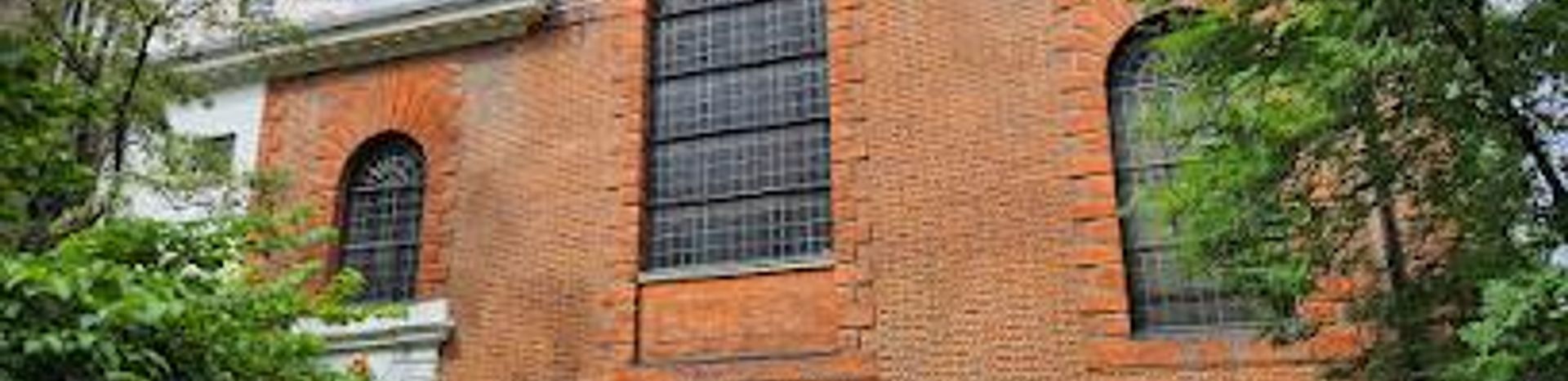
St Anne & St Agnes Church
A resilient masterpiece of Wren's post-Fire architecture, now a vibrant centre for vocal music and community education.
A remarkable Grade I listed Anglican church tucked away on Gresham Street in the City of London, St Anne & St Agnes stands as a testament to resilience and architectural innovation. First documented in 1137, this uniquely double-dedicated church survived the Great Fire of 1666, devastating World War II bombing, and multiple reconstructions. Rebuilt by Sir Christopher Wren in 1680 with its distinctive Greek cross design, the church now serves as the VOCES8 Centre, home to a world-renowned vocal ensemble and educational charity. Its intimate interior, featuring a harmonious square-within-square layout and superb acoustics, offers visitors a serene escape from the bustling City streets.
A brief summary to St Anne & St Agnes Church
- St Anne & St Agnes Church, Gresham St, London, EC2V 7BX, GB
- +442077960149
- Visit website
- Duration: 0.5 to 1.5 hours
- Free
-
 Indoor
- Mobile reception: 5 out of 5
Local tips
- The church is not regularly open to the public; check the VOCES8 Foundation's website for specific opening dates and event schedules before visiting.
- Arrive early to appreciate the church's exceptional acoustics and the harmonious proportions of its Greek cross design in a quiet atmosphere.
- Look closely at the interior fittings—each piece has a story, salvaged from other destroyed City churches after World War II bombing.
- The nearby Roman Wall ruins are visible just outside the church on Noble Street, adding another layer to the site's historical significance.
- Consider attending a VOCES8 performance or educational event to experience the church's renowned acoustics and support its community programmes.

For the on-the-go comforts that matter to you
- Restrooms
- Information Boards
- Seating Areas
Getting There
-
London Underground
From St Paul's Station on the Central Line, exit and follow signs toward Gresham Street. The church is approximately 5–7 minutes' walk northwest from the station. Journey time from central London zones is typically 15–25 minutes depending on your starting point.
-
Bus
Multiple bus routes serve the area around St Paul's Cathedral and the Barbican. Routes 4, 56, 100, and 172 stop near Gresham Street or Noble Street. Journey times vary by route and origin, typically 20–40 minutes from central London. Single fare approximately £1.75 GBP.
-
Walking
The church is accessible on foot from Barbican Station (approximately 8–10 minutes) or Moorgate Station (approximately 10–12 minutes). The route is flat and well-lit, passing through the City's historic streets. Walking from St Paul's Cathedral takes approximately 5–7 minutes.
-
Cycling
The City of London has dedicated cycle routes. Gresham Street is accessible via the Santander Cycles scheme (Barclays Bikes) with docking stations nearby. Journey time from central London is typically 10–15 minutes. Daily pass approximately £2 GBP; longer passes available.
St Anne & St Agnes Church location weather suitability
-
 Any Weather
Discover more about St Anne & St Agnes Church
A Church Born from Survival and Renewal
St Anne & St Agnes occupies one of London's most historically layered sites, with documented references stretching back to 1137, when a church dedicated to St Agnes stood near Aldersgate. The unusual double dedication—unique among City churches—emerged around the 15th century, combining the veneration of St Anne, mother of the Virgin Mary, with St Agnes, one of Christianity's youngest martyrs. This medieval church witnessed the turbulent sweep of London's history: a devastating fire in 1548 that nearly destroyed it entirely, the catastrophic Great Fire of 1666 that consumed most of the City, and the relentless bombing of the Second World War Blitz in December 1940. Yet through each calamity, the church's 14th-century tower and outer shell proved remarkably resilient, surviving where so many other structures crumbled to ash.Wren's Architectural Masterpiece and Dutch Influences
Following the Great Fire, Sir Christopher Wren undertook the church's reconstruction between 1677 and 1681, creating a design of exceptional elegance and innovation. The building employs a Greek cross within a square—a vaulted square nested within an outer square—a formula Wren adapted from the Nieuwe Kerk in Haarlem, Netherlands. This geometric sophistication creates a space of remarkable harmony and visual balance, with four central pillars supporting the composition. The design appears in only two other Wren churches: St Martin Ludgate and St Mary-at-Hill. The small brick structure, topped with a distinctive weather-boarded cupola, represents a departure from Wren's more monumental ecclesiastical works, yet its proportions and spatial clarity demonstrate the architect's mastery of intimate sacred geometry. Some architectural historians suggest Robert Hooke may have contributed to the design, given his documented enthusiasm for Dutch architectural traditions.Treasures Salvaged from Destruction
The church's interior tells a poignant story of preservation and recovery. When the Blitz of 1940 reduced the building to its shell and tower, restorers faced the challenge of recreating a lost interior. Rather than fabricate replacements, they salvaged and relocated significant fittings from other damaged or demolished City churches. The reredos, originally constructed by a local parishioner, features paintings of Moses and Aaron transferred from the demolished St Michael Wood Street. The ornate pulpit, adorned with intriguing cherubs, came from St Augustine on Watling Street. Above the west door stands a striking figure of Father Time, rescued from the destroyed St Mildred Bread Street. The coat of arms of Charles II was relocated from St Mary Whitechapel. This patchwork of rescued elements creates an interior of unexpected richness, where each object carries its own narrative of survival and displacement.Musical Legacy and Community Purpose
From 1966 to 2013, St Anne & St Agnes served the exile Estonian and Latvian Lutheran communities, becoming renowned for its Bach Vespers and developing a strong musical tradition that reflected the church's exceptional acoustics. In 2013, the VOCES8 Foundation, an educational charity centred on the internationally acclaimed vocal ensemble Voces8, took stewardship of the building, transforming it into the VOCES8 Centre. Today, the church serves approximately 2,000 children annually through the Foundation's education programmes, supporting disadvantaged communities both locally and globally. The building's superb acoustic properties—a direct result of Wren's Greek cross design—make it an ideal venue for vocal performance and musical education.Notable Connections and Historical Significance
The church's parish attracted prominent figures throughout its history. The Percys, Earls and later Dukes of Northumberland, were the most influential family in the medieval parish. Among its notable parishioners were the poet John Milton, John Bunyan (author of Pilgrim's Progress), and John Wesley, founder of Methodism, who preached at the church twice in 1738. These associations underscore the church's importance as a spiritual and intellectual centre within the City. The building's designation as Grade I listed in 1950 reflects its architectural and historical significance as a masterwork of post-Fire reconstruction and a survivor of twentieth-century urban devastation.For the vibe & atmosphere seeker
- Tranquil
- Scenic
- Unique
- Cultural Heritage
For the design and aesthetic lover
- Historic
- Minimalist Designs
For the architecture buff
- Historic
- Landmarks
- Art & Design
For the view chaser and sunset hunter
- Iconic Views
For the social media creator & influencer
- Architectural Shots
- Photo Spots
For the eco-conscious traveler
- Protected Area
- Locally Managed
For the kind of experience you’re after
- Cultural Heritage
- Myth & Legends
- Day Trip
For how adventurous you want the journey to be
- Easy Access
Location Audience
- Family Friendly
- Senior Friendly
- Solo Friendly
- Couple Friendly
- Wheelchair Access


