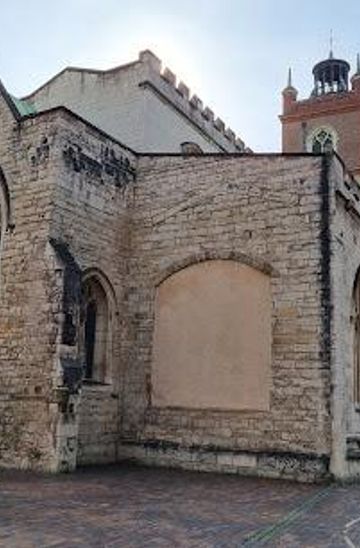
St Giles Cripplegate
Medieval sanctuary where Milton rests and Cromwell wed, surviving 1,000 years of London's turbulent history.
St Giles Cripplegate stands as one of London's few remaining medieval churches, with over 1,000 years of continuous history. Located on Fore Street within the Barbican complex, this Grade I listed building has survived the Great Fire of 1666, devastating fires in 1545 and 1897, and near-total destruction during World War II bombing. Meticulously restored using original 1545 plans, the church retains its 1394 Perpendicular Gothic structure with a distinctive 1682 tower. Inside, visitors encounter monuments to literary giants including John Milton, John Foxe, and connections to William Shakespeare, alongside treasures spanning centuries.
A brief summary to St Giles Cripplegate
- Fore St, London, Barbican, EC2Y 8DA, GB
- Click to display
- Click to display
- Duration: 0.75 to 2 hours
- Free
-
 Indoor
- Mobile reception: 4 out of 5
- Monday 8 am-6 pm
- Tuesday 8 am-6 pm
- Wednesday 8 am-6 pm
- Thursday 11 am-4 pm
- Friday 8 am-6 pm
- Sunday 8 am-4:30 pm
Local tips
- Visit on weekdays to avoid weekend crowds and enjoy quieter contemplation of the medieval interior and literary monuments.
- Look closely at the base of the 1682 tower to see original stones from the 1090 Norman church—a tangible connection across nearly 600 years.
- Request access to the parish registers to trace family history back 400 years through baptism, marriage, and burial records.
- Examine the sword rest displaying coats-of-arms of five Aldermen who became Lord Mayors, and the 17th-century wine cups and George IV pepper pot.
- Allow time to locate burial sites and memorials of John Milton, John Foxe, and other notable historical figures within the church.


Getting There
-
London Underground
Take the Circle, Hammersmith & City, or Metropolitan Line to Barbican Station. Exit and follow signs to Fore Street; the church is approximately 5 minutes' walk from the station. Service runs frequently throughout the day, with typical journey times from central London of 10–15 minutes depending on origin.
-
Bus
Multiple bus routes serve the Barbican area, including routes 4, 56, 153, and 205. Alight at Barbican or nearby stops and walk to Fore Street. Journey times vary by starting point but typically range from 15–30 minutes across London. Buses run regularly throughout the day and evening.
-
Walking from City Centre
From St Paul's Cathedral, walk north along Cheapside for approximately 10 minutes, then continue northeast toward the Barbican complex. The church sits on Fore Street within the residential estates. The walk is straightforward on level terrain through the historic City of London.
-
Cycling
London's Santander Cycles scheme provides bike rental from numerous docking stations throughout central London. Cycle to the Barbican area and use the designated cycle parking near the church. Journey times from central locations typically range from 10–20 minutes depending on route.
For the on-the-go comforts that matter to you
-
 Restrooms
-
 Seating Areas
-
 Information Boards
St Giles Cripplegate location weather suitability
-
 Any Weather
Discover more about St Giles Cripplegate
A Thousand Years of Sacred Ground
St Giles Cripplegate occupies a site of extraordinary longevity in the heart of London. A church has stood here for over 1,000 years, beginning with a Saxon structure in the 11th century. By 1090, a Norman church replaced the earlier building, constructed by Alfune, Bishop of London, who later assisted Rahere in founding the nearby St Bartholomew's priory. The church's name derives from its original position outside the Roman city wall near Cripplegate, one of the six original Roman gates. The name Cripplegate itself likely stems from the Anglo-Saxon word 'crepel,' meaning a covered way or underground passage that led from the gate to the Barbican fortification.Medieval Reconstruction and Architectural Evolution
The church underwent significant transformation in 1394 during the reign of Richard II, when it was rebuilt in the Perpendicular Gothic style to accommodate a growing parish population. This reconstruction established the architectural character visible today. The distinctive stone tower, however, dates from 1682, when extensive alterations were undertaken. At the tower's base, original stones from the 1090 Norman church remain visible—a tangible connection spanning nearly 600 years of continuous building. The 1682 modifications added fifteen feet of red brickwork and an ornamental cupola with smaller cupolas at the angles, crowned by a raised circular arcade of wood with a pyramidical roof forming an open turret. This layered construction history makes St Giles a living chronicle of London's architectural development.Trials by Fire and Restoration
The church has endured three major fire disasters. In 1545, a devastating fire destroyed the entire interior, leaving only the walls, steeple, and bells standing. The building was painstakingly reconstructed, and in 1682 the tower received its distinctive upper portions. In 1897, a fire originating in an ostrich feather warehouse destroyed 56 surrounding buildings but the church survived. The most catastrophic damage occurred during the Blitz in World War II. German bombs delivered a direct hit in summer 1940, followed by incendiary bombing at year's end that completely gutted the interior, leaving only the outer walls, tower, and structural supports. The restoration undertaken in the 1950s followed the architectural plans from the 1545 reconstruction, allowing the church to rise again with historical authenticity. A new ring of twelve bells was cast by Mears and Stainbank in 1954, augmented with a sharp second bell from the Whitechapel Bell Foundry in 2006.Literary and Historical Luminaries
St Giles Cripplegate's congregation and burial records read like a roster of English cultural achievement. John Milton, author of Paradise Lost, was buried here in 1674 and worshipped as a parishioner. John Foxe, author of the Book of Martyrs, preached lengthy sermons—often two to three hours long—and was buried against the chancel arch in 1587. Oliver Cromwell married Elizabeth Bourchier in the church in 1620. Daniel Defoe, author of Robinson Crusoe, was baptized here. John Bunyan, the Puritan preacher, worshipped here frequently during his London visits. William Shakespeare's brother was a church member, and Shakespeare himself attended services when his two nephews were baptized. Ben Jonson, the poet and playwright, attended St Giles. Lancelot Andrewes, one of the King James Version translators, served as minister. Jeremiah Burroughs, a Puritan minister from 1640 to 1646, preached the opening sermon of the Long Parliament and remarkably pastored two congregations simultaneously, riding on horseback between St Giles and his church in Stepney to deliver afternoon and morning sermons respectively.Medieval Treasures and Sacred Objects
The church houses remarkable historical artifacts spanning centuries. A sword rest attached to a pillar displays the coats-of-arms of five Aldermen of Cripplegate who became Lord Mayors of London, including Sir John Baddeley, Sir Peter Studd, and Sir Allan Davis. The historic pews, altar, and font were transferred from the nearby St Luke Old Street when that church closed and the parishes amalgamated in 1959. The east window, designed by Nicholson Studios, follows the pattern of the original medieval window. Medieval sedilia and a piscina remain in place. The church possesses 17th-century wine cups and a pepper pot from the reign of George IV. These objects collectively represent the material culture of London across four centuries, accessible to visitors through the church's registers and displays.Contemporary Setting and Preservation
Today, St Giles Cripplegate stands as a remarkable survivor within the Barbican complex, its medieval stone and brick architecture creating a striking contrast against the surrounding brutalist residential estates. Designated a Grade I listed building on 4 January 1950, the church underwent extensive restoration in 1966. The building remains an active Anglican parish church and a significant tourist attraction, drawing visitors interested in London's ecclesiastical heritage, literary history, and architectural continuity. Its survival through plague, fire, war, and urban transformation makes it one of the most historically significant churches in the City of London.Explore the best of what St Giles Cripplegate has to offer















More about London
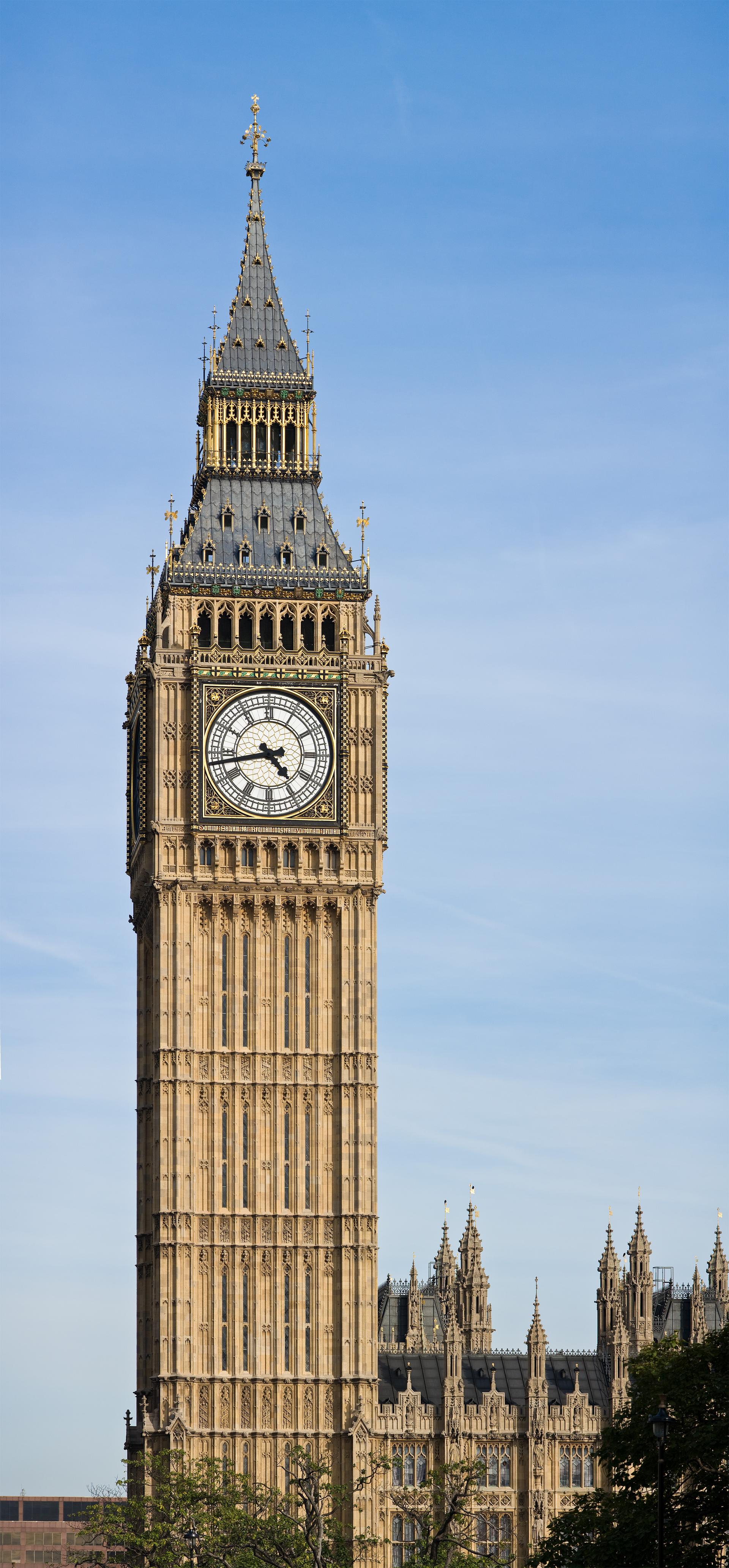
Explore London: A city of iconic landmarks, rich history, vibrant culture, and endless attractions that cater to every taste, making it a must-visit destination.
Tell me more about London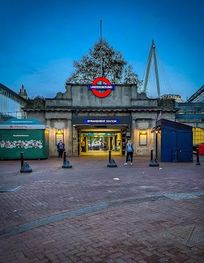
Discover the charm of Embankment Station, a historic gateway to London's iconic landmarks along the River Thames, blending Victorian elegance with modern transport.
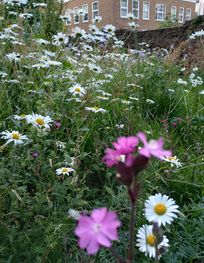
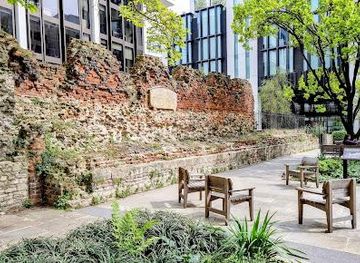
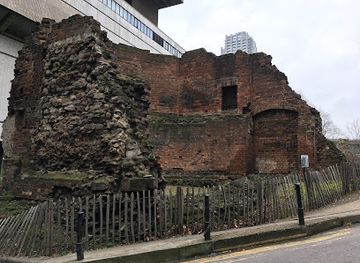
Explore the ancient Roman and medieval London City Wall, a monumental symbol of the city’s enduring history and resilience.
Want to improve this location?
Activate this location now and let Evendo enhance its appearance, information, and visibility for millions of travellers.