
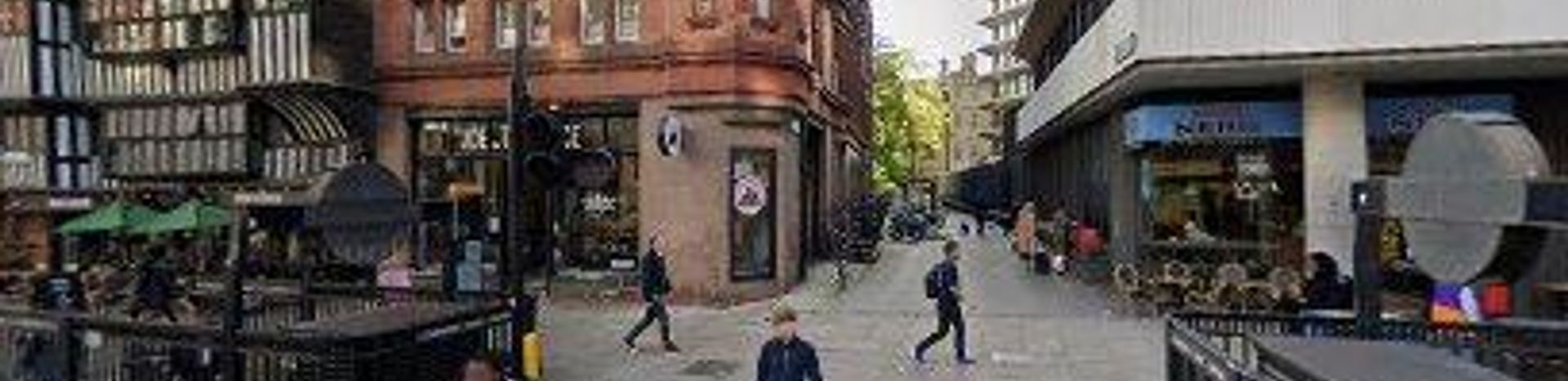
Staple Inn
London's most impressive surviving Tudor timber building, miraculously preserved through fire, plague, and wartime bombing.
Staple Inn is one of London's most remarkable surviving Tudor buildings, a Grade I listed structure on High Holborn that has endured plague, fire, and wartime bombing. Originally a wool trading centre in 1585, it later became an Inn of Chancery—a legal training institution—and now serves as the headquarters of the Institute and Faculty of Actuaries. Its distinctive black-and-white timber-framed façade, described by architect Nikolaus Pevsner as 'the most impressive surviving example of timber building in London,' conceals a hidden courtyard sanctuary that Charles Dickens praised as an escape from the city's chaos.
A brief summary to Staple Inn
- London, GB
- Duration: 0.5 to 2 hours
- Free
-
 Mixed
Mixed
- Mobile reception: 5 out of 5
Local tips
- Enter through the side gate to discover the hidden courtyard—a peaceful sanctuary that inspired Charles Dickens. The tranquil space with benches and trees offers a remarkable escape from the busy High Holborn street.
- Examine the distinctive black-and-white timber-framed façade closely; it comprises two separate buildings with different construction dates, revealing layers of London's architectural history.
- Look for the 1937 replacement pump in the courtyard, which marks the site of much older pumps dating to the original building—a subtle reminder of centuries of continuous occupation.
- Visit during quieter morning hours to fully appreciate the courtyard's tranquility and photograph the façade without crowds, as this is one of London's most popular and heavily photographed buildings.
- Note the ground-floor shops and café; the building has maintained commercial activity on its street level for centuries, just as it did during medieval times.

Getting There
-
London Underground
Chancery Lane station on the Central Line is the closest tube station, located approximately 100 metres south of Staple Inn. Journey time from central London varies by starting point; from King's Cross St Pancras allow 5–8 minutes, from Oxford Circus allow 8–12 minutes. The station has step-free access to platforms. Service runs every 2–4 minutes during peak hours, every 5–10 minutes off-peak.
-
Bus
Multiple bus routes serve High Holborn directly outside Staple Inn, including routes 8, 25, 242, and 243. These buses connect to major transport hubs across London. Journey times vary by origin; from King's Cross allow 10–15 minutes, from Piccadilly Circus allow 12–18 minutes. Buses run every 5–15 minutes depending on route and time of day. No fare required with Contactless or Oyster card.
-
Walking
Staple Inn is accessible on foot from several nearby landmarks. From the British Museum (approximately 800 metres north-west), allow 10–12 minutes via Great Russell Street and Museum Street. From St Paul's Cathedral (approximately 600 metres south-east), allow 8–10 minutes via Ludgate Hill and Fleet Street. The route is entirely on paved streets with good accessibility; no steep hills or difficult terrain.
-
Taxi or Ride-Share
Taxis and ride-share services (Uber, Bolt) can drop passengers directly on High Holborn outside Staple Inn. Journey times from major London locations: from King's Cross 8–15 minutes depending on traffic, from Paddington 15–25 minutes, from Victoria 20–30 minutes. Typical fares range from £8–20 depending on origin. High Holborn has limited taxi rank space; ride-share pickups occur on the street.
For the on-the-go comforts that matter to you
-
 Restrooms
-
 Drink Options
-
 Food Options
-
 Seating Areas
-
 Information Boards
Staple Inn location weather suitability
-
 Any Weather
Discover more about Staple Inn
A Merchant's Hall Becomes a Legal Institution
Staple Inn's origins trace back to 1292, when a structure called 'le Stapled Halle' occupied this site on what was then Houlburne Street. The name 'Staple' derives from a duty on wool introduced in 1275, and the building functioned as a covered market where wool merchants gathered to have their goods weighed and taxed. By the early 15th century, as the surrounding area became increasingly associated with law and legal practice, the building's purpose shifted. In 1415, it evolved into the home of the Society of Staple Inn, an association of lawyers and legal students. By 1586, its transformation was complete: Staple Inn became formally established as an Inn of Chancery, one of nine or ten such institutions that served as training grounds and offices for younger members of the legal profession, attached to the more senior Inns of Court like Gray's Inn across the street.The Iconic Timber-Framed Façade
The distinctive black-and-white frontage visible today actually comprises two separate buildings. The five gables on the left were constructed between 1545 and 1589, while the two right-hand gables belong to a separate structure. The current façade dates primarily from 1585, though what visitors see is far more complex than it appears. Following the Great Fire of London in 1666, which miraculously stopped just before reaching Staple Inn, authorities applied extensive plaster to the timber frame as a 'fireproof' measure. This plaster remained for nearly two centuries until architect Alfred Waterhouse removed it during his 1886 restoration, revealing the semi-preserved original façade beneath. Waterhouse's sympathetic approach reinstated original Tudor bow-windows discovered in the cellars and restored much of the building's authentic character. However, the 1937 restoration on the eve of World War II proved far less sympathetic, extensively rebuilding portions of the structure. The visible woodwork today largely dates from this period, though some genuine Tudor elements survive. In 1938, the façade—by then merely a wafer-thin shell—was reinforced with 20th-century steel to ensure its preservation.Survival Against Extraordinary Odds
Staple Inn's survival stands as one of London's most improbable achievements. It escaped the Great Fire of London in 1666, when 13,200 houses, 87 parish churches, and major landmarks including St. Paul's Cathedral were destroyed. The building endured the Great Plague, multiple fires, and centuries of reconstruction. The most catastrophic blow came on 10 May 1944, when a German Luftwaffe bomb struck the courtyard and rear gardens, completely destroying the Great Hall and causing severe damage throughout. The stained glass windows, fortunately, had been removed and stored in the cellars during the Second World War, preserving these irreplaceable treasures. Reconstruction began in 1954 under architect Sir Edward Maufe and builders Sir Robert McAlpine, who painstakingly recreated the Hall as closely as possible to its original design. The rebuilt hammerbeam roof, incorporating one original roof truss from the first oak and mostly original carved pendants and features, represents what historians describe as 'unrivalled antique faking'—a reconstruction so faithful that it remains an object of wonder and scholarly debate.The Hidden Courtyard Sanctuary
Behind the famous façade lies a tranquil courtyard that has captivated visitors for centuries. Charles Dickens, writing in *The Mystery of Edwin Drood*, described this space as an escape from the 'clashing streets' of London, noting how it imparts 'to the relieved pedestrian the sensation of having put cotton in his ears and velvet soles on his boots.' The courtyard features a small garden, benches beneath trees, and an unusual pump installed in 1937 to replace earlier pumps dating to the original building. This peaceful oasis, surrounded by historic brick and timber, provides a remarkable contrast to the bustling High Holborn just beyond the Tudor arch. The Great Hall, rebuilt after wartime destruction, dominates the courtyard's eastern side and continues to serve as a gathering space much as it did in medieval times.Legal Training and Notable Residents
During its centuries as an Inn of Chancery, Staple Inn trained generations of lawyers and legal clerks. The building's Great Hall, originally constructed around 1581, hosted legal proceedings, formal dinners, and scholarly gatherings. Samuel Johnson, the celebrated lexicographer, briefly lodged at Number Three in 1759 while writing *Rasselas*, though he reportedly found the constant renovation work unbearable and departed after only a few months. The building also housed regular residents alongside its legal functions, with modifications like lead water pumps reflecting its domestic use. Between 1729 and 1780, Staple Inn underwent gradual renovation, with each dwelling systematically restored. A fire in 1756 necessitated rebuilding the hall, and a massive clock with two faces was added to the minstrel's gallery in 1757 as part of the upgrades, its weights running through special channels in the wall.Modern Purpose and Architectural Legacy
Since 1887, Staple Inn has served as the London headquarters of the Institute and Faculty of Actuaries, providing office and meeting space for this professional body. The ground-floor street frontage accommodates shops and restaurants, required by heritage regulations to use plainer signage than permitted on less sensitive buildings. The building briefly appeared on Old Holborn tobacco packaging, a nod to Richard Lloyd's tobacco business established on this street in 1785. Today, Staple Inn remains the sole surviving Inn of Chancery—all other Inns of Chancery having been dissolved and demolished during the 19th century. Architect Nikolaus Pevsner's assessment of it as 'no doubt the most impressive surviving example of timber building in London' endures as the definitive architectural judgment. Its Grade I listing status, granted in 1974, ensures that any alterations require special permission from local authorities, protecting this extraordinary survivor for future generations.Explore the best of what Staple Inn has to offer















More about London
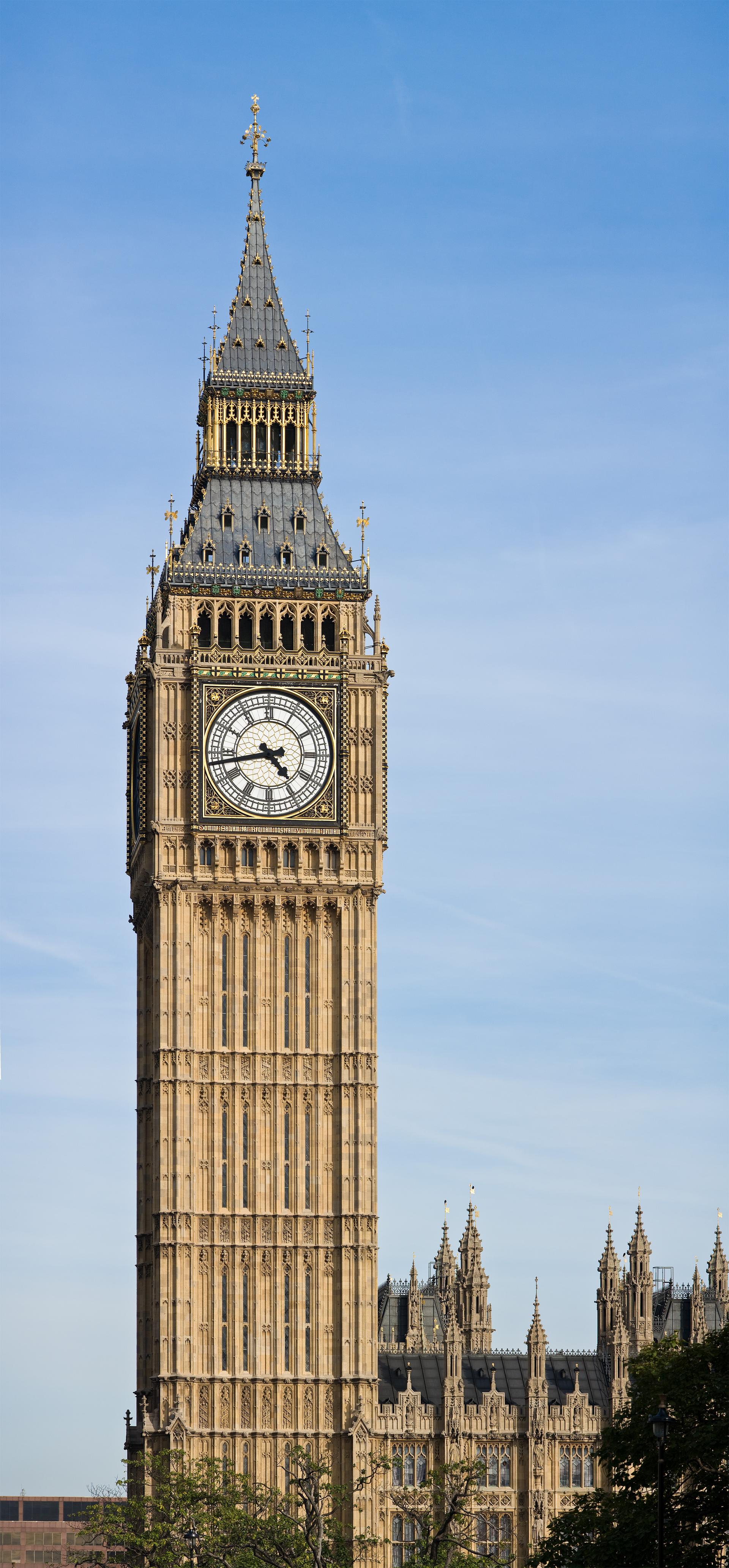
Explore London: A city of iconic landmarks, rich history, vibrant culture, and endless attractions that cater to every taste, making it a must-visit destination.
Tell me more about LondonWant to improve this location?
Activate this location now and let Evendo enhance its appearance, information, and visibility for millions of travellers.
