
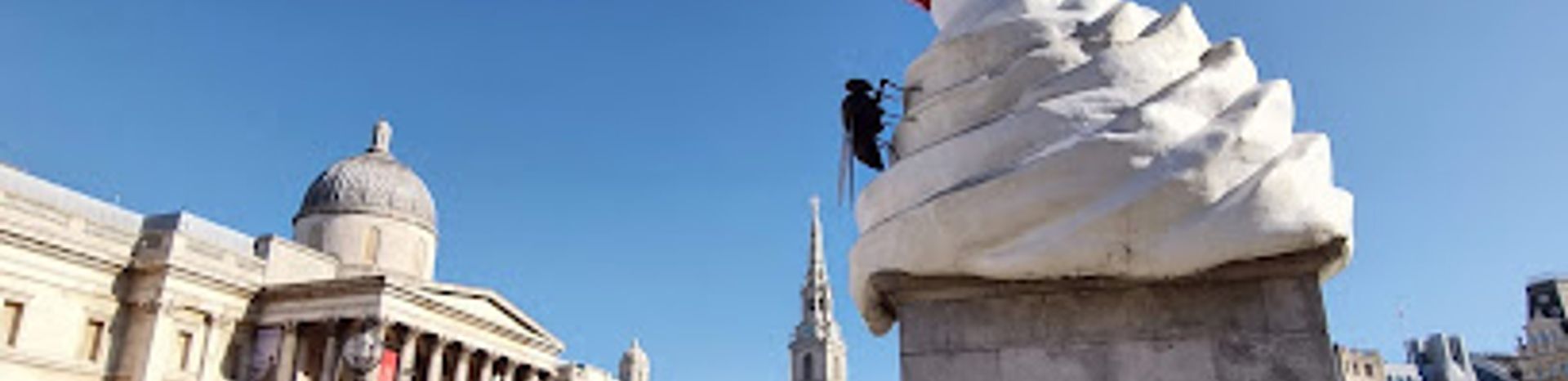
The Fourth Plinth: London's Dynamic Contemporary Art Stage in Trafalgar Square
A historic plinth turned world-renowned stage for bold contemporary art in the heart of London’s Trafalgar Square.
The Fourth Plinth in Trafalgar Square, London, is a unique and evolving public art platform. Originally intended for a statue of King William IV but left empty for over 150 years, it now hosts a rotating series of contemporary artworks that provoke thought and engage millions. This plinth transforms a historic square into a lively space where art, history, and public debate intersect.
A brief summary to The Fourth Plinth
- Trafalgar Sq, London, WC2N 5NJ, GB
- Visit website
- Duration: 0.5 to 1.5 hours
- Free
-
 Outdoor
- Mobile reception: 5 out of 5
Local tips
- Check the current artwork on the Fourth Plinth before visiting, as the installations rotate every few years.
- Visit Trafalgar Square at different times of day to see the plinth and surrounding fountains illuminated at night.
- Combine your visit with nearby attractions like the National Gallery and Nelson’s Column for a full cultural experience.
- Attend public talks or events related to the Fourth Plinth commissions when available to deepen your understanding of the artworks.

For the on-the-go comforts that matter to you
- Restrooms
- Drink Options
- Food Options
- Seating Areas
- Information Boards
Getting There
-
Public Transport
Take the London Underground to Charing Cross station, served by the Bakerloo and Northern lines. From there, it is a 5-10 minute walk to Trafalgar Square. Tickets cost between £2.50 and £6 depending on the time and ticket type.
-
Bus
Several London bus routes stop near Trafalgar Square, including routes 3, 6, 9, 11, and 15. Buses run frequently throughout the day, and a single fare costs £1.75 with an Oyster or contactless card.
-
Walking
If staying nearby in central London, walking to Trafalgar Square is pleasant and accessible, with flat terrain and pedestrian-friendly streets. Walking times vary but typically range from 10 to 30 minutes from nearby landmarks.
The Fourth Plinth location weather suitability
-
 Any Weather
-
 Rain / Wet Weather
-
 Clear Skies
-
 Mild Temperatures
Discover more about The Fourth Plinth
Origins and Historical Context of the Fourth Plinth
The Fourth Plinth is situated in the northwest corner of Trafalgar Square, a central London landmark named after the 1805 British naval victory at the Battle of Trafalgar. Designed by Sir Charles Barry and completed in 1841, the plinth was originally intended to hold an equestrian statue of King William IV. However, due to insufficient funds, the statue was never installed, leaving the plinth empty for over 150 years. This absence turned the plinth into an iconic 'empty throne' within a square surrounded by statues commemorating historic figures such as King George IV, Henry Havelock, and Charles James Napier.The Transformation into a Contemporary Art Platform
In 1998, the Fourth Plinth began its new life as a stage for contemporary public art. This initiative was sparked by a letter from Prue Leith, then chair of the Royal Society of Arts, calling attention to the empty plinth. Following public debate and consultation, the plinth was designated for a rolling programme of temporary artworks by leading national and international artists. The artworks are selected by an independent panel and approved by the Mayor of London, ensuring a dynamic and diverse range of sculptures that often engage with social, political, and cultural themes.Notable Artworks and Cultural Impact
The Fourth Plinth has showcased a wide variety of striking and thought-provoking pieces. Early commissions included Mark Wallinger’s 'Ecce Homo' and Thomas Schütte’s colorful 'Model for a Hotel.' More recent works include Elmgreen & Dragset’s 'Powerless Structures, Fig 101,' a poignant take on traditional equestrian statues, and Yinka Shonibare’s 'Nelson’s Ship in a Bottle,' which cleverly references Trafalgar Square’s naval heritage. The plinth has become a symbol of contemporary artistic expression in a historic setting, attracting global attention and fostering public engagement with art.Setting Within Trafalgar Square’s Historic and Cultural Landscape
Trafalgar Square itself is a vibrant public space surrounded by significant landmarks such as the National Gallery, St Martin-in-the-Fields church, and Nelson’s Column, which honors Admiral Horatio Nelson. The square has a rich history as a site for public gatherings, protests, and celebrations. The Fourth Plinth adds a contemporary layer to this heritage, bridging past and present through art. Its location offers visitors panoramic views of the square’s fountains, bronze lions, and historic statues, making it a focal point for both tourists and locals.Engagement and Educational Initiatives
Beyond displaying art, the Fourth Plinth programme includes educational projects like the Fourth Plinth Schools Awards, encouraging young Londoners to create artworks inspired by the plinth’s commissions. This engagement fosters creativity and awareness of public art’s role in society. The plinth’s rotating exhibitions ensure that visitors experience a fresh perspective with each visit, making it a continually relevant and exciting destination.The Fourth Plinth’s Role in London’s Cultural Identity
The Fourth Plinth exemplifies London’s commitment to blending historical reverence with contemporary innovation. It transforms a once-empty monument into a lively forum for artistic dialogue, reflecting the city’s diversity and dynamism. As a free and accessible public art space, it invites reflection on current issues while celebrating London’s rich cultural tapestry, making it a must-see landmark for visitors seeking both history and modern creativity.For the vibe & atmosphere seeker
- Unique
- Lively
- Scenic
- Entertaining
For the design and aesthetic lover
- Colorful Aesthetics
- Modern Designs
For the architecture buff
- Historic
- Landmarks
- Art & Design
For the view chaser and sunset hunter
- Iconic Views
- Panoramas
For the social media creator & influencer
- Instagrammable
- Photo Spots
- Selfie Spots
For the eco-conscious traveler
- Public-Transport Accessible
- Locally Managed
For the kind of experience you’re after
- Cultural Heritage
- Photowalk
- Day Trip
- Festival / Event Nearby
For how adventurous you want the journey to be
- Easy Access
Location Audience
- Family Friendly
- LGBT Friendly
- Senior Friendly
- Child Friendly
- Teen Friendly
- Wheelchair Access
- Pet Friendly
- Solo Friendly
- Couple Friendly
- Solo Female Friendly
- Vegetarian Friendly
- Vegan Friendly


