
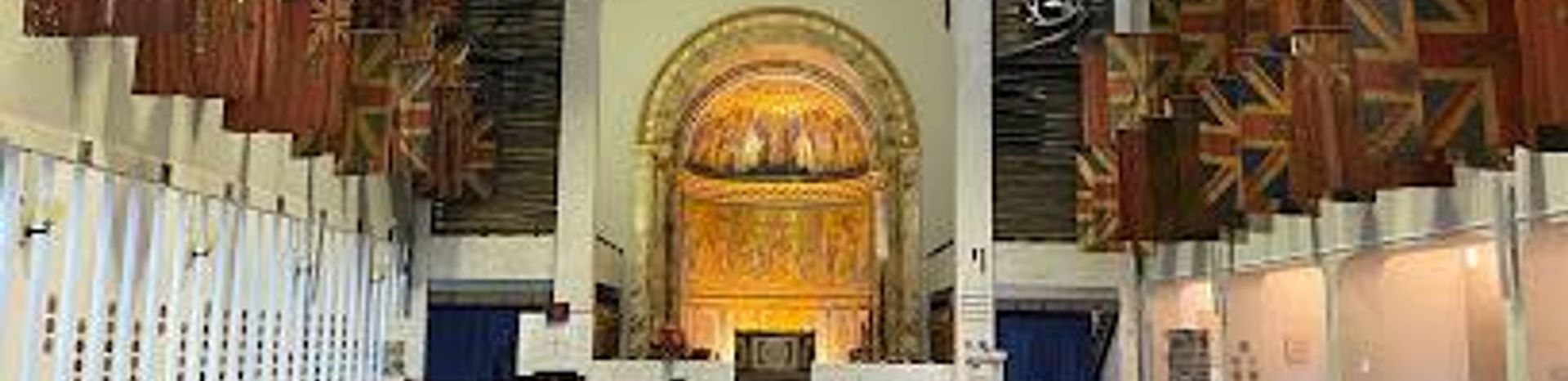
The Royal Military Chapel (The Guards’ Chapel), Wellington Barracks
A solemn blend of modernist architecture and historic memorials, The Guards’ Chapel honors the Household Division’s sacrifice in London’s ceremonial heart.
The Royal Military Chapel, known as The Guards’ Chapel, is the spiritual home of the Household Division of the British Army, located at Wellington Barracks, London. Originally built in 1838, it was extensively redesigned in the 1870s and rebuilt in a modernist style in the 1960s after severe damage from WWII bombings. The chapel is a poignant memorial site, incorporating historic mosaics and stained glass, and honors the sacrifice of soldiers and civilians lost in wartime attacks.
A brief summary to The Royal Military Chapel (The Guards’ Chapel)
- Wellington Barracks, Birdcage Walk, London, SW1E 6HQ, GB
- +442074143228
- Visit website
- Duration: 0.5 to 1.5 hours
- Free
-
 Indoor
- Mobile reception: 5 out of 5
Local tips
- Check service times before visiting, as the chapel holds regular military and ceremonial services.
- Take time to explore the War Memorial Cloister and the Rolls of Honour for a deeper understanding of the chapel’s commemorative role.
- Notice the surviving apse with its golden mosaic and the six silver candlesticks that remarkably endured the 1944 bombing.
- Combine your visit with nearby landmarks such as St James’s Park and Buckingham Palace for a full ceremonial London experience.

For the on-the-go comforts that matter to you
- Restrooms
- Seating Areas
- Information Boards
Getting There
-
London Underground
Take the District or Circle Line to St James's Park station, approximately a 10-15 minute walk to Wellington Barracks. Services run frequently with fares starting around £2.50 with an Oyster card. The walk involves some pavement and is suitable for most visitors.
-
Bus
Bus routes 11, 24, and 148 stop near Birdcage Walk, close to Wellington Barracks. The bus ride from central London takes 15-25 minutes depending on traffic. Contactless payment or Oyster cards are accepted, with fares around £1.75.
-
Taxi or Rideshare
A taxi or rideshare from central London will take approximately 10-20 minutes depending on traffic. Expect fares from £8 to £15. Wellington Barracks has limited parking, so drop-off is recommended.
-
Walking
If staying nearby, walking from Buckingham Palace or St James’s Park takes about 10-15 minutes on mostly flat, paved routes accessible to wheelchair users.
The Royal Military Chapel (The Guards’ Chapel) location weather suitability
-
 Any Weather
-
 Rain / Wet Weather
-
 Clear Skies
-
 Mild Temperatures
Discover more about The Royal Military Chapel (The Guards’ Chapel)
Origins and Early History of the Guards’ Chapel
The Royal Military Chapel was established alongside the construction of Wellington Barracks in 1834, with the first service held on 6 May 1838. Initially, the chapel’s interior was plain and unadorned, reflecting a modest military place of worship. Over time, efforts to beautify the chapel began, notably in the 1870s when architect George Edmund Street transformed it with a Lombardo Byzantine style, adding an apse, marble mosaics, alabaster, and stained glass. These embellishments created a richly decorated memorial space dedicated to members of the Brigade of Guards.Devastation During the Second World War
The chapel suffered damage during the Blitz, including incendiary bomb fires in 1940 that destroyed the roof and stained glass windows. The most catastrophic event occurred on 18 June 1944, when a German V1 flying bomb struck the chapel during a Sunday service. The concrete roof collapsed onto the congregation, killing 121 people and injuring many others, marking the deadliest single V1 attack in Britain during the war. Remarkably, the apse survived intact, along with six silver candlesticks and the altar cross, which remained upright with candles still burning amid the ruins.Post-war Rebuilding and Architectural Renewal
Reconstruction began in 1962, led by architect Bruce George, who designed a modernist chapel that incorporated the surviving apse and reused the recovered stained glass. The new building was completed and rededicated in 1963, blending contemporary design with historic elements. The chapel features white marble, Portland stone pillars, and natural light that highlights the regimental colours displayed on its walls. This design has been praised for harmonizing avant-garde architecture with the traditional spirit of the Household Division.Memorial Significance and Artistic Features
The chapel serves as a memorial to those who died in the 1944 bombing and other conflicts. The War Memorial Cloister at the entrance, opened by Queen Elizabeth II in 1956, contains the regimental Rolls of Honour listing Household Brigade casualties from WWII. The chapel’s interior mosaics, marble work, and stained glass continue to honor the sacrifice of the Guards regiments, some of which date back to historic battles such as Yorktown and Waterloo.Living Tradition and Military Worship
Today, The Guards’ Chapel remains an active place of worship and ceremony for the Household Division, including the Grenadier Guards, Coldstream Guards, Scots Guards, Irish Guards, and Welsh Guards. It is closely linked with ceremonial events like Trooping the Colour, symbolizing regimental pride and continuity. The chapel also holds historical significance for the British royal family, who have attended services here over the decades.Visiting Experience and Atmosphere
Visitors to the chapel encounter a serene and solemn space combining modernist architecture with poignant memorial art. The contrast between the historic Byzantine apse and the bright, modern interior creates a reflective atmosphere. The chapel’s location opposite St James’s Park and near Buckingham Palace situates it within London’s ceremonial heart, making it a meaningful destination for those interested in military history, remembrance, and architectural heritage.For the vibe & atmosphere seeker
- Tranquil
- Scenic
- Unique
- Casual
For the design and aesthetic lover
- Modern Designs
- Vintage Styles
For the architecture buff
- Historic
- Landmarks
- Sacred Sites
For the view chaser and sunset hunter
- Iconic Views
For the social media creator & influencer
- Instagrammable
- Photo Spots
- Architectural Shots
For the eco-conscious traveler
- Public-Transport Accessible
- Locally Managed
For the kind of experience you’re after
- Cultural Heritage
- Myth & Legends
- Spiritual / Energy Spot
- Day Trip
- Weekend Getaway
For how adventurous you want the journey to be
- Easy Access
Location Audience
- Family Friendly
- Senior Friendly
- Child Friendly
- Teen Friendly
- Wheelchair Access
- Solo Friendly
- Couple Friendly
- Solo Female Friendly


