
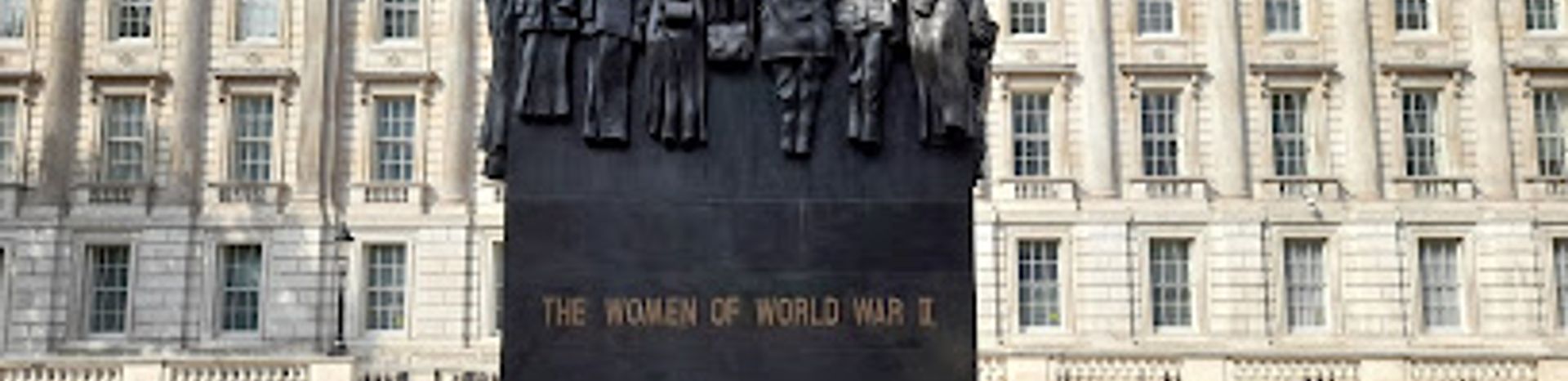
The Women of World War II Monument, Whitehall, London
A powerful bronze tribute in Whitehall honoring the seven million British women who served and supported the WWII effort in countless vital roles.
The Women of World War II Monument in Whitehall, London, is a striking bronze memorial honoring the vital contributions of over seven million British women during the Second World War. Unveiled by Queen Elizabeth II in 2005 on the 60th anniversary of VE Day, the monument features sculpted uniforms and helmets hanging as if on pegs, symbolizing the many roles women played both in military and civilian capacities. It stands prominently near the Cenotaph, reflecting a powerful tribute to women’s wartime service and sacrifice.
A brief summary to The Women of World War II
- Whitehall, London, SW1A, GB
- Visit website
- Duration: 0.25 to 1 hours
- Free
-
 Outdoor
- Mobile reception: 5 out of 5
Local tips
- Take time to closely observe the sculpted uniforms and helmets representing diverse wartime roles women undertook.
- Visit during quieter times early morning or late afternoon to appreciate the monument without heavy crowds.
- Combine your visit with nearby Whitehall memorials such as the Cenotaph for a fuller understanding of Britain’s wartime history.
- Reflect on the inscription style mimicking wartime ration books as a link to everyday life during WWII.

For the on-the-go comforts that matter to you
- Information Boards
- Seating Areas
- Trash Bins
Getting There
-
London Underground
Take the London Underground to Westminster Station, served by the Jubilee, District, and Circle lines. From there, it is a 10-15 minute walk along Whitehall to the monument. The station is well connected and accessible, with step-free access available. Typical travel times from central London stations range from 10 to 25 minutes. No additional fare beyond standard zone 1 pricing applies.
-
Bus
Multiple London bus routes stop near Whitehall, including routes 11, 24, 148, and 211. Bus stops are located within a short walking distance of the monument. Journey times vary depending on traffic but typically range from 15 to 30 minutes from central London locations. Oyster cards and contactless payments are accepted, with fares around £1.75 per journey.
-
Walking
If staying nearby in central London, walking to the monument is a pleasant option, taking about 10-20 minutes from Trafalgar Square or the Houses of Parliament. The route is flat and paved, suitable for wheelchairs and strollers, with plenty of pedestrian crossings and nearby amenities.
The Women of World War II location weather suitability
-
 Any Weather
-
 Rain / Wet Weather
-
 Clear Skies
-
 Mild Temperatures
Discover more about The Women of World War II
A Bold Tribute to Women’s Wartime Service
The Women of World War II Monument stands on Whitehall in central London, near the Cenotaph and Downing Street, as a national memorial dedicated to the millions of British women who contributed to the war effort during World War II. This imposing bronze sculpture, measuring approximately 6.7 metres tall, 4.9 metres long, and 1.8 metres wide, was unveiled in July 2005 by Queen Elizabeth II to mark the 60th anniversary of Victory in Europe Day. The monument commemorates over seven million women who took on a vast array of roles, including 650,000 who served in the armed forces, such as the Women’s Royal Naval Service (WRNS), Women’s Auxiliary Air Force (WAAF), and Auxiliary Territorial Service (ATS).Design and Symbolism of the Monument
Designed by sculptor John W. Mills, the monument’s form resembles a large coat rack, with 17 sculpted uniforms and helmets hanging as if on pegs around its sides. These uniforms represent the diverse jobs women undertook during the war, from munitions factory workers and air raid wardens to nurses, land girls, and military personnel. The lettering on the monument’s sides mimics the typeface used on wartime ration books, linking the memorial visually to the everyday experiences of wartime Britain. The stark black bronze contrasts with the nearby Cenotaph, creating a deliberate dialogue between the memorials and highlighting the often overlooked contributions of women in wartime.Historical Context and Legacy
The monument’s creation was championed by Baroness Boothroyd, former Speaker of the House of Commons, who helped raise funds including through a celebrity appearance on "Who Wants to Be a Millionaire?" The memorial replaced a statue of Sir Walter Raleigh, symbolizing a shift in public commemoration towards recognizing women’s roles in history. The unveiling ceremony included a flypast of military helicopters flown by all-female crews, underscoring the significance of women’s military service. Despite the vital roles women played, many were expected to return to domestic life after the war, a reality the monument quietly acknowledges by depicting the uniforms hung up as if retired.Location and Visitor Experience
Situated in the centre of Whitehall’s roadway, the monument is highly visible and accessible for viewing from the pavement without needing to cross the street. Its proximity to other key national memorials and government buildings places it within a historic and ceremonial heart of London. Visitors can closely examine the detailed sculpted uniforms, prompting reflection on the varied and essential contributions women made during the war years. The monument’s presence in this prominent location serves as a powerful reminder of women’s courage, resilience, and indispensable service.Commemorative Importance and Cultural Impact
As the first national memorial in the UK dedicated solely to women’s wartime contributions, this monument holds significant cultural importance. It acknowledges the sacrifices and achievements of women who often remained in the shadows of history. The memorial invites contemplation on gender roles during wartime and the broader social changes sparked by women’s service. It stands as a call to remember and honor the legacy of women who helped shape modern Britain through their wartime efforts.Artistic and Social Dimensions
Artistically, the monument’s bold, minimalist design contrasts with more traditional war memorials, making it a distinctive piece of public art. Socially, it fosters awareness of women’s history and encourages visitors to recognize the depth and diversity of women’s experiences during World War II. The monument’s location and form challenge visitors to consider the complex narratives of war, memory, and gender, making it a meaningful site for education and reflection.For the vibe & atmosphere seeker
- Tranquil
- Scenic
- Unique
- Casual
For the design and aesthetic lover
- Minimalist Designs
For the architecture buff
- Historic
- Landmarks
For the view chaser and sunset hunter
- Iconic Views
For the social media creator & influencer
- Photo Spots
- Architectural Shots
For the eco-conscious traveler
- Public-Transport Accessible
For the kind of experience you’re after
- Cultural Heritage
- Photowalk
- Day Trip
For how adventurous you want the journey to be
- Easy Access
Location Audience
- Family Friendly
- Senior Friendly
- Child Friendly
- Teen Friendly
- Wheelchair Access
- Solo Friendly
- Couple Friendly
- Solo Female Friendly


