
1 Poultry, London Travel Guide
Iconic postmodern office and retail building with vibrant limestone stripes, a colorful atrium, and a rooftop garden overlooking London’s financial district.
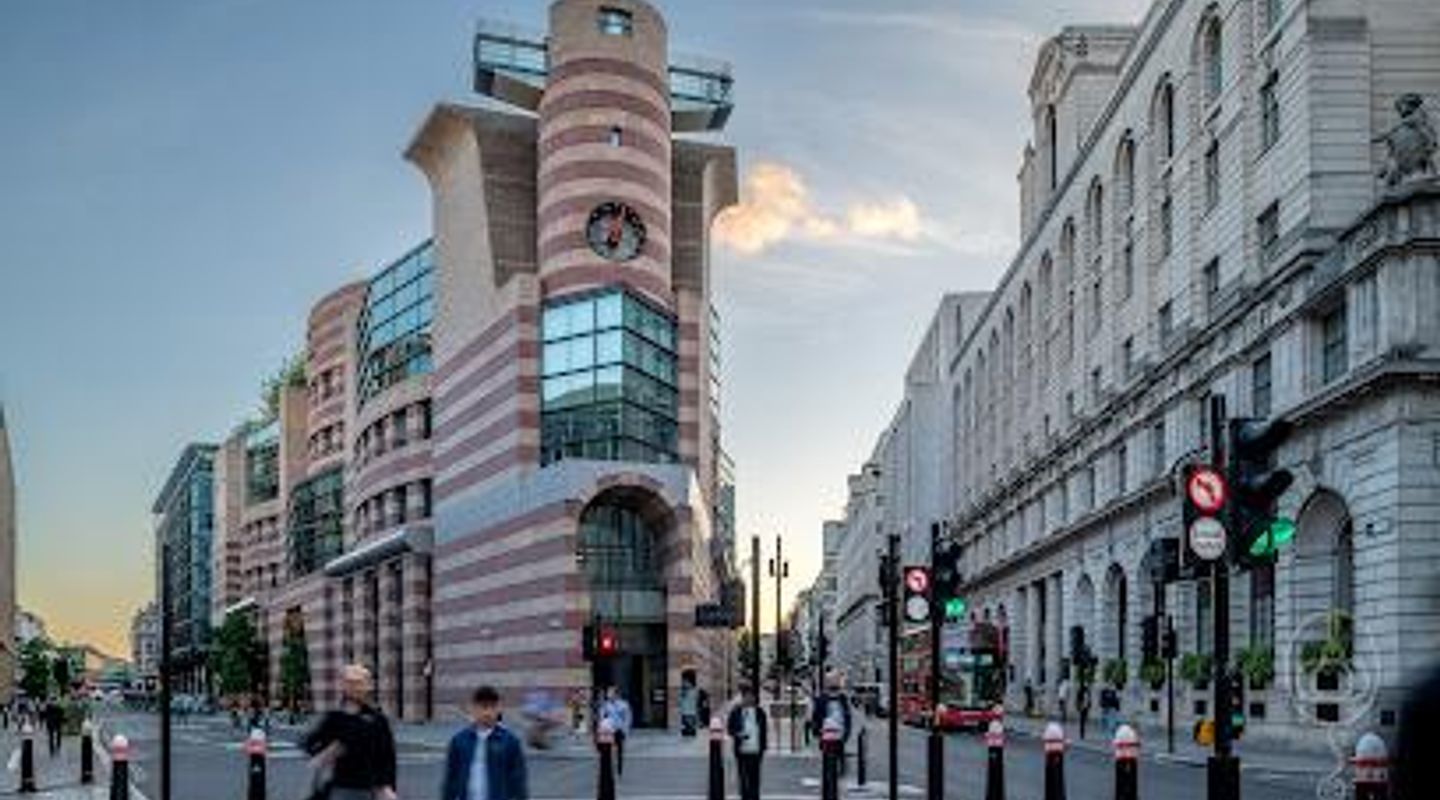
No 1 Poultry is a striking postmodern office and retail building located at the apex of Poultry and Queen Victoria Street in London’s financial district. Completed in 1997 and designed by Sir James Stirling, it features bold pink and yellow limestone stripes, a colorful central atrium, and a rooftop garden with panoramic city views. This Grade II* listed building blends contemporary architecture with historic surroundings, housing shops, offices, and the renowned Coq d’Argent restaurant.
A brief summary to 1 Poultry
- 1 Poultry, London, EC2R 8EN, GB
- Duration: 0.5 to 2 hours
- Mid ranged
-
 Mixed
Mixed
- Mobile reception: 5 out of 5

Know before you go
Hi, I'm Eve. Here are a few practical things to know before exploring 1 Poultry.
- Visit the Coq d’Argent restaurant on the rooftop for panoramic views and a refined dining experience.
- Explore the colorful central atrium to appreciate Stirling’s signature use of bold colors and geometric forms.
- Take time to observe the building’s façade stripes and architectural references to Roman columns and nearby historic landmarks.
- Consider the building’s historical context, including the archaeological significance of the site dating back to Roman London.
Do you manage this location?
Take control to get all the benefits, like improved information, better appearance, and stronger visibility across AI-powered discovery. Learn more about listing your business on Evendo
Activate your presenceOther nearby places you may find interesting
The closest places of the same kind, if this one is not quite what you had in mind.

Explore 1 Poultry on the Map
A handpicked selection of must-see spots near 1 Poultry, mapped for you.
Getting There
-
Underground
Bank Underground station is the nearest tube stop, approximately a 5-minute walk from No 1 Poultry. It is served by multiple lines including Central, Northern, and DLR, with frequent trains running throughout the day. Tickets cost between £2.50 and £6.00 depending on zones and time.
-
Bus
Several bus routes serve the Bank area with stops within a 5-10 minute walk of No 1 Poultry. Routes include 8, 11, 23, and 133, connecting to various parts of London. Standard bus fares apply, currently £1.75 per journey with contactless payment.
-
Taxi
Black cabs and ride-hailing services like Uber operate widely in central London. A taxi ride to No 1 Poultry from central London locations typically takes 10-20 minutes depending on traffic, with fares ranging from £8 to £20.
For the on-the-go comforts that matter to you
-
 Restrooms
-
 Drink Options
-
 Food Options
-
 Seating Areas
-
 Information Boards
1 Poultry location weather suitability
-
 Any Weather
-
 Clear Skies
-
 Mild Temperatures
Discover more about 1 Poultry
Architectural Boldness and Postmodern Identity
No 1 Poultry stands as one of the most significant examples of British postmodern architecture, designed by Sir James Stirling and completed in 1997, five years after his death. Its façade is clad in alternating stripes of rose-pink and muted yellow limestone, creating a visually bold and geometric pattern that contrasts with the surrounding historic buildings. The building’s wedge-shaped form culminates in a distinctive clock tower and cylindrical apex, referencing Roman rostral columns and the architectural heritage of the City of London. The interior atrium bursts with vibrant colors—blues, pinks, and yellows—showcasing Stirling’s characteristic playfulness with color and form.Historical Context and Urban Setting
Situated at the junction of Poultry, Queen Victoria Street, and Mansion House Street, No 1 Poultry occupies a site steeped in history, once part of a Roman village and later a Victorian commercial district. The building replaced a cluster of Victorian structures, some of which were listed, sparking controversy during its development. Despite initial criticism for its flamboyant style and the demolition involved, the building was recognized for its architectural importance and granted Grade II* listed status in 2016, making it the youngest building in England to receive this designation. It sits opposite landmarks such as the Royal Exchange and the Bank of England, blending modernity with the City’s rich heritage.Mixed-Use Functionality and Public Engagement
No 1 Poultry incorporates a mix of retail spaces on its ground and basement levels, alongside five floors of flexible office accommodation. The rooftop garden and terrace provide a rare green space in the dense financial district, offering far-reaching views of London’s skyline. The acclaimed Coq d’Argent restaurant occupies the top floor, known for its formal garden and city vistas, making it a popular destination for dining and socializing. The building also integrates public walkways and access to Bank Underground station, reflecting a late 20th-century ambition to create commercial spaces that engage with the public realm.Architectural Legacy and Preservation
Commissioned originally by developer Peter Palumbo, No 1 Poultry was the culmination of a long design process that replaced a planned Mies van der Rohe tower. Stirling’s design is noted for its rigorous attention to detail, high-quality materials sourced from Australia, and its contextual sensitivity despite its boldness. The building’s preservation campaign successfully protected it from redesign, underscoring its status as an architectural masterpiece. It embodies the transition from modernist ideals to postmodern freedom, celebrated by architects and preservationists alike.Atmosphere and Visitor Experience
Visitors encounter a dynamic interplay of colors and forms both inside and outside the building. The atrium’s vibrant palette contrasts with the more subdued yet striking exterior stripes, creating a unique sensory experience. The rooftop garden offers a tranquil retreat amid the City’s bustle, while the Coq d’Argent restaurant adds a layer of sophistication and lively social atmosphere. Though the building has faced criticism over the years, it remains a conversation piece and a landmark symbolizing architectural evolution in London’s financial heart.Notable Anecdotes and Cultural Footprint
No 1 Poultry gained wider public attention when featured in the 2012 London Olympic Games opening ceremony, where Daniel Craig as James Bond escorted Queen Elizabeth II via helicopter to the rooftop restaurant. The building’s rooftop terrace, perched dramatically above the street, has also been the site of tragic incidents, underscoring the complex relationship between urban architecture and human experience. Its history, design, and cultural significance make No 1 Poultry a compelling destination for those interested in architecture, urban history, and London’s evolving cityscape.More to explore near 1 Poultry









Your all‑in‑one travel companion app
Explore expert travel guides, compare and book tours, experiences, hotels, and more—all from the palm of your hand. Download now for seamless trip planning wherever your wanderlust takes you.


Explore More of London
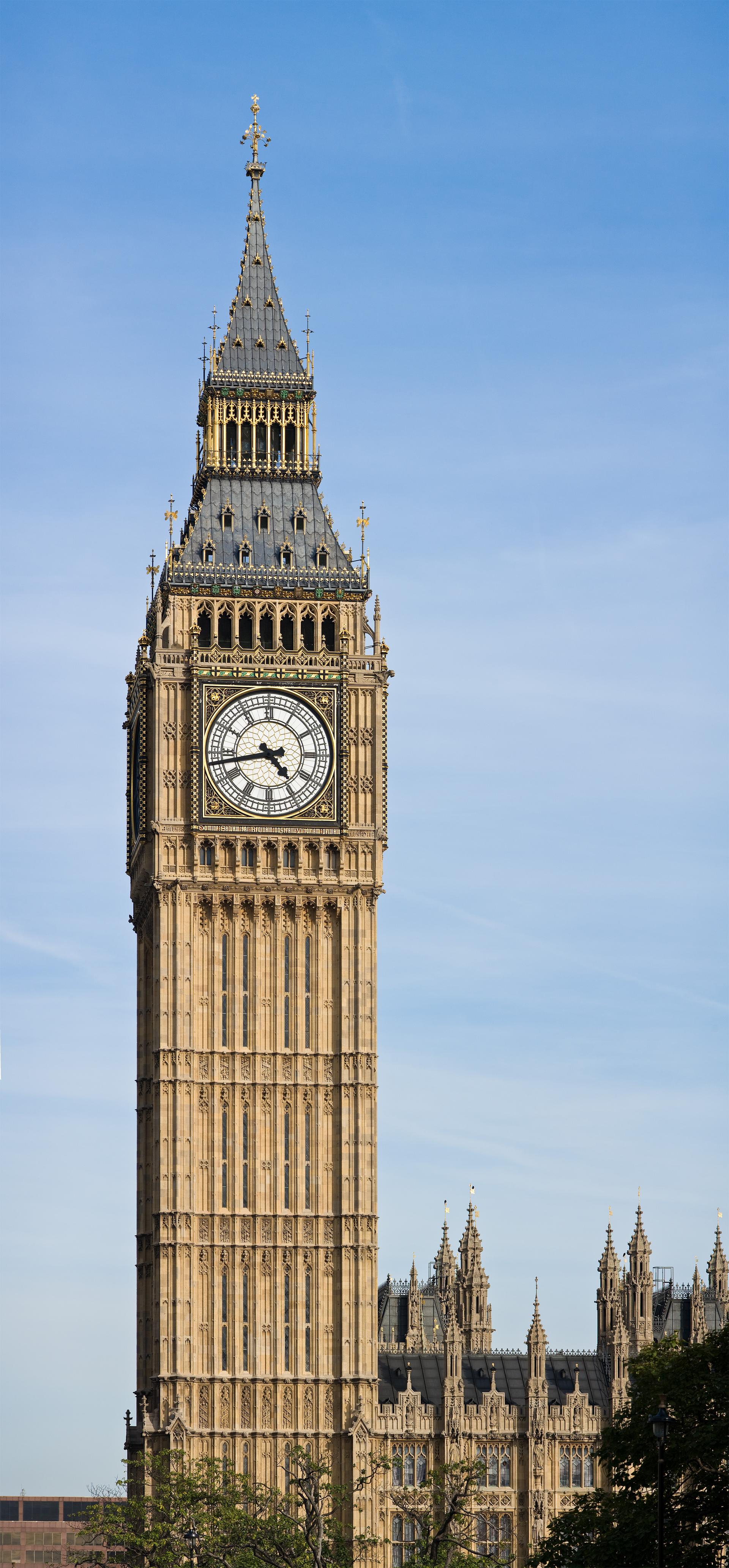
Looking beyond 1 Poultry? Discover London for broader travel guides, local hot-spots, and regional highlights.
Explore London
Explore the fascinating history of Tower Bridge at the Engine Rooms and shop for unique gifts at the Official Gift Shop.
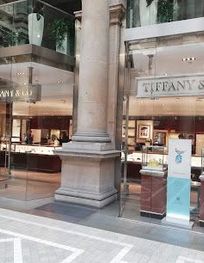
A majestic neoclassical landmark blending 450 years of London’s trading history with luxury shopping in the City’s financial heart.
