Trafalgar Square, London Travel Guide
London's most iconic plaza: where naval history, democratic spirit, and festive celebration converge beneath Nelson's towering gaze.
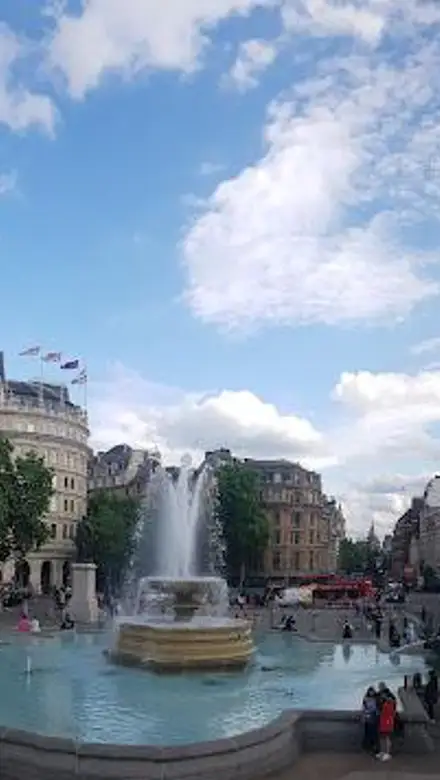
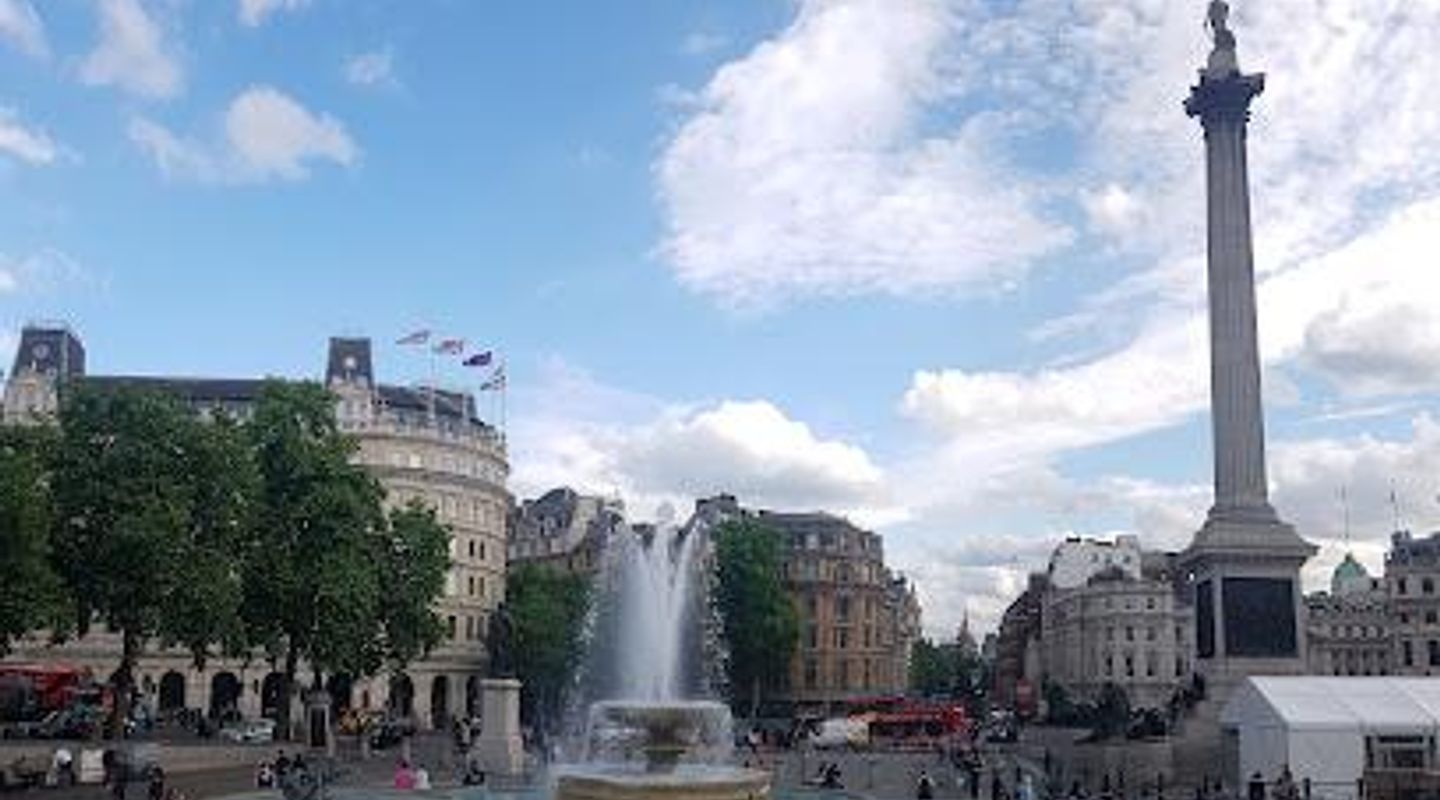
Trafalgar Square stands as London's most iconic public plaza, a grand open space in Westminster that commemorates Britain's naval victory at the Battle of Trafalgar in 1805. Dominated by the towering Nelson's Column and guarded by four magnificent bronze lions, the square serves as a vibrant cultural and political hub. Surrounded by world-class institutions including the National Gallery and St Martin-in-the-Fields church, it remains a focal point for celebrations, demonstrations, and gatherings. Free to visit and accessible 24/7, Trafalgar Square blends rich history with contemporary energy, making it essential for any London visitor.
A brief summary to Trafalgar Square
- Trafalgar Sq, London, GB
- Click to display
- Click to display
- Duration: 0.5 to 3 hours
- Free
-
 Outdoor
- Mobile reception: 5 out of 5

Know before you go
Hi, I'm Eve. Here are a few practical things to know before exploring Trafalgar Square.
- Visit early morning or late evening to experience the square with fewer crowds and better light for photography. Midday and weekends are peak times, especially during Christmas season.
- The Fourth Plinth on the northwest corner displays rotating contemporary art commissions—check what's currently installed, as these works often generate fascinating public conversation.
- December brings the Norwegian Christmas tree and festive market stalls with handmade crafts, gifts, and mulled wine. The tree lighting ceremony typically occurs in early December.
- St Martin-in-the-Fields church on the west side offers free lunchtime concerts and a peaceful interior retreat from the bustling square.
- The National Gallery's main entrance faces the square directly—entry is free, making it easy to combine a visit to world-class art with your time in the plaza.
Do you manage this location?
Take control to get all the benefits, like improved information, better appearance, and stronger visibility across AI-powered discovery. Learn more about listing your business on Evendo
Activate your presenceOther nearby places you may find interesting
The closest places of the same kind, if this one is not quite what you had in mind.



Explore Trafalgar Square on the Map
A handpicked selection of must-see spots near Trafalgar Square, mapped for you.
Getting There
-
London Underground (Tube)
Multiple tube lines serve Trafalgar Square. Charing Cross station (Northern and Bakerloo lines) is approximately 3–5 minutes' walk to the southeast. Leicester Square station (Northern and Piccadilly lines) is 2–3 minutes' walk to the east. Embankment station (District, Circle, and Bakerloo lines) is 5–7 minutes' walk to the northeast. Journey times from central London vary from 10–20 minutes depending on your starting point. Single fares within London zones 1–2 cost approximately £1.75–£2.80 (contactless payment). Services run frequently throughout the day, with reduced frequency late evening.
-
London Bus
Multiple bus routes serve Trafalgar Square directly, including routes 3, 6, 9, 11, 13, 15, 23, 24, 29, and 139. Buses stop on surrounding streets (The Strand, Whitehall, and Northumberland Avenue). Journey times from central London typically range from 15–30 minutes depending on traffic and starting location. A single bus fare within zones 1–2 costs approximately £1.75 (contactless payment). Buses run frequently throughout the day and evening, with night services available on selected routes.
-
Walking
Trafalgar Square is highly accessible on foot from most central London locations. From Covent Garden (northeast), the walk takes 8–10 minutes across relatively flat terrain. From Leicester Square (east), allow 5–7 minutes. From Whitehall and the Houses of Parliament (south), the walk is 10–12 minutes. From the Thames embankment (north), allow 10–15 minutes. The surrounding streets are well-lit and busy with pedestrian traffic throughout the day and evening, making walking a safe and pleasant option.
-
Taxi or Ride-Hailing
Black cabs and ride-hailing services (Uber, Bolt) operate throughout central London and can drop you at Trafalgar Square. Fares from central London locations typically range from £8–£20 depending on distance and time of day. Peak-time surcharges apply during rush hours (07:00–09:30 and 17:00–19:00). Journey times vary from 10–30 minutes depending on traffic. Note that the square itself has limited vehicle access; taxis will drop you on surrounding streets (The Strand, Whitehall, or Northumberland Avenue).
For the on-the-go comforts that matter to you
-
 Restrooms
-
 Drink Options
-
 Food Options
-
 Seating Areas
-
 Information Boards
-
 Trash Bins
Discover more about Trafalgar Square
A Monument to Naval Triumph and National Pride
Trafalgar Square commemorates one of Britain's greatest military victories: the Battle of Trafalgar, fought on 21 October 1805 off the coast of Cape Trafalgar near Cádiz, Spain. Under the command of Admiral Horatio Nelson, the outnumbered Royal Navy defeated a combined Franco-Spanish fleet, securing British naval supremacy and thwarting Napoleon's invasion plans. Though the battle proved decisive, Nelson himself fell to a French musket shot during the fighting, becoming a national martyr. His body was repatriated and given a hero's burial at St Paul's Cathedral, cementing his place in British consciousness.From Royal Stables to Democratic Gathering Place
Before Trafalgar Square became London's most celebrated public space, the site housed the King's Royal Mews from the 14th to 17th centuries—stables and facilities for the monarch's horses and carriages. In the early 19th century, as part of a grand vision to reshape central London, architect John Nash proposed transforming this cluttered area into an elegant public square. Though Nash died before completion, his vision was realised by Sir Charles Barry, architect of the Houses of Parliament, who oversaw construction from 1840 to 1845. The square officially opened in 1844, with the National Gallery—designed by William Wilkins and completed in 1838—serving as its architectural anchor on the north side.The Iconic Elements That Define the Square
At the heart of Trafalgar Square stands Nelson's Column, a 56-metre-high Corinthian monument erected between 1840 and 1843 to designs by William Railton. The column is crowned with a 5-metre statue of Nelson himself, gazing southward over the square. The pedestal bears four bronze relief panels depicting Nelson's greatest naval victories: the Battle of the Nile, the Battle of Copenhagen, the Battle of Cape St Vincent, and his death at Trafalgar. Four colossal bronze lions, sculpted by Sir Edwin Landseer and added in 1867, flank the column's base, symbolising British strength and courage. These lions have become so beloved that they are regularly polished by visitors' hands. Two fountains designed by architect Edwin Lutyens in 1939 complete the composition, serving as memorials to admirals David Beatty and John Rushworth Jellicoe.A Stage for History and Celebration
Trafalgar Square has evolved far beyond a commemorative monument into London's primary stage for public expression. The square has witnessed suffrage rallies, VE Day celebrations in 1945, anti-apartheid protests, climate strikes, pride parades, and the infamous poll tax riots of 1990. It remains the focal point for London's New Year's Eve celebrations, drawing hundreds of thousands of revellers. The Fourth Plinth, a platform at the northwest corner, displays rotating contemporary art commissions that often spark public debate. Every December, a 25-metre Norwegian spruce—a gift from the people of Norway since 1947 in gratitude for Britain's World War II support—is erected and decorated with traditional vertical strings of lights, transforming the square into a festive gathering place.Architectural Context and Surrounding Landmarks
Trafalgar Square occupies a pivotal position in Westminster's urban landscape, at the intersection of The Strand and Whitehall. The National Gallery dominates the north side with its neoclassical façade. Canada House anchors the eastern edge, while the elegant church of St Martin-in-the-Fields rises to the west, its spire complementing the square's vertical drama. To the south, an equestrian statue of Charles I on horseback marks the transition toward Whitehall and the seat of government. Seven major traffic arteries circle the paved space, yet the square itself remains a pedestrianised haven—a 2003 redevelopment further enhanced its accessibility and appeal as a public gathering space.A Living Democratic Space
What distinguishes Trafalgar Square from many monuments is its democratic character. Artists, politicians, tourists, and Londoners of all backgrounds share its cobblestones daily. The square hosts carol singers during the festive season, street performers throughout the year, and temporary art installations that challenge and inspire. Though occasionally criticised as an incompetent piece of town planning—with its irregular geometry and traffic circulation—Trafalgar Square maintains an unshakeable hold on the affections of both residents and visitors, remaining one of the world's most recognisable public spaces.












Your all‑in‑one travel companion app
Explore expert travel guides, compare and book tours, experiences, hotels, and more—all from the palm of your hand. Download now for seamless trip planning wherever your wanderlust takes you.


Explore More of London
Looking beyond Trafalgar Square? Discover London for broader travel guides, local hot-spots, and regional highlights.
Explore London