
The South Bank Lion: London’s Enduring Symbol of Strength and Heritage
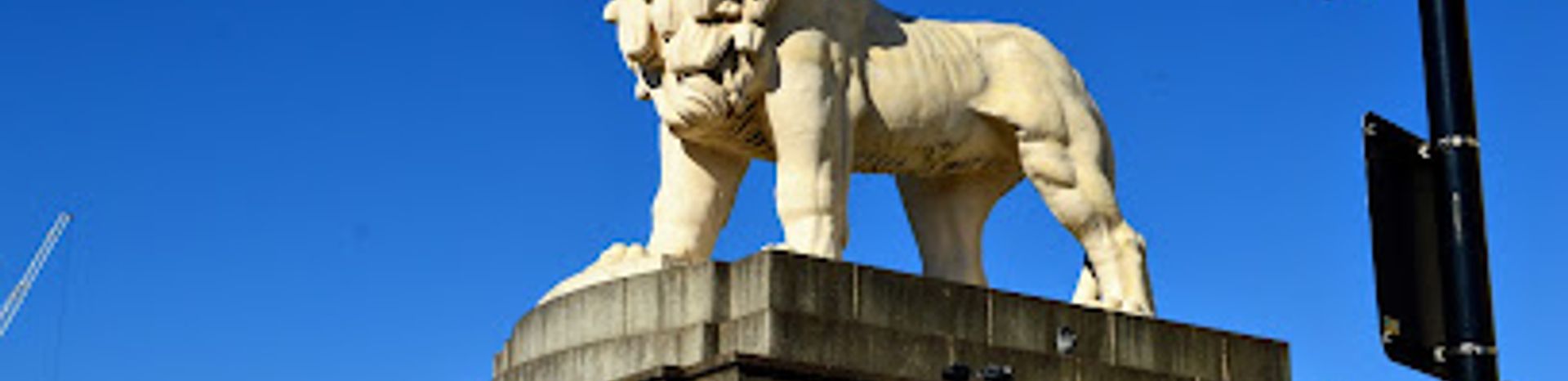
Majestic 1837 Coade stone lion guarding Westminster Bridge, symbolizing London’s resilience and rich heritage.
The South Bank Lion is a majestic 13-ton Coade stone sculpture created in 1837 by William Frederick Woodington. Originally perched atop the Lion Brewery on the Lambeth bank of the Thames, it now stands proudly on a granite plinth at the south end of Westminster Bridge. This Grade II* listed landmark embodies London’s resilience and history, having survived brewery fires, demolition, and wartime symbolism, while captivating visitors with its glossy white presence overlooking the city.
A brief summary to South Bank Lion
- Westminster Bridge, The Queen's Walk, London, SE1 7GA, GB
- Visit website
- Duration: 0.25 to 1 hours
- Free
-
 Outdoor
- Mobile reception: 5 out of 5
Local tips
- Visit early morning or late evening for quieter moments and beautiful light on the lion and the Thames.
- Look closely at the lion’s paw for the sculptor’s initials and the date, a rare signature on public statues.
- Combine your visit with a walk along the South Bank to enjoy nearby cultural landmarks and river views.
- Notice the lion’s glossy white finish, a testament to the durability of Coade stone, a unique 19th-century ceramic.

For the on-the-go comforts that matter to you
- Restrooms
- Drink Options
- Food Options
- Seating Areas
- Information Boards
Getting There
-
London Underground
Take the Jubilee or Northern Line to Waterloo Station, a 5-10 minute walk to the South Bank Lion. The station is well-served, accessible, and operates frequently with fares typically ranging from £2.50 to £6.00 depending on zones and ticket type.
-
Bus
Several bus routes, including routes 211, 148, and 381, stop near Westminster Bridge or Waterloo Station. Travel times vary between 15-30 minutes from central London locations. Buses accept contactless payment or Oyster cards, with fares around £1.75 per journey.
-
Riverboat
Riverboat services from Westminster Pier or London Eye Pier provide a scenic 15-25 minute journey to the vicinity of the South Bank Lion. Tickets cost approximately £7-£12 one way, offering a unique perspective of the Thames and city landmarks.
-
Walking
If staying nearby in central London, a 20-30 minute walk along the Thames Path from areas like Covent Garden or Trafalgar Square offers a pleasant, flat route with iconic views. The terrain is fully paved and wheelchair accessible.
South Bank Lion location weather suitability
-
 Any Weather
-
 Clear Skies
-
 Mild Temperatures
-
 Rain / Wet Weather
Discover more about South Bank Lion
Origins and Artistic Craftsmanship
The South Bank Lion was sculpted in 1837 by William Frederick Woodington, a notable sculptor and later curator of the Royal Academy’s School of Sculpture. Crafted from Coade stone, an artificial ceramic stoneware renowned for its durability and weather resistance, the lion was originally mounted on the parapet of James Goding’s Lion Brewery on the Lambeth bank of the River Thames. The brewery, founded in 1836, was a major exporter of ales during the 19th century. This lion, weighing approximately 13 tonnes, was cast in parts at the nearby Coade Stone Works and assembled on an iron frame, a testament to the industrial craftsmanship of the era.A Symbol Through Turbulent Times
The lion witnessed the brewery’s prosperity and its decline after a devastating fire in 1931. When the brewery was demolished in 1949 to make way for the Royal Festival Hall, the lion was at risk of destruction. However, thousands of Londoners petitioned for its preservation, and King George VI personally intervened to save the statue. During the Festival of Britain in 1951, the lion was painted red, symbolizing British Rail’s mascot, and placed near Waterloo Station. This period marked the lion’s transformation into a symbol of hope and patriotism, famously inspiring the wartime saying, “So long as the lion stands, London will stand.”Relocation and Legacy
In 1966, the lion was moved to its current location on a large granite plinth at the south end of Westminster Bridge, adjacent to County Hall. The red paint was removed, restoring the lion’s pristine white appearance, showcasing the remarkable longevity of Coade stone. The plinth bears the simple inscription “The South Bank Lion,” inviting admiration from passersby. The lion’s presence here offers a commanding view of the Thames and the iconic Houses of Parliament across the river, linking it visually and symbolically to London’s historic heart.Connections to Other Lions and Cultural Impact
The Lion Brewery originally featured three Coade stone lions. One stands gilded at the west gate of Twickenham Stadium, presented to the Rugby Football Union in 1971 and covered in gold leaf for the 1991 Rugby World Cup. Another lion, once on an arched gateway, was lost before the brewery’s demolition. The South Bank Lion is often compared with the four lions guarding Nelson’s Column in Trafalgar Square, underscoring its significance as a heraldic and cultural icon of London.Material and Conservation Significance
Made of Coade stone, the lion is an exceptional example of 19th-century ceramic stoneware that resists weathering far better than natural stone. This material choice has allowed the lion to retain its detailed features and glossy finish despite nearly two centuries of exposure to London’s atmospheric conditions. Conservation efforts have maintained its condition, ensuring that this historic sculpture remains a vivid and enduring symbol of the city’s industrial heritage and artistic achievement.Present-Day Experience and Symbolism
Today, the South Bank Lion stands as a proud sentinel at Westminster Bridge, embodying London’s resilience, history, and spirit. Its commanding stance and glossy white coat invite reflection on the city’s past, from Victorian industry to wartime endurance. The lion’s proximity to major landmarks and the River Thames makes it a memorable focal point for visitors seeking to connect with London’s rich cultural tapestry and architectural grandeur.For the vibe & atmosphere seeker
- Scenic
- Tranquil
- Historic
- Unique
For the design and aesthetic lover
- Vintage Styles
For the architecture buff
- Historic
- Landmarks
- Viewpoints
For the view chaser and sunset hunter
- Iconic Views
- Waterfront
- Skyline
- Sunset Spots
For the social media creator & influencer
- Instagrammable
- Photo Spots
- Selfie Spots
- Architectural Shots
For the eco-conscious traveler
- Public-Transport Accessible
- Car-Free Access
For the kind of experience you’re after
- Cultural Heritage
- Photowalk
- Day Trip
- Weekend Getaway
For how adventurous you want the journey to be
- Easy Access
Location Audience
- Family Friendly
- Senior Friendly
- Child Friendly
- Teen Friendly
- Wheelchair Access
- Pet Friendly
- Solo Friendly
- Couple Friendly
- Solo Female Friendly


