
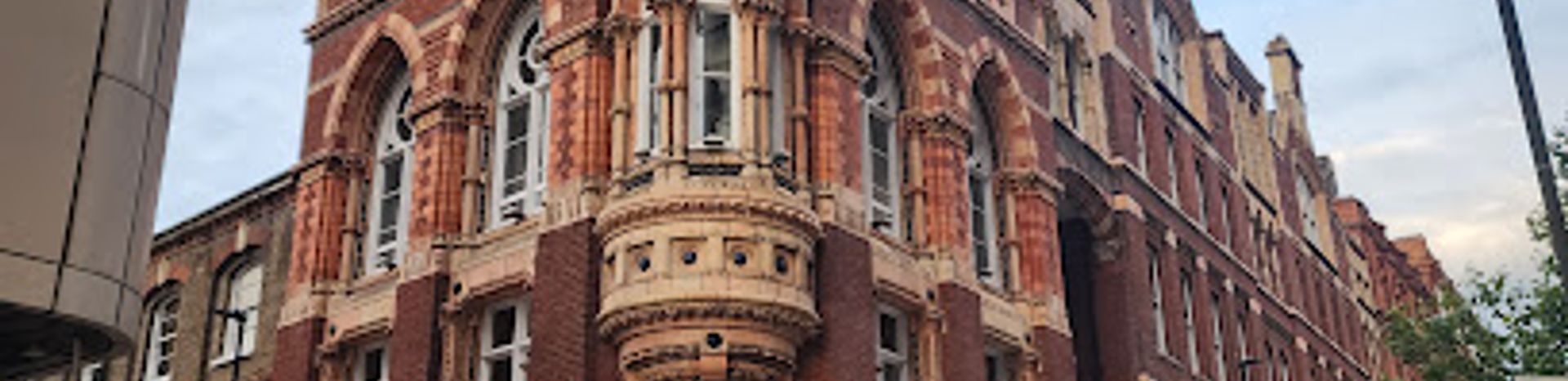
Southbank House, Historic Pottery Landmark in Lambeth
Historic terracotta landmark in Lambeth, blending Victorian pottery heritage with modern creative workspaces.
Southbank House is a striking Grade II listed terracotta and tiled building located on Black Prince Road, Lambeth, London SE1. Built between 1876-78, it is the last surviving part of the Royal Doulton Pottery complex, once a thriving centre for ceramic art and craftsmanship. Today, it serves as a stylish shared workspace and artist studios, preserving its creative heritage while offering modern office facilities.
A brief summary to Southbank House
- Black Prince Rd, London, SE1 7SJ, GB
- Visit website
- Duration: 0.5 to 2 hours
- Mid ranged
-
 Outdoor
- Mobile reception: 4 out of 5
Local tips
- Take time to admire the intricate terracotta reliefs by George Tinworth and the ceramic motifs referencing Doulton’s products.
- Explore the nearby mosaics under the bridge on Black Prince Road that depict the history of the Black Prince and local pottery heritage.
- Visit during weekdays to experience the vibrant atmosphere of the shared workspaces and artist studios.
- Look out for the Thames lighters artwork nearby, commemorating the river’s role in the pottery trade.

For the on-the-go comforts that matter to you
- Restrooms
- Drink Options
- Food Options
- Seating Areas
- Information Boards
Getting There
-
Public Transport
Take the London Underground to Vauxhall Station, approximately a 10-15 minute walk from Southbank House. Vauxhall is served by the Victoria Line and National Rail services. Frequent bus routes also run along Lambeth High Street. No parking is available on-site; public transport is recommended.
-
Taxi or Rideshare
A taxi or rideshare from central London to Southbank House typically takes 15-25 minutes depending on traffic. Drop-off is possible directly outside the building on Black Prince Road. Parking nearby is limited and metered.
-
Walking
If staying nearby in Lambeth or Vauxhall, Southbank House is accessible on foot via paved urban streets. Walking times range from 10 to 30 minutes depending on your starting point. The terrain is flat and suitable for all fitness levels.
Southbank House location weather suitability
-
 Any Weather
-
 Rain / Wet Weather
-
 Clear Skies
-
 Mild Temperatures
Discover more about Southbank House
A Legacy of Ceramic Artistry and Innovation
Southbank House stands as a remarkable testament to the Victorian era’s flourishing pottery industry. Constructed between 1876 and 1878, the building originally formed part of the Royal Doulton Pottery complex, a powerhouse of ceramic production and artistic innovation. The site was home to the pottery’s museum, design studio, and art school, nurturing talents such as George Tinworth and Hannah Bolton Barlow, whose terracotta reliefs and ceramic artistry adorn the building’s façade. The building’s ornate Ruskinian Gothic architecture, complete with gargoyle dragons and sculpted heads, reflects its original function and the pride taken in craftsmanship during that period.Architectural Flourish and Artistic Details
The exterior of Southbank House is richly decorated with terracotta tiles and relief carvings, including the notable piece titled ‘Mr Doulton in his studio’ by George Tinworth dating from around 1878. This artwork, along with the figure of Hannah Bolton Barlow and her cat, highlights the building’s deep connection to the decorative arts. The building’s location near the Lambeth School of Art (now the City & Guilds of London Art School) fostered a creative environment that influenced its design and purpose. The terracotta and tiled façade is not only visually captivating but also symbolic of the craftsmanship and artistic excellence that defined the pottery works.Historical Context and River Thames Connection
Situated near the River Thames, Southbank House’s location was strategic for the pottery business. Although the riverfront was altered by Joseph Bazalgette’s construction of the Albert Embankment in the late 19th century, the building retained a functional relationship with the river. Barges could still reach the area at low tide to unload goods, and the waterway played a vital role during World War II as an emergency water supply for firefighting during bombing raids. Artistic installations nearby, such as the 2009 Thames lighters artwork by Handspring Design, pay homage to the river’s historical importance in trade and industry.Transformation into a Modern Creative Hub
In recent decades, Southbank House has been revitalized as a shared workspace and artist studio complex, returning to its roots as a centre for creativity and production. The building underwent extensive refurbishment to blend its historic character with modern functionality, providing high-spec offices, meeting rooms, and flexible studio spaces. This transformation preserves the building’s heritage while supporting contemporary professionals and artists, making it a vibrant part of Lambeth’s creative community.Artistic Heritage Preserved in a Contemporary Setting
The preservation of Southbank House’s architectural and artistic features ensures that visitors and tenants alike can appreciate its rich history. The terracotta reliefs, mosaics under nearby bridges, and ceramic plaques referencing Doulton’s products create a layered narrative of the site’s past. The building’s continued use as a creative workspace honors the legacy of innovation and artistry that defined its original purpose.Enduring Symbol of Lambeth’s Industrial and Cultural History
Southbank House remains a unique landmark in Lambeth, symbolizing the area’s industrial heritage and artistic achievements. Its survival as the only remaining part of the once extensive pottery complex offers a tangible link to London’s Victorian manufacturing past. Today, it stands as a beautifully restored historic building that bridges the gap between heritage and modern urban life, embodying both history and ongoing creativity.For the vibe & atmosphere seeker
- Historic
- Unique
- Creative
- Tranquil
For the design and aesthetic lover
- Vintage Styles
- Rustic Designs
For the architecture buff
- Historic
- Landmarks
- Art & Design
For the view chaser and sunset hunter
- Iconic Views
For the social media creator & influencer
- Instagrammable
- Architectural Shots
- Photo Spots
For the eco-conscious traveler
- Public-Transport Accessible
- Locally Managed
For the kind of experience you’re after
- Cultural Heritage
- Photowalk
- Nature Escape
- Day Trip
- Weekend Getaway
For how adventurous you want the journey to be
- Easy Access
Location Audience
- Family Friendly
- LGBT Friendly
- Senior Friendly
- Child Friendly
- Teen Friendly
- Wheelchair Access
- Solo Friendly
- Couple Friendly
- Solo Female Friendly
- Vegetarian Friendly
- Vegan Friendly


