
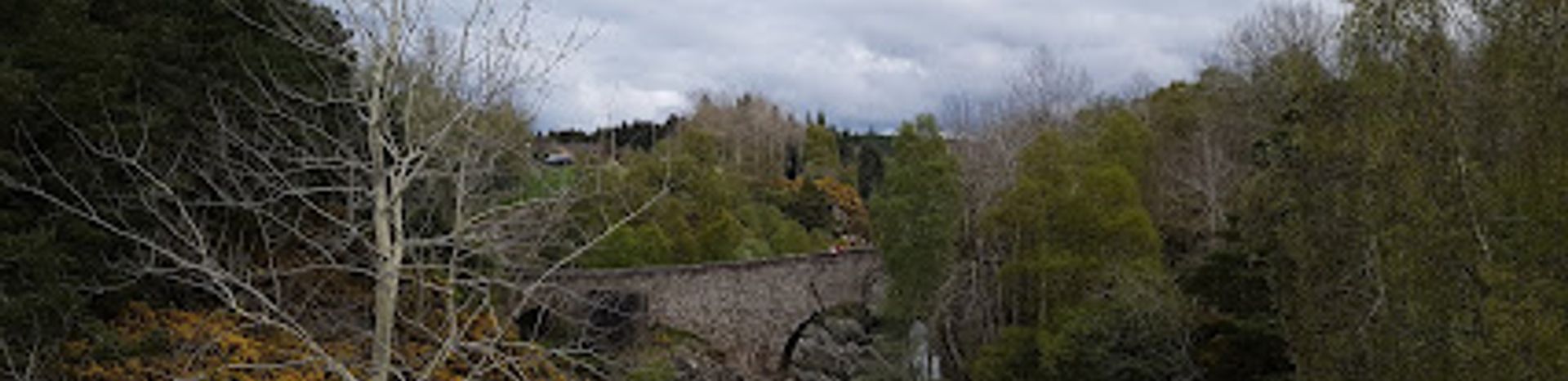
Dulsie Bridge: Historic Highland Crossing over the River Findhorn
Historic 18th-century stone bridge soaring over the River Findhorn gorge, offering scenic Highland views and a tranquil picnic spot near Nairn.
Dulsie Bridge is a striking 18th-century stone arch bridge spanning a narrow gorge over the River Findhorn near Nairn, Scotland. Built in 1755 by Major William Caulfield and soldiers from Lord Robert Manner’s regiment, it was part of a strategic military road network across the Highlands. The bridge stands 60 feet above the riverbed, surviving the devastating 1829 Muckle Spate flood. Visitors enjoy scenic views, a nearby picnic area, and tranquil natural surroundings.
A brief summary to Dulsie Bridge
- Old Military Rd, Nairn, IV12 5UR, GB
- Duration: 0.5 to 2 hours
- Free
-
 Outdoor
- Mobile reception: 4 out of 5
Local tips
- Visit on a bright sunny day to fully appreciate the stunning views and enjoy a picnic at the tables atop the bridge.
- Wear sturdy footwear for the short trail leading to the safe viewing point overlooking the gorge.
- Bring a camera to capture the dramatic stone arches and the wild River Findhorn below.
- Combine your visit with a cycling trip from Nairn, approximately 13–14 miles, passing through varied Highland terrain.

For the on-the-go comforts that matter to you
- Restrooms
- Seating Areas
- Picnic Areas
- Trash Bins
- Information Boards
Getting There
-
Car
Driving from Nairn to Dulsie Bridge takes about 25 to 35 minutes via local roads. There is a small parking area near the bridge with limited spaces. Parking is free but can fill up on sunny days. The roads are narrow and rural, so drive cautiously.
-
Cycling
Cycling from Nairn to Dulsie Bridge covers approximately 13 to 14 miles and takes 1 to 1.5 hours depending on fitness. The route includes varied terrain and scenic Highland views. Suitable for experienced cyclists; bring water and repair kit.
-
Walking
A short walk from the nearby parking area leads to the bridge and viewing points. The trail is well-maintained but uneven in places, requiring sturdy footwear. The walk is suitable for most visitors but may be challenging for those with mobility issues.
Dulsie Bridge location weather suitability
-
 Any Weather
-
 Clear Skies
-
 Rain / Wet Weather
-
 Mild Temperatures
-
 Windy Conditions
Discover more about Dulsie Bridge
Engineering Feat of the 18th Century Highlands
Constructed in 1755, Dulsie Bridge is an impressive example of 18th-century military engineering. Built under the supervision of Major William Caulfield and men from Lord Robert Manner's regiment, it was part of a vast network of military roads designed to improve transport and government control across the Scottish Highlands. The bridge spans a dramatic gorge over the River Findhorn, standing approximately 60 feet above the riverbed. Its keystone and arches demonstrate the skill and daring of its builders, who faced challenging terrain and heights during construction.A Witness to Historic Floods and Highland Life
Dulsie Bridge notably survived the catastrophic Muckle Spate flood of 1829, which destroyed many surrounding structures. The floodwaters rose to just three feet below the bridge’s keystone, underscoring its robust construction. The surrounding area carries echoes of Highland history, including connections to the famed Scottish poet Robert Burns, who is believed to have stayed nearby during his 1787 tour. The bridge’s name likely derives from the Gaelic word "dhulfhasaidh," meaning meadow, reflecting the pastoral landscape around it.Scenic Beauty and Visitor Experience
Today, Dulsie Bridge offers visitors a picturesque vantage point over the wild River Findhorn and its cascading waters. A small parking area with picnic tables sits atop the bridge, providing a pleasant spot for rest and views. A short trail leads to a safe overlook, where visitors can appreciate the natural beauty and tranquil atmosphere of the gorge. The bridge and its surroundings are popular for scenic walks, cycling trips from nearby Nairn, and peaceful picnics, especially on bright sunny days.Architectural and Cultural Significance
As a Category A listed structure, Dulsie Bridge is recognized for its historical and architectural importance. It exemplifies the strategic military infrastructure of the mid-18th century, linking key locations such as Braemar and Fort George. The bridge’s enduring presence reflects both the practical needs and the aesthetic values of its era, combining functionality with the rugged beauty of Highland stonework. Its survival through centuries of natural and human history makes it a cherished landmark.Natural Environment and Wildlife
The bridge overlooks a narrow gorge carved by the River Findhorn, known for its turbulent waters and rich biodiversity. The surrounding landscape is a haven for wildlife and offers a serene nature escape. The area’s flora and fauna thrive in this relatively untouched environment, making it attractive for nature enthusiasts and photographers. The sound of rushing water and the sight of the river tumbling below add to the sensory experience of visiting Dulsie Bridge.Preservation and Accessibility
Dulsie Bridge remains well-preserved, with maintenance efforts ensuring its structural integrity and visitor safety. The site is accessible via a short walk from parking, with clear paths and viewing points. While the bridge itself is narrow and historic, the approach and picnic area provide comfortable amenities. Its location on the Old Military Road invites exploration of the wider Highland road network and historical routes.For the vibe & atmosphere seeker
- Scenic
- Relaxing
- Tranquil
- Unique
For the design and aesthetic lover
- Rustic Designs
- Vintage Styles
For the architecture buff
- Historic
- Landmarks
For the view chaser and sunset hunter
- Iconic Views
- Panoramas
For the social media creator & influencer
- Instagrammable
- Photo Spots
- Selfie Spots
For the eco-conscious traveler
- Eco-Friendly
- Low Impact
- Public-Transport Accessible
- Leave-No-Trace Critical
For the kind of experience you’re after
- Cultural Heritage
- Nature Escape
- Day Trip
- Photowalk
- Weekend Getaway
For how adventurous you want the journey to be
- Easy Access
Location Audience
- Family Friendly
- Senior Friendly
- Child Friendly
- Teen Friendly
- Wheelchair Access
- Pet Friendly
- Solo Friendly
- Couple Friendly
- Solo Female Friendly


