Durham Tower, Newcastle upon Tyne Travel Guide
Free Guide: Medieval stone sentinel guarding Newcastle's ancient western walls since the 13th century.


A brief summary of Durham Tower
Medieval stone sentinel guarding Newcastle's ancient western walls since the 13th century.
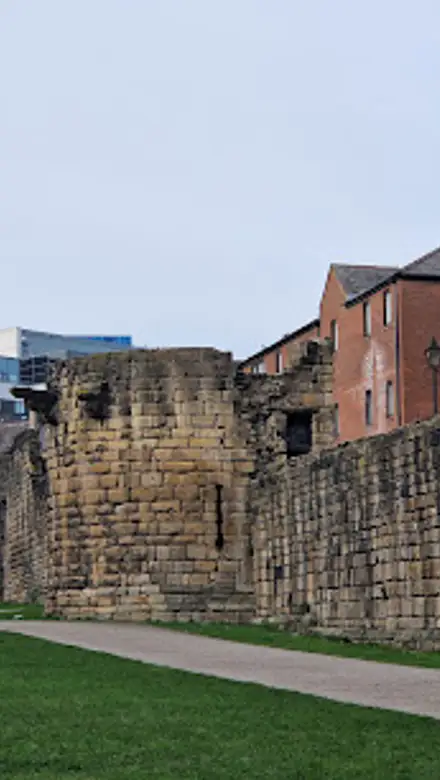
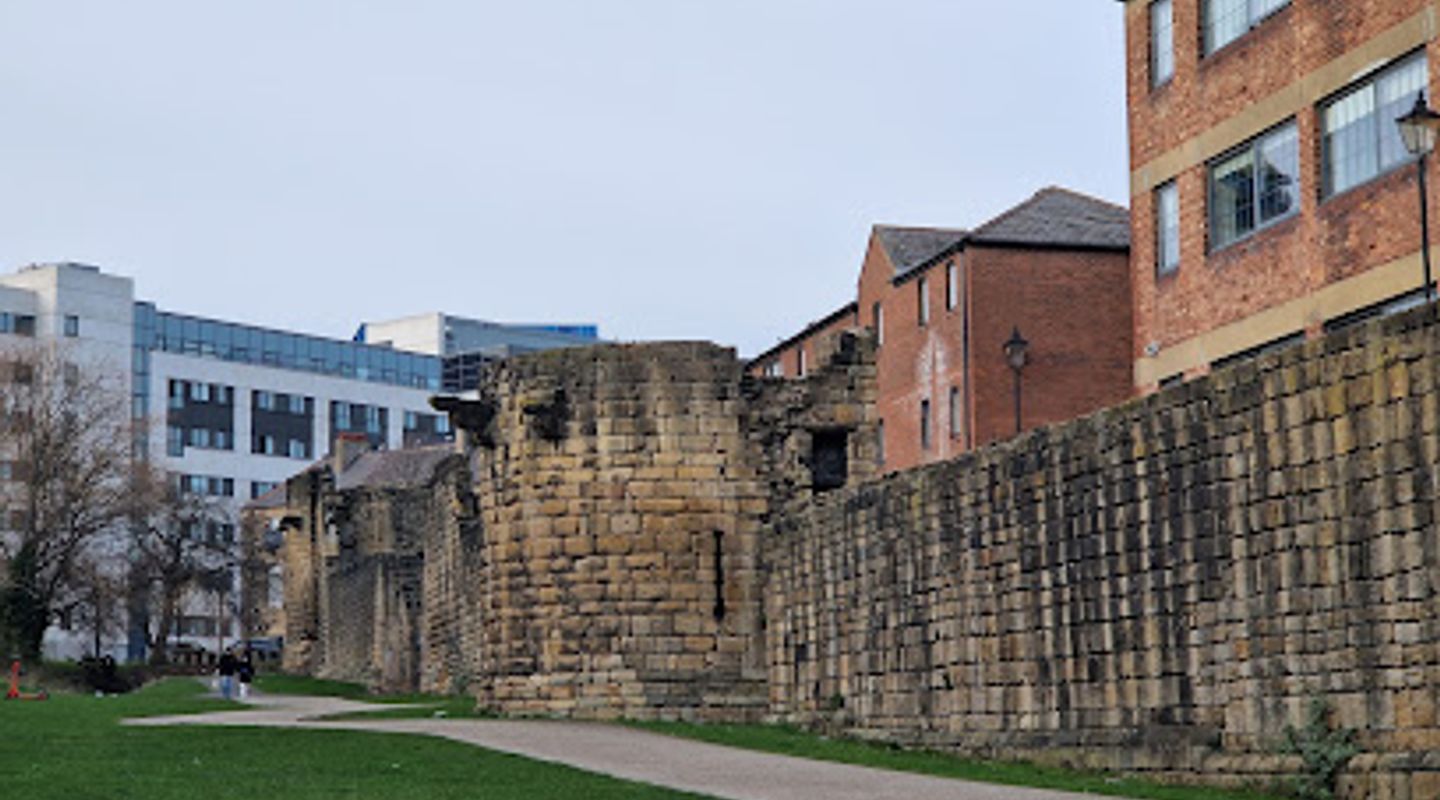
Durham Tower is a striking medieval fortification standing on Newcastle's historic western town wall. Dating to the late 13th century with 15th-century additions, this semi-circular defensive structure features a vaulted stone roof, narrow window loops, and corbels that once supported timber galleries. Located on West Walls near Stowell Street, it forms part of a 90-metre stretch of original curtain wall and represents a crucial element of Newcastle's medieval defensive circuit. Free to view and explore from outside.
On-site amenities
 Information boards
 Seating areas
- Address
- W Walls, Newcastle upon Tyne NE1 4XB
Getting there
Walking from Newcastle City Centre
Public Transport via Metro
Taxi or Ride-Share
Cycling
Discover more about Durham Tower
A Medieval Guardian of Newcastle's Defences
Durham Tower stands as one of Newcastle's most significant surviving medieval fortifications, a semi-circular defensive structure that has watched over the city for nearly seven centuries. Built in the late 13th century as part of the town's western defensive circuit, the tower was strategically positioned to protect Newcastle's vulnerable western flank. The structure underwent refinements in the 15th century, adding architectural details that enhanced both its defensive capabilities and structural integrity. Today, it remains in good condition, its weathered sandstone blocks telling the story of medieval military engineering and urban protection.
Architectural Mastery in Stone
The tower's construction showcases the skilled craftsmanship of medieval masons. Built from large, squared ashlar sandstone blocks bonded with mortar, Durham Tower features a distinctive semi-circular outer face with a rectangular ground floor chamber. The structure rises approximately 4 metres from the curtain wall, projecting outward to provide commanding views of the approaches beyond the city's perimeter. Most remarkably, the tower retains its original stone vaulted roof—a rare survival that speaks to the quality of its construction. Narrow window loops pierce the western and south-facing walls, designed to allow defenders to observe and engage threats while minimizing exposure. An entrance on the north side, marked by a narrow stone lintel, provided access to the interior chamber. Several external corbels project from the tower's face, originally supporting timber hoardings or galleries that extended the defensive reach of the structure.
Part of a Formidable Defensive Network
Durham Tower did not stand alone. It formed part of a continuous 90-metre stretch of curtain wall that connected it to neighbouring towers, including Heber Tower to the northwest. The curtain wall itself, approximately 2 metres wide and reaching 4 metres in height, still retains sections of the wall walk complete with parapet and steep coping stones. Beyond the wall's outer face lay a berm and town ditch—a defensive moat that has since been infilled and buried but whose traces remain beneath the modern street level. This integrated system of wall, towers, ditches, and galleries created a formidable barrier against medieval threats, whether from rival cities, invading forces, or civil unrest.
Scheduled Monument Status and Preservation
Recognizing its historical and architectural significance, Durham Tower and its associated town wall section have been designated as a scheduled monument, affording it legal protection under heritage legislation. The structure is classified as Grade 1, the highest designation for buildings of national importance. This status ensures that any work affecting the tower requires special consent and must be carried out with sensitivity to its historical character. The tower's survival in good condition reflects both the durability of medieval construction and the commitment of successive generations to preserve this tangible link to Newcastle's past.
Urban Archaeology and Hidden Depths
While the tower's stone superstructure is immediately visible, much of its story lies beneath the surface. The town ditch, now infilled and buried, represents an archaeological layer that contains evidence of medieval life, warfare, and urban development. Excavations and surveys have revealed the sophisticated engineering behind Newcastle's defences, including the precise positioning of towers to maximize defensive coverage and the careful construction of drainage systems to manage water in the ditch. These archaeological investigations continue to yield insights into how medieval Newcastle functioned as a fortified urban centre.
Evendo Review Centre
 Google
Guest reviews
Best time to go
Quietest: Jan, Feb & Dec · before 6am or at 9pm
Busy times are Evendo estimates for a typical year, to help you plan. Actual crowds vary with events, school holidays and the weather.
Explore Durham Tower on the map
A handpicked selection of must-see spots near Durham Tower, mapped for you.
Get your free copy of our complete guide to Durham Tower, delivered straight to you.
Everything on this page, from opening hours and how to get there to Eve’s tips and the best time to go, in one PDF you can read offline, print or share.
Already have an account? Sign in
Your Durham Tower guide is ready.
We'll send it to · Not you? Sign out

Getting your guide ready…
We are putting together a fresh copy of the Durham Tower guide. This can take up to a minute.
This can take a few moments. If your browser asks, choose Allow so the download can start. You'll find the guide in your Downloads folder.
Nothing happened? Download it again
Sorry, the guide is taking longer than usual. Please try again in a minute, or get it by email instead.
Other nearby places you may find interesting
The closest places of the same kind, if this one is not quite what you had in mind.
-
-
-
-
-


Swipe for more places
More to explore near Durham Tower

 Best experiences near Durham Tower
 Best hotels near Durham Tower
 Best landmarks near Durham Tower
 Best attractions near Durham Tower
 Best shops near Durham Tower
 Best restaurants near Durham Tower
 Best bars near Durham Tower
Do you manage this location?
Take control to get all the benefits, like improved information, better appearance, and stronger visibility across AI-powered discovery.
Explore more
Explore more of Newcastle upon Tyne
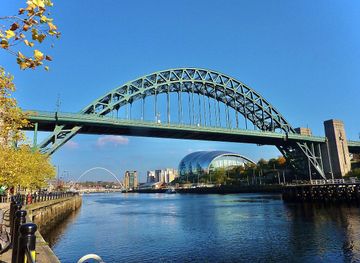
Discover Newcastle upon Tyne: A dynamic city where history meets modernity, known for its iconic bridges, vibrant culture, and lively nightlife in the northeast of England.
Explore Newcastle upon Tyne
Explore more of United Kingdom
Discover the United Kingdom: A blend of rich history, stunning landscapes, and vibrant cities, offering a unique travel experience for every visitor.
Explore United Kingdom