Elvet Bridge, North East England Travel Guide
A medieval marvel bridging Durham’s past and present, Elvet Bridge is a living testament to centuries of history, architecture, and legend.
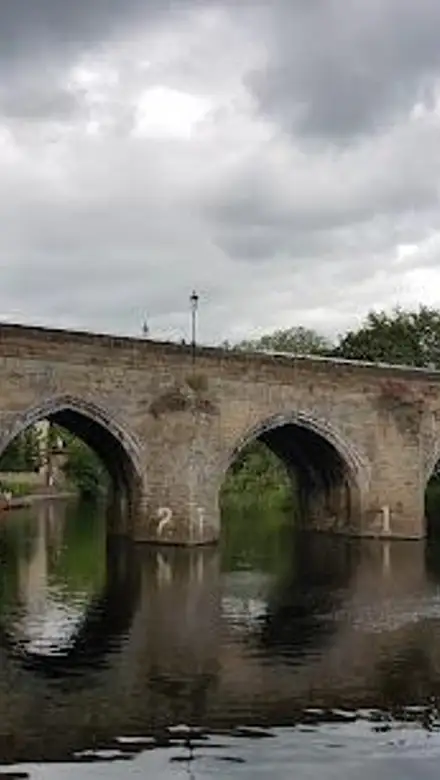
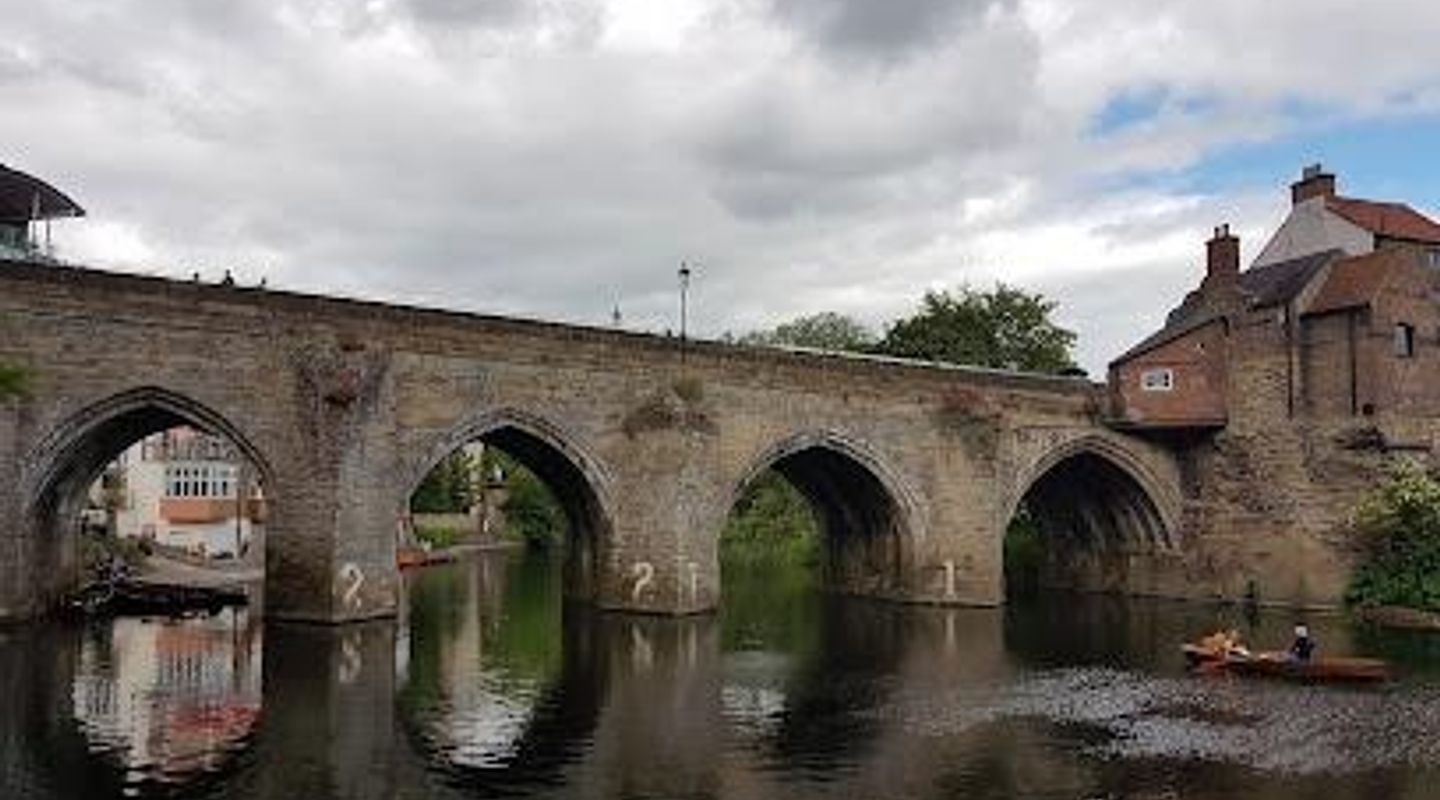
Elvet Bridge is a remarkable medieval masonry arch bridge spanning the River Wear in Durham, England. Built between the 12th and 13th centuries, it connects Durham’s historic peninsula with the Elvet area. This Grade I listed structure is renowned for its rich history, architectural evolution, and intriguing legends. Once featuring chapels and a prison, today it serves as a pedestrian thoroughfare and a vivid symbol of Durham’s medieval heritage within its UNESCO World Heritage Site.
A brief summary to Elvet Bridge
- Durham, GB
- Duration: 0.5 to 1.5 hours
- Free
-
 Outdoor
- Mobile reception: 4 out of 5

Know before you go
Hi, I'm Eve. Here are a few practical things to know before exploring Elvet Bridge.
- Visit the bridge on foot to appreciate the visible seam between medieval and 19th-century stonework.
- Explore the remains of St. Andrew’s Chapel visible from the riverbanks for a glimpse into the bridge’s ecclesiastical past.
- Combine your visit with nearby Durham Cathedral to experience the full historical context of the area.
- Consider visiting during quieter times to enjoy the bridge’s atmosphere without crowds, especially early mornings or late afternoons.
Do you manage this location?
Take control to get all the benefits, like improved information, better appearance, and stronger visibility across AI-powered discovery. Learn more about listing your business on Evendo
Activate your presenceOther nearby places you may find interesting
The closest places of the same kind, if this one is not quite what you had in mind.

Explore Elvet Bridge on the Map
A handpicked selection of must-see spots near Elvet Bridge, mapped for you.
Unlock the Best of Elvet Bridge
Buy tickets
-
No tickets available
Book tours with entry


Book tours without entry
-
No tours available
Getting There
-
Train and Walking
Arrive at Durham Railway Station, which has frequent services from major cities like London and Newcastle. From the station, it is a 15-20 minute walk through the historic city center to Elvet Bridge. The walk is mostly on paved streets with some cobbled sections, suitable for most visitors.
-
Bus
Local bus services connect Durham city center with surrounding areas. Buses stop near the city center, from where Elvet Bridge is a 10-minute walk. Bus services run regularly throughout the day with fares typically between £2-£4.
-
Car and Parking
Visitors arriving by car can use city center parking facilities, such as the Claypath or Milburngate car parks, located about 10-15 minutes’ walk from Elvet Bridge. Parking fees range from £3 to £8 depending on duration. Note that the bridge itself is pedestrianized and closed to vehicle traffic.
For the on-the-go comforts that matter to you
-
 Seating Areas
-
 Information Boards
-
 Trash Bins
Discover more about Elvet Bridge
Origins and Medieval Significance
Elvet Bridge was commissioned in 1160 by Bishop Hugh de Puiset, a powerful Prince Bishop of Durham, as part of a strategic urban development to connect the newly planned borough of Elvet with Durham’s established religious and administrative peninsula. The bridge was essential for commerce and communication, housing around 40 merchants in the Elvet borough. Construction spanned many decades, with church records from 1225 and 1228 indicating indulgences granted to those funding its completion, underscoring its religious and civic importance. Originally called the “New Bridge” to distinguish it from the older Framwellgate Bridge, Elvet Bridge was more than a crossing; it was a catalyst for Durham’s growth in the medieval period.Architectural Evolution and Features
The bridge is a masonry pointed arch structure, originally about 15 feet wide, later doubled in width to 33 feet during a major 1804–05 widening to accommodate increased traffic at the dawn of the industrial age. This expansion created a visible seam where 19th-century stonework meets the medieval fabric, telling a story of adaptation and growth. Of the original arches, only one dates from the late 12th century, with the others from the 13th century. Historically, Elvet Bridge was lined with buildings including two chapels—St. James’s on the east and St. Andrew’s on the west—the latter partially surviving today as part of a shop and restaurant. A prison known as the House of Correction replaced St. James’s chapel in the 17th century, adding layers of social history to the bridge.Legends, Hidden Arches, and Cultural Legacy
Elvet Bridge is steeped in folklore, including persistent rumors of hidden arches beyond the visible ten, with some 17th-century antiquarians claiming up to fourteen arches once existed. While no physical evidence confirms this, it adds to the mystique of the bridge. The structure has witnessed commerce, conflict, worship, and imprisonment, reflecting Durham’s complex history. Its role as a living document of the city’s evolution makes it a unique heritage asset that continues to define Durham’s character within the UNESCO World Heritage Site.Modern-Day Experience and Preservation
Today, Elvet Bridge is pedestrianized, forming part of Durham’s key walking routes and offering visitors a tangible connection to the past. The bridge’s Grade I listing ensures its protection and careful preservation. Visitors can observe the architectural contrasts between medieval and 19th-century stonework and explore the remnants of historic chapels visible from the riverbanks. Its central location invites exploration of Durham’s rich medieval streetscape, including nearby landmarks like Durham Cathedral.Surrounding Context and Urban Fabric
Elvet Bridge links two vital parts of Durham: the cathedral peninsula, home to Durham Cathedral and Castle, and the Elvet area, historically a commercial hub. The bridge’s presence has shaped urban development patterns and remains a focal point for cultural heritage. Its proximity to other historic sites enriches the visitor experience, allowing a deeper appreciation of Durham’s layered history and architectural grandeur.Architectural and Historical Importance in Northern England
As one of the oldest surviving bridges in Northern England, Elvet Bridge exemplifies medieval engineering and urban planning. Its construction under Bishop Hugh de Puiset reflects the ambitions of Prince Bishops to consolidate power and foster economic growth. The bridge’s survival through floods, repairs, and modifications highlights its resilience and ongoing relevance. It stands as a testament to Durham’s medieval prominence and the enduring legacy of ecclesiastical and civic leadership in shaping the cityscape.












Your all‑in‑one travel companion app
Explore expert travel guides, compare and book tours, experiences, hotels, and more—all from the palm of your hand. Download now for seamless trip planning wherever your wanderlust takes you.


Explore More of North East England
Looking beyond Elvet Bridge? Discover North East England for broader travel guides, local hot-spots, and regional highlights.
Explore North East England