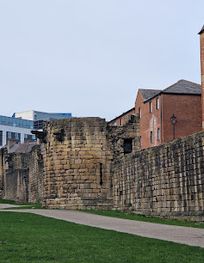
The Guildhall, Newcastle Upon Tyne Travel Guide
Discover Newcastle’s historic Guildhall, a stunning 17th-century civic landmark rich in architecture and medieval heritage.
The Guildhall in Newcastle upon Tyne is a Grade I listed historic civic building dating back to the mid-17th century. Featuring a neo-Grecian eastern remodelling and classical facades, it stands as a testament to Newcastle’s rich mercantile and judicial heritage. Located near the Quayside, it offers visitors a glimpse into the city’s medieval guilds and architectural evolution.
A brief summary to The Guildhall
- Newcastle upon Tyne, GB
- Duration: 0.5 to 2 hours
- Budget
-
 Outdoor
- Mobile reception: 4 out of 5

Know before you go
Hi, I'm Eve. Here are a few practical things to know before exploring The Guildhall.
- Check for guided tour availability to explore the interior and learn about its history in detail.
- Visit on weekdays for a quieter experience and better photo opportunities of the building and surroundings.
- Bring a camera to capture the intricate architectural details and nearby scenic views of the Quayside.
- Explore nearby historic sites such as Bessie Surtees House and Trinity House for a fuller cultural experience.
Do you manage this location?
Take control to get all the benefits, like improved information, better appearance, and stronger visibility across AI-powered discovery. Learn more about listing your business on Evendo
Activate your presenceOther nearby places you may find interesting
The closest places of the same kind, if this one is not quite what you had in mind.



Explore The Guildhall on the Map
A handpicked selection of must-see spots near The Guildhall, mapped for you.
Unlock the Best of The Guildhall
Buy tickets
-
No tickets available
Book tours with entry
-
No tours available
Book tours without entry

Getting There
-
Metro and Bus
Take the Tyne and Wear Metro to Central Station, approximately 10 minutes from Newcastle city center, followed by a 10-minute walk to the Guildhall. Frequent bus services also run along nearby routes with stops within 5 minutes’ walk. Tickets cost around £2–£4 depending on the route.
-
Taxi or Rideshare
A taxi or rideshare from Newcastle city center to the Guildhall takes about 5–10 minutes depending on traffic. Expect fares between £5 and £10. Note that parking near the Guildhall is limited and mostly restricted.
-
Walking
The Guildhall is easily accessible on foot from central Newcastle, with a 15–20 minute walk along pedestrian-friendly streets. The terrain is mostly flat but includes some cobbled areas. Suitable for most visitors with moderate mobility.
For the on-the-go comforts that matter to you
-
 Information Boards
-
 Seating Areas
-
 Trash Bins
Discover more about The Guildhall
Architectural Legacy Spanning Centuries
The Guildhall is a striking historic building situated on Sandhill in Newcastle upon Tyne, embodying architectural styles from the 17th to the 19th centuries. Its main structure was constructed between 1655 and 1660 by Robert Trollope, a master mason from York. The building’s facades underwent significant classical remodelling: the north front was redesigned by Stephenson and Newton in 1794–96, and the south front by John and William Stokoe in 1809. The east end features a neo-Grecian remodelling of an earlier medieval structure completed by Dobson in 1823–25. This layering of styles reflects the Guildhall’s evolving role and prominence in Newcastle’s civic life.Historical Significance and Civic Role
The Guildhall has served as a center for municipal governance and mercantile activity for centuries. The earliest references to a guildhall on this site date back to 1400, coinciding with the establishment of Newcastle’s Guild Merchant in 1216 by King John. The building was historically used for town court sessions and as a meeting place for the Merchant Venturers’ Hall, underscoring its importance in the administration of trade and justice. It also housed a fishmarket and other civic functions, illustrating its multifaceted role in the city’s social and economic fabric.Interior Features and Artistic Details
Inside, the Guildhall contains richly decorated spaces such as the Freeman’s Hall, adorned with intricate buttresses, coats of arms, and exquisite wood carvings. The Mayor’s Parlour features paintings from the original mansion house and a stunning ornamental ceiling. The courtroom, explorers’ chamber, and other rooms display historic oak carvings and marble floors, offering a glimpse into the grandeur of Newcastle’s civic past. These interiors highlight the craftsmanship and artistic heritage preserved within the building.Notable Events and Cultural Impact
The Guildhall has witnessed significant historical events, including the Guildhall Riots of 1740 when an angry crowd damaged the town court. Despite such turbulent moments, the building remains a symbol of Newcastle’s resilience and civic pride. Today, it stands as a Grade I listed building, recognized for its architectural and historic importance. The Guildhall continues to attract interest for its connection to the city’s medieval guilds and its role in shaping Newcastle’s identity.Setting and Surrounding Attractions
Located near the vibrant Quayside area, the Guildhall is surrounded by other historic landmarks such as Bessie Surtees House and Trinity House. Its proximity to the River Tyne and the Castle Garth area places it within a rich cultural and historic landscape. Visitors can enjoy scenic views and explore nearby heritage sites, making the Guildhall a key stop on any historical tour of Newcastle.Preservation and Accessibility
As a protected heritage site, the Guildhall is maintained to preserve its architectural integrity and historical significance. While it is not always open to the public, guided tours are occasionally offered, providing deeper insight into its history and architecture. The building’s narrow stairs and age may limit accessibility for some visitors, but its exterior and surrounding area remain accessible for exploration and photography.












Your all‑in‑one travel companion app
Explore expert travel guides, compare and book tours, experiences, hotels, and more—all from the palm of your hand. Download now for seamless trip planning wherever your wanderlust takes you.


Explore More of Newcastle Upon Tyne
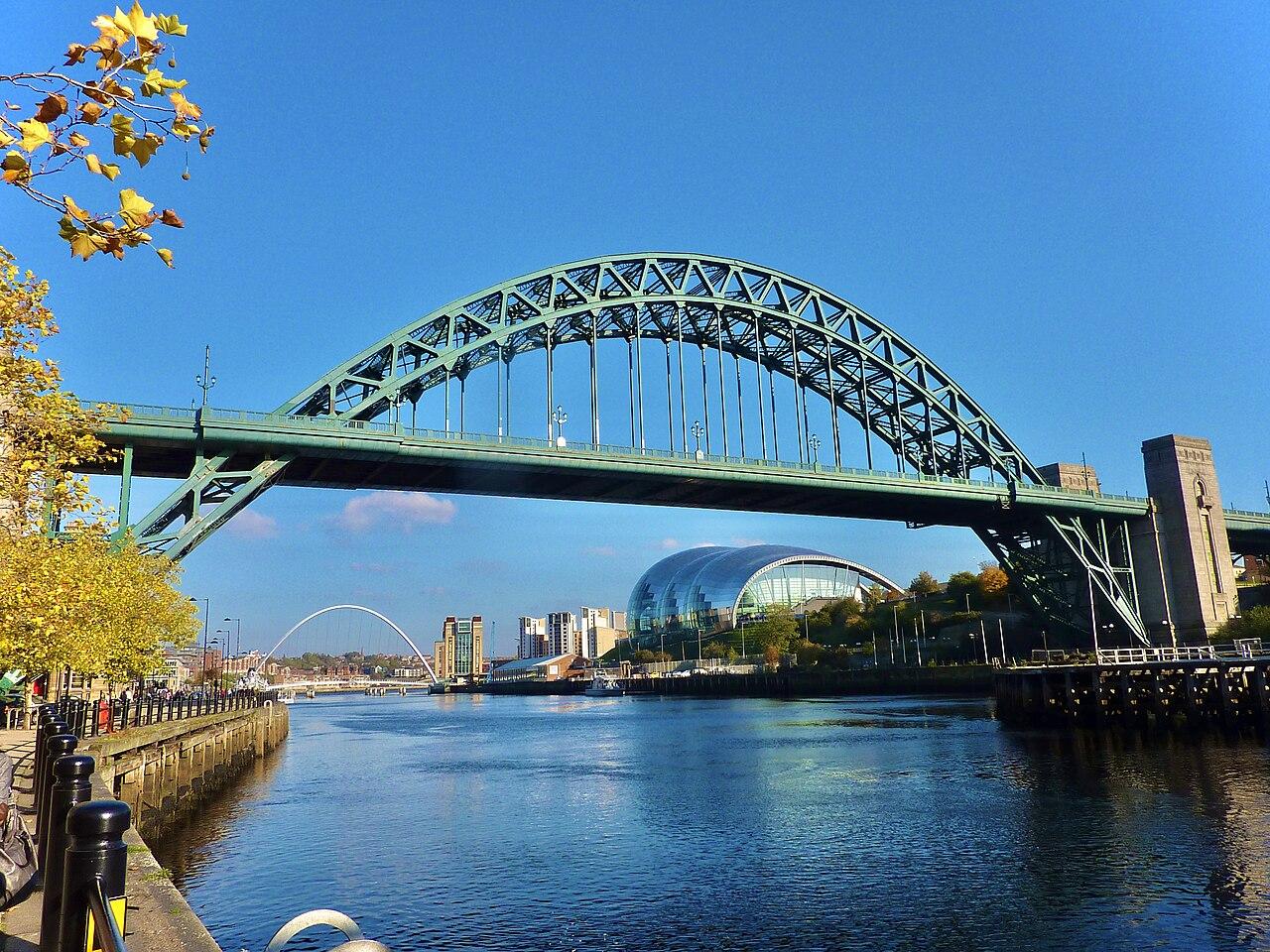
Looking beyond The Guildhall? Discover Newcastle Upon Tyne for broader travel guides, local hot-spots, and regional highlights.
Explore Newcastle Upon Tyne