

Kielder Viaduct Travel Guide
Free Guide: Explore Kielder Viaduct, a Victorian Gothic railway marvel blending engineering genius and scenic beauty in Northumberland’s forested landscape.


A brief summary of Kielder Viaduct
Explore Kielder Viaduct, a Victorian Gothic railway marvel blending engineering genius and scenic beauty in Northumberland’s forested landscape.
Kielder Viaduct is a striking Victorian railway viaduct built in 1862 by the North British Railway to carry the Border Counties Line across the North Tyne River near Kielder village. Famous for its seven semi-circular skew arches and Gothic-style battlements, it blends engineering ingenuity with architectural flair. Now a scheduled monument, it offers spectacular views of Kielder Forest and Reservoir and is accessible via scenic walking and cycling trails.
On-site amenities
 Restrooms
 Seating areas
 Information boards
Opening hours
- Every dayOpen 24 hours
Opening hours as listed on the venue’s Google Business Profile. Hours can change for services and special events, so check with the venue before you go.
- Address
- Kielder, Hexham NE48 1HX
- Website
Getting there
Car
Bus and Walking
Cycling
Discover more about Kielder Viaduct
Historic Origins and Architectural Distinction
Constructed between 1859 and 1862, Kielder Viaduct was designed to extend the Border Counties Railway line into Scotland. The project was commissioned by the North British Railway, which acquired the line in 1860. The viaduct spans the North Tyne River valley, originally crossing the Deadwater Burn, with a length of approximately 122 meters. Its design is unique due to the skewed angle at which it crosses the river and road, requiring complex stone-cutting techniques devised by architect Peter Nicholson. This mathematical challenge was solved by individually carving each stone to fit the skew arches, making it one of the finest examples of skew-arch construction in the North East of England.
Gothic Styling Inspired by Local Heritage
The viaduct’s distinctive Gothic appearance, complete with battlements and false arrow slits, was influenced by the nearby Kielder Castle, the Duke of Northumberland’s hunting lodge. The railway company agreed to reflect the castle’s Gothic style to appease the Duke, resulting in a structure that is both functional and visually striking. This architectural choice adds a romantic historic character to the viaduct, setting it apart from typical industrial railway bridges of its era.
From Railway Use to Preservation
The viaduct carried passenger trains until 1956 and goods traffic until 1958, after which the railway line was closed. Its future was uncertain for some time, with proposals to demolish it. However, a preservation campaign led by the Northumberland & Newcastle Society secured the viaduct’s survival by purchasing it for a nominal sum. Today, it is a protected scheduled monument, maintained as a heritage landmark and a testament to Victorian engineering prowess.
Natural Setting and Visitor Experience
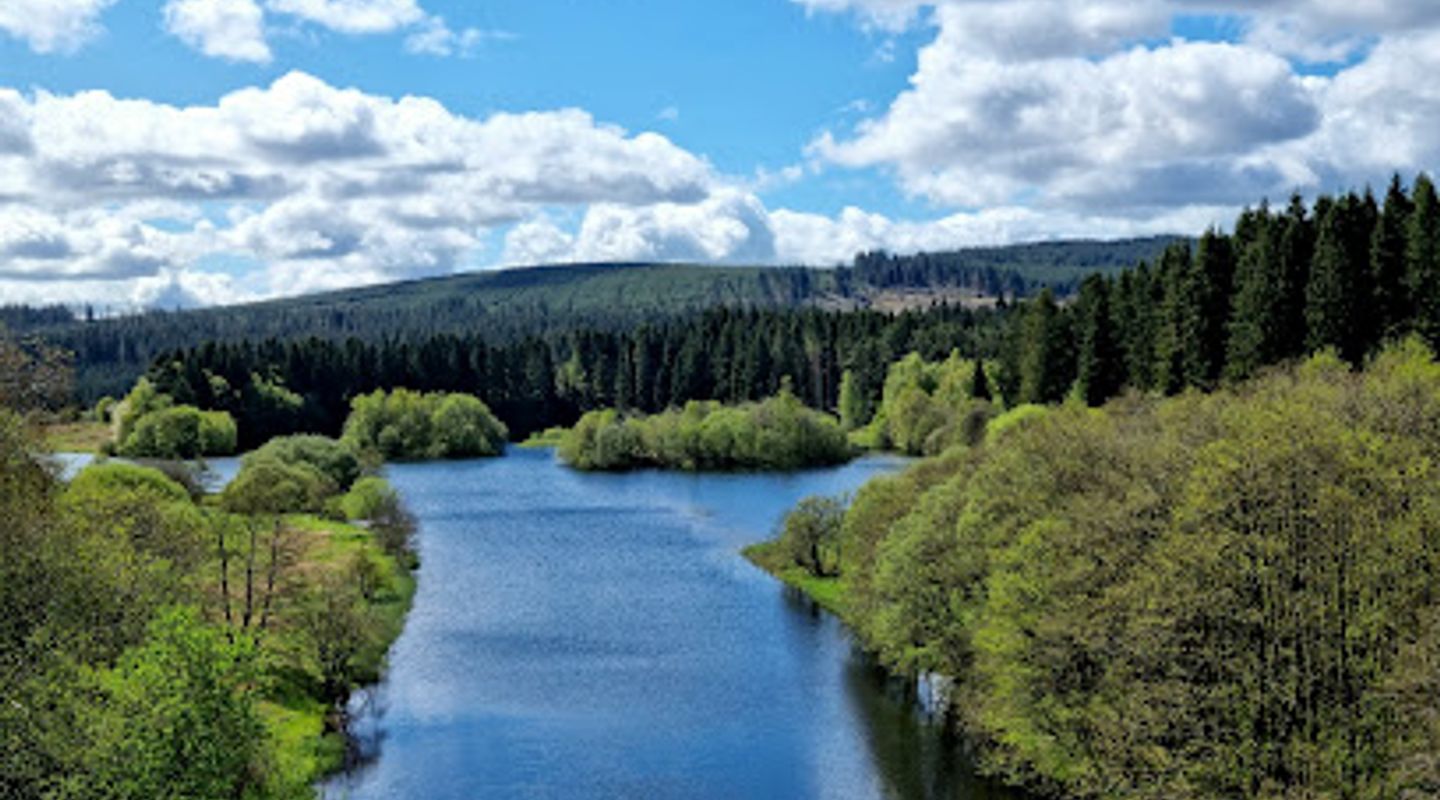
Nestled on the edge of Kielder village, the viaduct is surrounded by England’s largest forest and near Kielder Water, Northern Europe’s largest man-made lake. Visitors can enjoy spectacular panoramic views of the forest and reservoir from the top of the viaduct. The Lakeside Way trail crosses the viaduct, making it accessible by foot or bike from Kielder Village and Kielder Castle. A scenic path also runs beneath the structure along the North Tyne riverbank, offering different perspectives of its soaring arches.
Engaging Activities and Interpretation
For families and explorers, the Viaduct Ventures activity sheet provides imaginative ways to engage with the site, encouraging discovery of its history and surroundings. Interpretation boards near the viaduct share stories of the railway, the engineering challenges, and local industries once served by the line. This enriches the visitor experience, connecting the impressive structure to the broader cultural heritage of Northumberland.
Engineering Marvel and Cultural Legacy
Kielder Viaduct remains an enduring symbol of Victorian innovation, combining technical complexity with aesthetic consideration. Its skew arches showcase advanced engineering solutions of the 19th century, while its Gothic styling reflects a sensitivity to local heritage. The viaduct stands not only as a functional relic of railway history but as a cultural landmark that enhances the natural beauty and historical depth of the Kielder area.
Evendo Review Centre
 Google
Guest reviews
Best time to go
Quietest: Jan, Feb & Dec · before 6am or at 9pm
Busy times are Evendo estimates for a typical year, to help you plan. Actual crowds vary with events, school holidays and the weather.
Explore Kielder Viaduct on the map
A handpicked selection of must-see spots near Kielder Viaduct, mapped for you.
Get your free copy of our complete guide to Kielder Viaduct, delivered straight to you.
Everything on this page, from opening hours and how to get there to Eve’s tips and the best time to go, in one PDF you can read offline, print or share.
Already have an account? Sign in
Your Kielder Viaduct guide is ready.
We'll send it to · Not you? Sign out

Getting your guide ready…
We are putting together a fresh copy of the Kielder Viaduct guide. This can take up to a minute.
This can take a few moments. If your browser asks, choose Allow so the download can start. You'll find the guide in your Downloads folder.
Nothing happened? Download it again
Sorry, the guide is taking longer than usual. Please try again in a minute, or get it by email instead.
Other nearby places you may find interesting
The closest places of the same kind, if this one is not quite what you had in mind.
-
-
-
-
-


Swipe for more places
More to explore near Kielder Viaduct

 Best experiences near Kielder Viaduct
 Best hotels near Kielder Viaduct
 Best landmarks near Kielder Viaduct
 Best attractions near Kielder Viaduct
 Best shops near Kielder Viaduct
 Best restaurants near Kielder Viaduct
 Best bars near Kielder Viaduct
Do you manage this location?
Take control to get all the benefits, like improved information, better appearance, and stronger visibility across AI-powered discovery.
Explore more

Explore more of Northumberland
Discover Northumberland: A blend of natural beauty, rich history, and charming villages in England's northernmost county.
Explore Northumberland
Explore more of United Kingdom
Discover the United Kingdom: A blend of rich history, stunning landscapes, and vibrant cities, offering a unique travel experience for every visitor.
Explore United Kingdom
