Quoygrew settlement, Orkney Travel Guide
Explore Quoygrew, a Viking Age settlement on Westray revealing centuries of Norse life, fishing heritage, and medieval archaeology in Orkney.
Quoygrew is a remarkable multi-period archaeological settlement on Westray Island in Orkney, Scotland, dating from the Viking Age (circa AD 900) through to the 17th century. The site features two prominent low mounds—one coastal and one inland—revealing insights into Norse-era life, fishing economies, and long-term habitation. Excavations have uncovered medieval buildings, fish middens, and artifacts that illuminate the community’s evolving relationship with marine resources and settlement patterns over nearly a millennium.
A brief summary to Quoygrew settlement
- Westray, Orkney, GB
- Click to display
- Duration: 0.5 to 2 hours
- Free
-
 Outdoor
- Mobile reception: 3 out of 5

Know before you go
Hi, I'm Eve. Here are a few practical things to know before exploring Quoygrew settlement.
- Wear sturdy footwear as the site consists of low earthworks on uneven coastal terrain.
- Visit during daylight hours to fully appreciate the subtle landscape features and coastal views.
- Bring binoculars for birdwatching opportunities along the nearby coastline.
- Combine your visit with other archaeological sites on Westray for a comprehensive historical experience.
Do you manage this location?
Take control to get all the benefits, like improved information, better appearance, and stronger visibility across AI-powered discovery. Learn more about listing your business on Evendo
Activate your presenceOther nearby places you may find interesting
The closest places of the same kind, if this one is not quite what you had in mind.
Explore Quoygrew settlement on the Map
A handpicked selection of must-see spots near Quoygrew settlement, mapped for you.
Getting There
-
Bus
Take the local bus service from Kirkwall to Westray, which runs several times daily with a journey time of approximately 1.5 to 2 hours. From the Westray bus stop, Quoygrew is accessible by a 15-minute walk along coastal paths. Bus fares typically range from £8 to £12 one way.
-
Ferry and Walk
From mainland Orkney, take the ferry to Westray, a scenic 30-minute crossing. Upon arrival, Quoygrew is a 20-minute walk along marked coastal trails. Ferry tickets cost around £10 to £15 per adult, depending on season.
-
Car
Driving to Quoygrew on Westray is straightforward with local roads leading to nearby parking areas. The site is then reached by a short walk over uneven terrain. Parking is free but limited, and some roads may be narrow and single track.
For the on-the-go comforts that matter to you
-
 Information Boards
-
 Seating Areas
-
 Trash Bins
Discover more about Quoygrew settlement
Enduring Norse Heritage on Westray
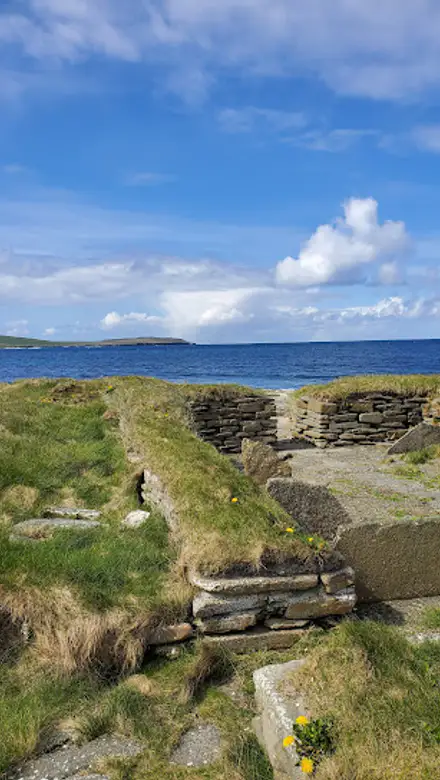
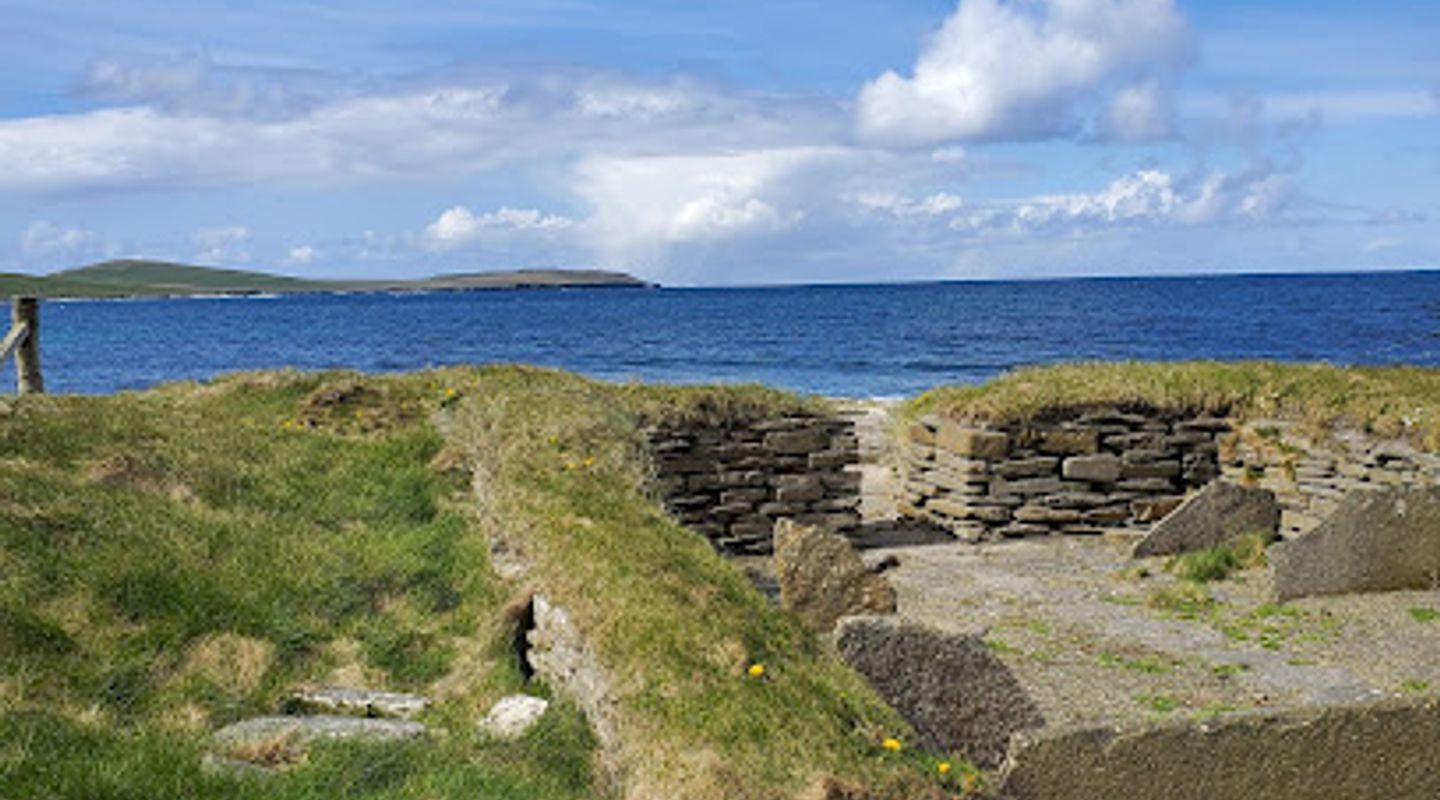
Quoygrew settlement is an extensive archaeological site on the island of Westray, part of the Orkney archipelago. Occupied from around the 9th or 10th century AD through to the 17th century, it provides a rare and valuable window into Norse and medieval life in northern Scotland. The site consists of two low mounds: one located near the shoreline and the other about 70 meters inland to the east. These mounds represent the remains of longhouses and farmsteads, reflecting a long-standing community that adapted over centuries to changing economic and environmental conditions.Archaeological Discoveries and Excavations
Excavations at Quoygrew have revealed a complex sequence of medieval and post-medieval buildings, including longhouses associated with fishing and farming activities. The site is notable for its large fish middens—piles of discarded fish bones—dominated by species such as cod, saithe, and ling. These middens provide crucial evidence of the settlement’s reliance on marine resources, highlighting a shift from earlier diets with more mammal bones to a fish-based economy during the Viking Age. Artefacts such as soapstone vessel shards and turf construction materials have also been recovered, enriching understanding of daily life and material culture.Environmental and Economic Context
The coastal location of Quoygrew was strategic for fishing and maritime trade, integral to the Norse settlers' livelihood. The artificially thickened 'plaggen' soils found at the site indicate deliberate land management for agriculture alongside fishing. The settlement’s long occupation period demonstrates resilience and adaptation to both natural and social changes, including shifts in economic focus from shore-based to more open-sea fishing practices.Broader Historical Significance
Quoygrew is part of a wider archaeological landscape on Westray and Orkney that includes Bronze Age ritual sites, Iron Age brochs, and early Christian monastic remains. The settlement’s continuity through the Viking Age into the medieval period connects it to the broader Norse cultural and economic networks in the North Atlantic. Artefacts and burial finds in the region attest to a wealthy and interconnected community engaged in long-distance trade and cultural exchange.Visitor Experience and Setting
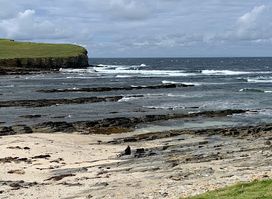
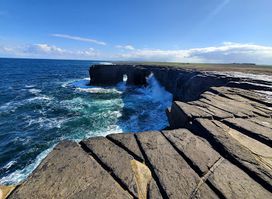
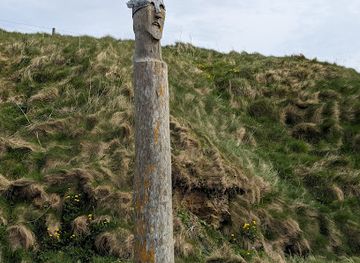
Today, Quoygrew offers visitors a tranquil and scenic glimpse into Orkney’s deep past, set against the rugged coastal backdrop of Westray. While the remains are subtle earthworks rather than standing structures, the site’s atmosphere evokes centuries of human habitation and maritime enterprise. Interpretive information enhances appreciation of the site’s archaeological importance and the Norse legacy in Orkney.Preservation and Research
Ongoing archaeological work continues to refine understanding of Quoygrew’s development and significance. The site is protected as a scheduled monument, ensuring its conservation for future generations. Research at Quoygrew contributes to broader knowledge of Viking Age settlements, subsistence strategies, and cultural identity in northern Scotland.












Your all‑in‑one travel companion app
Explore expert travel guides, compare and book tours, experiences, hotels, and more—all from the palm of your hand. Download now for seamless trip planning wherever your wanderlust takes you.


Explore More of Orkney
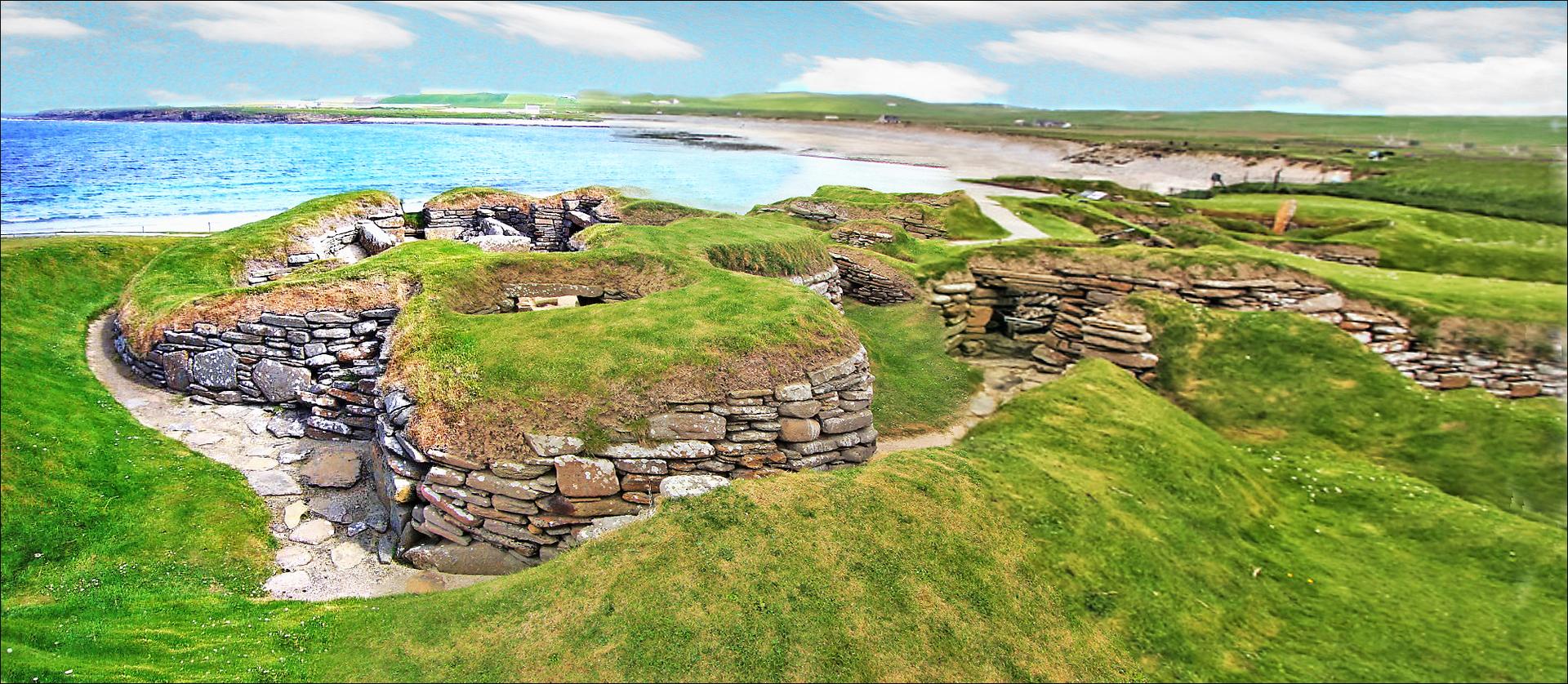
Looking beyond Quoygrew settlement? Discover Orkney for broader travel guides, local hot-spots, and regional highlights.
Explore Orkney