

William Marshal Statue Travel Guide
Free Guide: Medieval England's greatest knight, immortalized in bronze below his castle stronghold.


A brief summary of William Marshal Statue
Medieval England's greatest knight, immortalized in bronze below his castle stronghold.
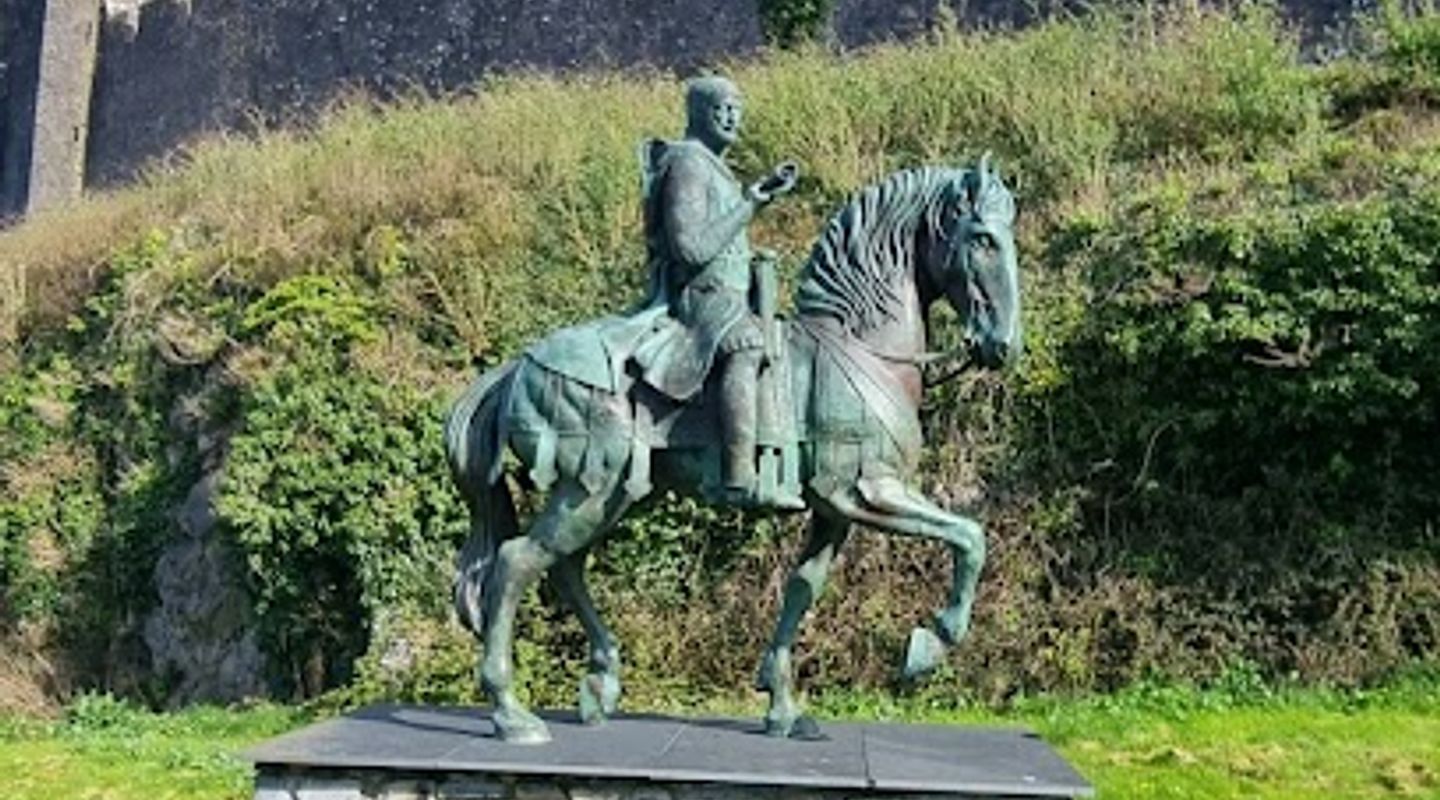
A striking bronze sculpture commemorating William Marshal, 1st Earl of Pembroke, unveiled in May 2022 outside Pembroke Castle. The statue depicts the renowned 12th-13th century knight mounted on his war-horse, capturing the Anglo-Norman magnate who rose from humble origins to become one of medieval England's most powerful figures. Created by sculptor Harriet Addyman, this modern monument celebrates a pivotal historical figure whose loyalty and military prowess shaped English history.
On-site amenities
 Information boards
 Seating areas
- Address
- Monkton, Pembroke SA71 4LE
Getting there
Car
Bus
Walking
Taxi
Discover more about William Marshal Statue
A Knight's Rise to Power
William Marshal stands as one of medieval England's most remarkable figures—a man who rose from being the younger son of a minor knight to become the most powerful magnate in the realm. Born into relative obscurity, his extraordinary skill at tournaments, unwavering loyalty to successive monarchs, and political acumen transformed him into a trusted adviser and protector of kings. His journey from obscurity to prominence reflects the possibilities of medieval society, where martial prowess and strategic intelligence could elevate a man far beyond his birth.The statue, unveiled on 7 May 2022, captures William Marshal in his prime: mounted on a war-horse, armed and ready, his figure projecting the confidence and authority he commanded during his lifetime. Created by sculptor Harriet Addyman of Narberth, the bronze work stands immediately below the walls of Pembroke Castle, the very fortress that became the seat of his power and the symbol of his dominion over south-west Wales.
Shaping Medieval England
William Marshal's influence on English history proved decisive at critical moments. In 1214-15, he held the balance of power between King John and the rebel barons, remaining loyal to the Crown while ensuring that the King sealed Magna Carta—a document that would define English liberty for centuries. His most celebrated achievement came as regent to the young King Henry III between 1216 and 1219. When civil war threatened to tear the kingdom apart and French forces invaded, William rallied the loyal barons and led them to a decisive victory at the Battle of Lincoln in 1217. That triumph saved both the Charter and England itself; had the French prevailed, the course of English history would have been fundamentally altered.William's political wisdom extended beyond the battlefield. He re-issued Magna Carta twice under his own seal, demonstrating his commitment to the principles of law and governance. His actions during these turbulent years established precedents for royal authority tempered by law—principles that would echo through English constitutional history.
Building a Dynasty Through Marriage and Land
William's transformation into a magnate came through a strategic marriage arranged by the Crown. In 1189, King Richard Lionheart confirmed his permission for William to marry Isabel, daughter and heiress of Richard de Clare, Earl of Pembroke. Isabel brought with her vast estates across Wales, England, Ireland, and France—lands that had been stripped from her father by Henry II but were now restored through William's union with her. In 1200, King John granted William the Earldom of Pembroke, cementing his status as one of the realm's greatest landholders.Pembroke became the base of William's power in south-west Wales. The region, praised by the chronicler Gerald of Wales for its flat lands, long seacoast, beauty, wheat, and abundant fish, provided both wealth and strategic advantage. William set about consolidating his authority, recapturing lands from Welsh princes and fortifying his position. He commissioned the construction of Pembroke Castle's great circular tower—80 feet high with walls 20 feet thick at the base—a monument to Anglo-Norman power that dominated the landscape and projected his authority across the region.
The Knight's Armor and Legacy
During William's era, plate armor had not yet been invented. Instead, he wore a mail hauberk made of 30,000 interlinking iron rings, covering his arms, chest, and reaching to his knees with strategic splits front and back to allow skilled horsemanship. This armor, combined with his legendary tournament skills, made him a formidable warrior whose reputation preceded him across Christendom.William Marshal died on 14 May 1219, worn out from decades of service to the Crown. In his final act, he arranged to become a Knight Templar, hoping that God would forgive him for the violence and property seizure that had marked his military career. He was buried in the Temple Church in London, where a magnificent effigy commemorates his life. The statue at Pembroke Castle, unveiled more than 800 years after his death, recalls those days of Anglo-Norman power and the extraordinary man who shaped them.
Evendo Review Centre
 Google
Guest reviews
Best time to go
Quietest: Jan, Feb & Nov · before 7am
Busy times are Evendo estimates for a typical year, to help you plan. Actual crowds vary with events, school holidays and the weather.
Explore William Marshal Statue on the map
A handpicked selection of must-see spots near William Marshal Statue, mapped for you.
Get your free copy of our complete guide to William Marshal Statue, delivered straight to you.
Everything on this page, from opening hours and how to get there to Eve’s tips and the best time to go, in one PDF you can read offline, print or share.
Already have an account? Sign in
Your William Marshal Statue guide is ready.
We'll send it to · Not you? Sign out

Getting your guide ready…
We are putting together a fresh copy of the William Marshal Statue guide. This can take up to a minute.
This can take a few moments. If your browser asks, choose Allow so the download can start. You'll find the guide in your Downloads folder.
Nothing happened? Download it again
Sorry, the guide is taking longer than usual. Please try again in a minute, or get it by email instead.
Other nearby places you may find interesting
The closest places of the same kind, if this one is not quite what you had in mind.
-
-
-
-
-


Swipe for more places
More to explore near William Marshal Statue

 Best experiences near William Marshal Statue
 Best hotels near William Marshal Statue
 Best landmarks near William Marshal Statue
 Best attractions near William Marshal Statue
 Best shops near William Marshal Statue
 Best restaurants near William Marshal Statue
 Best bars near William Marshal Statue
Do you manage this location?
Take control to get all the benefits, like improved information, better appearance, and stronger visibility across AI-powered discovery.
Explore more

Explore more of Pembrokeshire
Explore Pembrokeshire: Wales' Coastal Gem with Stunning Beaches, Scenic Trails, and Historic Castles. Ideal for Nature Lovers and History Enthusiasts.
Explore Pembrokeshire
Explore more of United Kingdom
Discover the United Kingdom: A blend of rich history, stunning landscapes, and vibrant cities, offering a unique travel experience for every visitor.
Explore United Kingdom
