Buchanan Castle, Renfrewshire Travel Guide
Explore the hauntingly beautiful ruins of Buchanan Castle, a grand 19th-century Scottish baronial mansion steeped in history and mystery near Loch Lomond.
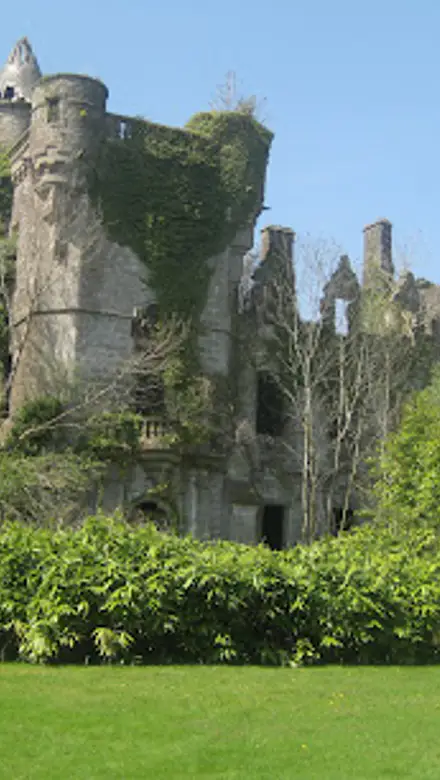
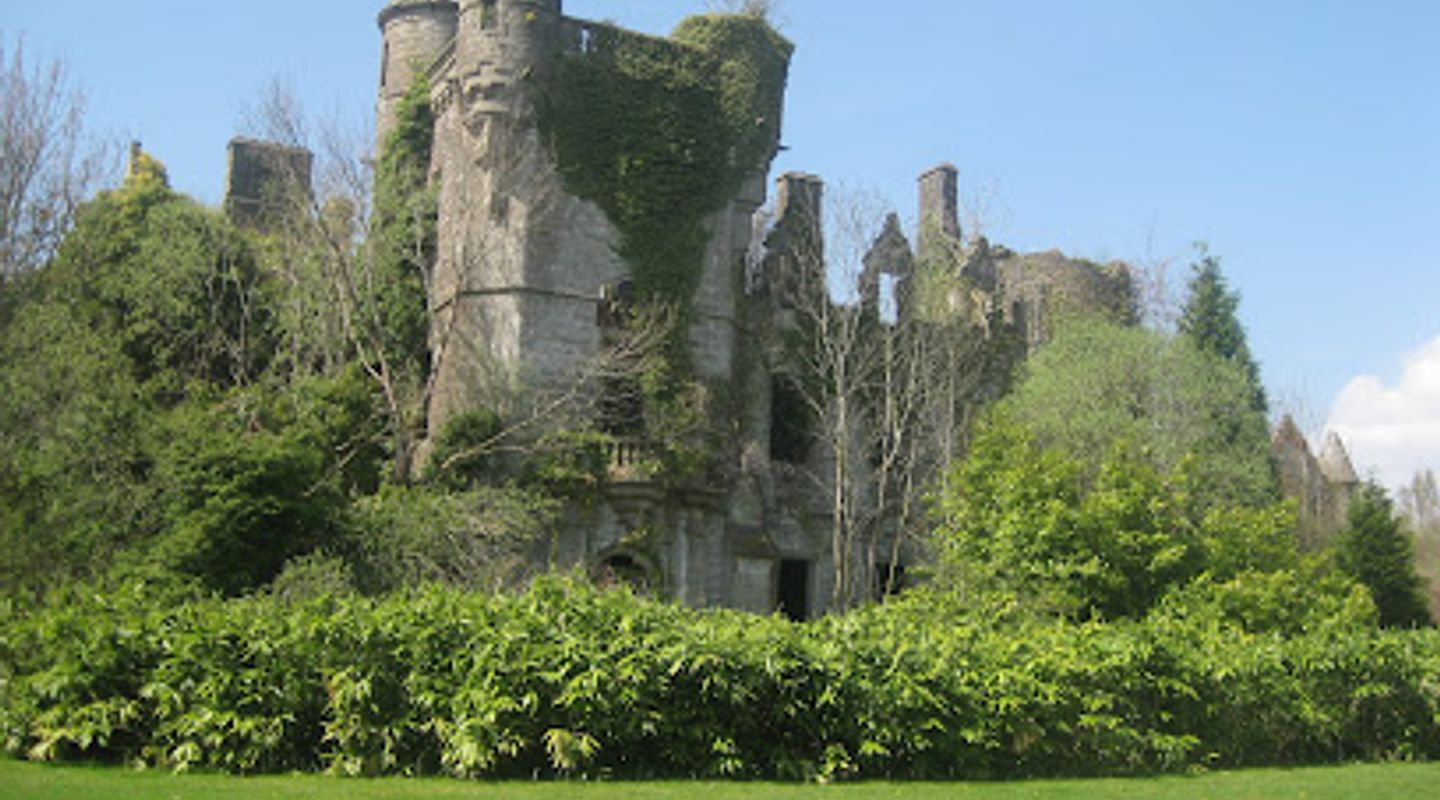
Buchanan Castle, located near Drymen in Stirlingshire, Scotland, is a striking ruin of a grand 19th-century Scottish baronial mansion. Built between 1852 and 1858 by the 4th Duke of Montrose as a replacement for the earlier Buchanan Auld House, it served as the Montrose family home until 1925. The castle later became a hotel, a WWII hospital famously treating Rudolf Hess, and an army school before falling into ruin. Today, it stands as a hauntingly beautiful landmark surrounded by a golf course and overgrown grounds, visible only from a safe distance.
A brief summary to Buchanan Castle
- Glasgow, G63 0HX, GB
- Click to display
- Duration: 1 to 3 hours
- Free
-
 Outdoor
- Mobile reception: 4 out of 5

Know before you go
Hi, I'm Eve. Here are a few practical things to know before exploring Buchanan Castle.
- Observe the castle ruins from a safe distance and respect all safety barriers and warning signs to avoid hazards.
- Combine your visit with a round of golf at Buchanan Castle Golf Course for a full day of scenic leisure.
- Visit the nearby village of Drymen for amenities and to experience local Scottish culture.
- Bring a camera to capture the dramatic and atmospheric views of the castle ruins and surrounding landscape.
Do you manage this location?
Take control to get all the benefits, like improved information, better appearance, and stronger visibility across AI-powered discovery. Learn more about listing your business on Evendo
Activate your presenceOther nearby places you may find interesting
The closest places of the same kind, if this one is not quite what you had in mind.
Explore Buchanan Castle on the Map
A handpicked selection of must-see spots near Buchanan Castle, mapped for you.
Getting There
-
Car
Driving from Glasgow to Buchanan Castle takes approximately 40-50 minutes via the M8 and A811. Parking is available in the nearby village of Drymen. Note that the castle grounds are fenced off, so plan to walk from Drymen to view the ruins safely.
-
Train and Walk
Take a train from Glasgow Queen Street to Balloch station (about 40 minutes), then a taxi or local bus to Drymen (around 15 minutes). From Drymen, enjoy a 20-30 minute walk along safe paths to the castle ruins. The terrain is moderate and suitable for most walkers.
-
Bus
Regular bus services run from Glasgow city center to Drymen, with journey times around 1 hour. From Drymen, the castle is accessible by a short walk. Bus frequency may be limited on weekends and holidays, so check schedules in advance.
For the on-the-go comforts that matter to you
-
 Restrooms
-
 Food Options
-
 Drink Options
-
 Seating Areas
-
 Information Boards
Discover more about Buchanan Castle
Architectural Grandeur and Origins
Buchanan Castle was commissioned by James Graham, the 4th Duke of Montrose, and constructed between 1852 and 1858 in the Scottish baronial style. This style is characterized by its turrets, bartizans, stepped gables, and an L-plan tower, creating an imposing and picturesque silhouette. It replaced the earlier Buchanan Auld House, which had been destroyed by fire in 1852. The castle was designed to befit the status of the Montrose family, who had acquired the estate from the Clan Buchanan in the 17th century. The building’s grand scale and intricate design reflected the wealth and prestige of the dukes, with lavish interiors and expansive grounds.Historical Significance and Clan Connections
Though named after the Buchanan district, the castle itself is not directly connected to the Clan Buchanan but rather to Clan Graham, who became the estate’s owners in the late 1600s. The original lands had belonged to Clan Buchanan since at least the 13th century, but the chiefly line ended in the 1680s. The Montrose family transformed the estate into their principal seat, replacing Mugdock Castle and the old Buchanan house. Buchanan Castle remained the family home until 1925, after which it was sold and repurposed, marking the end of its role as a noble residence.20th Century Transformations and Wartime Role
In the 1930s, the castle and its grounds were converted into a hotel and golf course, capitalizing on the scenic location near Loch Lomond. However, the outbreak of World War II changed its fate dramatically. The castle was requisitioned as a hospital, treating wounded soldiers and notable figures such as Rudolf Hess, Hitler’s deputy, who was brought here after his 1941 flight to Scotland in an ill-fated peace mission. After the war, the castle briefly served as an Army School of Education. To avoid property taxes, the roof was removed in 1954, accelerating the building’s decline into ruin.The Present-Day Ruins and Surroundings
Today, Buchanan Castle stands as a haunting ruin surrounded by overgrown vegetation and fenced off for safety due to its unstable condition. The castle’s crumbling walls and turrets evoke a sense of romantic decay and mystery. It lies within the grounds of Buchanan Castle Golf Course, which remains active and offers spectacular views of the ruins. Visitors are advised to admire the castle from a safe distance, respecting warning signs and barriers. The surrounding landscape, near the village of Drymen and close to Loch Lomond, offers a peaceful and scenic setting that enhances the castle’s atmospheric presence.Local Landscape and Cultural Context
The castle is situated in a region rich with Scottish heritage, near the traditional lands of Clan Buchanan along the eastern shores of Loch Lomond. The area features a blend of natural beauty, including woodlands and the nearby Loch Lomond and The Trossachs National Park. The ruins of Buchanan Castle contribute to the cultural tapestry of Stirlingshire, linking the past aristocratic grandeur with the natural environment. Nearby, the original Buchanan Auld House site and other clan landmarks offer deeper insight into the region’s history.Visitor Experience and Safety Considerations
While Buchanan Castle no longer functions as a residence or hotel, its ruins provide a compelling destination for history enthusiasts, photographers, and walkers. The site’s eerie and overgrown state creates a unique atmosphere, combining beauty with a touch of melancholy. Safety is paramount, as the structure is unstable and fenced off; visitors should refrain from entering the ruins and instead enjoy views from designated paths and nearby areas. The adjacent golf course and village of Drymen offer amenities and additional recreational opportunities, making the castle a memorable highlight within a broader exploration of central Scotland.












Your all‑in‑one travel companion app
Explore expert travel guides, compare and book tours, experiences, hotels, and more—all from the palm of your hand. Download now for seamless trip planning wherever your wanderlust takes you.


Explore More of Renfrewshire
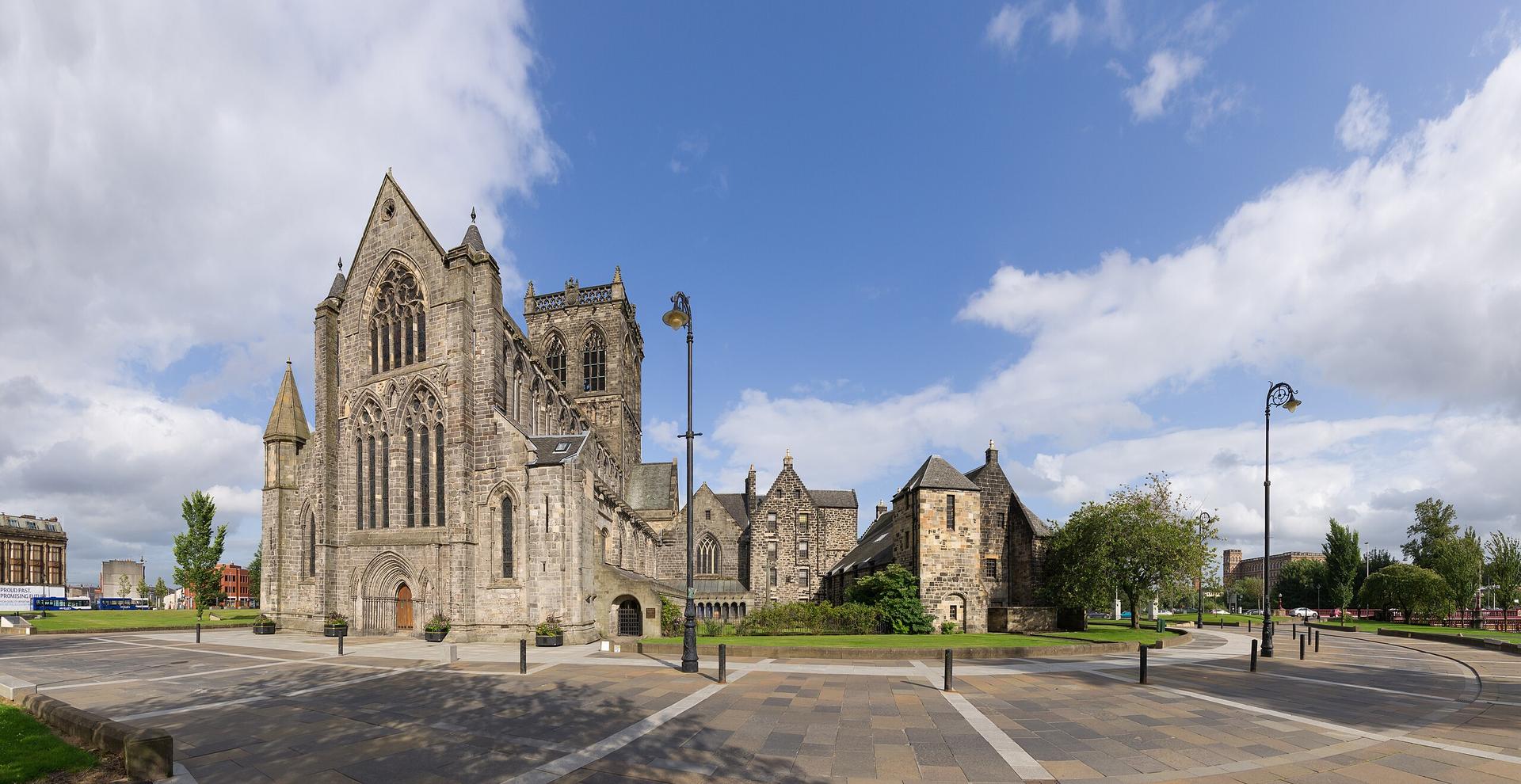
Looking beyond Buchanan Castle? Discover Renfrewshire for broader travel guides, local hot-spots, and regional highlights.
Explore Renfrewshire