Formakin House Travel Guide
Free Guide: A whimsical early 20th-century mansion known as the Monkey House, set in peaceful Renfrewshire parkland with woodland walks and historic charm.


A brief summary of Formakin House
A whimsical early 20th-century mansion known as the Monkey House, set in peaceful Renfrewshire parkland with woodland walks and historic charm.
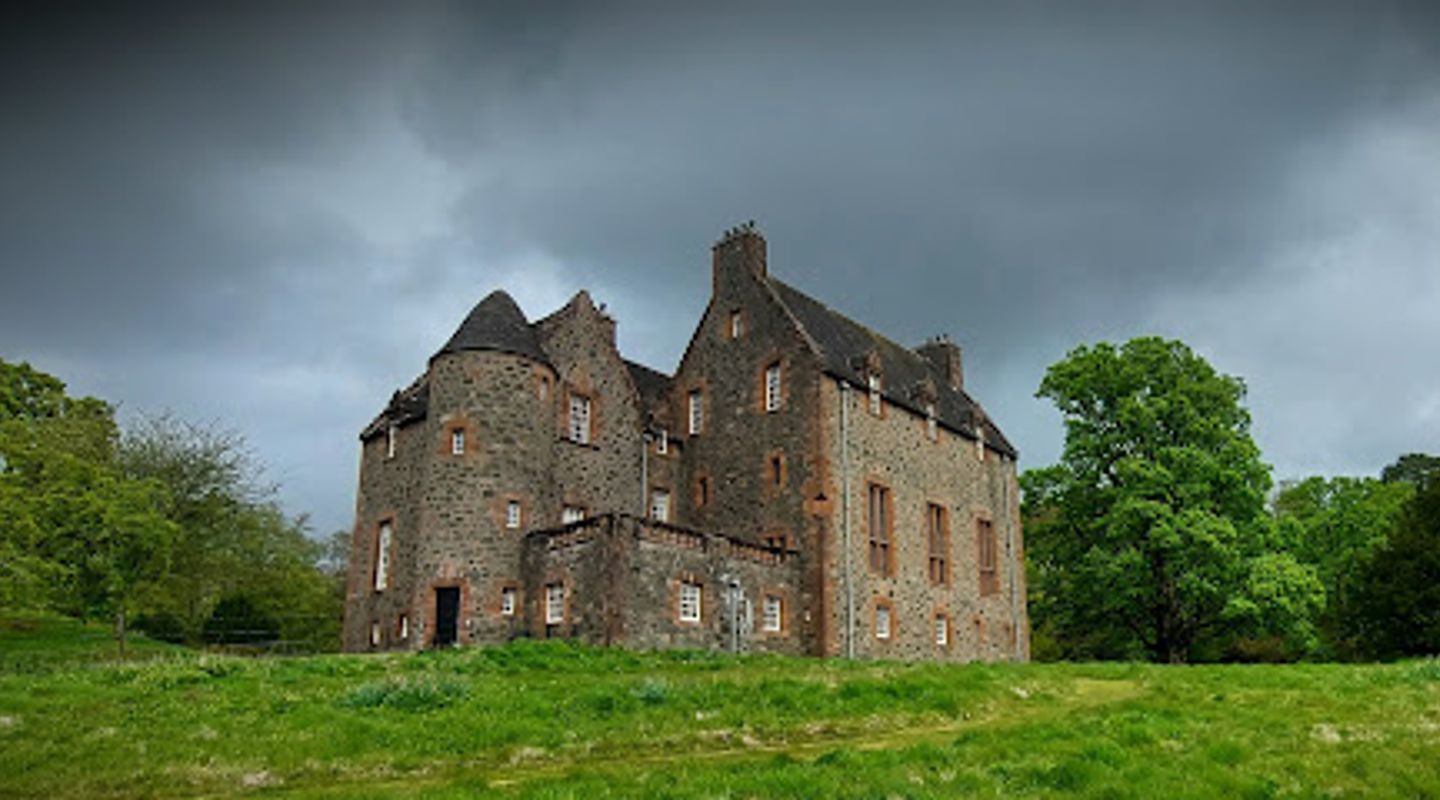
On the outskirts of Bishopton in Renfrewshire, Formakin House is an early 20th-century mansion known locally as the Monkey House for its whimsical stone monkeys perched on the roof. Built for a wealthy stockbroker and art collector, the estate features a 17th-century-style tower house, elegant gardens, and woodland walks. Though now converted into private residences, the surrounding grounds remain a cherished green space for quiet exploration, where history, architecture, and local folklore blend beneath the trees.
On-site amenities
 Seating areas
 Trash bins
 Information boards
- Address
- Bishopton PA7 5NX
Getting there
By car from Glasgow
By public transport and walk
By bicycle
On foot from Bishopton
Discover more about Formakin House
A Mansion with a Mischievous Spirit
Formakin House is not a medieval castle, but a romantic early 20th-century mansion built in the style of a 17th-century Scottish tower house. It was commissioned by John Augustus Holms, a Paisley stockbroker and art collector, who wanted a grand country estate to house his treasures. The design was entrusted to architect Robert Lorimer, and the result is a stately, A-listed mansion with a distinctly theatrical flair. The estate’s most famous feature is its collection of stone monkeys carved into the masonry and perched on the roofs, giving the place its local nickname, the Monkey House. These playful figures, along with a curious stone archway dated "1694 DL" (said to stand for "Damned Lie"), hint at Holms’s sense of humour and his desire to create a place that felt both historic and slightly mischievous.
From Private Dream to Public Treasure
The Formakin estate began as Millbank Farm, which Holms assembled into a larger property in the early 1900s. He lived on the estate until his death in 1938, after which it passed to Glasgow entrepreneur Albert Ernest Pickard. During the Second World War, the grounds were requisitioned by the army, and the buildings gradually fell into disrepair. By the 1970s, the mansion was derelict, and there were plans to turn the site into a housing development. Local campaigners and heritage bodies fought to save the estate, and with support from the National Heritage Memorial Fund, the site was preserved. Between 1988 and 1999, the mansion was sensitively restored and converted into private residences, ensuring its survival as a distinctive landmark in the Renfrewshire countryside.
Woodland Walks and Hidden Details
Today, Formakin House stands as a private residential estate, but the surrounding parkland and woodland walks remain accessible and much loved by locals. The estate extends across rich parkland and lush policy woodland, with formal garden areas including an Oriental Garden and a Fountain Garden, influenced by the designs of Gertrude Jekyll. Paths wind through mature trees, past ornamental features and curious stonework, offering a peaceful escape just a short distance from Glasgow. Visitors can admire the mansion’s exterior, with its Jacobean-style details, stone turrets, and, of course, the famous monkeys, while enjoying the quiet atmosphere of this historic estate.
Respecting a Living Estate
Because Formakin House is now a private residential development, it is important to visit with consideration. The mansion itself is not open to the public as a museum or attraction, but the external views and the surrounding woodland paths provide a rewarding experience for those interested in architecture, local history, and quiet countryside walks. Parking can be limited, and visitors are asked to respect the residents by not blocking driveways, gathering in large groups, or venturing onto private property. Dogs should be kept under control and waste picked up, and horses are not permitted on the estate. With this mindful approach, the estate can continue to be enjoyed as a green, historic space on the edge of Bishopton.
Evendo Review Centre
 Google
Guest reviews
Best time to go
Quietest: Jan, Feb & Nov · before 3am
Busy times are Evendo estimates for a typical year, to help you plan. Actual crowds vary with events, school holidays and the weather.
Explore Formakin House on the map
A handpicked selection of must-see spots near Formakin House, mapped for you.
Get your free copy of our complete guide to Formakin House, delivered straight to you.
Everything on this page, from opening hours and how to get there to Eve’s tips and the best time to go, in one PDF you can read offline, print or share.
Already have an account? Sign in
Your Formakin House guide is ready.
We'll send it to · Not you? Sign out

Getting your guide ready…
We are putting together a fresh copy of the Formakin House guide. This can take up to a minute.
This can take a few moments. If your browser asks, choose Allow so the download can start. You'll find the guide in your Downloads folder.
Nothing happened? Download it again
Sorry, the guide is taking longer than usual. Please try again in a minute, or get it by email instead.
Other nearby places you may find interesting
The closest places of the same kind, if this one is not quite what you had in mind.
-
-
-
-
-


Swipe for more places
More to explore near Formakin House

 Best experiences near Formakin House
 Best hotels near Formakin House
 Best landmarks near Formakin House
 Best attractions near Formakin House
 Best shops near Formakin House
 Best restaurants near Formakin House
 Best bars near Formakin House
Do you manage this location?
Take control to get all the benefits, like improved information, better appearance, and stronger visibility across AI-powered discovery.
Explore more

Explore more of Renfrewshire
Discover Renfrewshire: Scotland's blend of history, culture, and natural beauty, from ancient abbeys to scenic parks.
Explore Renfrewshire
Explore more of United Kingdom
Discover the United Kingdom: A blend of rich history, stunning landscapes, and vibrant cities, offering a unique travel experience for every visitor.
Explore United Kingdom