

Littledean Tower Travel Guide
Free Guide: Explore the evocative ruins of Littledean Tower, a 16th-century border fortress steeped in history, legend, and haunting tales along the River Tweed.


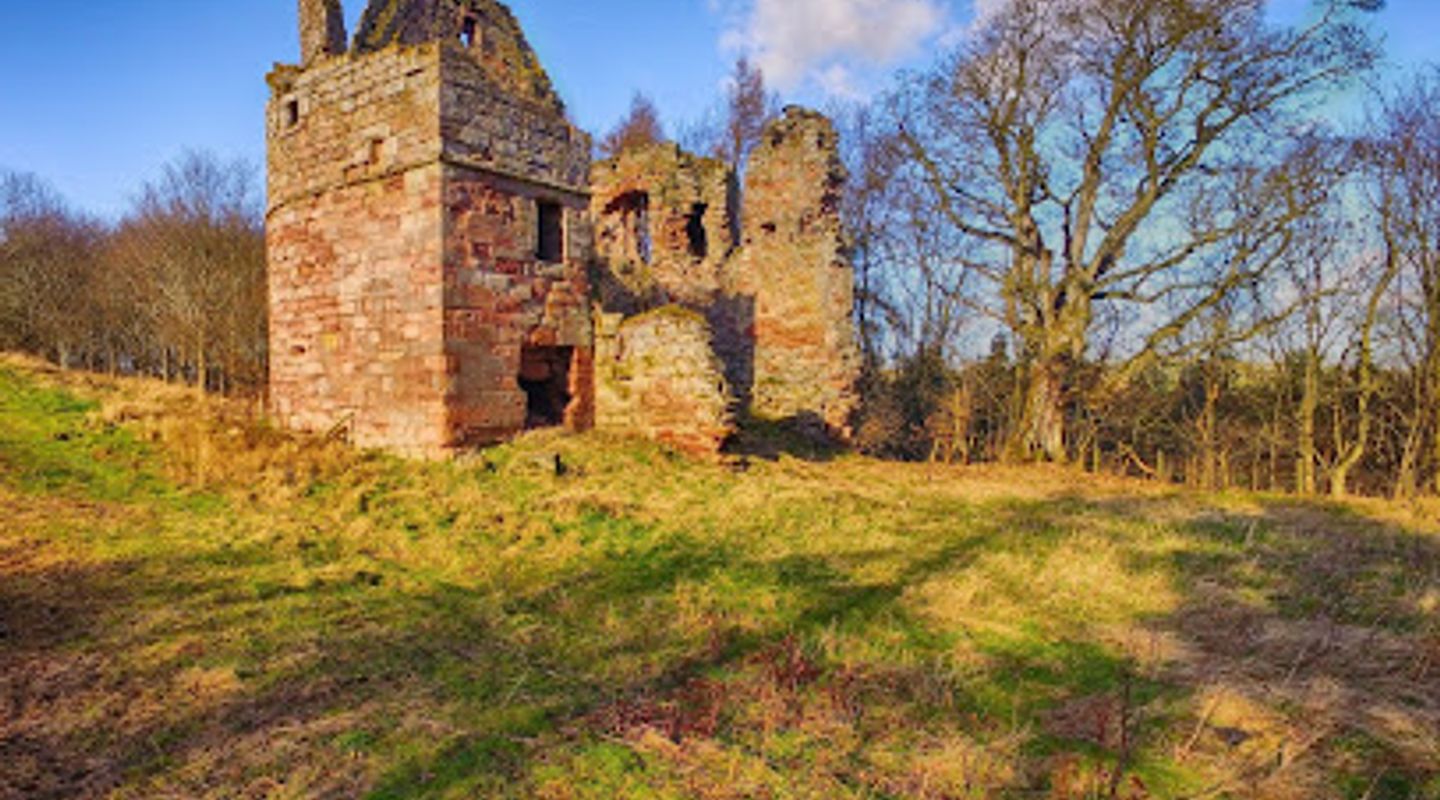
A brief summary of Littledean Tower
Explore the evocative ruins of Littledean Tower, a 16th-century border fortress steeped in history, legend, and haunting tales along the River Tweed.
Littledean Tower, located near Melrose in the Scottish Borders, is a striking 16th-century tower built on the site of an earlier fort. Once the principal residence of the Kers of Littledean, this historic stronghold guarded a vital ford on the River Tweed. The tower’s robust D-shaped defensive addition and its ruins evoke centuries of border conflicts, local legends, and ghost stories, making it a captivating site for history enthusiasts and those intrigued by the supernatural.
On-site amenities
 Information boards
 Seating areas
 Trash bins
- Address
- A699, Melrose TD6 0RP
- Website
Getting there
Car
Bus
Walking
Discover more about Littledean Tower
Origins and Strategic Importance of Littledean Tower
Littledean Tower stands on the south bank of the River Tweed, near an ancient ford that historically served as a crucial crossing point. The site’s occupation dates back to prehistoric times, evidenced by earthworks of a likely prehistoric fort surrounding the tower. The strategic location made it vital for controlling movement along the river and protecting the surrounding lands. The earliest castle here was destroyed by the early 1400s during the Wars of Independence, a period marked by Scottish efforts to reclaim and demolish English-held fortifications to prevent reoccupation.
Architectural Evolution and Defensive Features
The current tower was constructed primarily in the 16th century as the main residence of the Kers of Littledean, a branch of the powerful Kers of Cessford. The initial structure was an oblong four-storey block made of freestone rubble with ashlar dressings. Later in the century, a massive D-shaped tower was added to the west end, featuring 1.8-meter-thick walls and six oval gun loops on both the ground and first floors. This addition enhanced the tower’s defensive capabilities, particularly after it was attacked and burnt by the English in 1544. Atop the tower, a corbelled parapet and a two-storey garret with crow-stepped gables were constructed, adding both protection and accommodation.
Decline and Abandonment in the 18th Century
Littledean Tower remained in use until the 18th century, when the Kers family relocated to nearby Nenthorn House. The tower subsequently fell into ruin. Local lore recounts a dramatic end to its habitation: the head of the house was reportedly gored to death by his prize bull, after which the tower was abandoned. Over time, the structure deteriorated, leaving the romantic and evocative ruins visible today.
Legends, Hauntings, and Local Lore
The tower is steeped in ghost stories and folklore. It is said to be haunted by the spirit of a former lady of the house, remembered as a covetous and oppressive figure who could not rest due to her amassed wealth. Other tales speak of a laird who encountered mysterious women spinning by a fire in a nearby cottage, and whose ghost is said to race toward the tower on stormy nights. Two young women in white, believed to be victims of the laird’s cruelty, have also been reported as spectres approaching the tower. In the 19th century, two skeletons were found near the riverbank, thought to be connected to these legends.
Present-Day Significance and Visitor Experience
Today, Littledean Tower is a captivating ruin that offers visitors a glimpse into Scotland’s turbulent border history and a chance to explore a site rich in architectural and cultural heritage. Its setting on the Tweed’s banks provides scenic views and a palpable sense of the past. The tower’s evocative atmosphere, combined with its historical and supernatural associations, makes it a unique destination for those interested in history, archaeology, and folklore.
Preservation and Archaeological Interest
Archaeological investigations have highlighted the tower’s layered history, from prehistoric fortifications through medieval and early modern periods. While much of the original barmkin has vanished, the surviving structures continue to be studied and preserved as part of Scotland’s border heritage. The site’s blend of natural beauty, historical depth, and haunting stories ensures its ongoing fascination for scholars and visitors alike.
Evendo Review Centre
 Google
Guest reviews
Best time to go
Quietest: Jan, Feb & Mar · before 6am or at 8pm
Busy times are Evendo estimates for a typical year, to help you plan. Actual crowds vary with events, school holidays and the weather.
Explore Littledean Tower on the map
A handpicked selection of must-see spots near Littledean Tower, mapped for you.
Get your free copy of our complete guide to Littledean Tower, delivered straight to you.
Everything on this page, from opening hours and how to get there to Eve’s tips and the best time to go, in one PDF you can read offline, print or share.
Already have an account? Sign in
Your Littledean Tower guide is ready.
We'll send it to · Not you? Sign out

Getting your guide ready…
We are putting together a fresh copy of the Littledean Tower guide. This can take up to a minute.
This can take a few moments. If your browser asks, choose Allow so the download can start. You'll find the guide in your Downloads folder.
Nothing happened? Download it again
Sorry, the guide is taking longer than usual. Please try again in a minute, or get it by email instead.
Other nearby places you may find interesting
The closest places of the same kind, if this one is not quite what you had in mind.
-
Frenchland Tower Explore the evocative ruins of Frenchland Tower, a 16th-century Scottish stronghold with panoramic views over Moffat and the Annandale valley.
-
Kelso Discover Kelso’s medieval charm and rich heritage nestled in the scenic Scottish Borders’ Tweed Valley.
-
Mungo Park Monument Historic monument in Selkirk honoring Mungo Park, pioneering Scottish explorer of West Africa and the Niger River.
-
Over Ancrum Discover the tranquil historic landmark of Over Ancrum near Jedburgh, where medieval heritage meets scenic Scottish landscapes.
-
Scott/Douglas Mausoleum A neo-classical temple mausoleum in Kelso honoring the historic Scott and Douglas families amidst the serene Springwood estate.
Swipe for more places
More to explore near Littledean Tower

 Best experiences near Littledean Tower
 Best hotels near Littledean Tower
 Best landmarks near Littledean Tower
 Best attractions near Littledean Tower
 Best shops near Littledean Tower
 Best restaurants near Littledean Tower
 Best bars near Littledean Tower
Do you manage this location?
Take control to get all the benefits, like improved information, better appearance, and stronger visibility across AI-powered discovery.
Explore more
Explore more of Roxburghshire
Discover the enchanting landscapes and rich history of Roxburghshire, a picturesque region in the Scottish Borders known for its ancient castles, scenic hills, and vibrant market towns.
Explore Roxburghshire
Explore more of United Kingdom
Discover the United Kingdom: A blend of rich history, stunning landscapes, and vibrant cities, offering a unique travel experience for every visitor.
Explore United Kingdom
