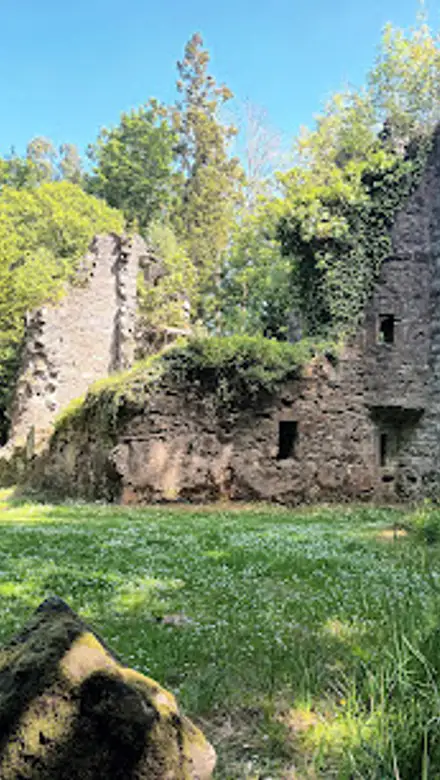
Finlarig Castle Travel Guide
Free Guide: Explore the haunting ruins of Finlarig Castle, a 17th-century Campbell stronghold steeped in dark legends and scenic Highland beauty.


A brief summary of Finlarig Castle
Explore the haunting ruins of Finlarig Castle, a 17th-century Campbell stronghold steeped in dark legends and scenic Highland beauty.
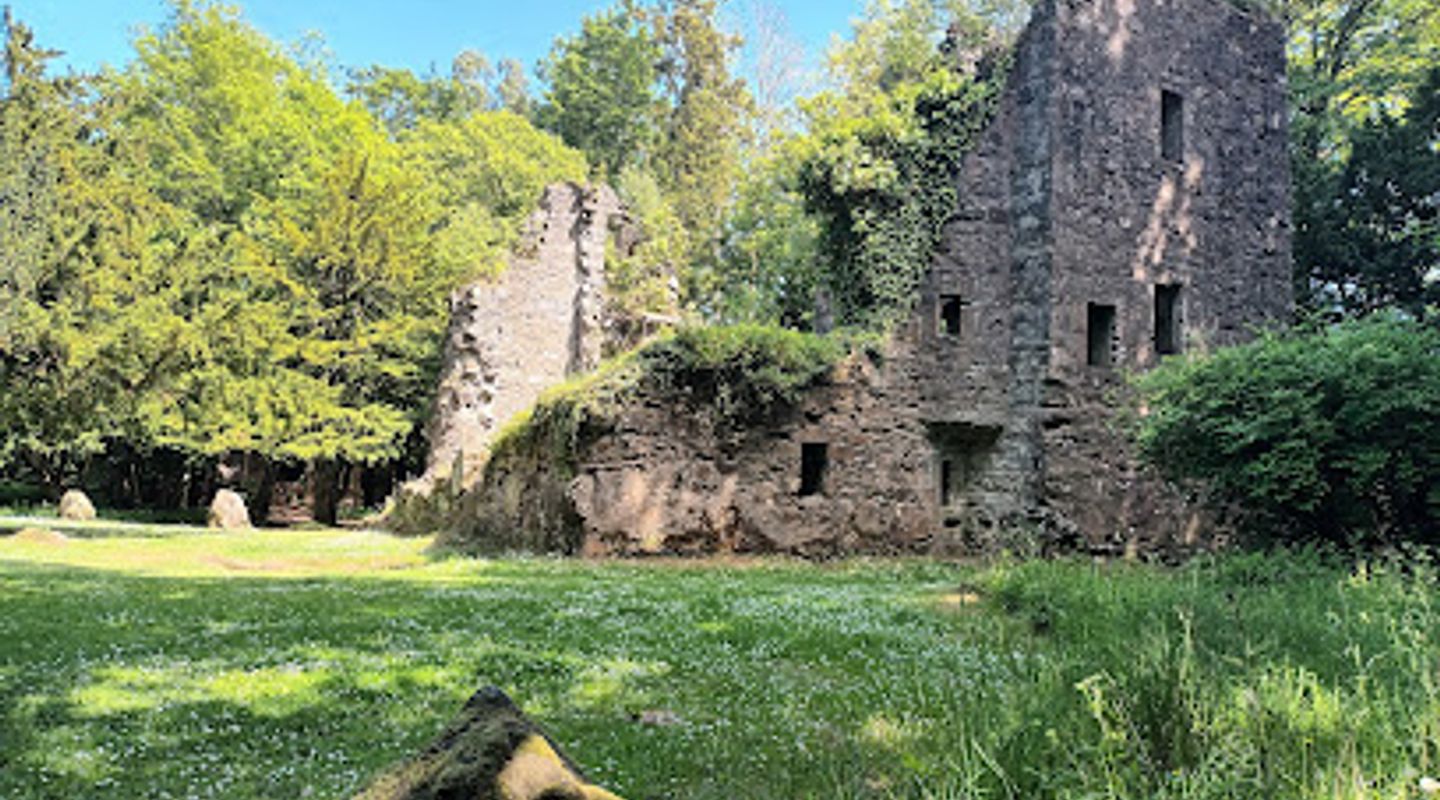
Finlarig Castle is a striking early 17th-century ruin near Killin, Scotland, perched on a mound between the River Lochay and Loch Tay. Built by the infamous 'Black Duncan' Campbell, this L-plan tower house is steeped in dark legends, including tales of a beheading pit and a hanging tree. Nearby lie the crumbling remains of the Breadalbane Mausoleum, the traditional burial place of the Campbell clan, adding to the castle’s haunting atmosphere and rich historical significance.
On-site amenities
 Information boards
 Seating areas
 Trash bins
Opening hours
- Every dayOpen 24 hours
Opening hours as listed on the venue’s Google Business Profile. Hours can change for services and special events, so check with the venue before you go.
- Address
- Killin FK21 8TN
Getting there
Car
Bus
Walking
Discover more about Finlarig Castle
Origins and Strategic Significance of Finlarig Castle
Finlarig Castle was constructed in the early 1600s, most notably completed in 1629 by Sir Duncan Campbell, known as 'Black Duncan' of Glenorchy. The castle sits on a natural mound on a peninsula framed by the River Lochay and Loch Tay, near the village of Killin in Stirling. Its location was chosen for strategic defense, controlling key glens and routes used for transportation and cattle driving. The castle’s design is a classic L-plan tower house, featuring offset towers at the southwest and northeast corners, and was originally protected by an outer enclosure or barmekin, now mostly ruined.
Dark Legends and the Infamous Beheading Pit
Finlarig Castle is enveloped in folklore, particularly surrounding a stone-lined rectangular pit near its north wall. Legend holds that this pit served as a beheading site for noble criminals, who were said to kneel with their heads placed in a hollow while executioners swung their axes. Common criminals were reportedly hanged from a nearby oak tree, known as the Hanging Tree, where deep grooves in the wood suggest many ropes once hung. However, historians and archaeologists propose a more mundane explanation: the pit likely functioned as a water storage tank collecting rainwater from the castle’s roofs, a practical necessity given the absence of a well.
The Campbell Clan and the Mausoleum Legacy
The castle was the seat of the powerful Campbell family of Breadalbane for several centuries. In 1523, Sir Colin Campbell, an ancestor of the Earls of Breadalbane, established a burial chapel on the site, dedicated to the Blessed Virgin Mary. This chapel was later replaced in the 19th century by the Breadalbane Mausoleum, a mock-Tudor brick structure now in a state of ruin. The mausoleum served as the burial place for generations of Campbells until the early 20th century. Notably, Sir Gavin Campbell, the 17th Laird of Glenorchy, and his wife Lady Alma were buried just outside the mausoleum’s walls, their graves marked by Celtic crosses standing quietly in the shadow of the crumbling buildings.
Architectural Features and Surrounding Landscape
Finlarig Castle’s remaining structure includes a ruined square tower with shot-holes and a larger rectangular block, with passages leading past vaulted cellars to what was once the kitchen. The castle’s armorial panel above the entrance bears the coat of arms of King James VI and Queen Anne of Denmark, symbolizing the close ties between Black Duncan Campbell and the Scottish crown. The castle’s wooded setting, bordered by water and river, would have made it a formidable stronghold in its time, with the surrounding landscape offering panoramic views and natural defenses.
Historical Events and Notable Visitors
The castle has witnessed significant historical moments, including a 1651 summons for the Scottish Parliament to convene there, although only a few members appeared. It was also visited by the famed Scottish folk hero Rob Roy MacGregor in 1713. The castle’s history is intertwined with the turbulent clan conflicts and political upheavals of the Highlands, reflecting the power and influence wielded by the Campbells of Breadalbane.
Present-Day Atmosphere and Preservation Status
Today, Finlarig Castle stands as a haunting ruin, overgrown and perilously dilapidated, evoking the atmosphere of its storied past. The adjacent Breadalbane Mausoleum is similarly neglected, with crumbling stonework and a forlorn presence. Visitors can explore the evocative remains, imagine the dark tales of executions and clan power struggles, and appreciate the castle’s commanding natural setting near Loch Tay. Despite its ruinous state, Finlarig remains a poignant symbol of Scottish heritage and the complex history of the Campbell clan.
Evendo Review Centre
 Google
Guest reviews
Best time to go
Quietest: Jan, Feb & Dec · before 6am or at 9pm
Busy times are Evendo estimates for a typical year, to help you plan. Actual crowds vary with events, school holidays and the weather.
Explore Finlarig Castle on the map
A handpicked selection of must-see spots near Finlarig Castle, mapped for you.
Get your free copy of our complete guide to Finlarig Castle, delivered straight to you.
Everything on this page, from opening hours and how to get there to Eve’s tips and the best time to go, in one PDF you can read offline, print or share.
Already have an account? Sign in
Your Finlarig Castle guide is ready.
We'll send it to · Not you? Sign out

Getting your guide ready…
We are putting together a fresh copy of the Finlarig Castle guide. This can take up to a minute.
This can take a few moments. If your browser asks, choose Allow so the download can start. You'll find the guide in your Downloads folder.
Nothing happened? Download it again
Sorry, the guide is taking longer than usual. Please try again in a minute, or get it by email instead.
Other nearby places you may find interesting
The closest places of the same kind, if this one is not quite what you had in mind.
-
-
-
-
-


Swipe for more places
More to explore near Finlarig Castle

 Best experiences near Finlarig Castle
 Best hotels near Finlarig Castle
 Best landmarks near Finlarig Castle
 Best attractions near Finlarig Castle
 Best shops near Finlarig Castle
 Best restaurants near Finlarig Castle
 Best bars near Finlarig Castle
Do you manage this location?
Take control to get all the benefits, like improved information, better appearance, and stronger visibility across AI-powered discovery.
Explore more
Explore more of Scotland
Discover the magic of Scotland: stunning landscapes, historic castles, vibrant cities, and world-famous whisky. An unforgettable journey awaits in this enchanting land.
Explore Scotland
Explore more of United Kingdom
Discover the United Kingdom: A blend of rich history, stunning landscapes, and vibrant cities, offering a unique travel experience for every visitor.
Explore United Kingdom