

Buchanan Castle Travel Guide
Free Guide: A roofless Scottish baronial ruin steeped in aristocratic grandeur and wartime intrigue.


A brief summary of Buchanan Castle
A roofless Scottish baronial ruin steeped in aristocratic grandeur and wartime intrigue.
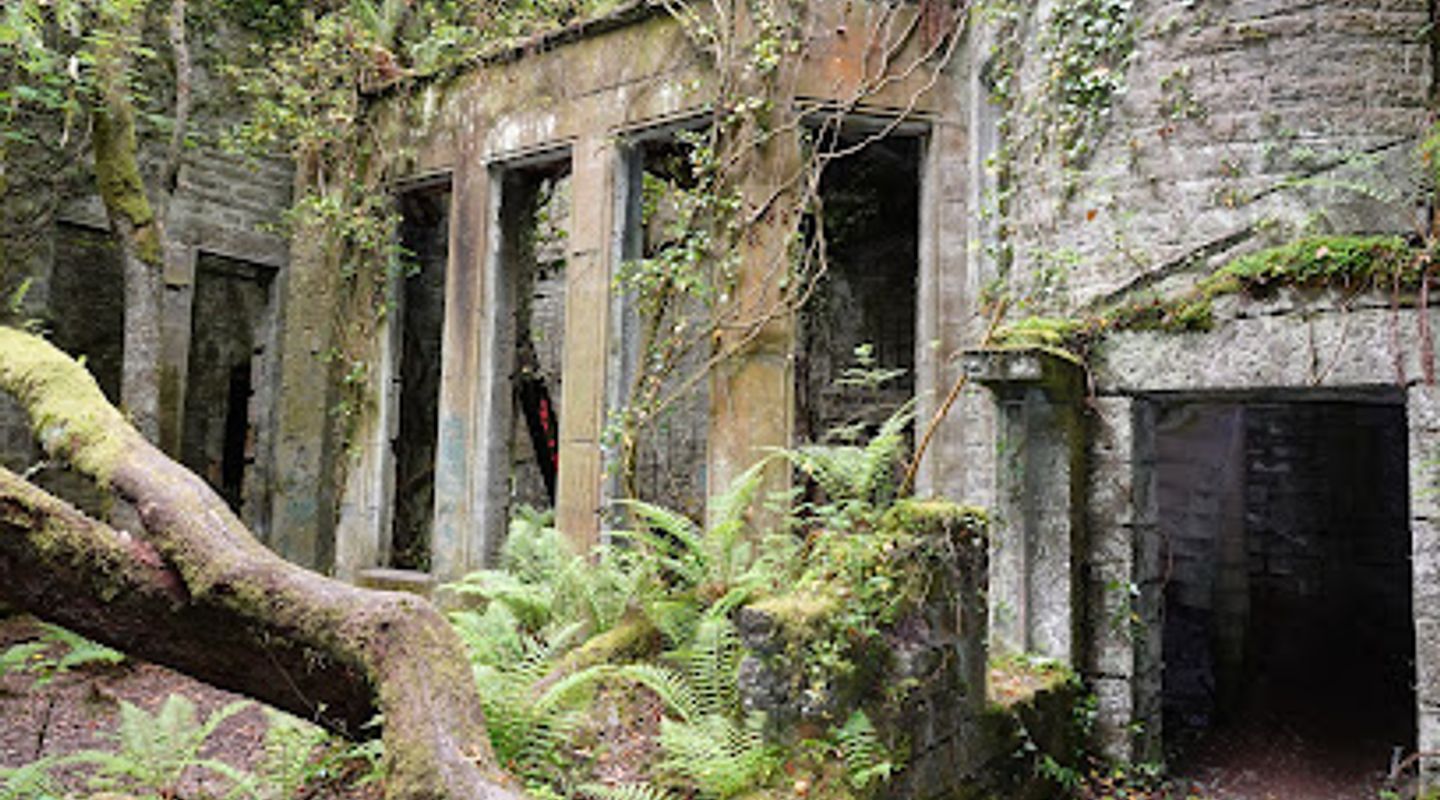
Buchanan Castle stands as a hauntingly beautiful Scottish baronial ruin near Drymen, west of Loch Lomond. Built in 1852–1858 by the 4th Duke of Montrose to replace an ancestral seat destroyed by fire, this grand manor features distinctive turrets, bartizans, and stepped gables. Now roofless and overgrown, the castle remains a striking testament to 19th-century Scottish architecture and a repository of dramatic historical moments, including its role as a World War II hospital where Nazi Deputy Führer Rudolf Hess was briefly held.
On-site amenities
 Picnic areas
 Information boards
- Address
- Glasgow G63 0HX
- Website
Getting there
Car from Drymen Village
Bus and Walking from Glasgow
Taxi or Ride-Share from Drymen
Walking from Loch Lomond Visitor Area
Discover more about Buchanan Castle
A Grand Vision Born from Tragedy
Buchanan Castle emerged from one of Scotland's most dramatic domestic disasters. In December 1852, while the Montrose family was away for Christmas, a fire—allegedly started by an intoxicated housekeeper—consumed the original Buchanan Auld House, destroying centuries of accumulated treasures and family heritage. The 4th Duke of Montrose commissioned architect William Burn to design a replacement that would surpass the lost mansion in grandeur and ambition. Construction began immediately and continued until 1858, resulting in an extravagant manor that embodied the height of Victorian Scottish baronial style. The new castle stood approximately half a mile southeast of its predecessor, positioned to command the landscape with architectural authority.
Architectural Splendor and Design Innovation
William Burn's design for Buchanan Castle represents a masterpiece of Scottish baronial revival. The structure encloses an L-plan tower within a dramatic composition of turrets, bartizans, and stepped gables that create a silhouette both imposing and theatrical. The principal front extended nearly 300 feet in length, rivaling the grandeur of English country houses like Petworth. Internally, the castle contained a complex maze of corridors, rooms of varying sizes, and multiple floors designed to impress and accommodate the lifestyle of one of Scotland's most powerful families. The architectural details—from the intricate stonework to the carefully proportioned windows—reflected the wealth and status of Clan Graham, whose seat this became after acquiring the Buchanan lands in the 17th century.
A Seat of Power and Changing Fortunes
From its completion in 1858 until 1925, Buchanan Castle served as the principal residence of the Dukes of Montrose and the seat of Clan Graham. The castle represented not merely a dwelling but a symbol of the family's dominance over the Loch Lomond region and their position within Scottish nobility. However, the 20th century brought dramatic transformations. Following the family's departure in 1925, the castle was sold and briefly operated as a hotel during the 1930s, with a golf course established in the surrounding grounds. The onset of World War II interrupted these commercial plans, and the building was requisitioned by the military for purposes far removed from its original grandeur.
World War II and the Hess Incident
During World War II, Buchanan Castle served as a field hospital, a role that brought it into contact with one of history's most extraordinary figures. In May 1941, Rudolf Hess, the Deputy Führer of Nazi Germany and Hitler's longtime associate, parachuted into Scotland on a secret and unauthorized peace mission. Hess had grown increasingly marginalized within Hitler's inner circle and hoped to negotiate with the Duke of Hamilton, whom he believed sympathetic to German interests. After his capture, Hess was brought to Buchanan Castle to receive medical treatment for injuries sustained in his crash landing. His presence at the castle, however brief, connected this Scottish ruin to one of World War II's most bizarre episodes. When Hitler learned of Hess's unauthorized flight, he was reportedly apoplectic, stripping his deputy of all powers and ordering him shot on sight—a dramatic rupture that some historians argue undermined the cohesion of the Nazi leadership at a critical moment.
Decline and Abandonment
Following the war, Buchanan Castle served briefly as the Army School of Education before its fate took a final, irreversible turn. In 1954, the roof was deliberately removed from the structure—a practice employed in Britain to avoid property taxation on uninhabitable buildings. This decision, made for financial expediency, transformed the castle from a damaged but potentially restorable mansion into a true ruin. Outlying sections were subsequently demolished, and residential buildings were constructed within the castle grounds and gardens. For more than seven decades, Buchanan Castle has stood open to the elements, its interior gradually consumed by vegetation and decay. Yet despite its derelict state, the castle retains an undeniable presence: its baronial architecture remains striking, its vast interior chambers still evoke the ambitions of those who built it, and its corridors continue to whisper stories of nobility, war, and historical consequence.
Evendo Review Centre
 Google
Guest reviews
Best time to go
Quietest: Jan, Feb & Dec · before 6am or at 10pm
Busy times are Evendo estimates for a typical year, to help you plan. Actual crowds vary with events, school holidays and the weather.
Explore Buchanan Castle on the map
A handpicked selection of must-see spots near Buchanan Castle, mapped for you.
Get your free copy of our complete guide to Buchanan Castle, delivered straight to you.
Everything on this page, from opening hours and how to get there to Eve’s tips and the best time to go, in one PDF you can read offline, print or share.
Already have an account? Sign in
Your Buchanan Castle guide is ready.
We'll send it to · Not you? Sign out

Getting your guide ready…
We are putting together a fresh copy of the Buchanan Castle guide. This can take up to a minute.
This can take a few moments. If your browser asks, choose Allow so the download can start. You'll find the guide in your Downloads folder.
Nothing happened? Download it again
Sorry, the guide is taking longer than usual. Please try again in a minute, or get it by email instead.
Other nearby places you may find interesting
The closest places of the same kind, if this one is not quite what you had in mind.
-
-
-
-
-


Swipe for more places
More to explore near Buchanan Castle

 Best experiences near Buchanan Castle
 Best hotels near Buchanan Castle
 Best landmarks near Buchanan Castle
 Best attractions near Buchanan Castle
 Best shops near Buchanan Castle
 Best restaurants near Buchanan Castle
 Best bars near Buchanan Castle
Do you manage this location?
Take control to get all the benefits, like improved information, better appearance, and stronger visibility across AI-powered discovery.
Explore more
Explore more of Scotland
Discover the magic of Scotland: stunning landscapes, historic castles, vibrant cities, and world-famous whisky. An unforgettable journey awaits in this enchanting land.
Explore Scotland
Explore more of United Kingdom
Discover the United Kingdom: A blend of rich history, stunning landscapes, and vibrant cities, offering a unique travel experience for every visitor.
Explore United Kingdom
