
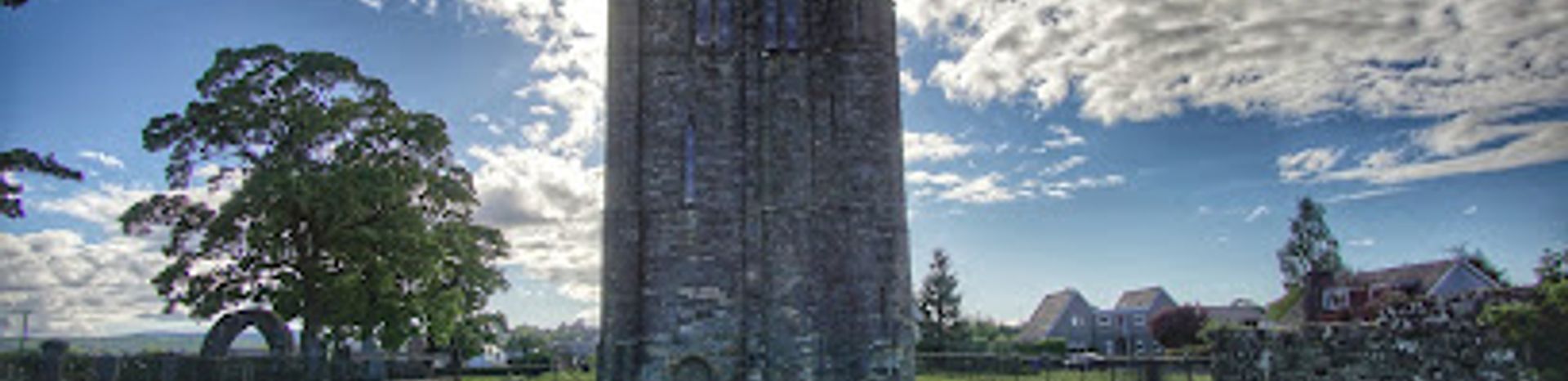
Cambuskenneth Abbey: A Royal Medieval Sanctuary by the River Forth
Discover the tranquil ruins and royal heritage of Cambuskenneth Abbey, home to a unique 13th-century bell tower and the tomb of King James III.
Cambuskenneth Abbey, founded around 1140 by King David I near Stirling, Scotland, is a historic Augustinian monastery ruin famed for its remarkably preserved 13th-century bell tower and royal connections. Once a prominent religious and political site hosting parliaments and royal burials, including King James III and Queen Margaret of Denmark, the abbey now offers tranquil grounds by the River Forth with evocative ruins and informative displays, accessible free to visitors.
A brief summary to Cambuskenneth Abbey
- Ladysneuk Rd, Stirling, Cambuskenneth, FK9 5NG, GB
- Visit website
- Duration: 1 to 2.5 hours
- Free
-
 Outdoor
- Mobile reception: 4 out of 5
- Monday 9:30 am-5:30 pm
- Tuesday 9:30 am-5:30 pm
- Wednesday 9:30 am-5:30 pm
- Thursday 9:30 am-5:30 pm
- Friday 9:30 am-5:30 pm
- Saturday 9:30 am-5:30 pm
- Sunday 9:30 am-5:30 pm
Local tips
- Entry to Cambuskenneth Abbey is free, but access is seasonal from April to September, 9:30am to 5:30pm.
- The bell tower is often locked; arriving early and asking the groundskeeper can grant access.
- Wear sturdy footwear as access involves walking over agricultural land that can be muddy.
- Enjoy peaceful riverside walks and views of the Wallace Monument from the abbey grounds.

For the on-the-go comforts that matter to you
- Information Boards
- Seating Areas
- Trash Bins
Getting There
-
Train and Bus
From Stirling city center, take a local bus or taxi for a 10-15 minute ride to Cambuskenneth Abbey. Stirling is well connected by frequent trains from Glasgow and Edinburgh (travel time 40-60 minutes). Bus services run regularly but check schedules for seasonal variations. Expect a total journey time of 1 to 1.5 hours from major cities. Bus fares range from £3 to £7.
-
Car
Driving from Stirling city center to Cambuskenneth Abbey takes about 10 minutes. Limited parking is available nearby; some roads are narrow and residential. Note that access involves walking across agricultural land which may be muddy. Parking is free but spaces are limited.
-
Walking
For active visitors, a 30-40 minute walk from Stirling town center to the abbey follows mostly flat terrain along quiet roads and footpaths. The final approach crosses farmland, so sturdy footwear is recommended. The walk is accessible for most but may be challenging in wet conditions.
Cambuskenneth Abbey location weather suitability
-
 Any Weather
-
 Rain / Wet Weather
-
 Clear Skies
-
 Mild Temperatures
Discover more about Cambuskenneth Abbey
Origins and Royal Foundations
Cambuskenneth Abbey was established circa 1140 by King David I of Scotland as an Augustinian monastery to serve Stirling Castle, mirroring the role of other royal abbeys like Holyrood Abbey for Edinburgh Castle. Dedicated to the Virgin Mary, it was originally known as the Abbey of St Mary of Stirling. The abbey quickly gained prominence and wealth due to royal patronage and its strategic location near the castle and the River Forth. A ferry likely operated nearby to maintain convenient access between the abbey and Stirling town, avoiding difficult terrain.Medieval Significance and Political Role
Throughout the 13th and 14th centuries, Cambuskenneth Abbey was a vital religious and political center. It hosted several important parliaments, including those held by Robert the Bruce after his 1314 victory at the Battle of Bannockburn, where nobles swore allegiance and royal succession was confirmed. The abbey's buildings included a large cruciform church with an eight-bay nave, choir, transepts with chapels, and a cloister. Its free-standing bell tower, dating from the 1200s, is unique in Scotland and renowned for its lancet windows and ornamental arcades.Royal Burials and Later History
The abbey is the burial site of King James III of Scotland and his queen, Margaret of Denmark. James III was killed in 1488 during the Battle of Sauchieburn and was interred alongside Margaret in front of the high altar. Their tomb, originally completed in 1502 and later damaged during the Reformation, was restored in the 19th century by order of Queen Victoria. The abbey declined after the Scottish Reformation; much of its stonework was quarried for nearby construction, including Stirling Castle and Mar’s Wark, a nearby townhouse.Architectural Remains and Landscape
Today, the abbey’s most prominent surviving structure is the remarkably preserved 13th-century bell tower, which stands as a testament to medieval architecture. The rest of the abbey’s complex is visible only as foundations and stone courses on the ground. Beyond the main enclosure, ruins extend into the surrounding meadows down to the tidal River Forth, offering a rare opportunity to explore abbey remains in a natural, pastoral setting. Informative boards throughout the site help visitors imagine the abbey’s former grandeur.Visitor Experience and Atmosphere
Visitors to Cambuskenneth Abbey can enjoy peaceful walks through the tranquil grounds, absorbing the deep history and royal associations. The site provides excellent photographic opportunities, including views of the nearby Wallace Monument. The bell tower interior is sometimes accessible, though often locked and requiring coordination with Historic Scotland. Entry to the grounds is free, with access over agricultural land that can be muddy. The abbey’s quiet, reflective atmosphere invites contemplation of Scotland’s medieval past and royal legacy.Conservation and Legacy
The abbey has undergone various conservation efforts, notably in the 1860s when excavations uncovered the royal bones and restored the tomb monument. While some early restoration practices do not meet modern standards, they remain significant in preserving this historic site. Cambuskenneth Abbey stands as a unique link to Scotland’s ecclesiastical and royal history, nestled in a serene riverside landscape close to Stirling Castle, continuing to inspire visitors with its stories and ruins.For the vibe & atmosphere seeker
- Tranquil
- Scenic
- Historic
- Relaxing
For the design and aesthetic lover
- Vintage Styles
- Rustic Designs
For the architecture buff
- Historic
- Landmarks
- Sacred Sites
For the view chaser and sunset hunter
- Iconic Views
- Panoramas
- Waterfront
For the social media creator & influencer
- Instagrammable
- Photo Spots
- Selfie Spots
For the eco-conscious traveler
- Public-Transport Accessible
- Leave-No-Trace Critical
- Locally Managed
For the kind of experience you’re after
- Cultural Heritage
- Photowalk
- Nature Escape
- Day Trip
- Weekend Getaway
- Myth & Legends
For how adventurous you want the journey to be
- Easy Access
Location Audience
- Family Friendly
- Senior Friendly
- Child Friendly
- Teen Friendly
- Wheelchair Access
- Pet Friendly
- Solo Friendly
- Couple Friendly
- Solo Female Friendly


