Cramond, Stirling Travel Guide
Historic riverside village with ancient roots, scenic beach, tidal island walks, and charming waterfront life just northwest of Edinburgh.
Cramond is a picturesque historic village and suburb in northwest Edinburgh, located at the mouth of the River Almond where it meets the Firth of Forth. Known for its ancient roots dating back to Mesolithic times, it features a sandy beach, a tidal causeway to Cramond Island, a Roman fort, medieval tower house, and charming village atmosphere with waterfront walks, shops, and pubs.
A brief summary to Cramond
- Edinburgh, Cramond, GB
- Duration: 1 to 4 hours
- Budget
-
 Outdoor
- Mobile reception: 4 out of 5

Know before you go
Hi, I'm Eve. Here are a few practical things to know before exploring Cramond.
- Check tide times before walking to Cramond Island to avoid being stranded; safe crossing times are posted locally.
- Visit the Maltings exhibition near the harbour to learn about Cramond’s rich archaeological and local history.
- Enjoy a stroll or cycle along the beach promenade connecting Cramond to Silverknowes and Granton for varied coastal views.
- Explore historic sites including Cramond Kirk and Cramond Tower to appreciate the village’s medieval heritage.
- Use the Lothian Bus 41 from Edinburgh city centre for a convenient and affordable trip to Cramond.
Do you manage this location?
Take control to get all the benefits, like improved information, better appearance, and stronger visibility across AI-powered discovery. Learn more about listing your business on Evendo
Activate your presenceOther nearby places you may find interesting
The closest places of the same kind, if this one is not quite what you had in mind.
Explore Cramond on the Map
A handpicked selection of must-see spots near Cramond, mapped for you.
Getting There
-
Bus
Take the Lothian Bus number 41 from Edinburgh city centre, which runs frequently and takes approximately 20 to 30 minutes to reach Cramond. The bus stops near the village, providing easy access to the beach and harbour area. A single fare costs around £2.50, with day passes available for better value.
-
Car
Driving to Cramond from Edinburgh city centre takes about 15 to 25 minutes depending on traffic. Limited parking is available near the harbour and village centre, with some free parking spots along Marine Drive near Silverknowes, from where a pleasant flat walk leads back to Cramond. Parking fees vary, but free options exist.
-
Walking and Cycling
For active travelers, cycling or walking from nearby suburbs like Silverknowes offers a scenic route along the beach promenade and through parkland. The terrain is mostly flat and accessible, suitable for moderate fitness levels. Walking from central Edinburgh is possible but takes over 90 minutes.
For the on-the-go comforts that matter to you
-
 Restrooms
-
 Drink Options
-
 Food Options
-
 Seating Areas
-
 Trash Bins
-
 Information Boards
Discover more about Cramond
Ancient Origins and Archaeological Significance
Cramond is one of Scotland’s oldest known sites of human settlement, with archaeological evidence of Mesolithic hunter-gatherer camps dating back to around 8500 BC. This rich prehistoric heritage makes it a key location for understanding early human activity in the region. The Romans established a fort here in the 2nd century AD, likely serving as a supply base for the Antonine Wall further inland. Though the Roman remains are modest, they mark Cramond’s importance in Roman Scotland.Medieval and Later Historical Layers
The village’s medieval heritage is visible in landmarks such as Cramond Kirk, a parish church founded in 1656 but incorporating a tower from the 1400s, and Cramond Tower, a 15th-century tower house once owned by the Bishops of Dunkeld. These historic structures reflect Cramond’s evolution from a strategic riverside settlement to a rural parish and later a desirable residential suburb of Edinburgh.Scenic Waterfront and Village Character
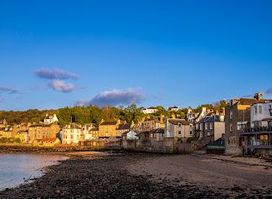
Nestled at the confluence of the River Almond and the Firth of Forth, Cramond offers a charming waterfront setting with a sandy beach and a small harbour mooring yachts and swans. The village retains an old fishing village ambiance with whitewashed houses, inviting pubs, cafes, and shops. The esplanade along the shore provides popular walking and cycling routes, connecting to nearby Silverknowes and Granton.Cramond Island and Coastal Walks
At low tide, visitors can walk across a concrete causeway to Cramond Island, which features remnants of World War II submarine defenses. The island offers panoramic views of the Firth of Forth and the mainland but requires careful attention to tide times to avoid being stranded. The coastal path along the beach and river is a favored spot for locals and visitors seeking both relaxation and natural beauty.Community and Modern Life
Though officially part of Edinburgh since 1920, Cramond maintains a village atmosphere prized by residents and visitors alike. It has transformed over centuries from an industrial mill village to a quiet commuter suburb, balancing its rich history with modern amenities. The Maltings, overlooking the harbour, hosts exhibitions on Cramond’s past, while local pubs and cafes provide convivial spots to enjoy the setting.Natural Environment and Wildlife
The area around Cramond features diverse natural habitats along the River Almond and the Firth of Forth estuary, supporting birdlife and marine species. The nearby Dalmeny Estate and Dalmeny Woods offer additional scenic walks. The village’s coastal location ensures fresh sea air and stunning views, making it a tranquil escape from the bustle of central Edinburgh.












Your all‑in‑one travel companion app
Explore expert travel guides, compare and book tours, experiences, hotels, and more—all from the palm of your hand. Download now for seamless trip planning wherever your wanderlust takes you.


Explore More of Stirling
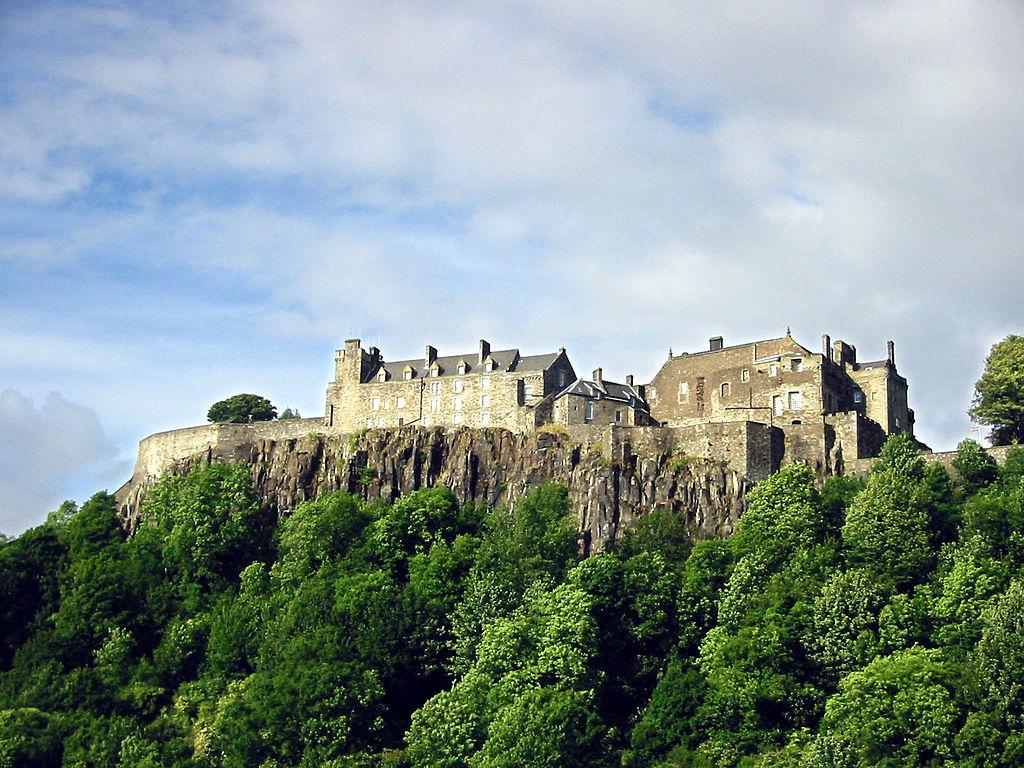
Looking beyond Cramond? Discover Stirling for broader travel guides, local hot-spots, and regional highlights.
Explore Stirling