
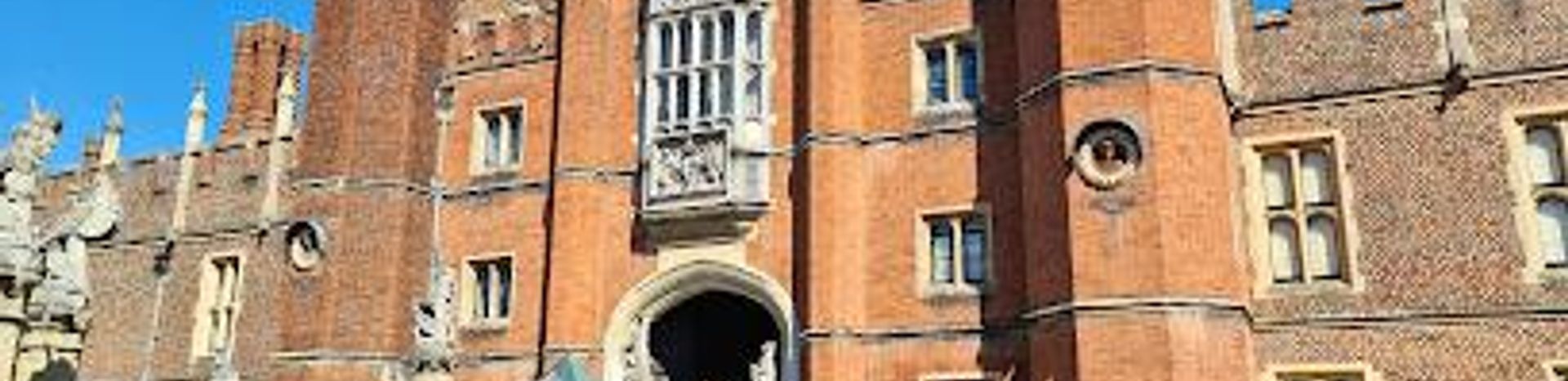
Hampton Court Palace: A Majestic Tudor and Baroque Royal Residence
Explore the grandeur of Henry VIII’s Tudor palace and the elegance of William III’s Baroque residence amid stunning gardens and the world’s oldest hedge maze.
Royal Origins and Tudor Grandeur
Hampton Court Palace began as a grand Tudor residence, famously associated with King Henry VIII. Built in the early 16th century, it was designed to impress visiting monarchs and dignitaries with its magnificent Great Hall, adorned with the exquisite Abraham tapestries and a spectacular hammer-beam roof. The palace’s vast Tudor kitchens reveal the scale and complexity of court life, where hundreds of servants worked to feed the king and his court. The Tudor World exhibition offers insight into the lives of the ordinary men and women who supported the royal household.Baroque Transformation and Later Royal Life
In the late 17th century, William III and Mary II commissioned Sir Christopher Wren to expand and transform the palace with Baroque architecture. This period introduced elegant state apartments, including the Presence Chamber with the king’s throne, and the grand Georgian Story rooms. The palace reflects a fascinating blend of Tudor and Baroque styles, illustrating the evolution of royal tastes and power over centuries. The Chapel Royal, the Haunted Gallery, and the Cumberland Gallery with artworks by masters like Caravaggio and Rembrandt add layers of cultural and historical richness.Gardens, Maze, and Outdoor Splendor
The palace is set within 60 acres of spectacular gardens that have evolved over centuries. The formal gardens are renowned for their seasonal displays, including 250,000 tulip bulbs in spring and the famous Great Vine, the largest grapevine in the world. The Hampton Court Maze, planted around 1700, is the oldest hedge maze globally and remains a beloved challenge for visitors. The Magic Garden, designed for children, and the Privy Garden offer diverse outdoor experiences, combining beauty, history, and family-friendly fun.Visitor Experience and Cultural Significance
Visitors can immerse themselves in royal history through guided tours, live historical reenactments, and multi-language audio guides that bring the palace’s stories to life. The palace hosts seasonal events such as the Festive Fayre, featuring over 100 artisan producers, enhancing the visitor experience. Conservation efforts are ongoing to preserve this heritage site, with some areas temporarily closed for restoration. The palace’s role as a filming location for popular TV shows adds a contemporary cultural layer to its historic significance.Accessibility and Amenities
Hampton Court Palace is equipped to welcome diverse visitors, with wheelchair access, mobility scooters, accessible toilets, and BSL-guided tours. On-site cafes provide a range of food and drink options, including dietary accommodations. The palace offers a visitor center, information boards, and well-maintained facilities to ensure a comfortable and engaging visit. Dogs are not permitted inside the palace or gardens except for trained assistance dogs.Legacy and Enduring Appeal
Spanning over five centuries, Hampton Court Palace stands as a testament to England’s royal heritage, architectural innovation, and garden design. Its blend of Tudor drama and Baroque elegance, combined with expansive gardens and cultural programming, makes it a captivating destination for history enthusiasts, families, and garden lovers alike. The palace continues to inspire awe and curiosity, preserving the stories of monarchs and the lives intertwined with this iconic landmark.Local tips
- Pre-book tickets online to secure entry and avoid queues, especially during peak seasons and special events.
- Allow at least three hours to fully explore the palace, gardens, maze, and exhibitions.
- Use the free multi-language audio guides included with admission for a richer understanding of the palace’s history.
- Wear comfortable footwear as the site is extensive with uneven floors and large gardens.
- Check for any conservation-related closures or route restrictions before your visit.

A brief summary to Hampton Court Palace
- Hampton Ct Way, East Molesey, Molesey, KT8 9AU, GB
- +442031666000
- Visit website
- Thursday 10 am-4 pm
- Friday 10 am-4 pm
- Saturday 10 am-4 pm
- Sunday 10 am-4 pm
Getting There
-
Train
Take the South Western Railway from London Waterloo to Hampton Court station, approximately 35-45 minutes. The station is a short 5-minute walk from the palace entrance. Trains run frequently but check schedules for weekend and holiday variations. Return tickets cost around £10-£15.
-
Car
Driving to Hampton Court Palace takes about 40-60 minutes from central London, depending on traffic. Paid parking is available near the palace but can be limited during peak times and special events. Use local signage for designated parking areas; charges apply.
-
Bus
Several local bus routes serve East Molesey, including routes 216 and 411 from Kingston and Richmond, with a journey time of 30-50 minutes depending on traffic. Buses stop within walking distance of the palace. Check current timetables for frequency and accessibility.
-
Walking
If staying nearby in East Molesey or Hampton, the palace is accessible on foot with well-maintained paths. Walking times vary from 15 to 40 minutes depending on your starting point. Terrain is mostly flat and suitable for most visitors.


