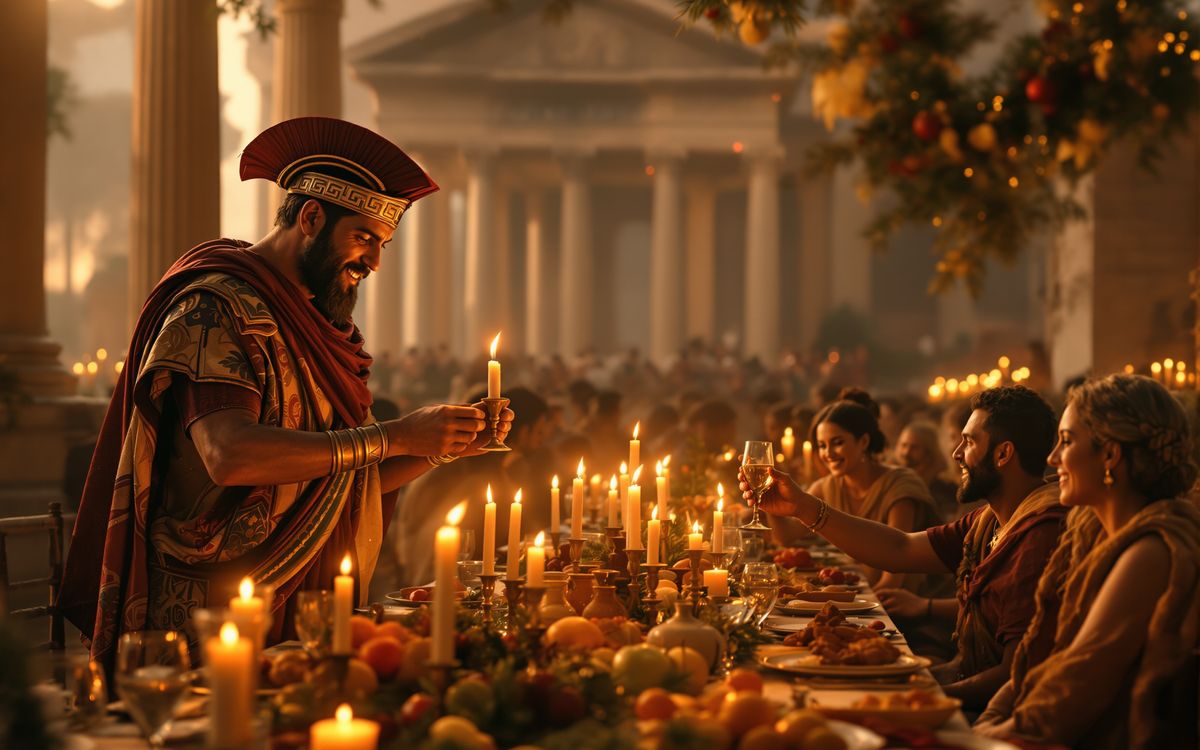
Christmas, a time of twinkling lights, festive feasts, and heartwarming traditions, is celebrated by billions across the globe. But have you ever paused to consider the origins of these cherished customs? From the ancient roots of winter solstice celebrations to the evolution of gift-giving, caroling, and the iconic Christmas tree, the holiday season is steeped in a rich tapestry of history and cultural influences. Join us as we unearth the captivating stories behind our most beloved Christmas traditions, revealing how they have been adapted and reinterpreted throughout the centuries.
From Saturnalia to Christ's Mass: The Ancient Roots of Christmas
The celebration of Christmas, observed primarily on December 25th, is a cultural and religious phenomenon with roots stretching far back into antiquity. While the holiday is now synonymous with the birth of Jesus Christ, many of its traditions are thought to have originated in pre-Christian festivals and rituals. The Roman festival of Saturnalia, celebrated in mid-December, was a time of feasting, gift-giving, and general merrymaking in honor of Saturn, the god of agriculture. During Saturnalia, social norms were often overturned, gambling was allowed, work was set aside, and masters would even wait on their servants. These celebrations provided a template for some of the celebratory aspects of Christmas.
Another significant influence on the development of Christmas was the winter solstice, the shortest day of the year, which held great importance for many ancient cultures. Pagans across Europe held feasts, sang songs, and performed rituals to honor the return of the sun and the promise of longer days. As Christianity spread throughout Europe, the Church sought to integrate these existing customs into the new religious context. In the early fourth century, the Church fixed the date of Christmas as December 25th, coinciding with the Roman winter solstice. This strategic decision allowed the Church to supplant pagan traditions with Christian observances, gradually transforming winter solstice celebrations into a commemoration of the birth of Jesus.
Over time, the celebration of 'Christ's Mass' absorbed elements from various cultures, blending religious significance with secular festivities. This syncretism resulted in the diverse and multifaceted holiday we know today, a testament to the enduring power of tradition and the adaptability of cultural practices.
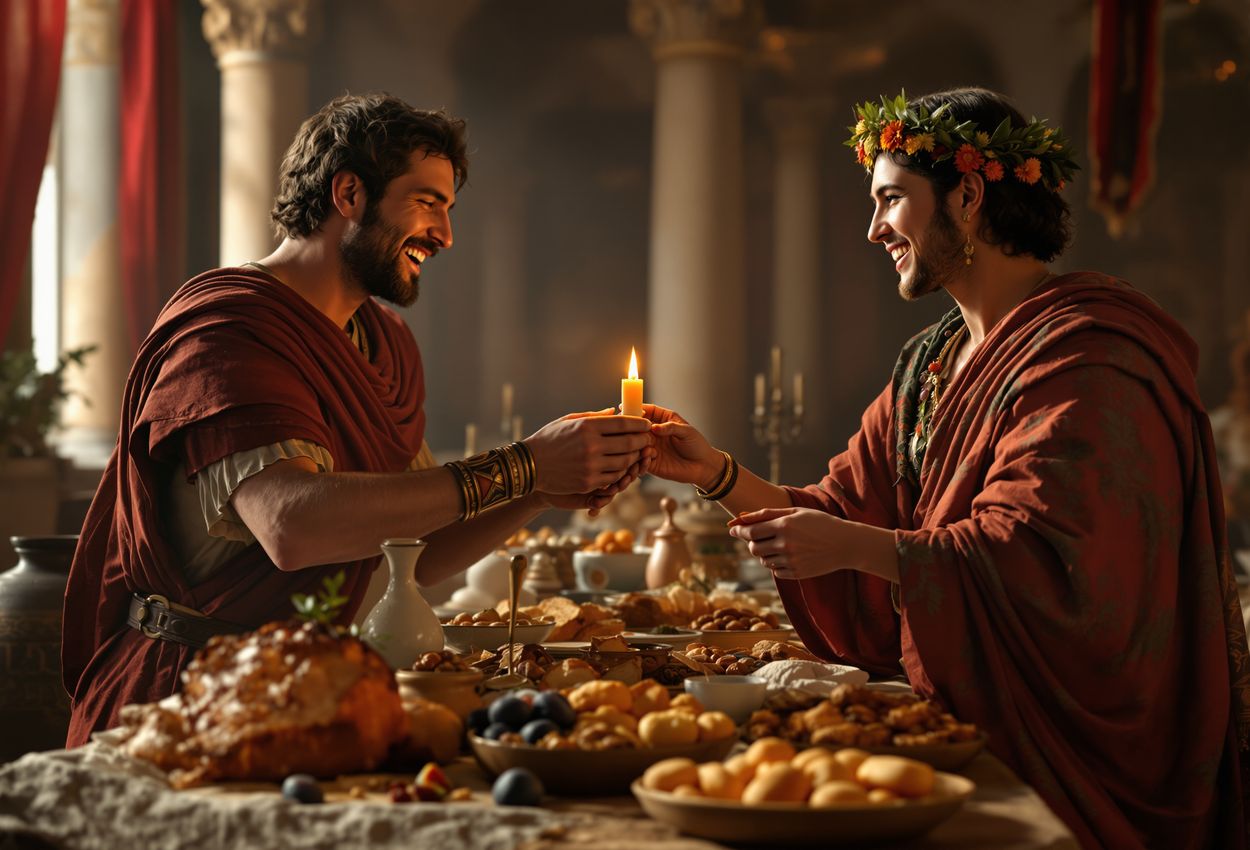
Image Description: A vibrant and bustling scene depicting a Roman Saturnalia celebration. People in togas exchange gifts, feast on tables laden with food, and engage in merriment amidst decorated temples and homes. The image should capture the lively atmosphere of the festival, with a focus on the exchange of candles and figurines as gifts. The photo should be taken on December 21, 2025.
Style Instructions: The image should be shot in a style reminiscent of classical paintings, with warm lighting and rich colors to evoke the opulence of ancient Rome. Use a wide-angle lens to capture the entire scene, and focus on the expressions of joy and camaraderie on the faces of the participants.
Evergreen Symbolism: Tracing the Christmas Tree's Ancestry
The Christmas tree, a ubiquitous symbol of the holiday season, boasts a history as rich and verdant as its evergreen boughs. While the modern Christmas tree is often associated with German Lutheran traditions of the 16th century, the use of evergreen trees, wreaths, and garlands to symbolize eternal life dates back to ancient cultures. Egyptians, Chinese, and Hebrews all revered evergreens for their ability to remain green throughout the winter months, representing enduring life and the promise of renewal.
In medieval Germany, the 'paradise tree,' a fir tree hung with apples, was a central prop in popular plays about Adam and Eve. These trees, representing the Garden of Eden, were often set up in homes on December 24th, the religious feast day of Adam and Eve. Over time, the paradise tree merged with the Christmas pyramid, a tiered structure adorned with candles and ornaments, eventually evolving into the Christmas tree we know today. Martin Luther, the Protestant reformer, is sometimes credited with adding lighted candles to the evergreen tree.
The tradition of decorating Christmas trees spread throughout Europe and eventually made its way to the United States with German settlers. Initially, the custom was not widely embraced, with some religious groups rejecting it for its pagan associations. However, by the 19th century, the Christmas tree had become a beloved American tradition, symbolizing family togetherness and the spirit of the holiday season. The first written record of a decorated Christmas Tree comes from Riga, Latvia in 1510.
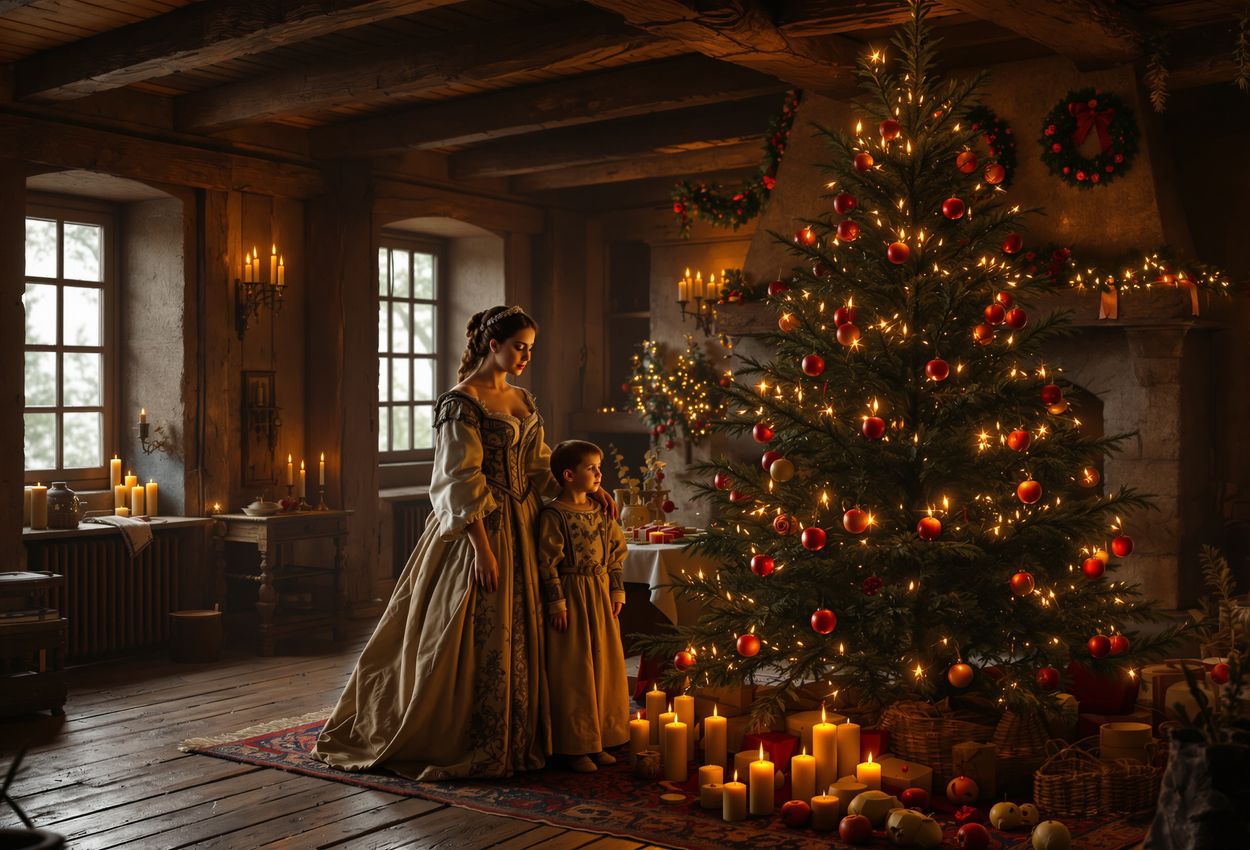
Image Description: A cozy interior scene of a German home in the 16th century. A family gathers around a Christmas tree adorned with apples, candles, and paper roses. The room is warmly lit by candlelight, casting a soft glow on the faces of the family members as they exchange gifts and sing carols. The photo should be taken on December 24, 2025.
Style Instructions: The image should be captured in a warm and inviting style, with a focus on the intimate atmosphere of the family gathering. Use a shallow depth of field to create a sense of intimacy, and pay attention to the details of the Christmas tree decorations and the period costumes.
Gifts of the Magi: Unpacking the Tradition of Christmas Gift-Giving
The exchange of gifts is a central tenet of modern Christmas celebrations, a tradition with roots in both religious and secular customs. The biblical story of the Magi, who presented gifts of gold, frankincense, and myrrh to the infant Jesus, is often cited as a primary influence on the practice of Christmas gift-giving. These symbolic offerings represented kingship, divinity, and sacrifice, setting the stage for associating gift-giving with the celebration of Jesus' birth.
However, the tradition of gift-giving also has connections to pre-Christian winter festivals, such as the Roman Saturnalia, during which people exchanged small tokens of appreciation and goodwill. Over time, these customs merged and evolved, with gift-giving becoming an increasingly prominent feature of Christmas celebrations. In colonial America, gift-giving was practiced, with gifts given to dependents such as servants, apprentices, or children.
The commercialization of Christmas in the Victorian era further solidified the tradition of gift-giving, with mass-produced toys and trinkets becoming more affordable and accessible. Today, the exchange of gifts is seen as a way to express love, appreciation, and generosity, embodying the spirit of the holiday season.

Image Description: A festive scene inside a Victorian-era home. A family gathers around a Christmas tree, exchanging gifts with expressions of joy and excitement. The gifts are wrapped in colorful paper and ribbons, and the room is decorated with garlands, stockings, and other traditional Christmas decorations. The photo should be taken on December 25, 2025.
Style Instructions: The image should evoke a sense of warmth and nostalgia, with soft lighting and a focus on the details of the Victorian-era clothing and decorations. Use a medium depth of field to capture the entire scene, and pay attention to the expressions of joy and connection on the faces of the family members.
Echoes of the Past: The Story Behind Christmas Caroling
The tradition of Christmas caroling, with its melodies and harmonies filling the winter air, has a history as diverse and enchanting as the songs themselves. Caroling can be traced back to pagan winter solstice celebrations, where people gathered to sing and dance in honor of the changing seasons. As Christianity spread, these songs were adapted and transformed into Christian hymns, celebrating the birth of Jesus.
In the 13th century, St. Francis of Assisi played a significant role in popularizing carols, incorporating upbeat Latin hymns into Christmas services. These joyful carols stood in stark contrast to the somber music of the time, helping to spread the spirit of Christmas throughout communities. During the medieval times, there were official carol singers called Waits. The rise of peaceful, “modern” singing of Christmas hymns, either in church or on the streets, came in vogue in the Victorian Era.
The practice of wassailing, in which groups of people would go door-to-door offering a drink called wassail in exchange for food or money, also contributed to the development of caroling. Today, Christmas caroling is a beloved tradition, bringing communities together to share the joy and spirit of the holiday season.
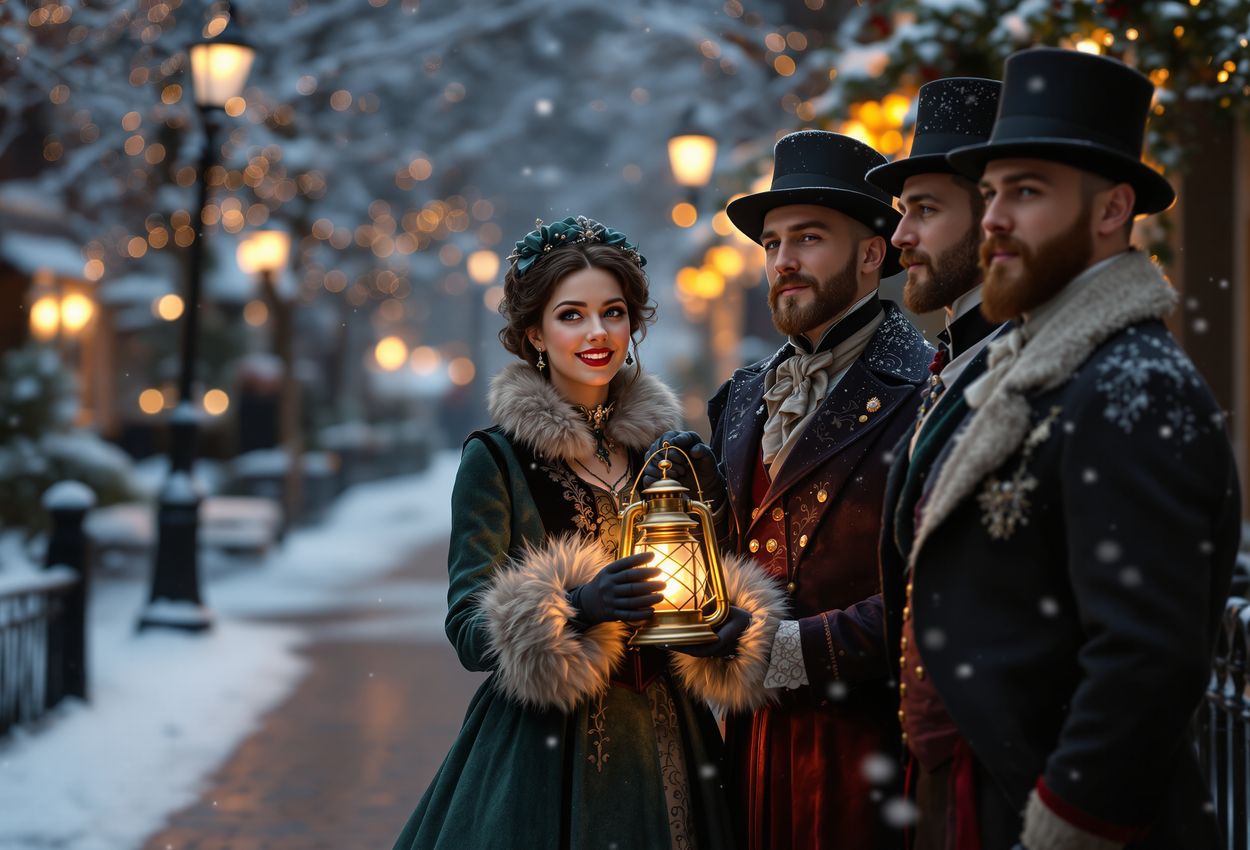
Image Description: A group of carolers dressed in Victorian-era clothing. They stand on a snow-covered street, singing carols by the light of lanterns. The scene should capture the warmth and joy of the caroling tradition, with a focus on the harmonious voices and the festive atmosphere. The photo should be taken on December 23, 2025.
Style Instructions: The image should be captured in a soft and romantic style, with a focus on the details of the Victorian-era costumes and the warm glow of the lanterns. Use a shallow depth of field to create a sense of intimacy, and pay attention to the expressions of joy and camaraderie on the faces of the carolers.
Yule Logs and Festive Feasts: Culinary Customs of Christmas
Christmas feasts, with their array of delectable dishes and time-honored culinary customs, are an integral part of the holiday experience. Many traditional Christmas foods have roots in ancient pagan and Christian traditions, symbolizing abundance, good fortune, and the celebration of life. The Yule log, a massive log burned in the hearth during winter solstice celebrations, is one such example. The Yule log tradition dates back to pre-Christian Europe, where it was part of the ancient winter solstice celebrations.
The burning of the Yule log symbolized the return of the sun's strength after the darkest days of winter, bringing good luck, prosperity, and protection to the home. Over time, as hearths became smaller and more impractical for burning large logs, the Yule log evolved into a delectable dessert, the Bûche de Noël, a rolled sponge cake decorated to resemble a wooden log. The shift from burning logs to baking cakes occurred as hearths in homes became smaller, or in some cases, were replaced with iron stoves, making it impractical to burn large logs indoors.
Other traditional Christmas foods, such as plum pudding, mince pies, and gingerbread, also have historical significance, reflecting the culinary traditions and available ingredients of different regions and time periods. Today, Christmas feasts are a time for families to gather and share a meal, celebrating the spirit of togetherness and the joy of the holiday season.
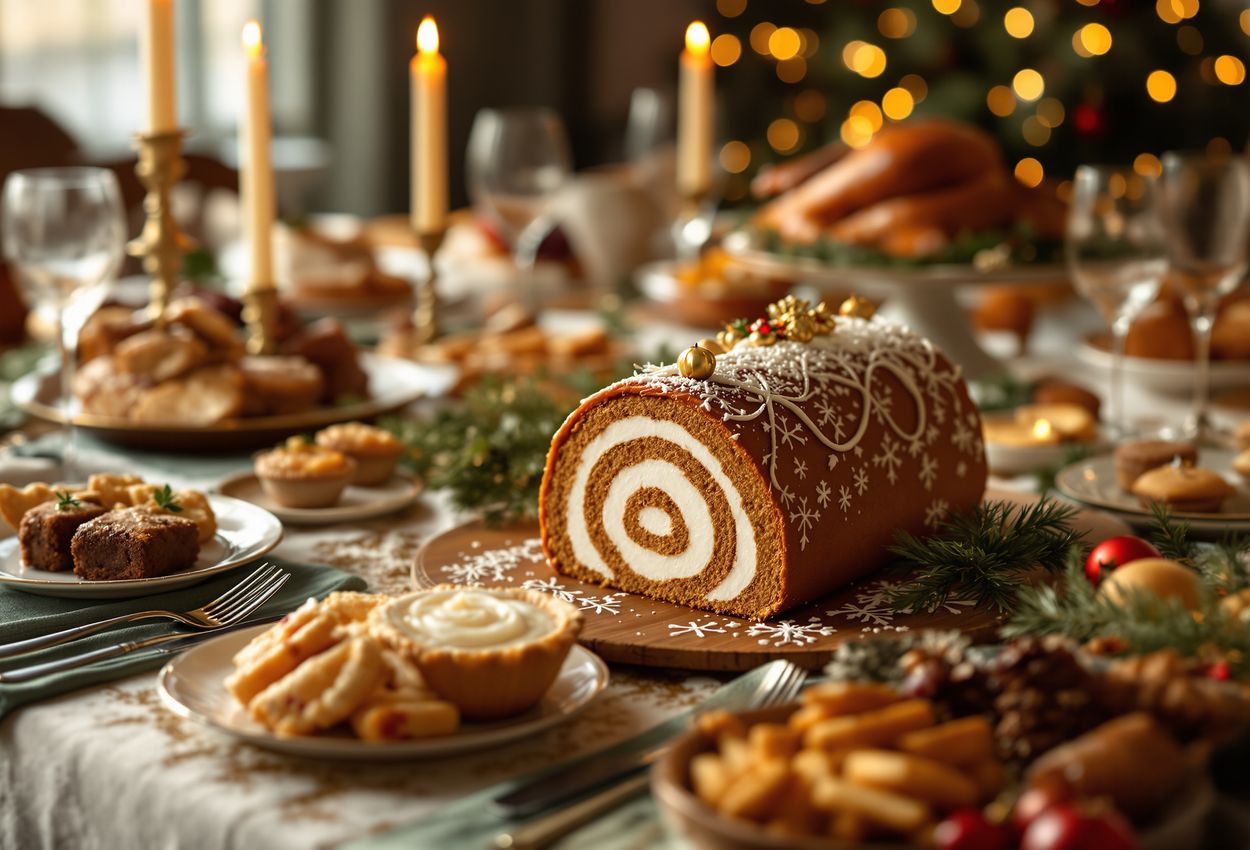
Image Description: A beautifully decorated Christmas table laden with traditional festive foods. A Yule log cake takes center stage, surrounded by platters of roast turkey, plum pudding, mince pies, and gingerbread cookies. The table is set with fine china, silverware, and crystal glasses, creating an atmosphere of elegance and abundance. The photo should be taken on December 25, 2025.
Style Instructions: The image should be captured in a warm and inviting style, with a focus on the details of the food and the elegant table setting. Use a shallow depth of field to create a sense of intimacy, and pay attention to the colors and textures of the various dishes.
Decking the Halls: The Evolution of Christmas Decorations
The tradition of decorating homes and public spaces for Christmas has a long and varied history, with influences from ancient Rome, pagan customs, and Victorian-era innovations. The use of evergreens, such as holly, ivy, and mistletoe, dates back to ancient Rome, where they were used to decorate homes and temples during winter festivals. These plants symbolized eternal life, protection, and good fortune, and their use continued into the Christian era.
The Victorian era saw a surge in the popularity of Christmas decorations, with the introduction of new ornaments, garlands, and lighting techniques. Christmas trees became increasingly elaborate, adorned with candles, glass ornaments, and handmade decorations. The Nativity scene, depicting the birth of Jesus, also gained popularity, spreading throughout Europe and becoming a beloved Christmas tradition. In 1895, President Grover Cleveland put up the first electrically lit tree in the White House.
Today, Christmas decorations range from simple and traditional to elaborate and modern, reflecting the diverse tastes and cultural backgrounds of those who celebrate the holiday. From twinkling lights to colorful ornaments, Christmas decorations bring joy and cheer to homes and communities around the world.
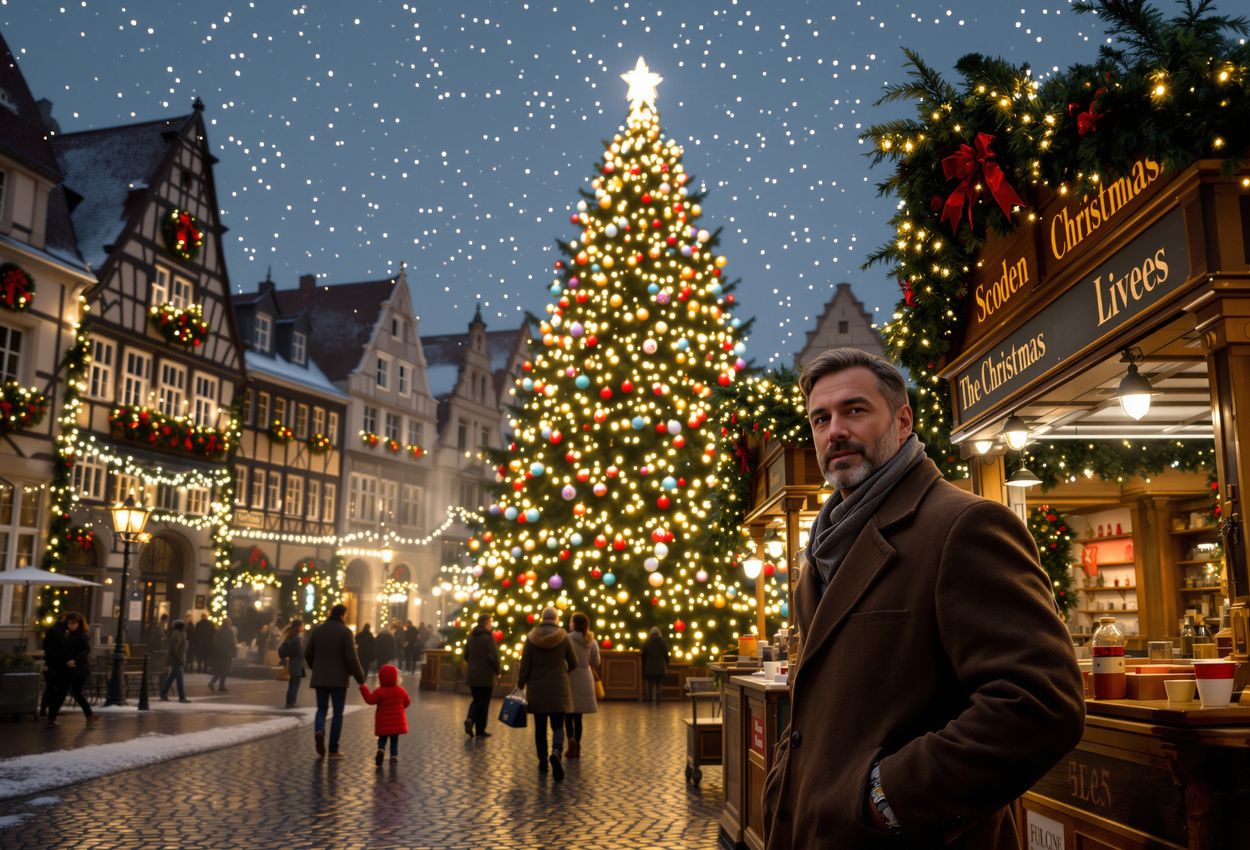
Image Description: A festive street scene in a European town during the Christmas season. Buildings are adorned with twinkling lights, garlands, and wreaths. A large Christmas tree stands in the center of the town square, decorated with colorful ornaments and a shining star. People stroll along the street, enjoying the festive atmosphere and admiring the decorations. The photo should be taken on December 20, 2025.
Style Instructions: The image should be captured in a wide-angle shot, showcasing the entire street scene and the festive decorations. Use a warm color palette to evoke the cozy and inviting atmosphere of the Christmas season. Pay attention to the details of the decorations and the expressions of joy and wonder on the faces of the people.
From Colonial America to Coca-Cola: The Transformation of Christmas in the United States
The celebration of Christmas in the United States has undergone a dramatic transformation since the colonial era, evolving from a largely subdued and even banned holiday to the commercialized and family-centered celebration we know today. In colonial America, attitudes toward Christmas varied greatly depending on religious and cultural backgrounds. The Puritans of New England, for example, viewed Christmas as a pagan holiday and actively discouraged its celebration.
In contrast, the southern colonies, with their Anglican and Catholic traditions, embraced Christmas with feasts, parties, and religious services. Over time, as more and more immigrants migrated to the New World, the Christmas holiday became more widespread and incorporated traditions from around the world. The influence of Charles Dickens' 'A Christmas Carol' on the American Christmas tradition cannot be overstated.
The 20th century saw the commercialization of Christmas, with advertising and marketing playing a significant role in shaping modern customs. Coca-Cola's iconic depiction of Santa Claus, for example, helped to solidify the image of the jolly, red-suited gift-giver in the American imagination. Today, Christmas in the United States is a blend of religious observance, family traditions, and commercial activities, reflecting the country's diverse cultural heritage.

Image Description: A nostalgic scene depicting an American family in the 1950s celebrating Christmas. The family gathers around a brightly lit Christmas tree, exchanging gifts and enjoying each other's company. The room is decorated with vintage Christmas decorations, and a Coca-Cola advertisement featuring Santa Claus is visible in the background. The photo should be taken on December 25, 2025.
Style Instructions: The image should be captured in a warm and nostalgic style, with a focus on the details of the vintage clothing, decorations, and Coca-Cola advertisement. Use a medium depth of field to capture the entire scene, and pay attention to the expressions of joy and connection on the faces of the family members.
Sinterklaas and Zwarte Piet: Christmas Traditions in the Netherlands
In the Netherlands, the celebration of Sinterklaas on December 5th holds a special place in the hearts of children and adults alike. Sinterklaas, based on the historical figure of Saint Nicholas, is a legendary figure who arrives in the Netherlands from Spain by steamboat, accompanied by his helpers, known as Zwarte Pieten (Black Petes). Sinterklaas is assisted by Zwarte Piet, a helper dressed in Moorish attire and in a black painted face.
During the weeks leading up to Sinterklaasavond (St. Nicholas' Eve), children leave their shoes by the fireplace, hoping that Sinterklaas and his Zwarte Pieten will fill them with treats and small gifts. On Sinterklaasavond, families gather to exchange gifts and read poems, often humorous or personalized, that accompany each present.
The figure of Zwarte Piet has become a subject of controversy in recent years, with many criticizing the character as a racist caricature. While some defend Zwarte Piet as a traditional part of Dutch culture, others advocate for changes to the character's appearance and portrayal to address concerns about racial insensitivity. The earliest known illustration of the character comes from an 1850 book by Amsterdam schoolteacher Jan Schenkman and portrays him as a black Moor.

Image Description: A vibrant scene depicting the arrival of Sinterklaas in a Dutch city. Sinterklaas, dressed in his traditional red bishop's robes and mitre, rides a white horse through the streets, surrounded by Zwarte Pieten who are handing out candy and treats to excited children. The buildings are decorated with colorful banners and flags, creating a festive atmosphere. The photo should be taken on December 5, 2025.
Style Instructions: The image should be captured in a dynamic and colorful style, with a focus on the excitement and joy of the Sinterklaas celebration. Use a wide-angle lens to capture the entire street scene, and pay attention to the details of the traditional costumes and decorations.
As we celebrate Christmas in 2025, it is important to remember the rich and complex history of these cherished traditions. By understanding their origins and evolution, we can appreciate the diverse cultural influences that have shaped the holiday season and celebrate its spirit of togetherness, generosity, and goodwill.