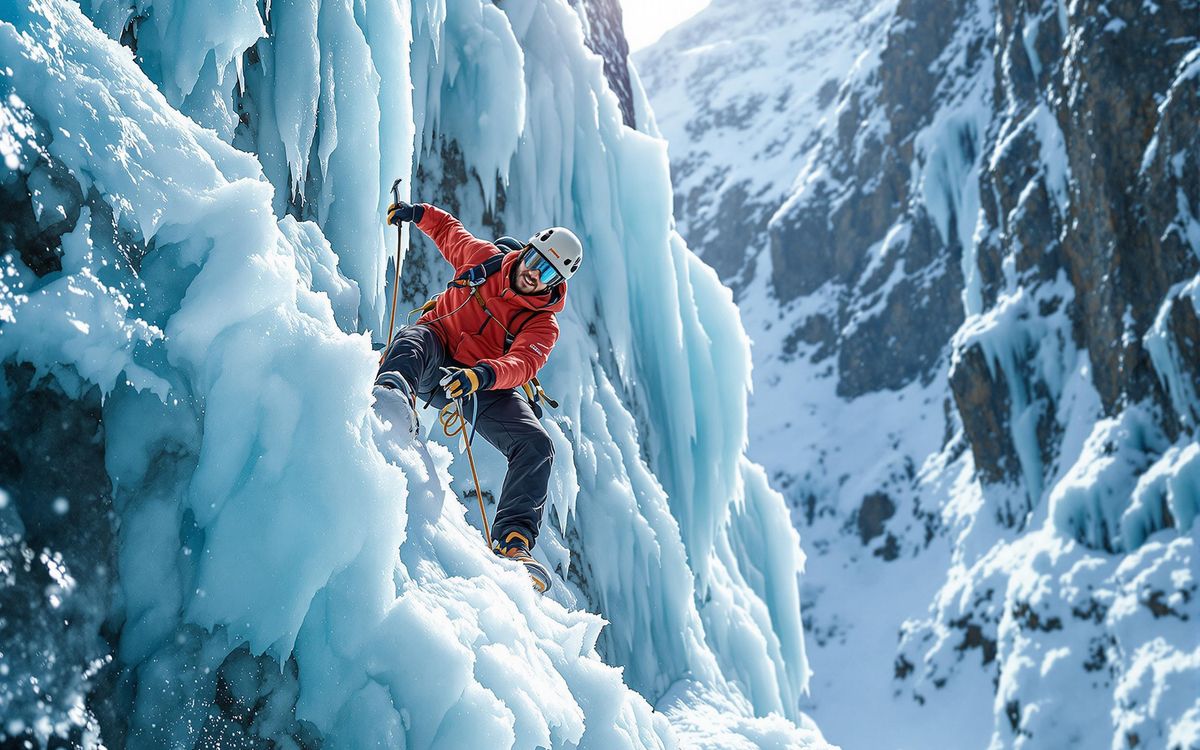
Embark on an exhilarating journey into the frozen world of ice climbing, where frozen waterfalls become your playground and the crisp winter air invigorates your spirit. This guide will equip you with the knowledge to tackle this unique vertical challenge, from selecting the right gear to mastering essential techniques, and discovering the world's most breathtaking ice climbing destinations.
Gearing Up for Glacial Glory
Ice climbing demands specialized equipment to ensure both safety and peak performance in frigid environments. Each piece plays a crucial role in your ascent, offering security and efficiency as you navigate icy walls. From the tools in your hands to the boots on your feet, understanding your gear is paramount.
At the heart of your ice climbing arsenal are the ice axes. These aren't your grandfather's mountaineering axes; modern ice axes are designed for steep, technical climbing. Look for axes with curved shafts for clearance and ergonomic grips for comfortable handling. Brands like Petzl and Black Diamond offer top-of-the-line options. For example, the Petzl Nomic is a popular choice among experienced climbers for its balance and precision. For steeper terrain, the Petzl Ergonomic is favored. Consider axes with modular heads, allowing you to customize picks and weights based on the ice conditions and your climbing style.
Crampons are your connection to the ice, providing the necessary grip to ascend frozen surfaces. There are three main types: strap-on, semi-automatic/hybrid, and automatic. Strap-on crampons are versatile and can fit a wider range of boots, making them a good choice for beginners. Semi-automatic crampons have a heel lever for a secure fit on boots with a heel welt, while automatic crampons offer the most secure attachment for boots with both toe and heel welts. Look for crampons with mono- or dual-point front points, depending on your climbing preference. Mono-points offer precision on steep ice, while dual-points provide more stability. Brands like Petzl, Black Diamond, Grivel and Blue Ice are known for their durable and high-performing crampons. The Petzl Dart crampons, known for their modularity and customizable features, are a popular choice. Ensure your crampons fit your boots perfectly to avoid any mishaps on the ice.
Boots are another critical piece of equipment. Double boots are highly recommended for ice climbing, offering superior warmth and support. These boots consist of a rigid outer shell and a removable inner bootie, providing insulation and allowing you to dry the liners overnight. Look for boots with a stiff sole to maximize energy transfer when front-pointing and a secure ankle fit for stability. Brands like Scarpa and La Sportiva are renowned for their high-quality ice climbing boots.
A harness is essential for connecting you to the rope and distributing the load in case of a fall. Choose a harness with adjustable leg loops to accommodate bulky winter clothing and gear loops for carrying ice screws and other equipment. Some harnesses, like the Petzl Sitta, are specifically designed for ice climbing and feature ice clipper slots for easy access to ice screws. Remember that while you can use a rock climbing harness for ice climbing, it is best to level up your gear as you advance in the sport.
A helmet is non-negotiable for ice climbing, protecting you from falling ice and potential head injuries. Look for a helmet that is lightweight, well-ventilated, and compatible with eye protection, such as goggles or a face shield. Some helmets even have built-in eye protection. Eye protection is crucial to shield your eyes from ice shards and glare. Also consider helmets with MIPS (Multi-directional Impact Protection System) for added protection. Face shields are also a reasonable option to protect expensive prescription glasses.
A belay device is used to control the rope and arrest a fall. Choose a versatile belay device that is compatible with both single and double ropes. Some popular options include the Petzl Reverso, Black Diamond ATC Guide, and Edelrid Mega Jul. For ice climbing, a standard plaquette device like the Black Diamond ATC Guide or Petzl Reverso 4 is recommended. These devices are reliable and can handle icy ropes effectively.
Ice screws are your primary means of protection on the ice, providing secure anchor points along your route. Choose screws of varying lengths to accommodate different ice thicknesses. Brands like Petzl, Black Diamond, and Blue Ice offer high-quality ice screws. The Petzl Laser Speed Light screws are a popular choice among climbers. Also, make sure to carry quickdraws for clipping the rope to your ice screws.
Finally, a rope is essential for any climbing endeavor. Opt for a dynamic rope specifically designed for ice climbing, with a dry treatment to repel water and prevent freezing. Sterling and Mammut are reputable brands for climbing ropes. Also, consider the Petzl Multiook or a homemade coat hanger tool for v-threads.
Hidden Gem: When selecting gear, consider models known for their durability and performance in extreme conditions. For instance, some climbers swear by specific models of Black Diamond crampons for their superior ice penetration, while others prefer Petzl ice axes for their ergonomic design and swing. Researching gear reviews and consulting with experienced ice climbers can provide valuable insights into choosing the best equipment for your needs.
Techniques to Conquer the Cold
Mastering fundamental ice climbing techniques is crucial for efficient and safe ascents. These techniques not only help you conserve energy but also allow you to navigate various ice conditions with confidence. Proper footwork and balance are key to success on the ice.
Front-pointing, also known as the German technique, involves using the front points of your crampons to kick into the ice, creating small platforms for your feet. This technique is most effective on steep or vertical ice, where other techniques may not provide enough purchase. When front-pointing, ensure your heels are dropped to engage the secondary points of your crampons, providing additional stability. Remember, this technique can be taxing on your calf muscles, so it's important to use it strategically.
The French technique, also known as flat-footing, involves keeping your crampons flat on the ice, engaging all the points for maximum traction. This technique is best suited for low-angle to moderately steep ice, where you can maintain a stable stance with all crampon points in contact with the surface. The French technique is less tiring than front-pointing and allows you to conserve energy on long climbs. It is also important in the French technique to plant all points except the front 2.
The American technique is a hybrid approach that combines elements of both front-pointing and flat-footing. This technique involves front-pointing with one foot while keeping the other foot flat on the ice, providing a balance of stability and efficiency. The American technique is particularly useful for traversing or negotiating uneven terrain.
The 'squat-stand-swing' method is a technique that emphasizes using your legs rather than your arms to ascend the ice. This method involves squatting down, placing your feet, and then standing up, using your leg muscles to power your ascent. By minimizing the use of your arms, you can conserve energy and reduce fatigue. This is the most crucial part of ice climbing footwork and makes climbing up a whole lot easier on your upper body.
The A-frame technique involves keeping your body in an A-shape, with your feet wider than your shoulders and your knees slightly bent. This stance provides a stable base of support and allows you to maintain balance on the ice. The A-frame technique is particularly useful for steep or overhanging terrain, where maintaining balance is crucial.
Hidden Gem: A less common but effective technique for conserving energy on long climbs involves incorporating micro-rests into your ascent. By finding small ledges or pockets in the ice, you can briefly shift your weight off your arms and onto your feet, allowing your muscles to recover. Additionally, practicing controlled breathing exercises can help regulate your heart rate and reduce fatigue. Inhaling deeply and exhaling slowly can promote relaxation and improve your overall endurance.
Ouray Ice Park: North America's Frozen Jewel
Nestled in the heart of the San Juan Mountains of Colorado, Ouray stands as a premier ice climbing destination, drawing climbers from around the globe. The town's claim to fame is the Ouray Ice Park, a unique man-made ice climbing venue that offers a variety of routes for all skill levels.
The Ouray Ice Park is a remarkable feat of engineering, transforming the natural Uncompahgre Gorge into a vertical wonderland. A network of pipes and sprinklers is used to create and maintain the ice formations, ensuring reliable climbing conditions throughout the winter season. The park features over 150 ice and mixed climbing routes, ranging from beginner-friendly slopes to challenging overhanging walls.
The park is divided into several distinct climbing areas, each offering a unique experience. The Scottish Gullies are a popular choice for beginners, with gentle slopes and easy access. The School Room offers a variety of moderate routes, perfect for honing your skills. For more experienced climbers, the Picnic Area and New Fangled area boast challenging mixed routes and steep ice walls.
The Ouray Ice Park is not only a world-class climbing venue but also a hub for the ice climbing community. The park hosts numerous events throughout the winter, including clinics, competitions, and gear demonstrations. The annual Ouray Ice Festival is a highlight of the season, drawing climbers and spectators from around the world to celebrate the sport of ice climbing. The 30th annual Ouray Ice Festival will be held from January 23rd - 26th, 2025.
Hidden Gem: For a unique challenge, seek out the Lead School route, located in the South Park area of the park. This less-known climb offers a sustained pitch of steep, chandeliered ice, requiring precise tool placements and solid technique. The route is often less crowded than other areas of the park, providing a more secluded and challenging climbing experience.
Rjukan, Norway: A Nordic Ice Dream
Across the Atlantic, Rjukan, Norway, beckons ice climbers with its reliable ice conditions, accessible routes, and stunning frozen waterfalls. This Nordic gem has earned a reputation as a world-class ice climbing location, attracting climbers of all skill levels.
Rjukan's reliable ice conditions are due to its unique geography and climate. The town is situated in a narrow valley, surrounded by steep cliffs that funnel cold air and create ideal conditions for ice formation. The long, cold winters ensure that the ice remains solid and climbable for several months of the year.
One of the defining features of Rjukan is the accessibility of its ice climbs. Many of the routes are located within a short walk from the town center, making it easy to access the ice even in the depths of winter. The variety of routes is also a major draw, with everything from roadside single-pitch climbs to multi-pitch adventures that ascend frozen waterfalls.
To navigate the vast array of ice climbs in Rjukan, consult the Rjukan Selected Ice Climbs Guidebook by Steve Broadbent. This comprehensive guidebook details over 220 of the best ice climbs in the area, providing route descriptions, topos, and essential information for planning your ascent. It describes a wide range of ice routes across all grades, with everything from roadside single pitch routes to 17 pitch adventures and multi-pitch test-pieces.
Hidden Gem: For optimal ice conditions and sunlight, aim to climb in Rjukan during the mid-morning hours. The sun's rays can soften the ice in the afternoon, making it less secure. After a day of climbing, immerse yourself in the local culture by visiting the Norwegian Industrial Workers Museum, located in the nearby town of Vemork. The museum tells the story of Norway's industrial heritage and the Norwegian resistance during World War II.
Ice climbing is a challenging but rewarding winter adventure that combines physical exertion with the beauty of nature. By equipping yourself with the right gear, mastering essential techniques, and exploring the world's best ice climbing destinations, you can unlock a new realm of vertical possibilities and experience the thrill of ascending frozen landscapes.