


Destination Guide
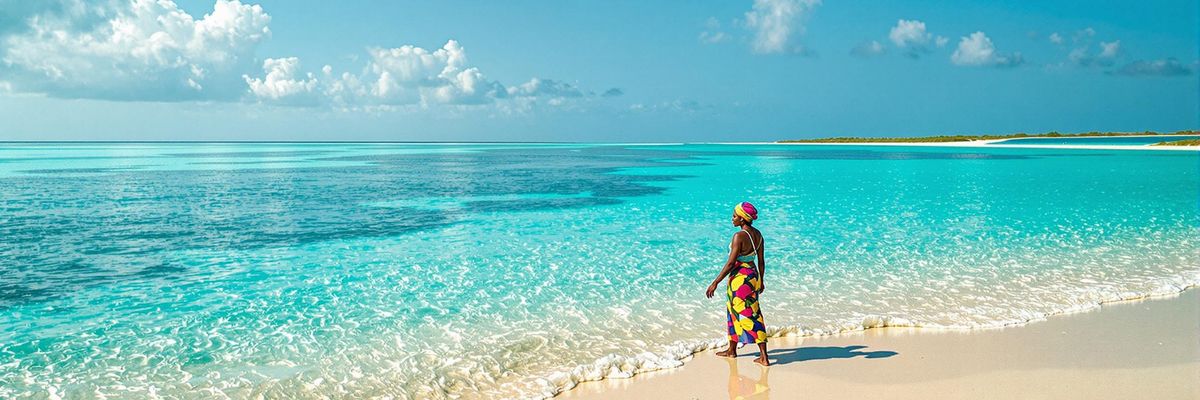
Xai-Xai: A Coastal Retreat
Relax on the beaches and explore the reefs of Xai-Xai.
View More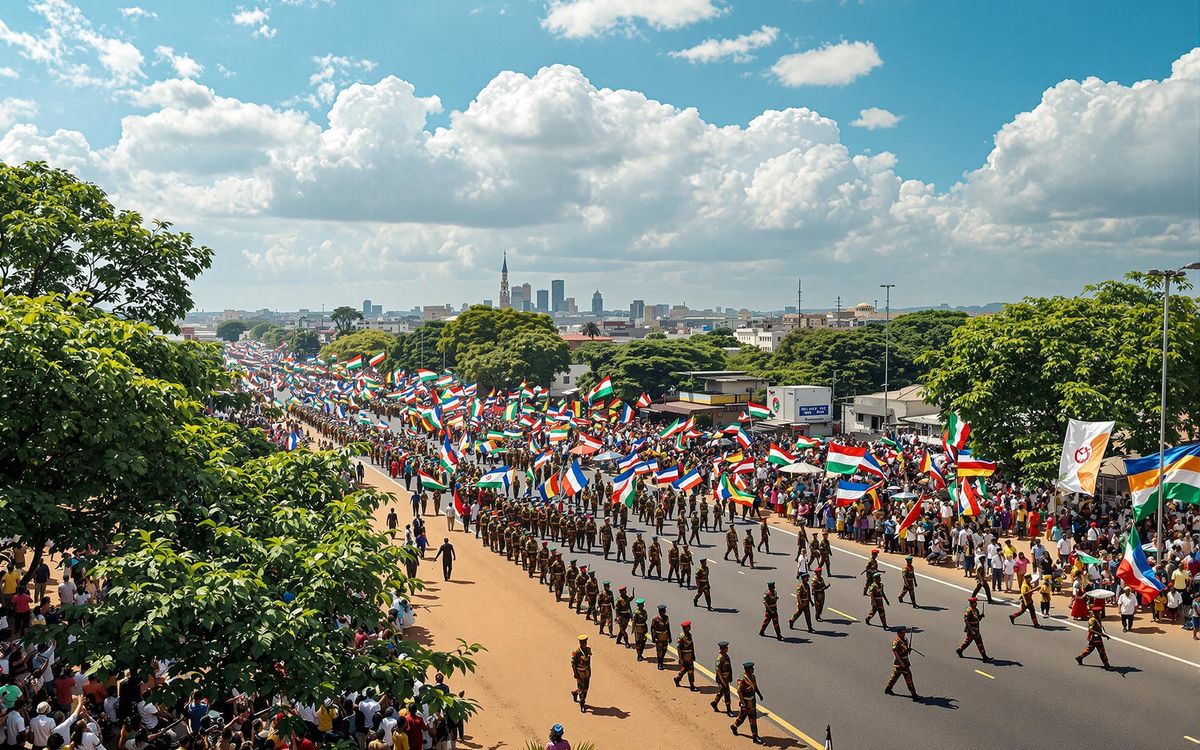

Bangui, the vibrant capital of the Central African Republic, prepares to celebrate its independence on August 13th, 2025. Join us as we explore the heart of Central African pride and culture during this momentous occasion.
Each year, the city awakens with a palpable sense of anticipation, ready to commemorate the nation's journey to freedom. The air is filled with excitement as locals prepare for a day of parades, music, and cultural displays, all reflecting the spirit of unity and national pride. From the early morning hustle in the markets to the final firework display, Independence Day in Bangui is an immersive experience that offers a deep dive into the heart of Central African identity.
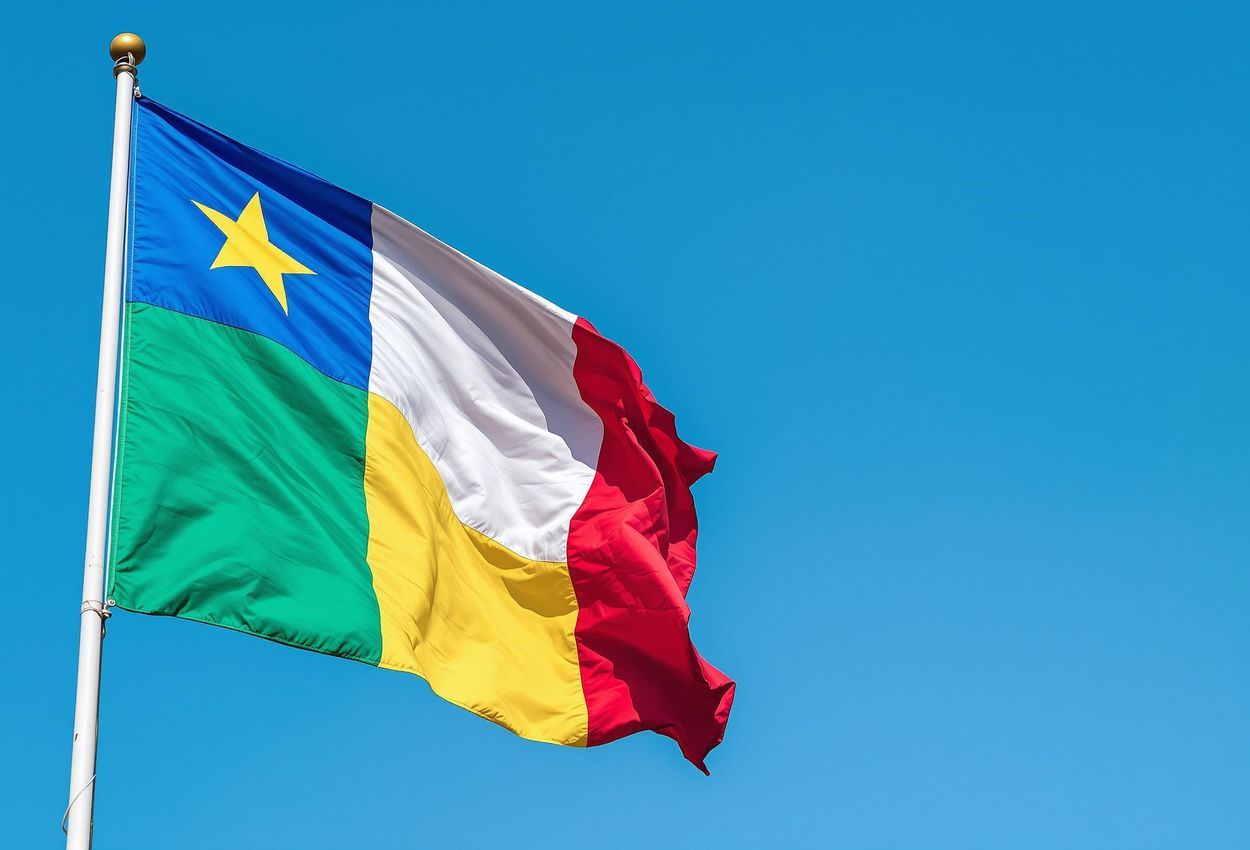
As dawn breaks over Bangui on August 13th, a sense of vibrant anticipation fills the air. The city, usually bustling with daily life, takes on an extra layer of energy as it prepares to celebrate its independence. The national flag, a unique combination of red, yellow, green, and blue, adorns every corner, fluttering proudly in the morning breeze. These colors, chosen to represent both the country's African heritage and its historical ties to France, create a visual tapestry of national identity.
The day's significance is rooted in the events of August 13th, 1960, when the Central African Republic gained its independence from France. This pivotal moment in history marked the culmination of years of struggle and the beginning of a new chapter for the nation. Key to this movement was Barthélémy Boganda, a leading figure in the fight for independence and the first Prime Minister of the autonomous territory of Ubangi-Shari. His vision for a unified and self-governing Central African Republic continues to inspire generations.
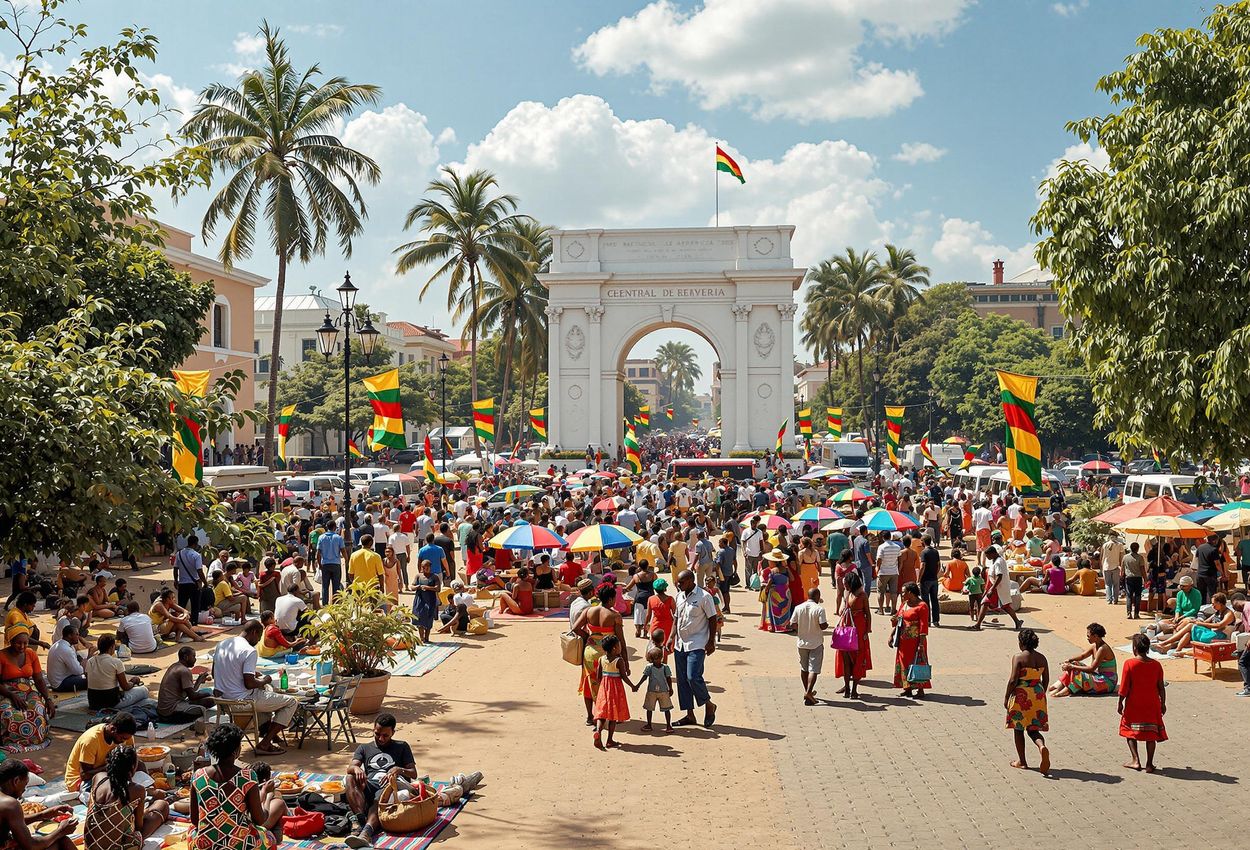
Early morning activities center around key locations such as the Place de la République, where final preparations for the day's events are underway. The sounds of rehearsals, the rhythmic beating of drums, and the cheerful chatter of excited citizens create a symphony of national pride. As the sun rises higher, the city transforms into a canvas of vibrant colors and sounds, setting the stage for a day of unforgettable celebrations.
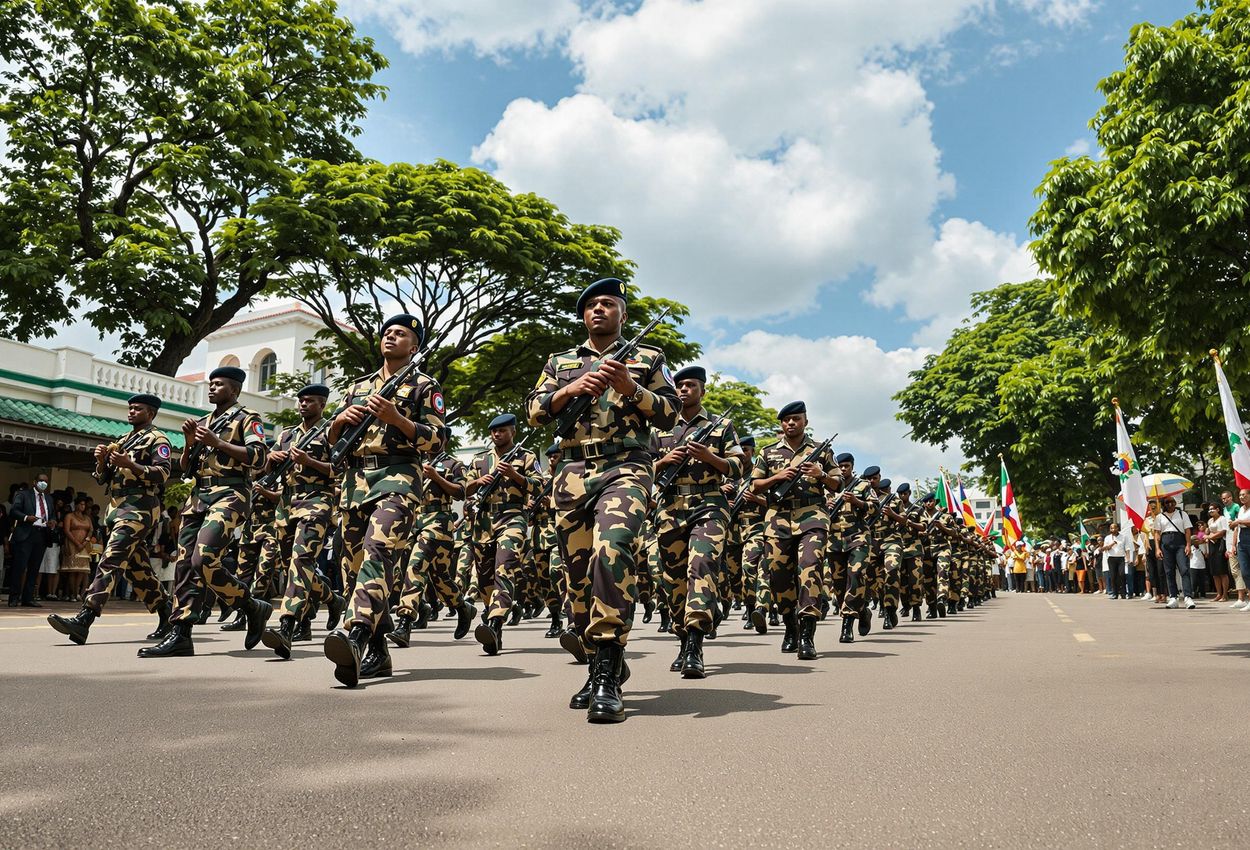
The highlight of the morning is the military parade along Avenue Barthélémy Boganda, a tribute to the man who paved the way for the nation's independence. The avenue comes alive with the synchronized steps of the national army, their uniforms crisp and their weaponry gleaming in the sunlight. The precision of their movements reflects the discipline and dedication of the forces charged with protecting the nation.
Adding to the spectacle, peacekeepers from MINUSCA (United Nations Multidimensional Integrated Stabilization Mission in the Central African Republic) may participate, symbolizing the international community's support for the country's stability. The presence of international forces underscores the ongoing efforts to maintain peace and security in the region. A military band provides a powerful soundtrack to the parade, their music resonating with patriotic fervor. Flyovers and aerial displays add a dramatic flair, captivating the crowds and filling the sky with symbols of national strength.
Dignitaries, including President Faustin-Archange Touadéra, gather to witness the display of national pride. Security measures are heightened to ensure the safety of all participants and spectators, allowing everyone to focus on the celebration. The parade is not just a display of military might but a powerful reminder of the nation's resilience and its commitment to safeguarding its hard-won freedom.
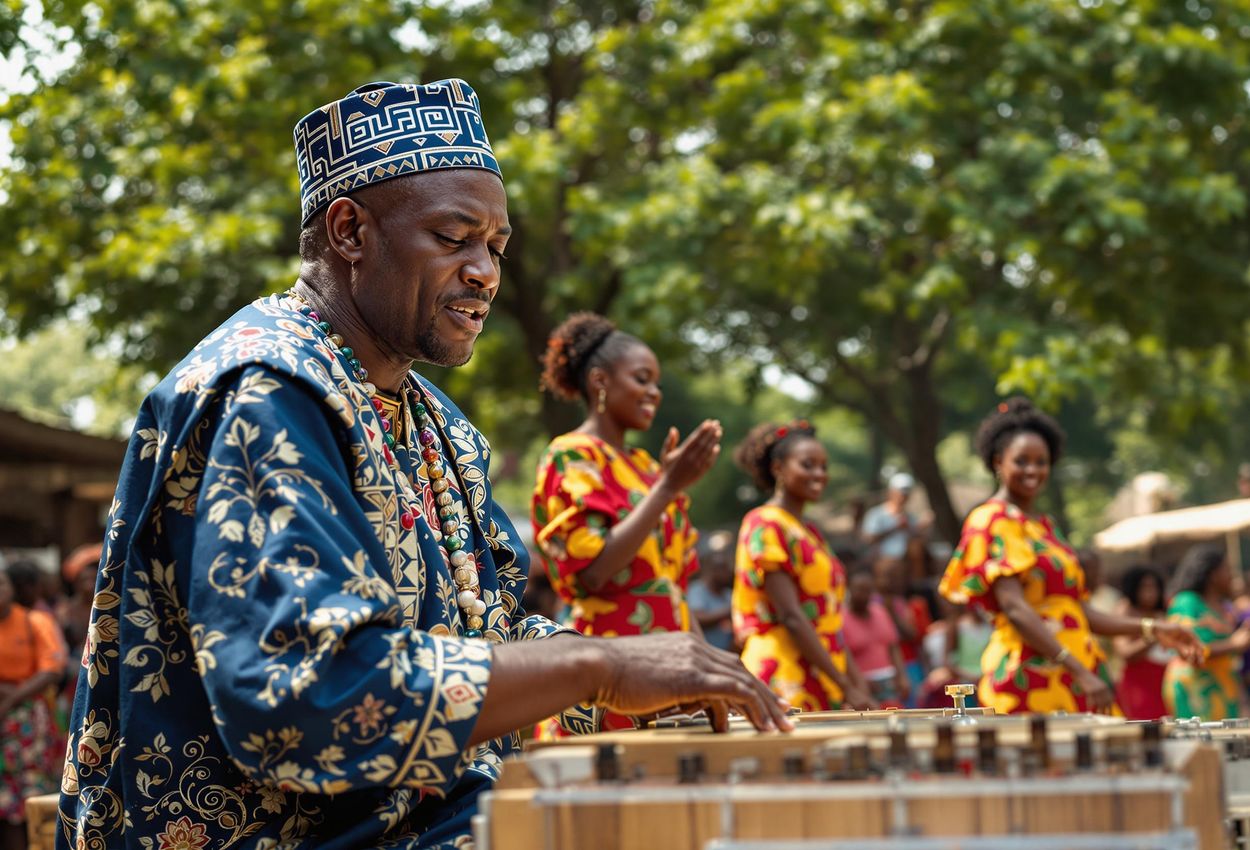
Following the military parade, the celebrations transition into a vibrant showcase of Central African music. Traditional instruments take center stage, with the likembe (thumb piano) and ngbaka drums creating captivating rhythms that echo through the city. The likembe, with its delicate yet resonant tones, weaves intricate melodies that speak to the soul. The ngbaka drums, with their deep and powerful beats, provide a rhythmic foundation that stirs the spirit.
Musical groups and artists from across the country come together to perform, each bringing their unique style and energy to the stage. The music reflects the cultural diversity of the Central African Republic, blending various ethnic traditions into a harmonious symphony of unity. Dance performances add another layer of cultural richness, with dancers moving to the rhythms in traditional costumes, their movements telling stories of heritage and history. The performances are not just entertainment; they are a celebration of identity, a reaffirmation of cultural pride, and a bridge connecting the past with the present.
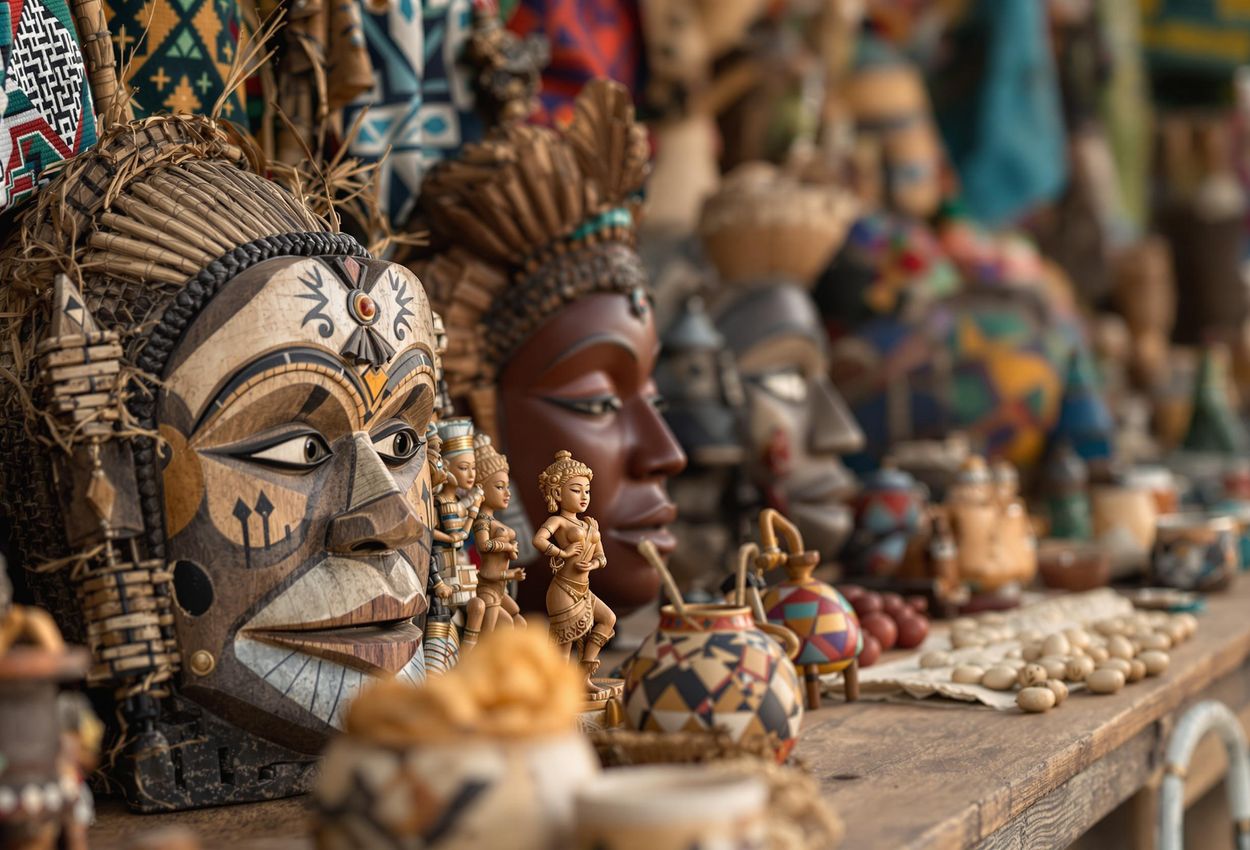
Beyond the music and parades, Independence Day in Bangui is an opportunity to witness the rich tapestry of Central African traditions. Cultural displays showcase the craftsmanship and artistry of the country's various ethnic groups. Wood carvings, pottery, and textiles are prominently featured, each piece telling a story of skill, creativity, and cultural heritage.
Traditional ceremonies and rituals offer a glimpse into the spiritual and social customs that have shaped the Central African Republic. Storytelling, an integral part of the oral tradition, brings history and folklore to life, connecting generations through shared narratives. These cultural displays are more than just exhibits; they are living expressions of identity, preserving traditions and passing them on to future generations.
Hidden Gem: One unique local tradition is the art of butterfly wing collage. Artisans create intricate designs and pictures by carefully arranging butterfly wings on paper, a delicate and beautiful art form that is unique to the region.
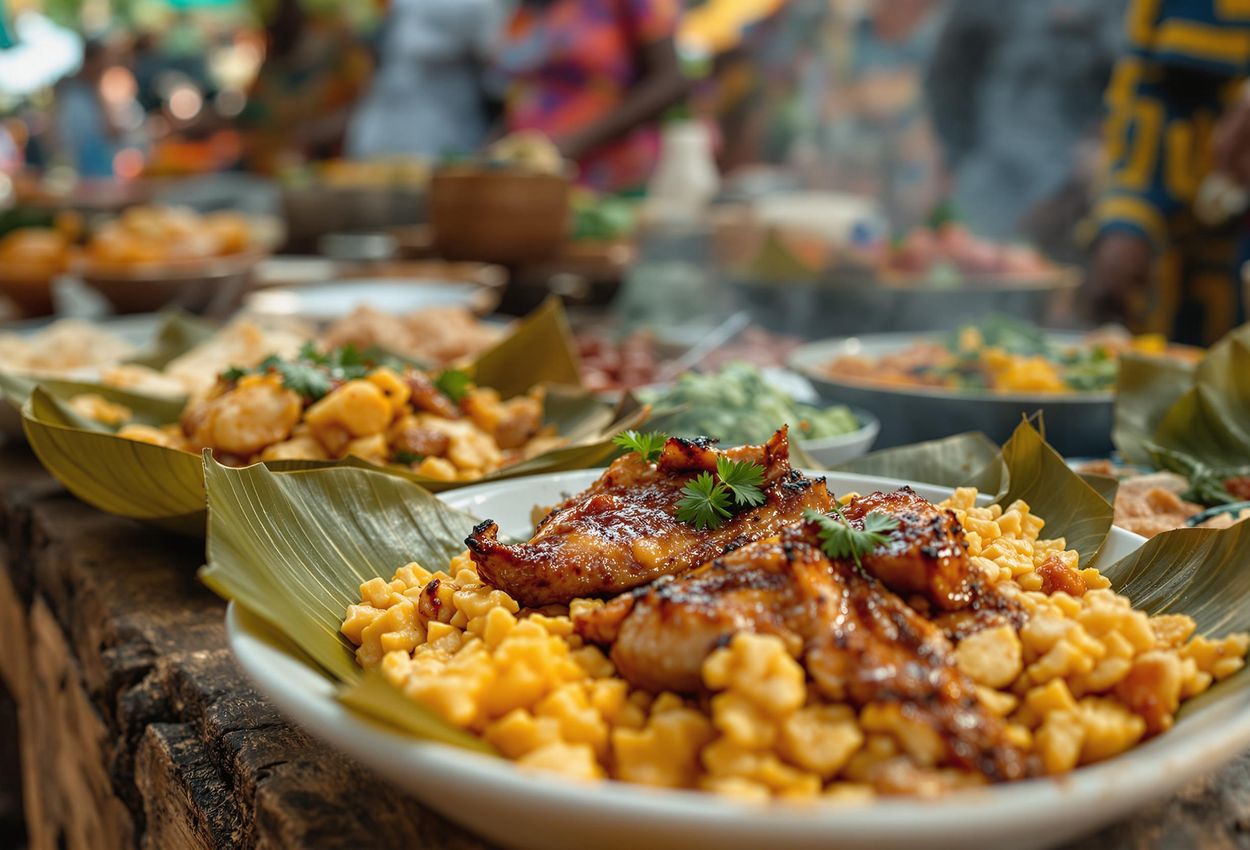
No celebration is complete without food, and Independence Day in Bangui offers a culinary journey through the flavors of the Central African Republic. Food stalls line the streets, offering a variety of traditional dishes that tantalize the taste buds and provide a true taste of the region. Manioc (cassava) dishes, prepared in various ways, are a staple, reflecting the importance of this root vegetable in the local diet. Stews, rich with spices and flavors, offer hearty and satisfying meals. Grilled meats, marinated in local herbs and spices, provide a savory delight that is perfect for a festive occasion.
Unique spices and flavors, such as those found in egusi sauce or chicken and cumin stew, add a distinctive touch to the cuisine. Eating these dishes amidst the vibrant atmosphere of the celebrations is an experience in itself, a sensory immersion into the heart of Central African culture.
To truly understand the significance of Independence Day, a visit to Bangui's historical sites is essential. Monuments dedicated to Barthélémy Boganda stand as testaments to his pivotal role in the country's journey to freedom. These monuments serve as reminders of the sacrifices made and the vision that guided the nation toward independence.
Other historical sites related to the independence movement offer further insights into the events and figures that shaped the Central African Republic. Exploring these locations provides a deeper understanding of the country's history and its ongoing pursuit of unity, peace, and progress.
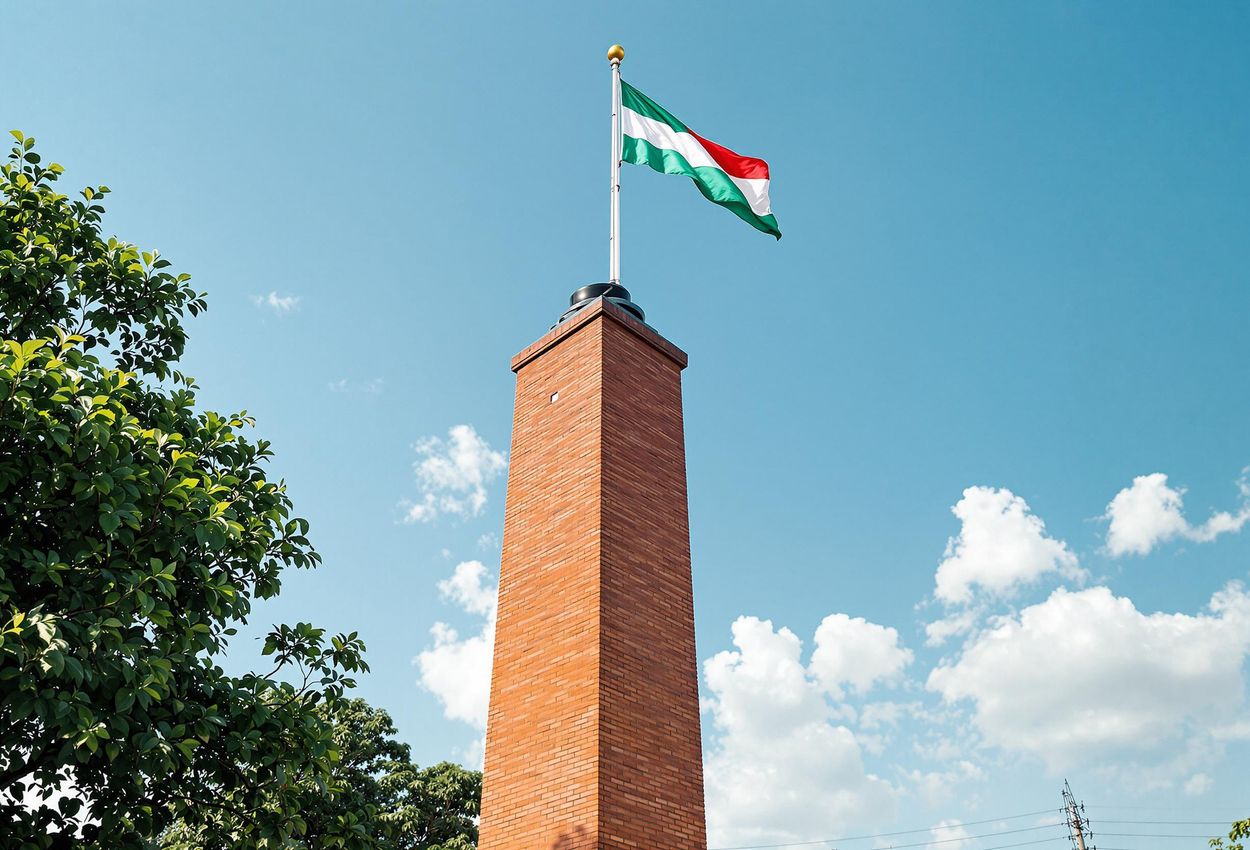
The visual spectacle of Independence Day in Bangui is dominated by the national flag, a symbol of unity and pride. The flag's colors – blue, white, green, yellow, and red – each hold special significance, representing the country's aspirations for peace, freedom, and prosperity. The blue symbolizes the sky and freedom; the white represents peace and dignity; the green signifies hope and faith; the yellow stands for tolerance and the red symbolizes the blood shed for independence.
People dress in the national colors, adorning themselves with flags and fabrics that showcase their patriotism. The city is decorated with banners and streamers, creating a festive atmosphere that amplifies the sense of national pride. Key locations, such as the Presidential Palace, are adorned with flags and banners, serving as focal points for the celebrations.
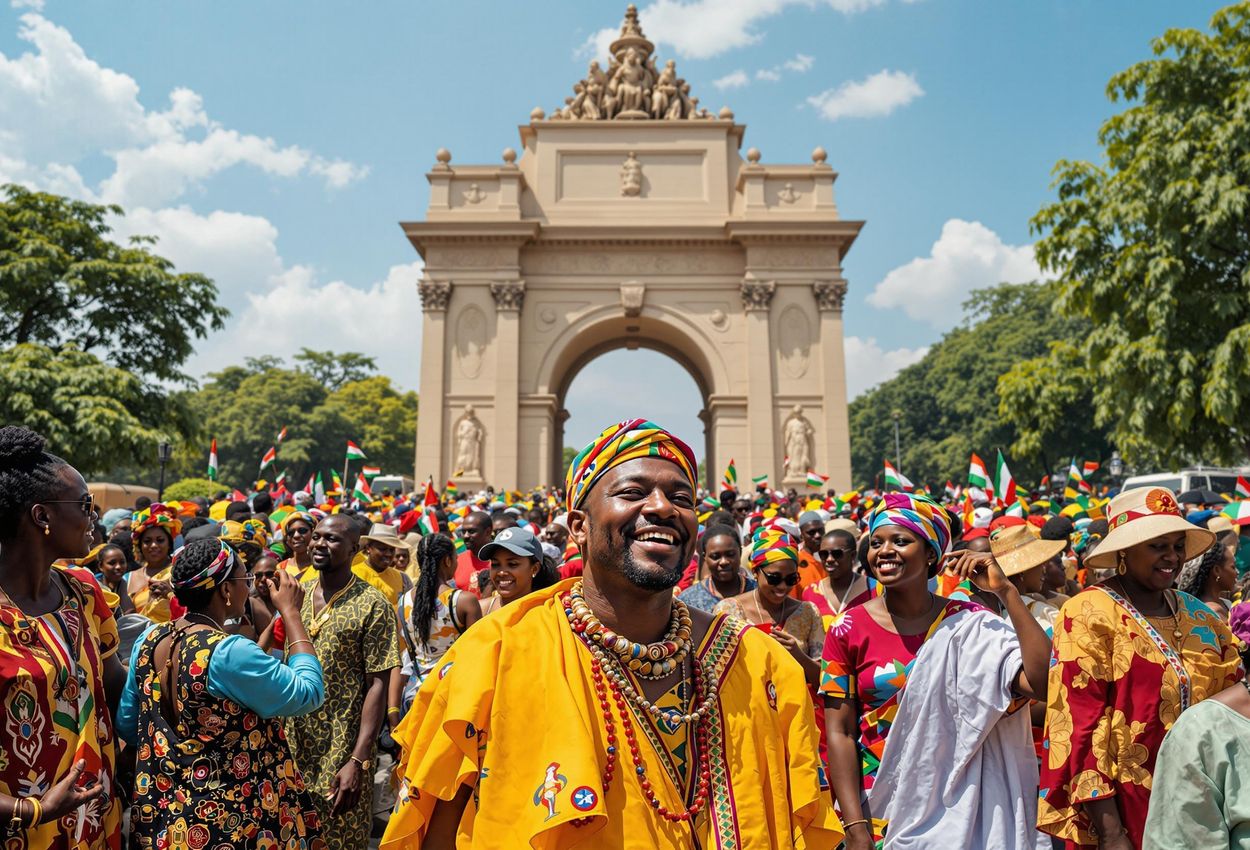
The auditory experience of Independence Day in Bangui is as captivating as the visual spectacle. The sounds of cheering crowds fill the air, their voices united in celebration. The music of the parades, from the rhythmic beats of the drums to the soaring melodies of the national anthem, creates a powerful and emotional atmosphere. Speeches by dignitaries, broadcast across the city, inspire hope and reinforce the values of unity and progress. The overall atmosphere is one of joy and jubilation, a collective expression of freedom and national identity.
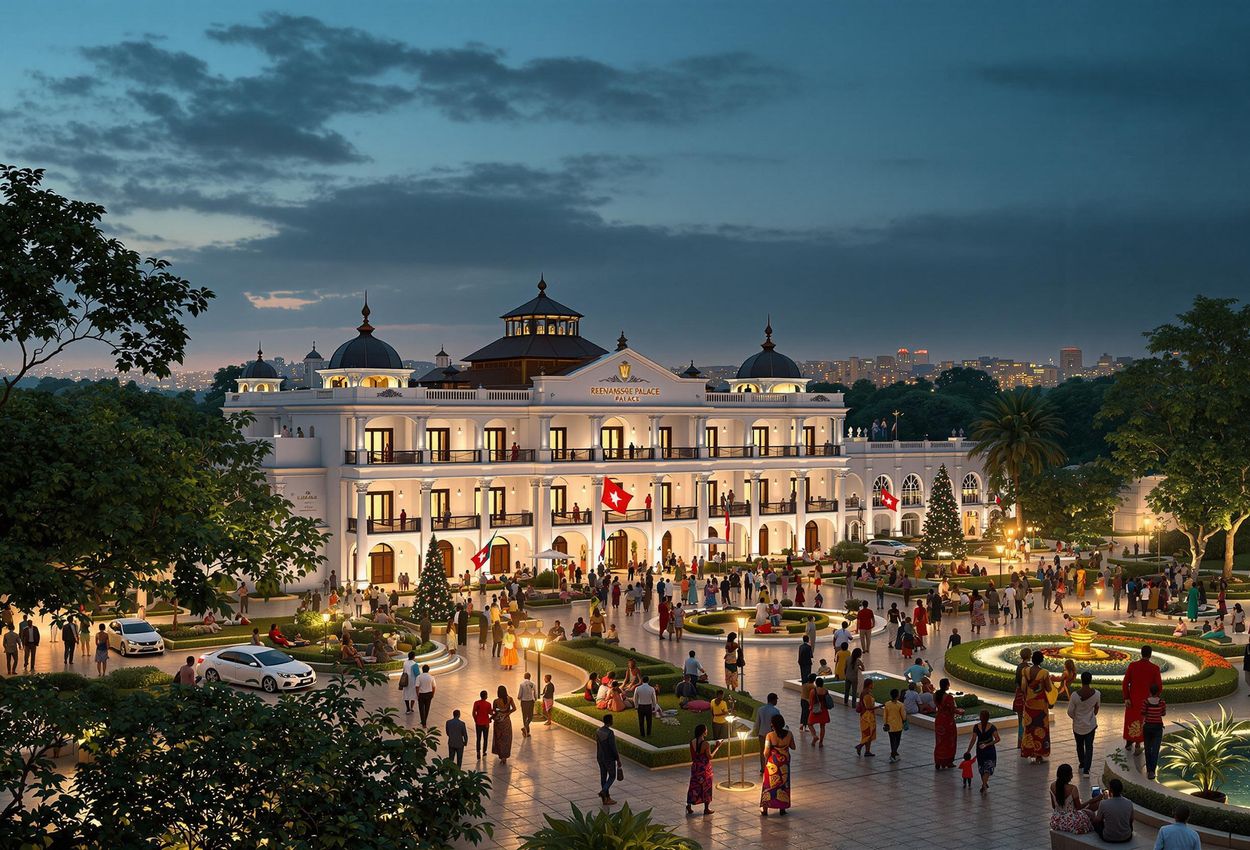
Independence Day in Bangui is a powerful reminder of national unity, bringing together people from diverse ethnic groups and backgrounds. The celebrations foster a shared sense of identity and belonging, emphasizing the common values and aspirations that unite the Central African people. This sense of unity is particularly significant in a country with a complex history, where overcoming divisions and working together towards a common future is essential.
The holiday serves as a platform for promoting inclusivity and understanding, celebrating the richness of Central African culture in all its forms. It is a day for reaffirming the commitment to building a society where everyone feels valued and respected, regardless of their background.
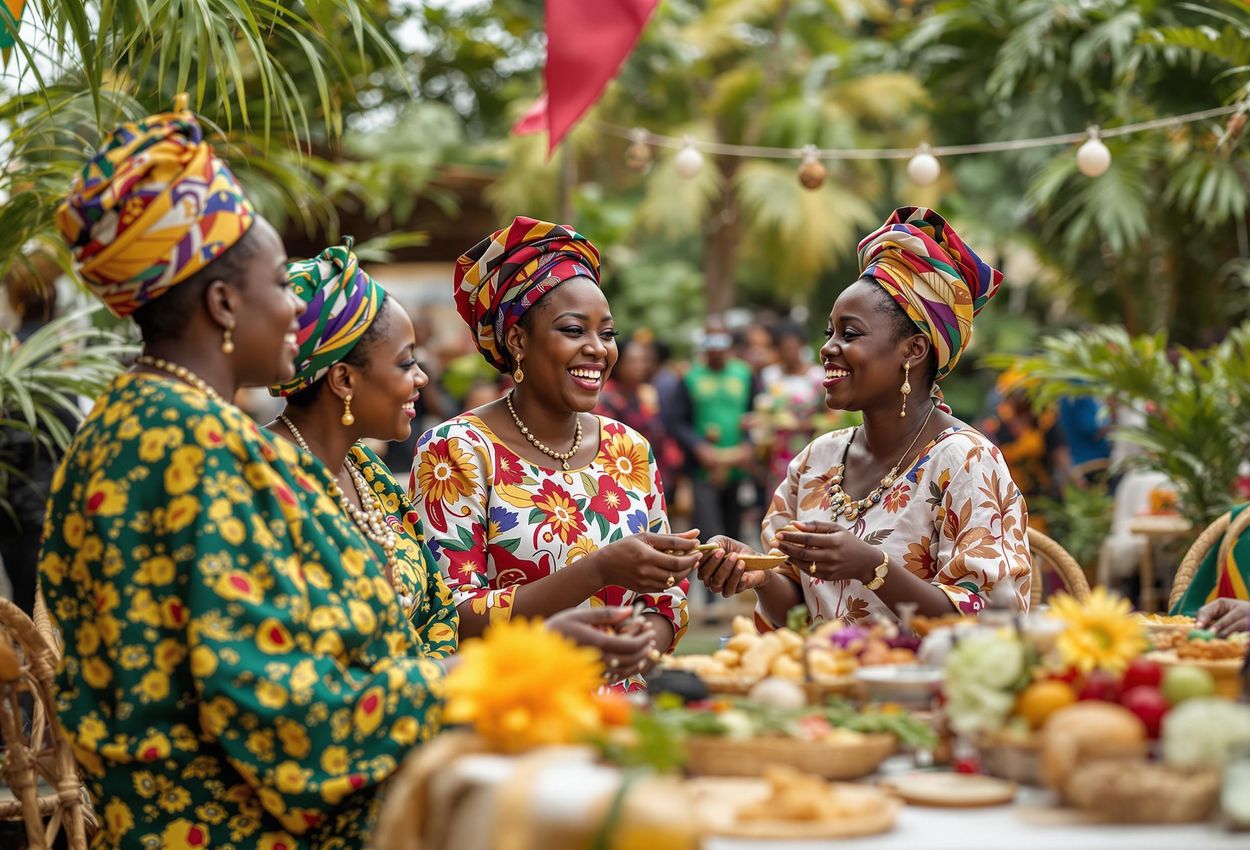
The significance of Independence Day extends far beyond the celebrations in Bangui. The holiday serves as a reminder of the country's hard-won freedom and its aspirations for the future. It is a time to reflect on the progress made and the challenges that remain, reaffirming the commitment to building a better future for all Central Africans. The values of unity, peace, and progress are promoted during the celebrations, inspiring citizens to work together towards a brighter tomorrow.
While the Central African Republic still faces numerous challenges, including political instability and economic hardship, the resilience and determination of its people are undeniable. Independence Day serves as a symbol of hope, reminding everyone of the strength and potential of the nation. It is a day to honor the past, celebrate the present, and look forward to a future filled with promise.
As the sun sets on Bangui, the echoes of the celebrations linger in the air, a testament to the enduring spirit of the Central African Republic. Independence Day is more than just a holiday; it is a celebration of identity, a reaffirmation of unity, and a symbol of hope for a nation on the rise.
Our editors` picks of the latest and greatest in travel - delivered to your inbox daily
Relax on the beaches and explore the reefs of Xai-Xai.
View More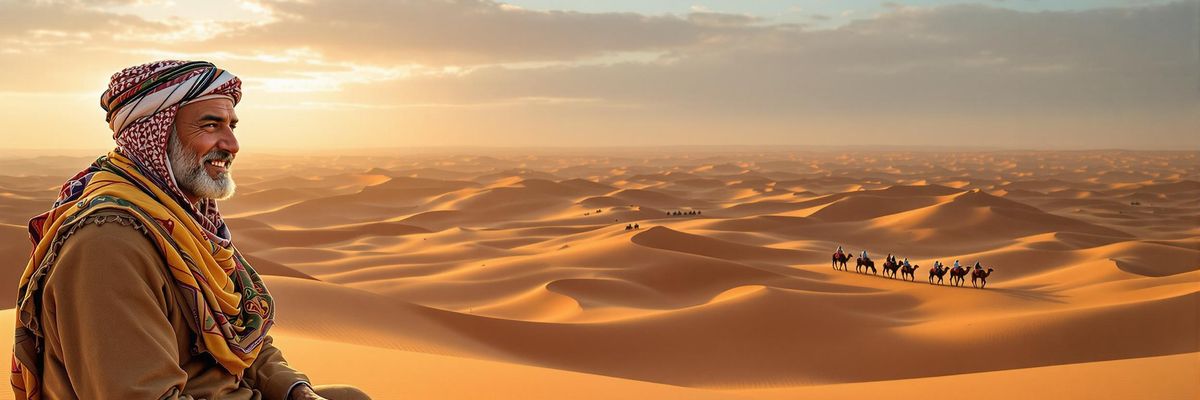
Embrace the cooler temperatures and experience the International Festival of the Sahara in Douz this December.
View More
Celebrate the year-end festivities in Accra, culminating in the vibrant Afrofuture festival.
View More Albania EDITION
 Algeria EDITION
 Argentina EDITION
 Armenia EDITION
 Australia EDITION
 Austria EDITION
 Bangladesh EDITION
 Belgium EDITION
 Belize EDITION
 Benin EDITION
 Bhutan EDITION
 Bolivia EDITION
 Bosnia and Herzegovina EDITION
 Botswana EDITION
 Brazil EDITION
 Bulgaria EDITION
 Burkina Faso EDITION
 Cambodia EDITION
 Cameroon EDITION
 Canada EDITION
 Central African Republic EDITION
 Chad EDITION
 Chile EDITION
 China EDITION
 Colombia EDITION
 Costa Rica EDITION
 Croatia EDITION
 Cyprus EDITION
 Denmark EDITION
 Djibouti EDITION
 Ecuador EDITION
 Egypt EDITION
 El Salvador EDITION
 Eritrea EDITION
 Estonia EDITION
 Ethiopia EDITION
 Finland EDITION
 France EDITION
 Gabon EDITION
 Georgia EDITION
 Germany EDITION
 Ghana EDITION
 Greece EDITION
 Guatemala EDITION
 Guinea EDITION
 Guinea-Bissau EDITION
 Honduras EDITION
 Hungary EDITION
 Iceland EDITION
 India EDITION
 Indonesia EDITION
 Ireland EDITION
 Israel EDITION
 Italy EDITION
 Jamaica EDITION
 Japan EDITION
 Jordan EDITION
 Kenya EDITION
 Kuwait EDITION
 Laos EDITION
 Latvia EDITION
 Lebanon EDITION
 Lesotho EDITION
 Liberia EDITION
 Lithuania EDITION
 Luxembourg EDITION
 Madagascar EDITION
 Malawi EDITION
 Malaysia EDITION
 Maldives EDITION
 Mali EDITION
 Malta EDITION
 Mauritania EDITION
 Mauritius EDITION
 Mexico EDITION
 Mongolia EDITION
 Montenegro EDITION
 Morocco EDITION
 Mozambique EDITION
 Namibia EDITION
 Nepal EDITION
 Netherlands EDITION
 New Zealand EDITION
 Nicaragua EDITION
 Niger EDITION
 Nigeria EDITION
 Norway EDITION
 Oman EDITION
 Pakistan EDITION
 Panama EDITION
 Papua New Guinea EDITION
 Paraguay EDITION
 Peru EDITION
 Philippines EDITION
 Poland EDITION
 Portugal EDITION
 Qatar EDITION
 Romania EDITION
 Rwanda EDITION
 Saudi Arabia EDITION
 Senegal EDITION
 Serbia EDITION
 Singapore EDITION
 Slovakia EDITION
 Slovenia EDITION
 Somalia EDITION
 South Africa EDITION
 South Korea EDITION
 Spain EDITION
 Sri Lanka EDITION
 Suriname EDITION
 Sweden EDITION
 Switzerland EDITION
 Tanzania EDITION
 Thailand EDITION
 Tunisia EDITION
 Uganda EDITION
 United Arab Emirates EDITION
 United Kingdom EDITION
 Uruguay EDITION
 Venezuela EDITION
 Vietnam EDITION
 Zambia EDITION
 Zimbabwe EDITION
Subscribe to our newsletter and get the most captivating travel stories, hidden gems, and expert insights delivered straight to your inbox. As a subscriber, you’ll be first in line for exclusive content, premium offers, and unforgettable travel experiences