


Destination Guide
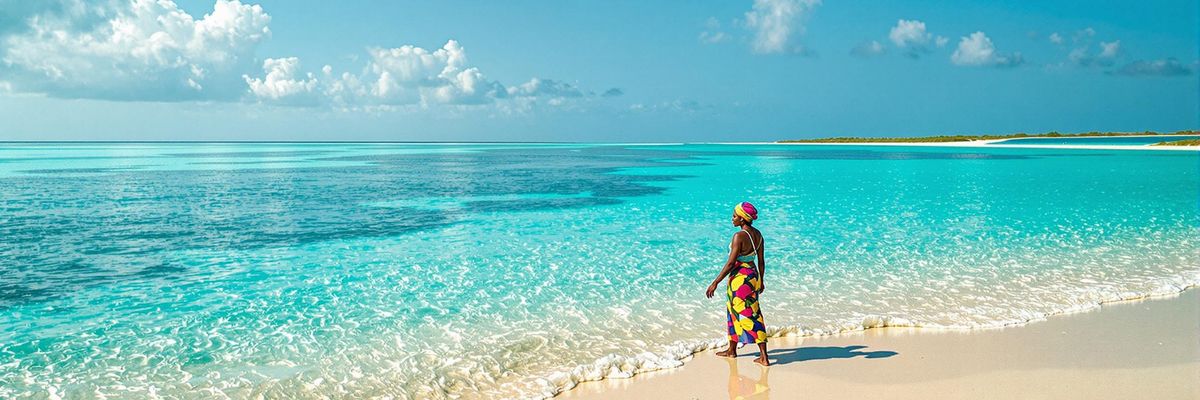
Xai-Xai: A Coastal Retreat
Relax on the beaches and explore the reefs of Xai-Xai.
View More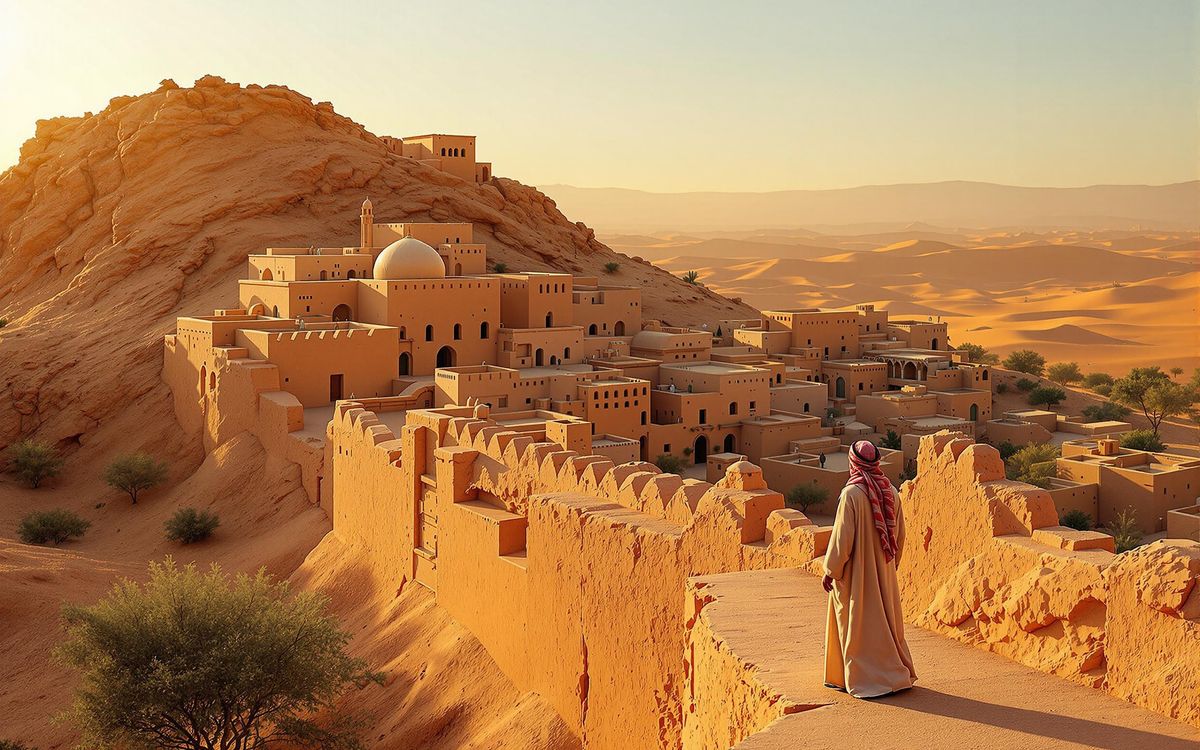

Step into the heart of the Sahara and discover Ouadane, a silent sentinel of Mauritania's golden age, where the whispers of ancient traders and scholars linger in the desert air.
Ouadane, a UNESCO World Heritage Site, stands as a poignant reminder of Mauritania's pivotal role in trans-Saharan trade. Founded in the 11th century, this ancient caravan town is nestled on the southern edge of the Adrar Plateau, a strategic location that once made it a bustling hub connecting North Africa with sub-Saharan Africa. The town's ochre-colored ruins, baked by the relentless sun, tell tales of Berber tribes, gold merchants, and Islamic scholars who once thrived in this remote outpost. Today, Ouadane invites intrepid travelers to step back in time and explore its crumbling ksour (fortified villages), where the echoes of a vibrant past resonate through the narrow, winding streets.
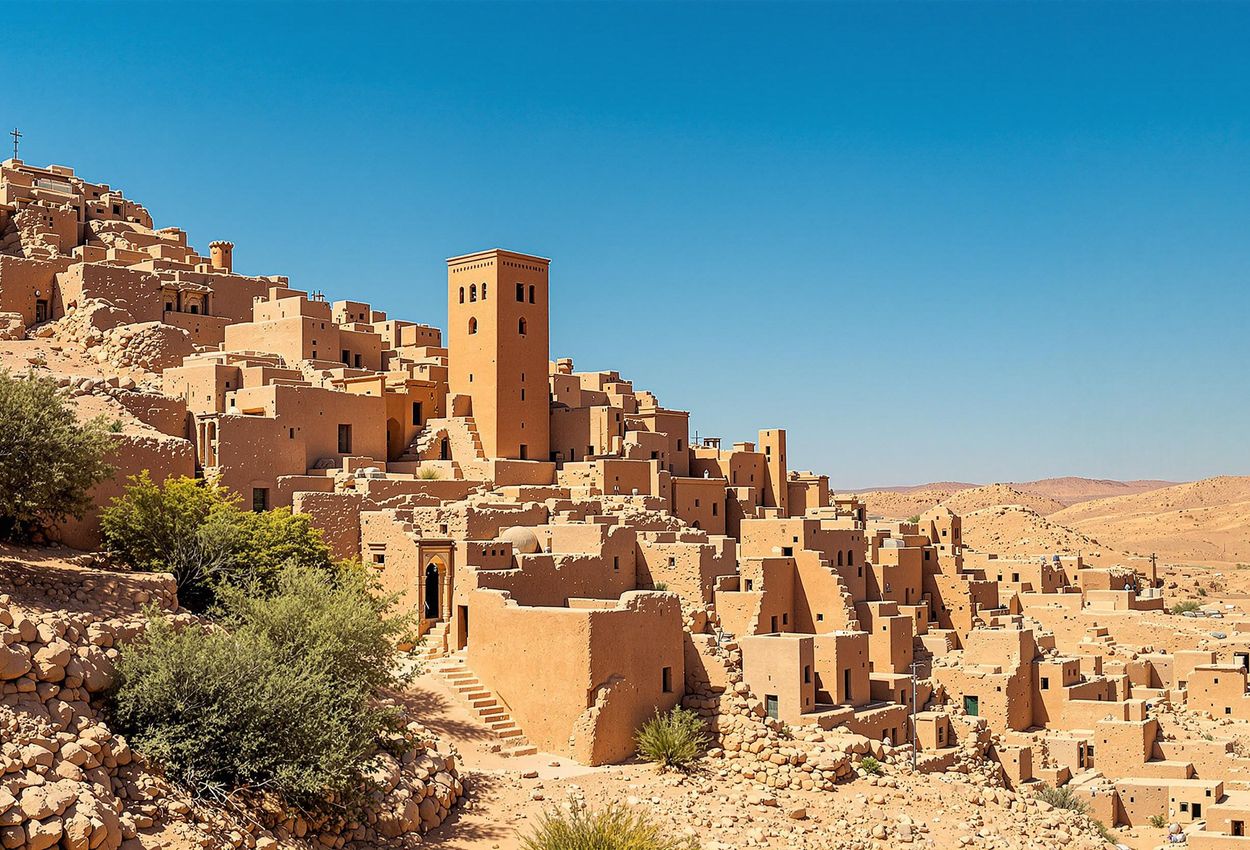
The city was literally built into the rock. Nowhere else in Mauritania do the ruins of the old city extend over such an extensive area as here.
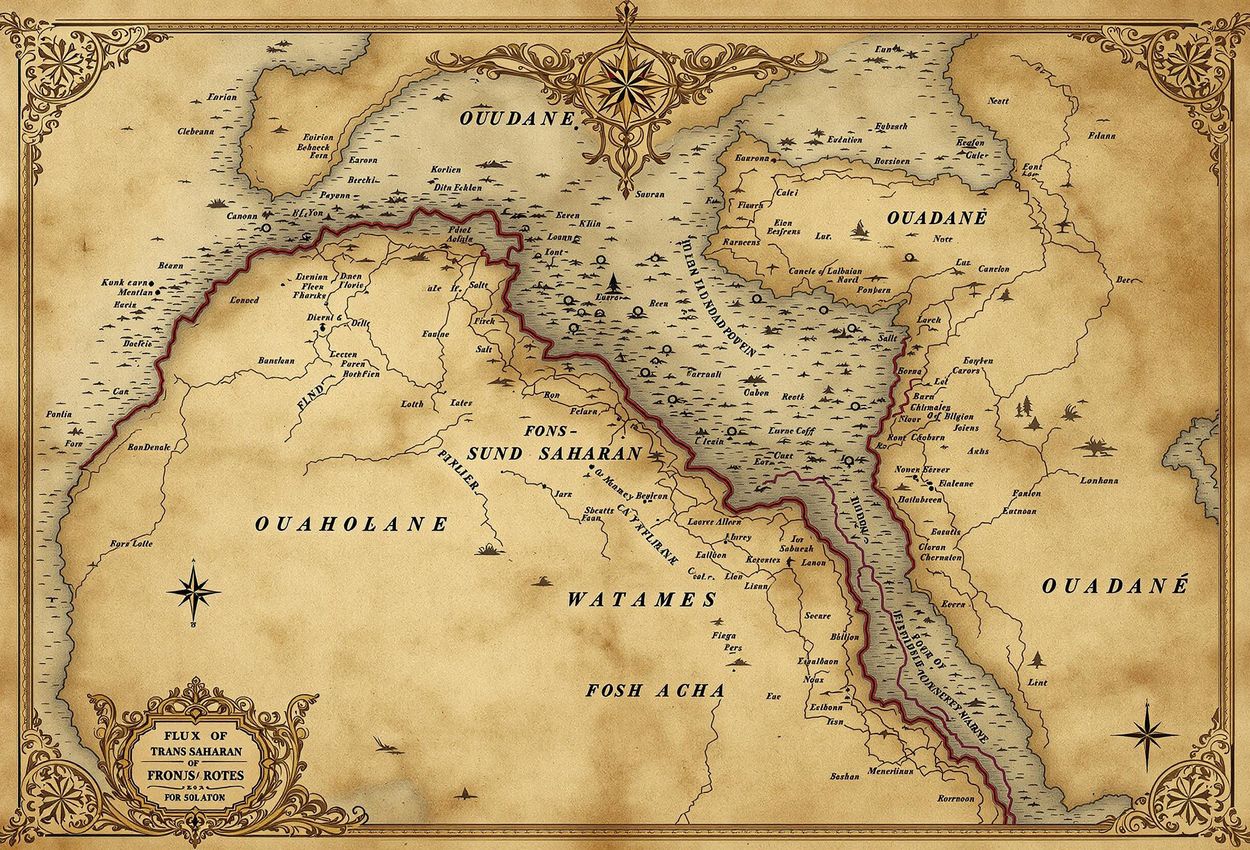
Ouadane's prosperity was inextricably linked to the trans-Saharan trade, a network of routes that crisscrossed the Sahara Desert, facilitating the exchange of goods, ideas, and cultural influences.
Caravans laden with gold from the south, salt from the mines at Idjil, and other precious commodities converged in Ouadane, transforming it into a vital staging post. Berber tribes, masters of the desert, played a crucial role in guiding these caravans, ensuring their safe passage through the treacherous sands. The cooperation between these nomadic groups and the settled population of Ouadane fostered a unique environment of cultural exchange and economic growth. Historical maps of the trans-Saharan trade routes reveal Ouadane's strategic location, highlighting its importance as a gateway between the Mediterranean world and the riches of West Africa.
The city was of far transregional importance in the 13th and 14th centuries. Gold was once exchanged here for dates and salt from the north.
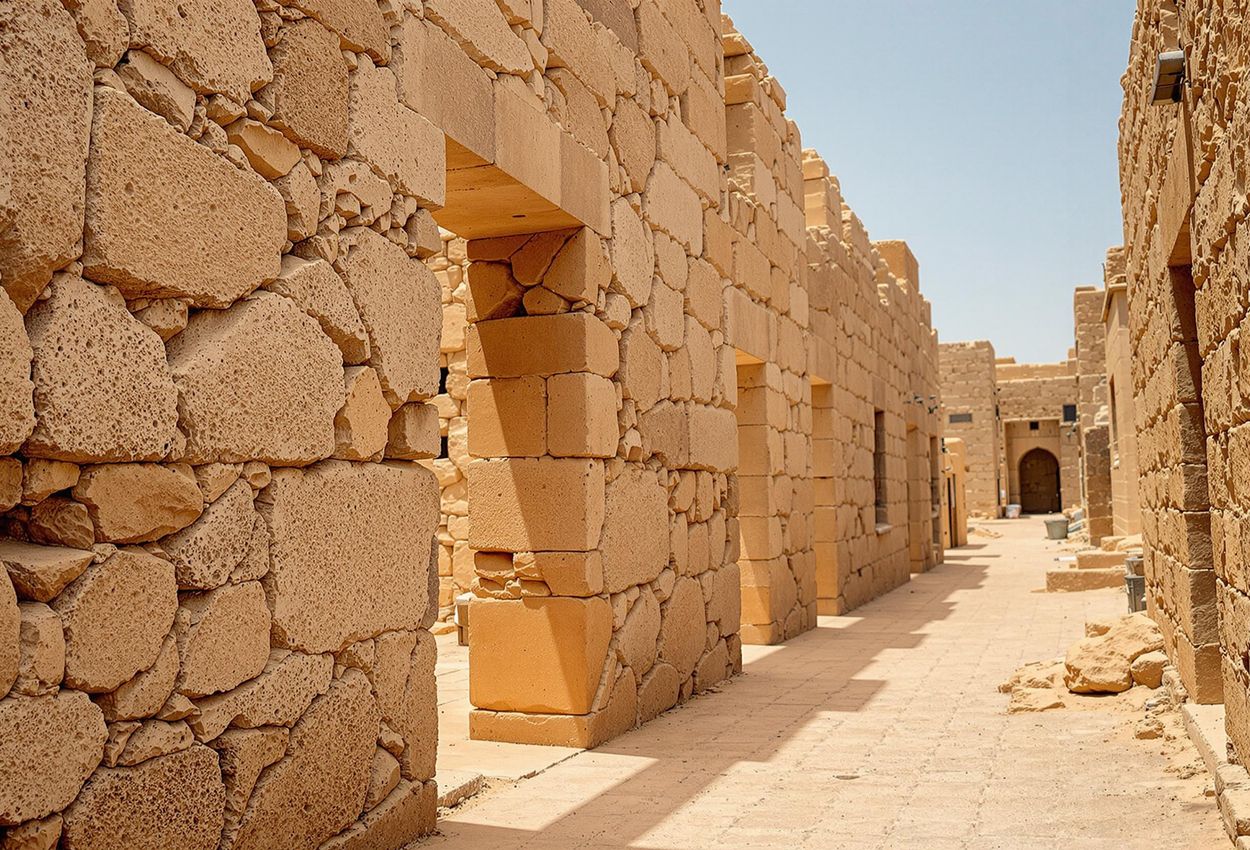
The stone ruins of Ouadane offer a glimpse into the architectural ingenuity of its inhabitants, who skillfully adapted to the harsh desert environment.
The remains of houses, a 15th-century mosque, and other structures stand as testaments to a once-thriving community. The architecture of the ksour, characterized by fortified walls and narrow, winding streets, provided protection against both the elements and potential raiders. Houses with patios offered residents a respite from the desert heat, while the mosque served as a center for religious and social life. Exploring these ruins, one can imagine the bustling activity that once filled these streets, the sounds of merchants haggling, and the rhythmic calls to prayer echoing through the town.
The houses, mosques and city walls were constructed from sandstone. These structures were adorned with intricate carvings and geometric patterns.
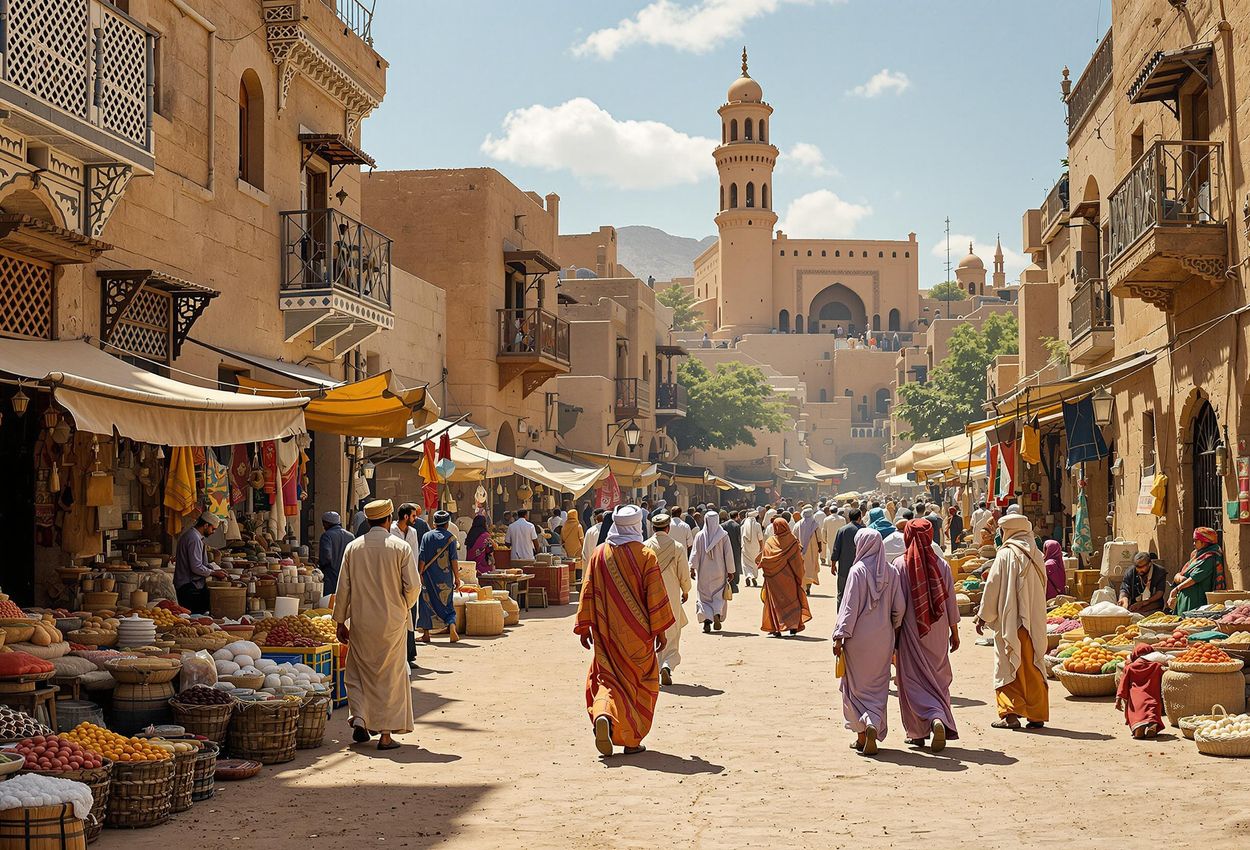
Ouadane was not only a center of commerce but also a hub of Islamic scholarship and cultural exchange.
Traders from distant lands mingled with local scholars, exchanging not only goods but also ideas and knowledge. The daily routines of these individuals were shaped by the rhythms of the desert, with long days spent trading, studying, and engaging in religious practices. The 'Street of the Forty Sages' stands as a reminder of the intellectual vibrancy that once permeated Ouadane, a place where knowledge was revered and passed down through generations. The city even housed 23 libraries that contained 3,000 manuscripts. These manuscripts covered a vast range of subjects including Islamic law, astronomy and medicine.
Ouadâne is probably the most picturesque town in the Adrar. At one time, Ouadâne was also an important cultural centre and its 23 libraries, now private, still contain 3,000 manuscripts. It was here that the first university in the desert was founded and the first manuscript in Mauritania was found.
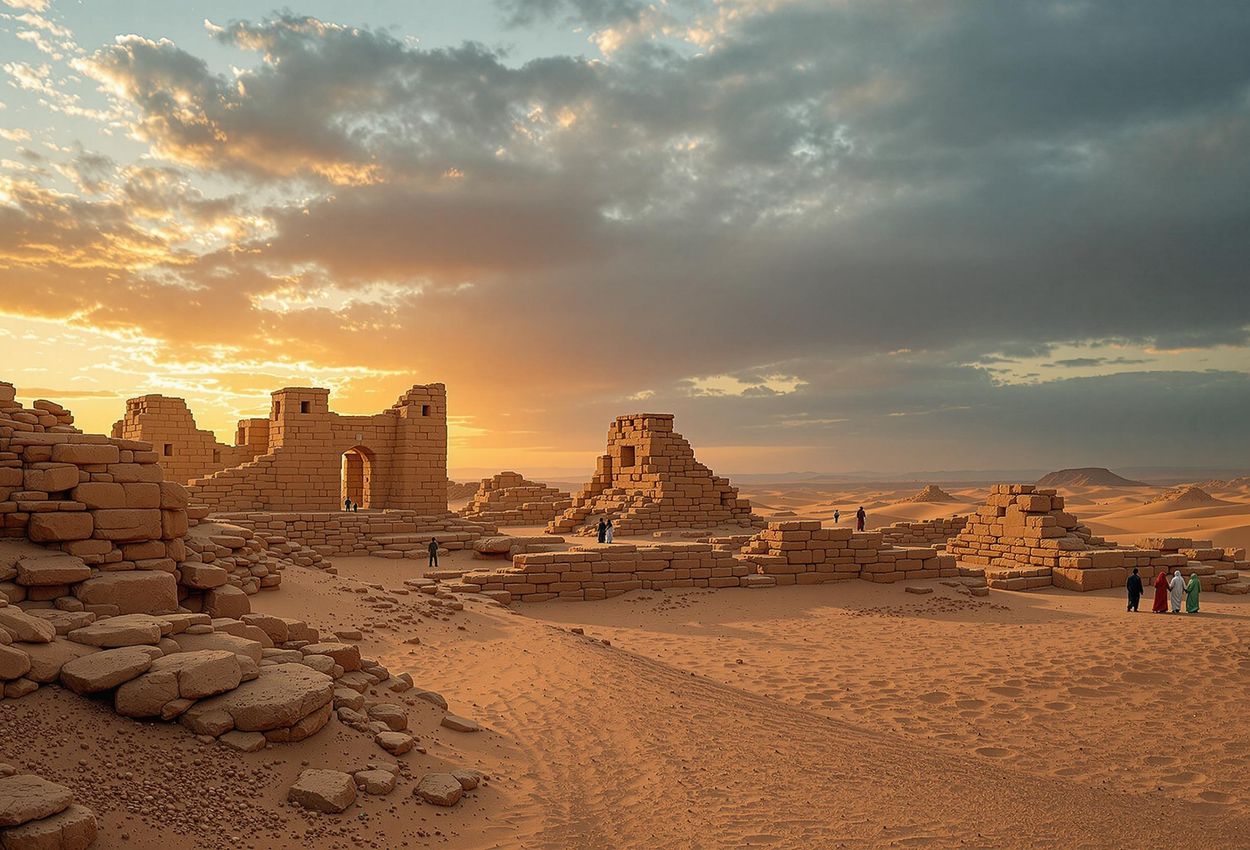
The decline of Ouadane was gradual, influenced by shifting trade routes, desert encroachment, and other factors.
As the trans-Saharan trade diminished, Ouadane's economic importance waned, leading to a decline in its population and influence. Today, the ruins stand as a testament to the fragility of human endeavors in the face of environmental challenges. However, ongoing efforts to preserve the ruins and promote sustainable tourism offer hope for the future. Despite the challenges of desert encroachment and climate change, the dimensions of the relatively well-preserved old town continue to amaze, reminding visitors of the resilience and ingenuity of its past inhabitants. A new protected area has been created in Adrar to support biodiversity.
Most of the routes in Mauritania were left to the destruction by sand storms and erosion until they were listed by the UNESCO as a cultural World Heritage Sites which has improved on the conservation and kick-started the restoration process for the ancient Mauritanian trade route.
Our editors` picks of the latest and greatest in travel - delivered to your inbox daily
Relax on the beaches and explore the reefs of Xai-Xai.
View More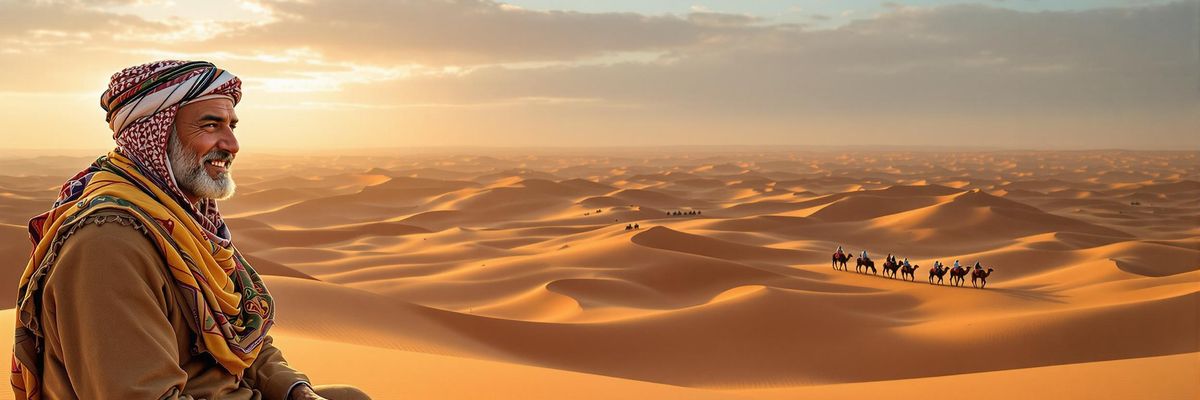
Embrace the cooler temperatures and experience the International Festival of the Sahara in Douz this December.
View More
Celebrate the year-end festivities in Accra, culminating in the vibrant Afrofuture festival.
View More Albania EDITION
 Algeria EDITION
 Argentina EDITION
 Armenia EDITION
 Australia EDITION
 Austria EDITION
 Bangladesh EDITION
 Belgium EDITION
 Belize EDITION
 Benin EDITION
 Bhutan EDITION
 Bolivia EDITION
 Bosnia and Herzegovina EDITION
 Botswana EDITION
 Brazil EDITION
 Bulgaria EDITION
 Burkina Faso EDITION
 Cambodia EDITION
 Cameroon EDITION
 Canada EDITION
 Central African Republic EDITION
 Chad EDITION
 Chile EDITION
 China EDITION
 Colombia EDITION
 Costa Rica EDITION
 Croatia EDITION
 Cyprus EDITION
 Denmark EDITION
 Djibouti EDITION
 Ecuador EDITION
 Egypt EDITION
 El Salvador EDITION
 Eritrea EDITION
 Estonia EDITION
 Ethiopia EDITION
 Finland EDITION
 France EDITION
 Gabon EDITION
 Georgia EDITION
 Germany EDITION
 Ghana EDITION
 Greece EDITION
 Guatemala EDITION
 Guinea EDITION
 Guinea-Bissau EDITION
 Honduras EDITION
 Hungary EDITION
 Iceland EDITION
 India EDITION
 Indonesia EDITION
 Ireland EDITION
 Israel EDITION
 Italy EDITION
 Jamaica EDITION
 Japan EDITION
 Jordan EDITION
 Kenya EDITION
 Kuwait EDITION
 Laos EDITION
 Latvia EDITION
 Lebanon EDITION
 Lesotho EDITION
 Liberia EDITION
 Lithuania EDITION
 Luxembourg EDITION
 Madagascar EDITION
 Malawi EDITION
 Malaysia EDITION
 Maldives EDITION
 Mali EDITION
 Malta EDITION
 Mauritania EDITION
 Mauritius EDITION
 Mexico EDITION
 Mongolia EDITION
 Montenegro EDITION
 Morocco EDITION
 Mozambique EDITION
 Namibia EDITION
 Nepal EDITION
 Netherlands EDITION
 New Zealand EDITION
 Nicaragua EDITION
 Niger EDITION
 Nigeria EDITION
 Norway EDITION
 Oman EDITION
 Pakistan EDITION
 Panama EDITION
 Papua New Guinea EDITION
 Paraguay EDITION
 Peru EDITION
 Philippines EDITION
 Poland EDITION
 Portugal EDITION
 Qatar EDITION
 Romania EDITION
 Rwanda EDITION
 Saudi Arabia EDITION
 Senegal EDITION
 Serbia EDITION
 Singapore EDITION
 Slovakia EDITION
 Slovenia EDITION
 Somalia EDITION
 South Africa EDITION
 South Korea EDITION
 Spain EDITION
 Sri Lanka EDITION
 Suriname EDITION
 Sweden EDITION
 Switzerland EDITION
 Tanzania EDITION
 Thailand EDITION
 Tunisia EDITION
 Uganda EDITION
 United Arab Emirates EDITION
 United Kingdom EDITION
 Uruguay EDITION
 Venezuela EDITION
 Vietnam EDITION
 Zambia EDITION
 Zimbabwe EDITION
Subscribe to our newsletter and get the most captivating travel stories, hidden gems, and expert insights delivered straight to your inbox. As a subscriber, you’ll be first in line for exclusive content, premium offers, and unforgettable travel experiences