As the crisp mountain air beckons and the slopes transform into a winter wonderland, skiers and snowboarders eagerly anticipate the thrill of gliding down snow-covered peaks. However, the excitement can quickly turn to disappointment if injuries occur. Preparing your body for the unique demands of skiing and snowboarding is crucial for preventing injuries and maximizing your enjoyment on the mountain. This guide provides a comprehensive approach to ski fitness, focusing on equipment selection, strength training, flexibility, warm-up routines, and cool-down exercises.
Gear Up for Success: Choosing the Right Equipment
Selecting the right equipment is the first step in preventing injuries on the slopes. Ill-fitting or improperly adjusted gear can significantly increase your risk of falls, strains, and other mishaps. Start with your boots. Whether you ski or snowboard, ensure your boots fit snugly and provide adequate ankle support. Boots that are too loose can lead to instability, while those that are too tight can cause discomfort and restrict circulation. Seek professional assistance from a qualified boot fitter to find the perfect fit for your foot shape and size.
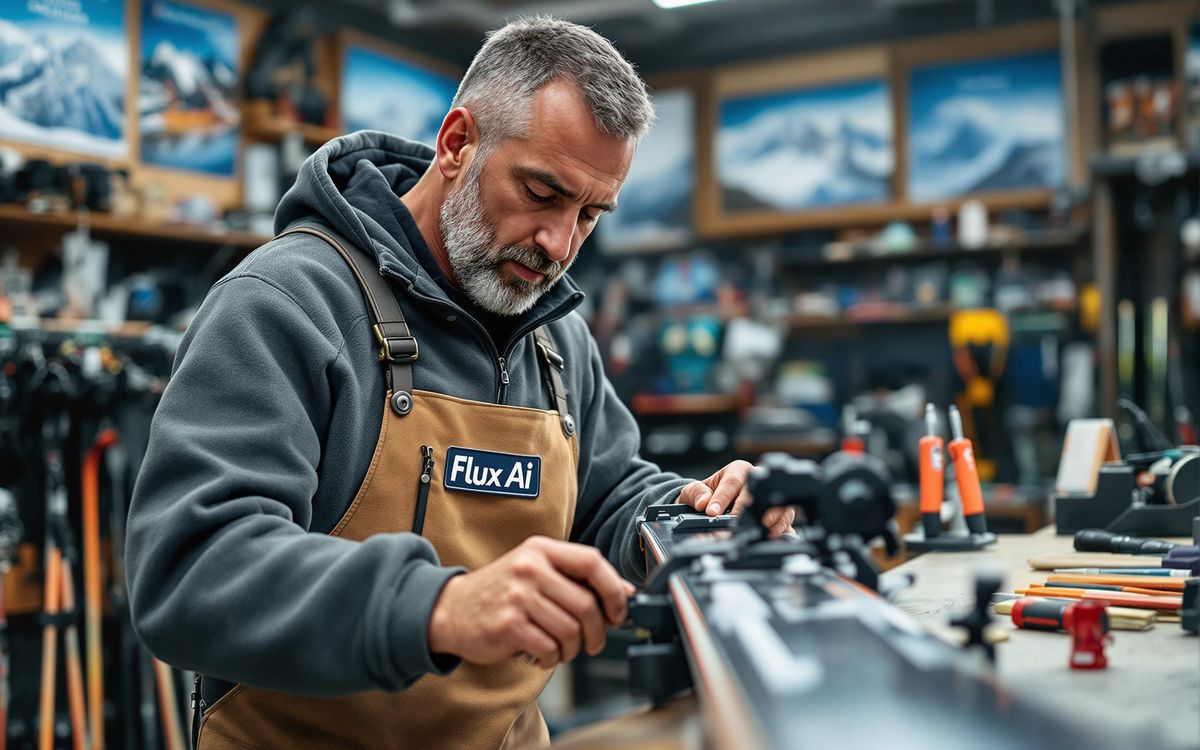
Next, consider your skis or snowboard. The length and flex of your equipment should match your skill level and the type of terrain you plan to tackle. Beginners should opt for shorter, more flexible skis or snowboards that are easier to control, while experienced riders may prefer longer, stiffer equipment for enhanced performance at higher speeds. Have your bindings adjusted by a certified technician to ensure they release properly in the event of a fall. This is a critical safety measure that can prevent serious leg injuries.
A helmet is non-negotiable. Head injuries are a leading cause of serious injuries in skiing and snowboarding, and a properly fitted helmet can significantly reduce your risk. Choose a helmet that meets safety standards and fits snugly on your head. Replace your helmet after any significant impact, even if there is no visible damage. Goggles are also essential for protecting your eyes from the sun, wind, and snow. Look for goggles with UV protection and anti-fog coating to ensure clear vision in all conditions. Wrist guards are highly recommended for snowboarders, as wrist injuries are common in this sport. These guards provide support and can help prevent fractures and sprains.
Finally, dress in layers to stay warm and dry. Moisture-wicking base layers, insulating mid-layers, and a waterproof outer layer will help regulate your body temperature and prevent hypothermia. Don't forget gloves or mittens, a hat, and a neck gaiter to protect your extremities from the cold.
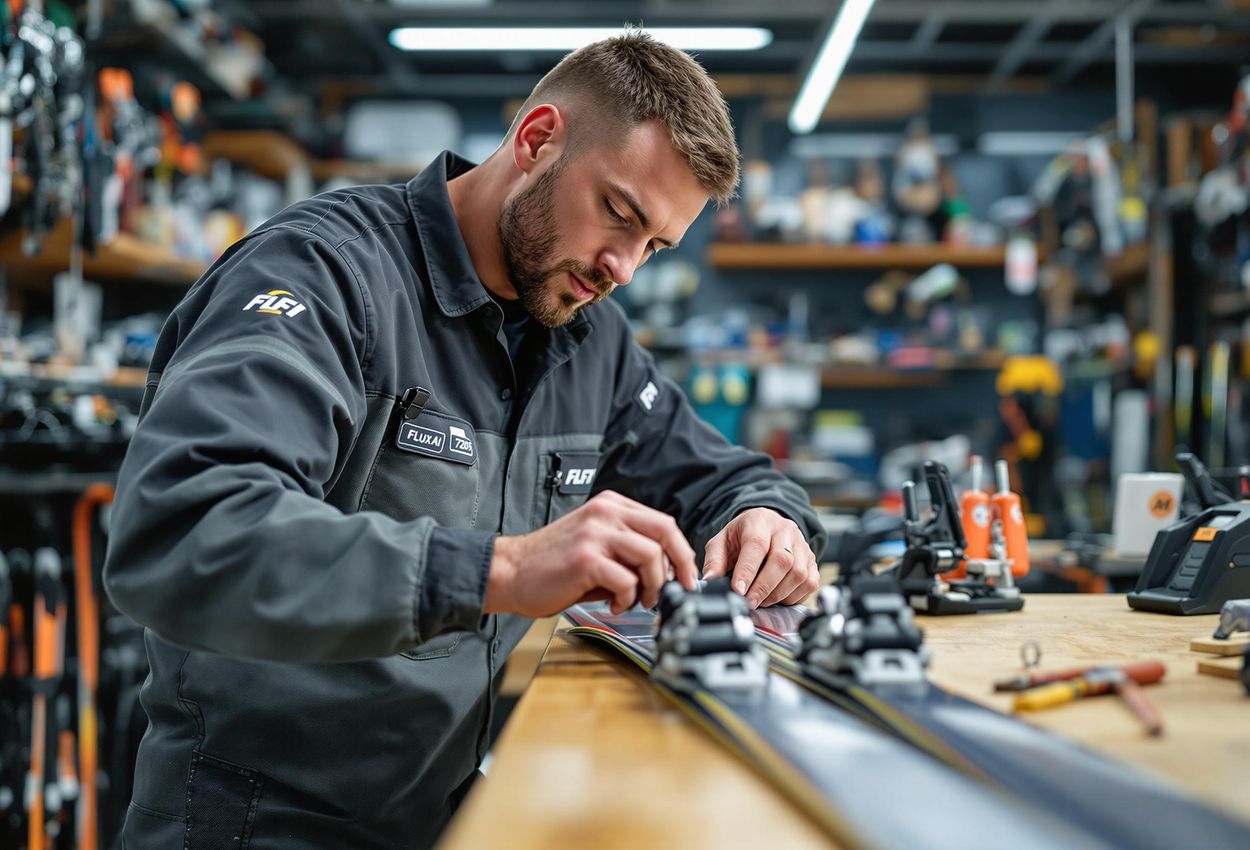
Image Description: A skier is meticulously adjusting the bindings on their skis in a well-lit ski shop. The focus is on the technician's hands as they use specialized tools to calibrate the bindings. The background is filled with various skis, boots, and other equipment. The atmosphere is professional and safety-conscious, emphasizing the importance of proper equipment adjustment. The image should convey a sense of trust and expertise, highlighting the role of professionals in ensuring a safe skiing experience. The date of the photo is January 7, 2025.
Style Instructions: Candid, close-up shot. Use a shallow depth of field to focus on the technician's hands and the ski bindings. The lighting should be bright and even, highlighting the details of the equipment. The color palette should be warm and inviting, creating a sense of comfort and trust.
Pre-Season Powerhouse: Strength Training Essentials
Building strength in the muscles used for skiing and snowboarding is essential for preventing injuries and improving performance. A well-rounded strength training program should focus on the legs, core, and upper body. Start your pre-season training at least six to eight weeks before hitting the slopes to allow your body time to adapt and build strength.
Squats are a fundamental exercise for skiers and snowboarders. They strengthen the quadriceps, hamstrings, and glutes, which are all crucial for maintaining balance and control. Perform squats with proper form, keeping your back straight and your knees behind your toes. To add intensity, try dumbbell squats, holding a dumbbell in each hand. Lunges are another excellent exercise for building leg strength and improving balance. Walking lunges with rotation are particularly effective, as they engage the core muscles and mimic the twisting motions used in skiing and snowboarding. Step forward into a lunge, then twist your torso towards the front leg, keeping your balance.
Deadlifts are a powerful exercise for strengthening the entire posterior chain, including the hamstrings, glutes, and lower back. These muscles are essential for maintaining a stable posture and preventing back injuries. Single leg romanian deadlifts are a variation that challenges your balance and strengthens each leg independently. Stand on one leg and hinge at the hips, lowering a dumbbell towards the ground while keeping your back straight. Glute ham raises are an advanced exercise that targets the hamstrings and glutes with incredible effectiveness. If you don't have access to a glute ham raise machine, you can perform them with a partner holding your ankles.
Core exercises are often overlooked but are vital for maintaining stability and preventing injuries. Planks are a simple yet effective exercise for strengthening the entire core. Hold a plank position, keeping your body in a straight line from head to heels, engaging your abdominal muscles. Russian twists are another great core exercise that targets the obliques. Sit with your knees bent and your feet slightly off the ground, then twist your torso from side to side, touching a dumbbell or medicine ball to the ground on each side. Unilateral strength is very important, because skiing and snowboarding are very unilateral sports. Focus on single leg exercises and balance to improve.
Aim for 3 sets of 10-12 repetitions for each exercise. As you get stronger, you can increase the weight or resistance to continue challenging your muscles.

Image Description: An athlete is performing a set of dumbbell squats in a modern gym setting. The athlete is in the middle of the squat, with thighs parallel to the ground, maintaining a straight back and engaged core. The dumbbells are held firmly in each hand, adding resistance to the exercise. The gym has ample natural light and features state-of-the-art equipment in the background, creating a motivating and professional atmosphere. The date the photo is taken is January 7, 2025.
Style Instructions: Action shot, capturing the dynamic movement of the squat. Use a medium shot to show the athlete's full body and the surrounding gym environment. The lighting should be bright and natural, highlighting the athlete's form and muscle definition. The color palette should be vibrant and energetic, conveying a sense of strength and vitality.
Bend, Don't Break: Flexibility is Your Friend
Flexibility is just as important as strength for preventing injuries and improving performance. Stretching improves your range of motion, reduces muscle tension, and helps prevent strains and sprains. Incorporate a regular stretching routine into your pre-season training, focusing on the muscles used in skiing and snowboarding.
Hamstring stretches are essential for skiers and snowboarders, as tight hamstrings can limit your range of motion and increase your risk of back pain. A bent knee hamstring stretch is a gentle and effective way to stretch the hamstrings. Lie on your back with one knee bent and your foot flat on the ground. Lift the other leg towards the ceiling, keeping a slight bend in the knee. Gently pull the leg towards your chest until you feel a stretch in the back of your thigh. Quad stretches are also important for maintaining flexibility in the front of your thighs. A standing quad stretch is a simple and effective way to stretch the quadriceps. Stand on one leg and grab your other foot, pulling it towards your buttock until you feel a stretch in the front of your thigh. Calf stretches are often overlooked but are crucial for ankle mobility and balance. A standing calf stretch is a simple and effective way to stretch the calf muscles. Stand facing a wall and place your hands on the wall for support. Step one foot back, keeping your heel on the ground, and lean forward until you feel a stretch in your calf.
Hip flexor stretches are important for maintaining good posture and preventing lower back pain. A kneeling hip flexor stretch is a gentle and effective way to stretch the hip flexors. Kneel on one knee and place your other foot in front of you, with your knee bent at a 90-degree angle. Gently push your hips forward until you feel a stretch in the front of your hip. IT band stretches can help relieve tension and prevent knee pain. A standing IT band stretch involves crossing one leg in front of the other and leaning to the side, feeling a stretch along the outside of your thigh. Hip mobility exercises are also beneficial for improving range of motion and preventing injuries. The hip clock exercise involves lying on your back and moving your leg in a circular motion, as if tracing the numbers on a clock. The hip roll exercise involves lying on your back and rolling your hips from side to side, feeling a stretch in your lower back and hips. The butterfly stretch involves sitting with the soles of your feet together and gently pressing your knees towards the ground, feeling a stretch in your inner thighs and hips.
Hold each stretch for 30 seconds and repeat 2-3 times. Focus on proper form and avoid bouncing, which can increase your risk of injury.
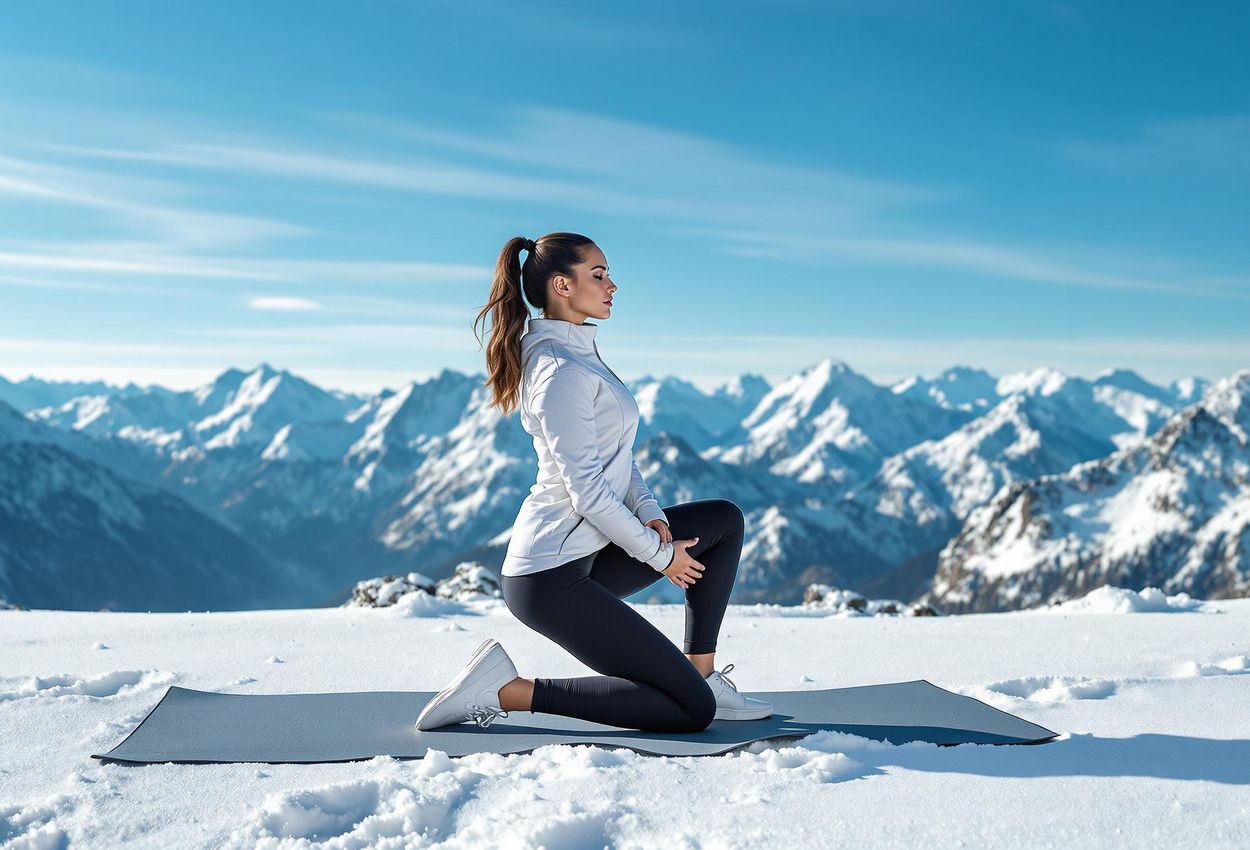
Image Description: A person is performing a kneeling hip flexor stretch outdoors in a serene mountain setting. The person is kneeling on their left knee with their right foot forward, knee bent at a 90-degree angle. Their hands are gently resting on their right thigh for balance. The backdrop features snow-capped mountains and a clear blue sky, emphasizing the connection between flexibility and enjoying outdoor activities like skiing. The date of the photo is January 7, 2025.
Style Instructions: Serene and natural. Capture the full body of the person performing the stretch, with the focus on their posture and the surrounding mountain landscape. Use soft, natural lighting to highlight the peacefulness of the scene. The color palette should be calming and inviting, with blues, greens, and whites dominating the image.
Warm-Up Wonders: Priming Your Body for the Peak
Warming up before hitting the slopes is crucial for preparing your muscles for activity and preventing injuries. A dynamic warm-up routine increases blood flow, improves range of motion, and prepares your body for the demands of skiing and snowboarding. Perform your warm-up routine for 10-15 minutes before each ski session.
Leg swings are a great way to warm up your hips and legs. Swing one leg forward and backward, then side to side, gradually increasing the range of motion. Walking lunges with rotation are another excellent warm-up exercise. Step forward into a lunge, then twist your torso towards the front leg, engaging your core muscles. Lateral squats/side lunges warm up your inner and outer thighs, which are important for maintaining control during turns. Step to the side and bend your knee, keeping your other leg straight. Torso twists warm up your core and improve spinal mobility. Stand with your feet shoulder-width apart and twist your torso from side to side, keeping your hips stable. Arm circles warm up your shoulders and improve upper body mobility. Extend your arms to the sides and make small circles, gradually increasing the size of the circles.
Each of these exercises helps prepare muscles for the activity. The goal is to increase blood flow and mobility so that you are ready to ski or snowboard.

Image Description: A group of skiers is performing dynamic stretching exercises at the base of a ski slope on a sunny morning. They are doing leg swings and torso twists, with their skis and snowboards nearby. The background shows a picturesque mountain landscape with snow-covered trees. The atmosphere is energetic and positive, conveying the importance of warming up before skiing. The date of the photo is January 7, 2025.
Style Instructions: Action and Landscape. Capture the skiers in motion, with a wide-angle shot to show the surrounding mountain scenery. Use bright, natural lighting to highlight the snow and the skiers' colorful clothing. The color palette should be vibrant and energetic, conveying a sense of excitement and adventure.
Cool-Down Calm: Recover Right for Tomorrow's Run
Cooling down after skiing or snowboarding is just as important as warming up. A proper cool-down routine helps reduce muscle soreness, prevent dizziness, and promote recovery. Perform your cool-down routine for 5-10 minutes after each ski session.
Start with light cardio, such as an easy ski run or walking, to gradually lower your heart rate. Follow this with static stretches, holding each stretch for 30 seconds. Hamstring stretches, standing quad stretches, calf stretches, and seated back stretches are all excellent choices for a cool-down routine. A hamstring stretch involves sitting on the ground with your legs extended and reaching towards your toes. A standing quad stretch involves standing and pulling your heel towards your buttock. A calf stretch involves leaning against a wall with one leg extended behind you. A seated back stretch involves sitting with your legs crossed and twisting your torso to the side. These stretches will help reduce muscle soreness and improve flexibility.
Cooling down is important for the body to return to its pre-activity resting state. It also helps to prevent injuries and promote recovery.
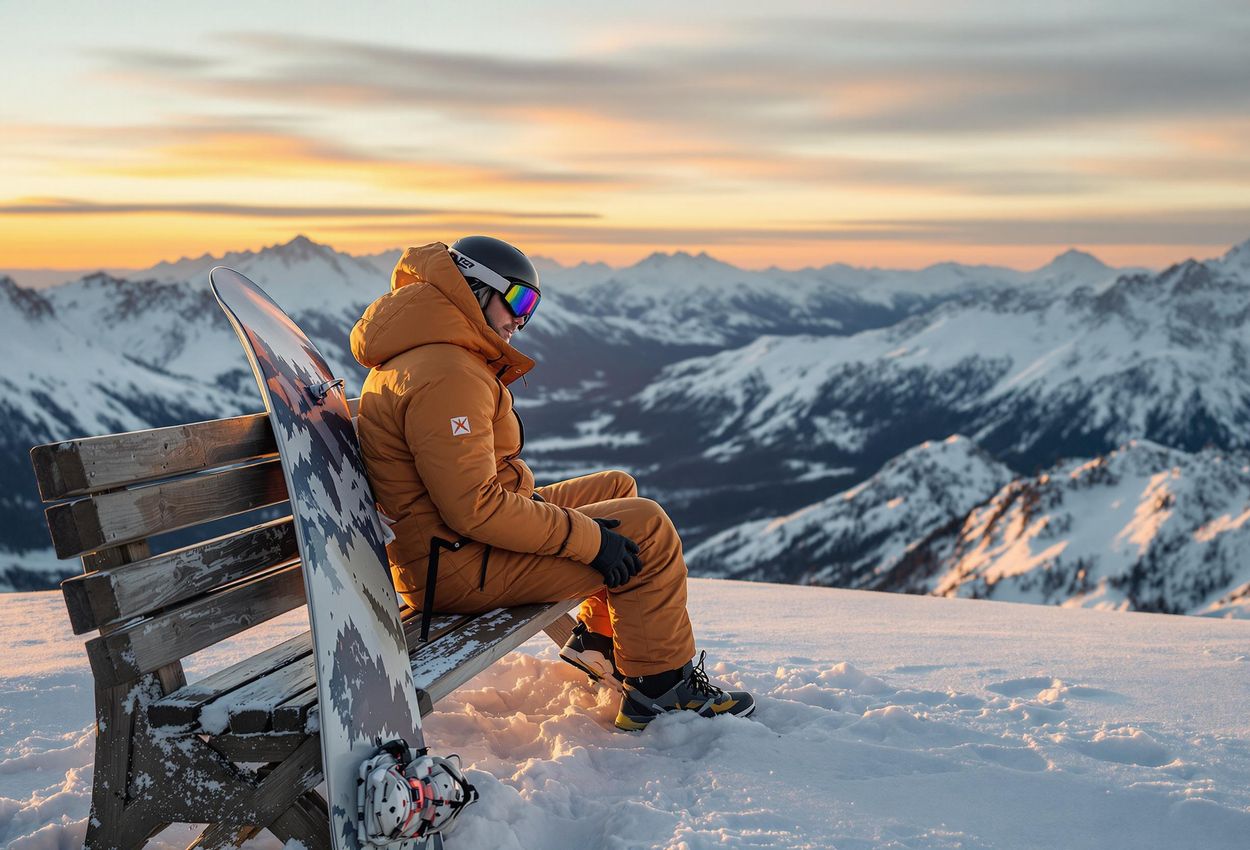
Image Description: A snowboarder is performing a seated hamstring stretch on a bench at the top of a mountain, overlooking a vast, snow-covered valley at sunset. The snowboarder is relaxed and focused, with their snowboard resting against the bench. The warm colors of the sunset create a serene and peaceful atmosphere. The date of the photo is January 7, 2025.
Style Instructions: Serene and Landscape. Capture the snowboarder in a relaxed pose, with a wide-angle shot to showcase the stunning mountain scenery. Use warm, golden lighting to emphasize the peacefulness of the sunset. The color palette should be calming and inviting, with oranges, pinks, and purples dominating the image.