


Destination Guide
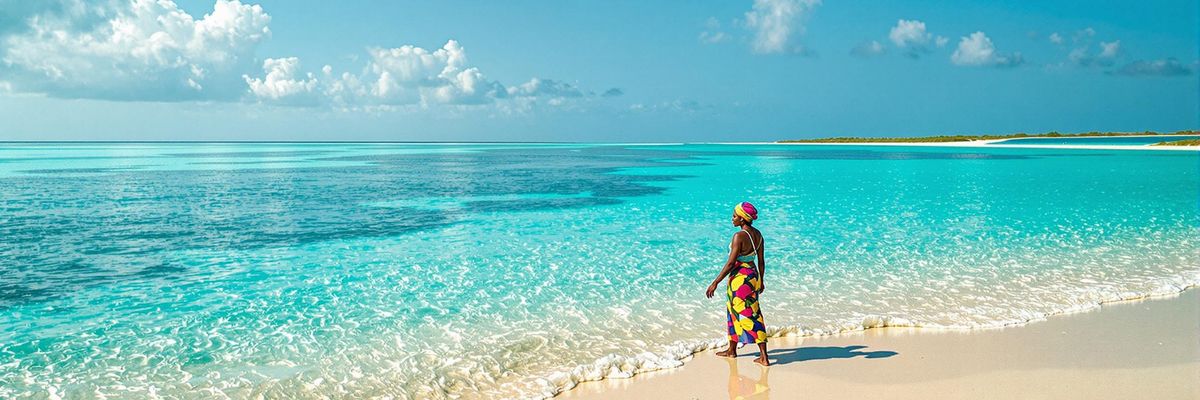
Xai-Xai: A Coastal Retreat
Relax on the beaches and explore the reefs of Xai-Xai.
View More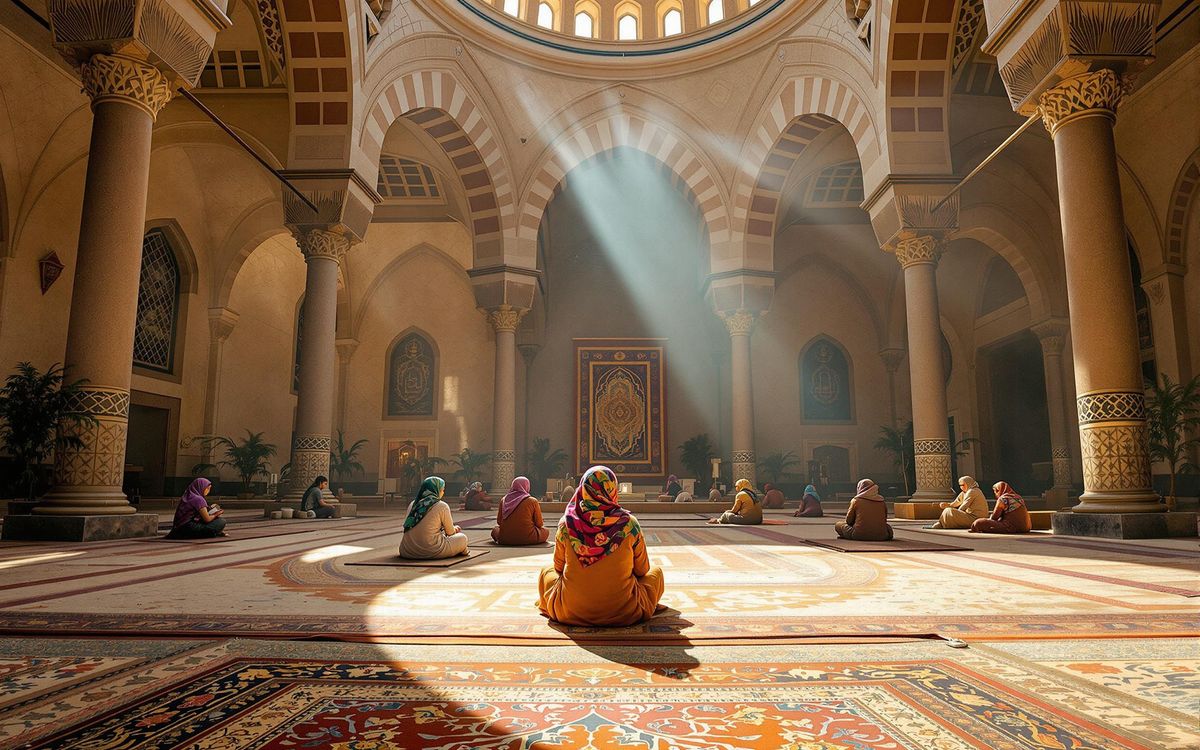

Embark on a transformative journey to Kairouan, Tunisia, this May, and immerse yourself in the spiritual heart of the Islamic world. Discover ancient mosques, marvel at architectural wonders, and explore a vibrant culture that has thrived for centuries.
Kairouan, a city steeped in history and religious significance, stands as one of Islam's holiest sites, often regarded as the fourth holiest city after Mecca, Medina, and Jerusalem. This UNESCO World Heritage site, nestled in the heart of Tunisia, beckons travelers seeking cultural enrichment and spiritual awakening. Founded in 670 AD by Uqba ibn Nafi, an Arab general, Kairouan holds the distinction of being the first Islamic capital in the Maghreb, a region encompassing North Africa west of Egypt. Its strategic location made it a vital center for the spread of Islamic teachings and a bastion of Arab-Muslim civilization.
As you step into Kairouan, you're immediately enveloped in a unique spiritual atmosphere. The city served as a prominent hub for Islamic learning, attracting scholars and students from across North Africa and beyond. Its commitment to Islamic and Quranic studies fostered an environment of intellectual discourse and religious practice, shaping Islamic culture during its early centuries. The legacy of this era endures today, with Kairouan remaining a symbol of historical Islamic scholarship and architectural beauty.
Legend has it that seven pilgrimages to Kairouan are equivalent to one pilgrimage to Mecca, underscoring the city's profound spiritual importance. This belief reflects the deep veneration held for Kairouan as a sanctuary of faith and a testament to the enduring power of Islamic tradition. The city's rich architectural heritage, including the Great Mosque, the Mosque of the Three Doors, and the Aghlabid Basins, further solidifies its status as a living museum of Islamic art and architecture.
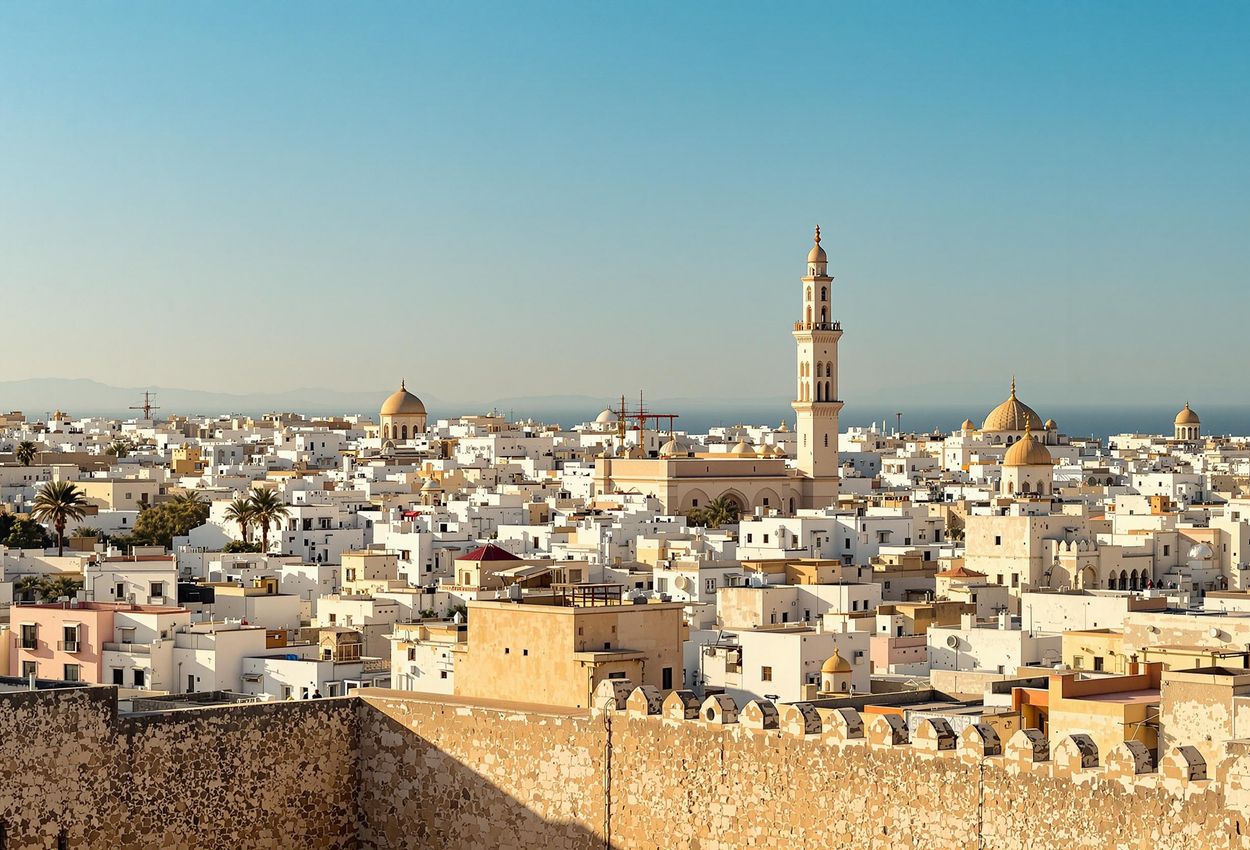
Wandering through the medina, one is transported back in time, with the city's network of winding streets and courtyard houses offering a glimpse into a bygone era. The medina's traditional architecture, characterized by its narrow alleyways and whitewashed buildings, has been carefully preserved, bearing witness to the civilization of the first centuries of the Hegira in Ifriqiya. The city's historical monuments and vibrant cultural scene create an immersive experience for travelers seeking to connect with the roots of Islamic civilization.
The city served as the starting point for many Islamic conquests towards Algeria, Morocco, and Spain. Kairouan became one of the most important cities in the Islamic world, witnessing the flourishing of religious sciences and arts. Being the most ancient Islamic base in the Maghreb, it became a place of teaching religion as well as the Arabic language.
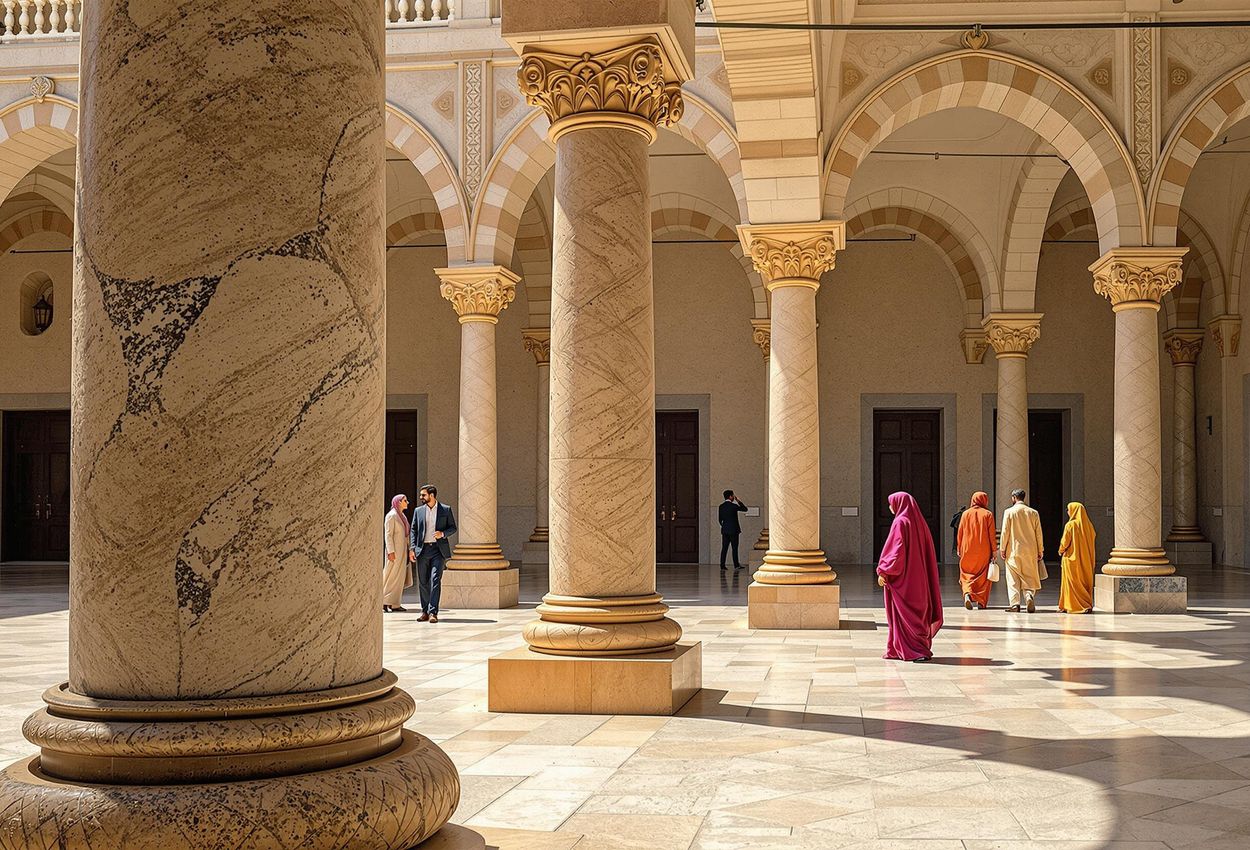
The Great Mosque of Kairouan, also known as the Mosque of Uqba, stands as the city's main landmark and one of the oldest and most impressive Islamic monuments in North Africa. Established in 670 AD by Uqba ibn Nafi, the founder of Kairouan, the mosque has undergone several renovations and expansions over the centuries, most notably during the Aghlabid dynasty in the 9th century. Today, it represents a harmonious blend of pre-Islamic and Islamic architectural styles, showcasing the rich cultural heritage of the region.
The mosque's exterior presents a fortress-like appearance, with massive ocher walls and corner towers, reflecting the austere Aghlabid design. However, upon entering, visitors are greeted by a grand courtyard paved with flagstones and surrounded by arched porticoes containing hundreds of ancient pillars. These pillars, repurposed from Roman, Byzantine, and Latin Christian buildings, add a unique layer of history and symbolism to the mosque's structure. Non-Muslims can enter the courtyard and observe the prayer hall, a majestic forest of arches and ancient columns.
The towering minaret, rising 35 meters high, dominates the mosque's skyline and serves as a visual reminder of the city's spiritual significance. Its robust proportions are reminiscent of Roman lighthouses or Syrian bell-towers, reflecting the diverse influences that have shaped Kairouan's architectural identity. The minaret is built in three stages and capped with a fluted dome.
The prayer hall, accessed through 17 carved wooden doors, is a vast hypostyle space divided into 17 aisles by rows of arches supported by over 400 columns. These columns, crafted from marble, granite, and porphyry, were sourced from ancient sites across the country, including Sbeitla, Carthage, and Hadrumetum. The central aisle leads to the mihrab, a niche indicating the direction of Mecca, adorned with 9th-century tiles and a wooden minbar, the oldest surviving wooden pulpit in the Islamic world. The mosque also has several domes, the largest being over the mihrab and the entrance to the prayer hall from the courtyard. The dome of the mihrab is based on an octagonal drum with slightly concave sides.
The Great Mosque of Kairouan was not only a place of worship but also a center for Islamic thought and secular sciences. The Aghlabids constructed the Great Mosque and established a university in it which catered to both Islamic scholarship and the secular sciences. The mosque also lodged a hospital in the 9th century. Its architecture served as a model for numerous mosques throughout the Maghreb and beyond, solidifying its place as a masterpiece of Islamic architecture.
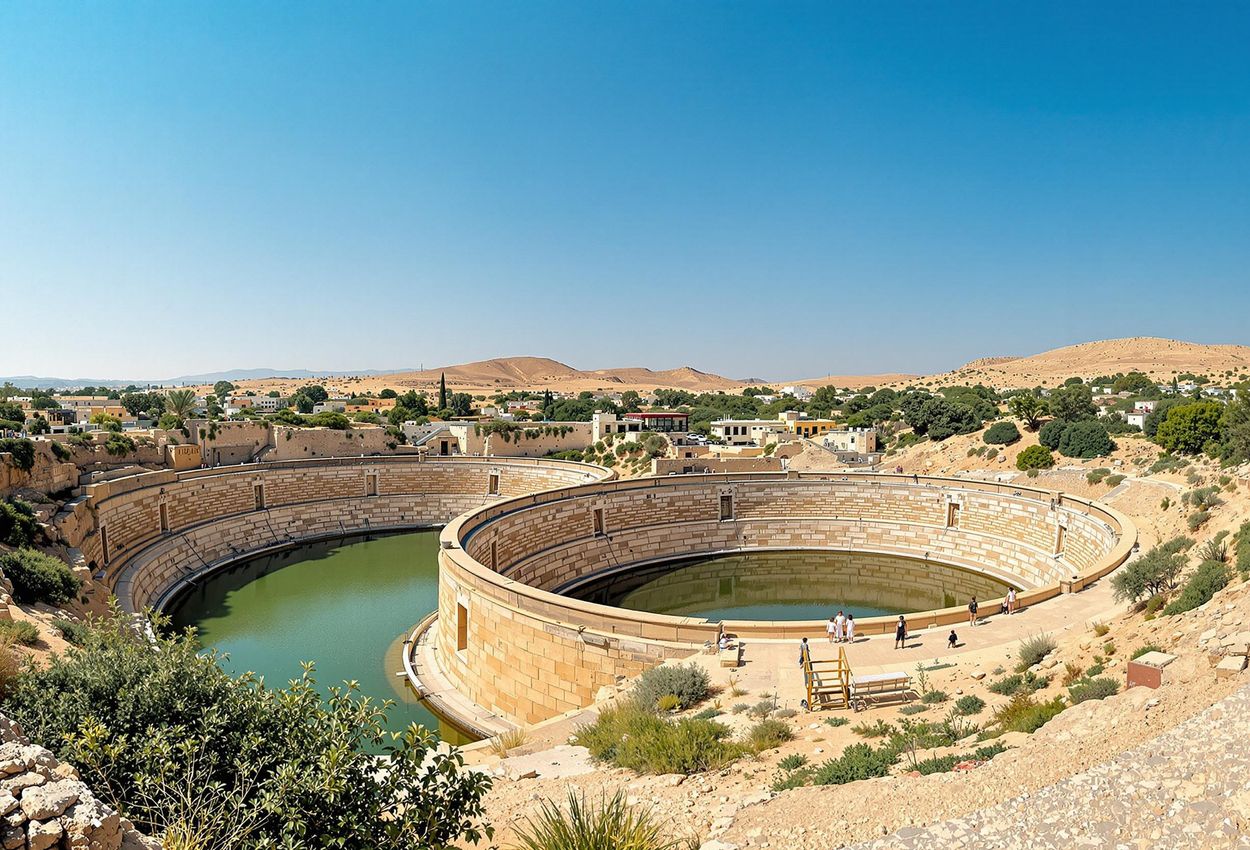
Just outside the walls of the medina lie the Aghlabid Basins, a series of historic water reservoirs that stand as a testament to the ingenuity of the Aghlabid dynasty. Constructed in the 9th century, these basins were designed to provide a reliable water supply to the city, which is located in an arid steppe far from any major river. The basins are considered to be the most important hydraulic structures in the history of the Muslim world.
The Aghlabid ruler Abu Ibrahim Ahmad commissioned the construction of the two large reservoirs which are still visible today. The basins functioned as settling tanks which partially purified the water before it was supplied to the city. Both reservoirs are composed of several connected sections: a smaller water basin, a larger basin, and a set of covered water tanks. The basins, circular in appearance, are built with rubble stone and covered in a waterproof coating, with rounded tops and edges. Their walls are reinforced with semi-circular buttresses both on the inside and outside.
Water was brought to the city and the reservoirs from the surrounding plains and lowlands by drawing it from Oued Merguellil and its tributaries. The waters were diverted by a system of small dams, weirs, and canals to the reservoirs. An aqueduct was also built that brought water from springs in the Shreshira Mountains, 36 kilometers west of Kairouan.
Covering an area of over 11,000 square meters, the basins consist of a large storage reservoir, a smaller settling basin, and multiple cisterns, together capable of holding an astonishing 68,800 cubic meters of water. The larger of the two basins is particularly striking, with its polygonal form and robust buttresses designed to withstand immense water pressure. During the Aghlabid era, these basins were more than mere reservoirs; they were also an oasis of leisure for the ruling elite, a place where the practical met the poetic.
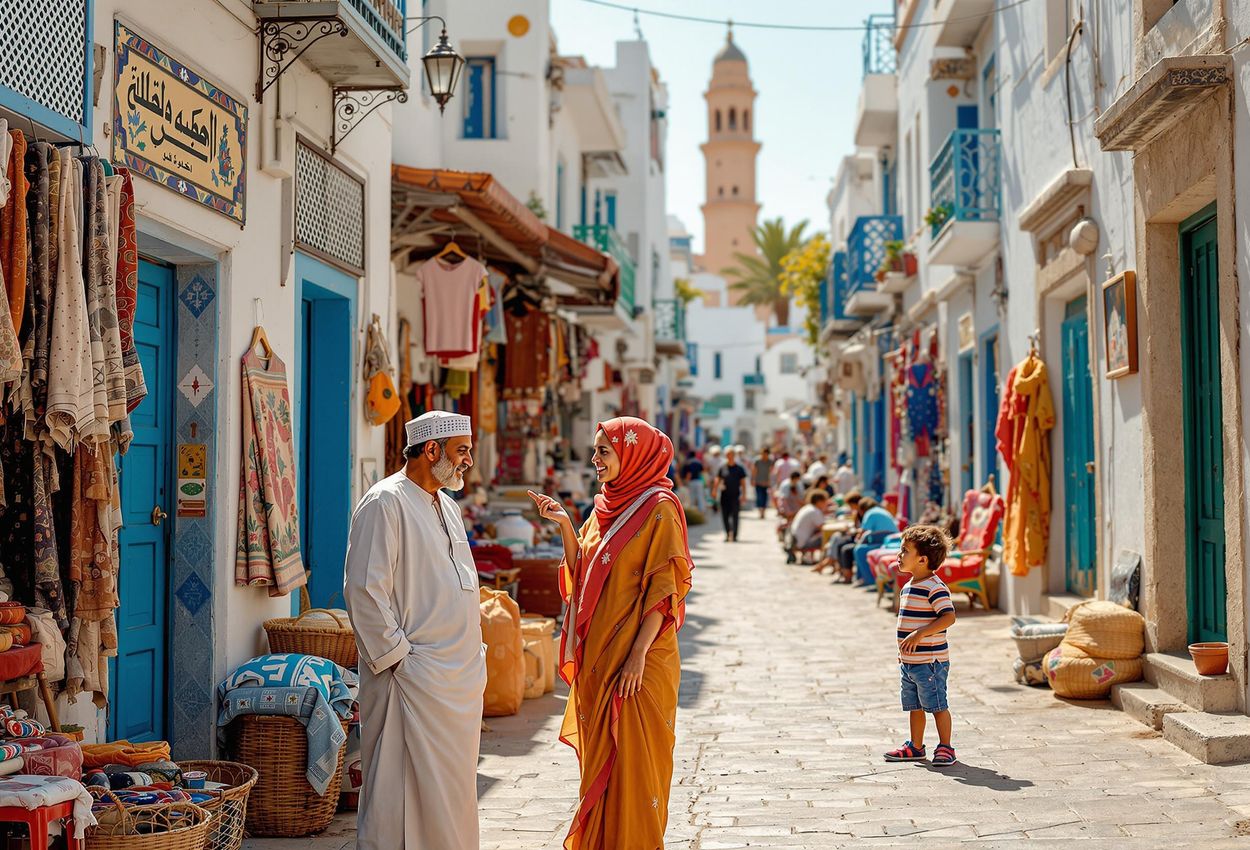
Step inside the Medina of Kairouan, a UNESCO World Heritage site, and prepare to be transported to another world. This ancient walled city, with its labyrinthine streets and traditional architecture, offers a glimpse into the heart of Islamic culture and history. Founded in the 7th century, the medina has retained its distinctive character over the centuries, with many of its buildings and landmarks preserved in their original form.
As you wander through the narrow, winding streets, you'll be captivated by the medina's vibrant atmosphere. The white-washed buildings, adorned with colorful tiles and intricate designs, create a visual feast for the eyes. The bustling souks, or markets, are filled with the aromas of spices, the sounds of bargaining, and the sights of colorful goods. Here, you can find everything from handmade crafts and textiles to traditional pottery and jewelry.
The medina's narrow alleys gained international recognition when they appeared in the film 'Indiana Jones: Raiders of the Lost Ark', adding to its allure and mystique. Exploring the medina on foot is the best way to experience its charm, allowing you to discover hidden gems and soak in the vibrant atmosphere. Be sure to visit the Bir Barrouta well and the small Mosque of the Three Doors.
The medina's traditional crafts, especially carpet weaving, are a testament to the city's rich cultural heritage. The local shops offer a wide selection of carpets, each with its unique design and craftsmanship. Exploring the souks and discovering unique souvenirs is an essential part of the Kairouan experience.
Kairouan is renowned as the carpet capital of Tunisia, and its carpets are prized for their quality, design, and craftsmanship. Carpet weaving in Kairouan is a tradition passed down through generations, with women playing a central role in the creation of these intricate works of art. The city's carpet shops offer a wide variety of carpets, each with its unique style and characteristics.
Kairouan carpets can be broadly classified into two types: pile carpets and short-nap carpets. Pile rugs are known as zerhivas, consist of a central motif bordered by an arabesque pattern. The short-nap carpets are either of the mergoum style (a diamond pattern worked into a neutral ground), and kilims (formed by alternate strips of natural-colored wools). The zerhivas are more expensive than the short-nap carpets and take much longer to make.
The designs and motifs used in Kairouan carpets are often symbolic, reflecting the region's Berber heritage and Islamic traditions. Geometric shapes, floral patterns, and stylized animals are common elements, each carrying its own cultural significance. The use of natural wool and silk adds to the carpets' luxurious feel and durability.
When selecting a Kairouan carpet, it's important to consider the quality of the materials, the intricacy of the design, and the density of the knots. The number of knots per square meter is an indicator of the carpet's fineness and durability. Visiting a carpet workshop and watching the artisans at work is a fascinating experience, allowing you to appreciate the skill and dedication that goes into creating these masterpieces.
Whether you're looking for a traditional Kairouan carpet or a more modern design, you're sure to find a piece that reflects your personal style and adds a touch of Tunisian elegance to your home. The carpets of Kairouan are not just floor coverings; they are works of art that tell a story of cultural heritage and artistic expression.
As your spiritual journey through Kairouan comes to an end, you'll carry with you the echoes of ancient prayers, the vibrant colors of the medina, and the warmth of Tunisian hospitality. This holy city, with its rich Islamic heritage and architectural wonders, offers a transformative experience for travelers seeking cultural immersion and spiritual enrichment.
Our editors` picks of the latest and greatest in travel - delivered to your inbox daily
Relax on the beaches and explore the reefs of Xai-Xai.
View More
Embrace the cooler temperatures and experience the International Festival of the Sahara in Douz this December.
View More
Celebrate the year-end festivities in Accra, culminating in the vibrant Afrofuture festival.
View More Albania EDITION
 Algeria EDITION
 Argentina EDITION
 Armenia EDITION
 Australia EDITION
 Austria EDITION
 Bangladesh EDITION
 Belgium EDITION
 Belize EDITION
 Benin EDITION
 Bhutan EDITION
 Bolivia EDITION
 Bosnia and Herzegovina EDITION
 Botswana EDITION
 Brazil EDITION
 Bulgaria EDITION
 Burkina Faso EDITION
 Cambodia EDITION
 Cameroon EDITION
 Canada EDITION
 Central African Republic EDITION
 Chad EDITION
 Chile EDITION
 China EDITION
 Colombia EDITION
 Costa Rica EDITION
 Croatia EDITION
 Cyprus EDITION
 Denmark EDITION
 Djibouti EDITION
 Ecuador EDITION
 Egypt EDITION
 El Salvador EDITION
 Eritrea EDITION
 Estonia EDITION
 Ethiopia EDITION
 Finland EDITION
 France EDITION
 Gabon EDITION
 Georgia EDITION
 Germany EDITION
 Ghana EDITION
 Greece EDITION
 Guatemala EDITION
 Guinea EDITION
 Guinea-Bissau EDITION
 Honduras EDITION
 Hungary EDITION
 Iceland EDITION
 India EDITION
 Indonesia EDITION
 Ireland EDITION
 Israel EDITION
 Italy EDITION
 Jamaica EDITION
 Japan EDITION
 Jordan EDITION
 Kenya EDITION
 Kuwait EDITION
 Laos EDITION
 Latvia EDITION
 Lebanon EDITION
 Lesotho EDITION
 Liberia EDITION
 Lithuania EDITION
 Luxembourg EDITION
 Madagascar EDITION
 Malawi EDITION
 Malaysia EDITION
 Maldives EDITION
 Mali EDITION
 Malta EDITION
 Mauritania EDITION
 Mauritius EDITION
 Mexico EDITION
 Mongolia EDITION
 Montenegro EDITION
 Morocco EDITION
 Mozambique EDITION
 Namibia EDITION
 Nepal EDITION
 Netherlands EDITION
 New Zealand EDITION
 Nicaragua EDITION
 Niger EDITION
 Nigeria EDITION
 Norway EDITION
 Oman EDITION
 Pakistan EDITION
 Panama EDITION
 Papua New Guinea EDITION
 Paraguay EDITION
 Peru EDITION
 Philippines EDITION
 Poland EDITION
 Portugal EDITION
 Qatar EDITION
 Romania EDITION
 Rwanda EDITION
 Saudi Arabia EDITION
 Senegal EDITION
 Serbia EDITION
 Singapore EDITION
 Slovakia EDITION
 Slovenia EDITION
 Somalia EDITION
 South Africa EDITION
 South Korea EDITION
 Spain EDITION
 Sri Lanka EDITION
 Suriname EDITION
 Sweden EDITION
 Switzerland EDITION
 Tanzania EDITION
 Thailand EDITION
 Tunisia EDITION
 Uganda EDITION
 United Arab Emirates EDITION
 United Kingdom EDITION
 Uruguay EDITION
 Venezuela EDITION
 Vietnam EDITION
 Zambia EDITION
 Zimbabwe EDITION
Subscribe to our newsletter and get the most captivating travel stories, hidden gems, and expert insights delivered straight to your inbox. As a subscriber, you’ll be first in line for exclusive content, premium offers, and unforgettable travel experiences