There is a quieter way to cross the world.Not in the hushed cocoon of business class, but in the rhythmic sway of a night train, the low hum of an electric bus gliding through an old town, the soft scrape of bicycle tires along a canal. Traveling with a lighter carbon footprint is not about self-denial; it is about choosing routes and rituals that tune you more closely to the places you pass through. With a little intention, every flight you skip, every local guesthouse you choose, every refillable bottle you carry becomes part of a larger story of care.
This guide is not a scolding ledger of what you must give up. Instead, it is an invitation to a different kind of luxury: the luxury of time, of slower journeys, of conversations with bakers and bus drivers, of tasting a city one neighborhood at a time. These seven approaches do not demand perfection. They simply ask that you look at each stage of your trip and gently nudge it toward something cleaner, fairer, and more deeply rooted in the places you love to explore.

Picture this as the beginning of your next journey: your bag is smaller, your route skims across rails instead of clouds, your hotel hums on renewable energy, your meals are threaded with local stories. The result is not only fewer emissions but richer memories, stitched from the textures of streets, markets, and voices you might have rushed past before.
1. Choose Transportation Wisely: Embrace Low-Carbon Travel
The single biggest decision you make on any trip, in carbon terms, is how you get from A to B. A short flight can burn through your carbon budget before you have even arrived, while a train or electric bus can turn that same journey into a lower-emission, higher-experience adventure. The key is to reframe transportation not as a necessary inconvenience between destinations, but as an integral, pleasurable part of the trip itself.
In much of Europe, rail is the clear climate champion. High-speed services like Eurostar, which links London with Paris and Brussels, have long publicized that a rail journey on these routes can emit up to around 90 percent less greenhouse gas per passenger than the equivalent flight, thanks to electric traction and increasingly decarbonized grids. Picture yourself leaving London St Pancras International beneath its soaring iron-and-glass vault, settling into a wide seat with a coffee, and emerging a little over two hours later in the heart of Paris at Gare du Nord — no airport transfer, no security queues, just a continuous urban-to-urban line that feels more like threading a needle than leaping across it.
Numbers make the choice stark. When you factor in high-altitude effects, aviation can average several times the emissions per passenger-kilometer of modern electrified rail, especially on short hops where the energy-intensive climb dominates the flight. By contrast, trains like Eurostar draw power from networks where countries such as France have a relatively low-carbon electricity mix, dramatically reducing the climate cost of each seat. A similar story plays out on longer routes: a combined Eurostar and TGV journey from London to the Mediterranean coast may take more hours than a flight, but shrinks your emissions to a fraction while adding landscapes — Burgundy vineyards, Rhône river plains — that no airplane window can properly reveal.
Buses, once the humble workhorses of budget travel, are quietly undergoing their own renaissance. Across forward-thinking cities, fleets of electric buses glide past cafés and plazas with little more than a soft whir. In Scandinavian capitals and progressive municipalities from Oslo to Amsterdam, fully electric and hybrid buses are rewiring public transit, offering travelers a way to slip into local life with almost negligible per-passenger emissions. Choosing an intercity coach over a short-haul flight on routes like Berlin to Prague or Madrid to Valencia can cut your carbon footprint dramatically while introducing you to rest-stop bakeries, roadside orchards, and the subtle changes in dialect and architecture that define a region.
Once you arrive, the lowest-carbon options are also the most intimate. Walking transforms a city from a backdrop into a living, breathing partner. On foot, you notice the warm fug of a bakery spilling into a side street in Lisbon, the salt-sweet smell of sea air threading through alleyways in Valencia, the rhythm of shopkeepers unrolling awnings at dawn. Cycling amplifies this intimacy over slightly longer distances. Many cities now run well-designed bike-sharing schemes, from Paris to New York City, carving protected lanes that feel safe even to the mildly nervous rider. Choosing a bicycle over a taxi for a few days carves dozens of car kilometers off your footprint while giving you a visceral sense of scale and geography.
For journeys that still demand a car, look for electric options. Major rental companies like Hertz have built up significant electric fleets in markets around the world, particularly in Europe and North America. Opting for an electric vehicle on a scenic drive — say, gliding in near-silence along the coastal curves of California Highway 1 or between Tuscan hill towns — can reduce tailpipe emissions to zero, especially when the local grid is relatively clean. Many of these rentals now integrate charging networks into their apps or provide fobs that unlock a web of chargers, turning range anxiety into another piece of travel logistics rather than a looming threat.
Crucially, low-carbon transport does not have to mean low comfort. A well-chosen train route with a window seat and a good book is not a downgrade from flying; it is an upgrade in spaciousness and sanity. An electric tram snaking through Vienna or Zurich can feel like an elegant moving balcony over the city. When you start planning your next trip, flip your assumptions: make rail, bus, cycling, and walking your default, and treat flights and private cars as the rare, last-resort exceptions rather than the norm.

Local Tip: On popular routes such as London–Paris, booking a morning Eurostar and an evening return allows you to experience both cities in a single low-carbon day trip, avoiding hotel stays and maximizing time on the ground while dramatically cutting emissions compared with a return flight.
2. Pack Light: Travel with Less Luggage
There is a certain liberation in stepping off a train or out of a station with only a small carry-on at your side, rather than wrestling an overstuffed suitcase over cobblestones. That lightness is not just psychological; it has a measurable climate impact. Every kilogram you add to a plane, train, bus, or car increases the energy needed to move it. On planes especially, where fuel is one of the heaviest costs both economically and environmentally, excess baggage translates directly into extra emissions.
While one bag might seem trivial, consider it multiplied across hundreds of passengers. A fully booked short-haul flight where each traveler carries ten unnecessary kilograms of clothing and gear forces the aircraft to burn significantly more fuel over the course of a year. Even on trains and buses, lighter vehicles need less energy to accelerate and maintain speed, particularly on routes with frequent stops. In a rental car or campervan, the math is even more personal: shaving weight from your luggage improves fuel efficiency, reducing both your carbon footprint and the number of times you have to hunt for a gas station or charger.
So how do you actually pack lighter without feeling deprived or underdressed? One elegant framework, beloved by minimalist travelers, is the so-called 1-2-3-4-5-6 rule: one hat, two pairs of shoes, three pairs of pants or skirts, four shirts, five pairs of socks, six pairs of underwear. Adjust it to your style and destination, of course, but use it as a guardrail against the anxious overpacking that leads to a second suitcase. Focus on versatile, neutral pieces that can be mixed and matched into multiple outfits, dressed up or down with a scarf or simple accessories purchased locally.
Think in layers rather than single-purpose items. Instead of a bulky, heavy coat, pack a thin thermal base layer, a light sweater, and a packable waterproof shell. This trio can handle everything from chilly dawns on the Brooklyn Heights Promenade to a windy ferry ride across San Francisco Bay. Quick-drying fabrics — merino wool, certain technical synthetics, and high-quality cotton blends — allow you to wash items in a sink or at a laundromat and have them ready the next morning, slashing the number of garments you need for a multi-week trip.
Organization tools make lean packing feel luxurious rather than spartan. Packing cubes compress clothes, keep categories separate, and turn your suitcase into an orderly set of drawers rather than a chaotic black hole. A small, dedicated pouch for electronics and chargers prevents you from throwing in duplicates “just in case.” Toiletries decanted into reusable travel bottles free you from lugging half-full full-size containers that you will barely dent on the road. Every time you remove an item from your packing list, you are not only easing your shoulders but also trimming the energy required to move you from place to place.
Consider building a travel capsule wardrobe specifically for life on the road — a curated collection of garments that live in your suitcase or a specific closet shelf, ready to go. Perhaps it includes a black dress or shirt that works equally well for a museum afternoon or a candlelit dinner, a pair of jeans broken in enough to walk ten miles in, and shoes that are stylish enough for city streets yet sturdy enough for countryside rambles. Over time, this capsule becomes second nature: you know that everything fits, coordinates, and performs well in different climates, eliminating pre-trip stress and last-minute, carbon-heavy impulse purchases.
Packing light also changes the texture of your days. With a single soft-sided bag, you can walk from NU Hotel Brooklyn through the brownstone streets of Boerum Hill and onto the subway without breaking a sweat, hop on a ferry, and then stroll directly to your next guesthouse. You are less beholden to taxis and ride-hailing services, more able to slip down staircases to hidden metro platforms or onto trams and trolleybuses. That freedom, in turn, makes it easier to favor public transport over private cars, compounding your carbon savings with every leg of the journey.

In essence, your suitcase is a daily vote for the kind of traveler you want to be. A lighter bag signals not only a lower carbon footprint but a willingness to rely on resourcefulness, local laundries, and the delight of discovering that you need far less than you thought to feel at home, anywhere in the world.
3. Stay Local: Support Local Businesses and Economies
One of the most powerful climate actions you can take on the road does not involve technology at all. It is simply this: spend your money as close to where you are standing as possible. When you choose a family-owned restaurant over a global chain, or a neighborhood market over an imported-goods supermarket, you shorten supply chains, reduce the emissions embedded in transport and packaging, and help sustain the very communities that make a place distinctive.
Consider a typical dinner in a historic city. You could settle into a widely franchised restaurant serving identical dishes in identical dining rooms from Dubai to Denver, where ingredients are often flown or trucked in from central distribution hubs. Or you could duck down a side street to a single-location trattoria or bistro where the menu changes with the harvest, wine arrives from nearby hills, and the owner can tell you which farmer grew the tomatoes in your salad. The latter meal not only tends to carry a smaller carbon footprint — fewer food miles, less refrigeration, lighter packaging — it also circulates your spending through the local economy, supporting producers who are more likely to steward the surrounding landscapes.
The same logic applies to shopping. Global fast-fashion stores, with their energy-hungry supply chains and disposable garments, are a major driver of emissions and waste. In contrast, local boutiques and artisan workshops often work with regional materials, from handwoven textiles to sustainably harvested wood. You might pay more for a single scarf or ceramic bowl than you would for a mass-produced trinket, but that object carries a story and a connection that cheap souvenirs cannot match — and it rarely needs to be replaced.
Hidden Gem: In the historic heart of Lisbon, a short walk from the cobbled lanes of Alfama, the tiny shop A Vida Portuguesa – Intendente is a temple to Portuguese craft and nostalgia. Its high shelves are stacked with beautifully packaged soaps from Claus Porto, tins of local sardines, enamelware, notebooks, and textiles, nearly all made within Portugal. By buying a bar of soap or a woven blanket here instead of a generic T-shirt from an international chain, you are channeling your travel budget directly into regional manufacturers and artisans, many of whom rely on such partnerships to survive in the face of global competition.
Staying local also extends to where you lay your head. Locally managed bed-and-breakfasts, guesthouses, and small hotels often have a far tighter relationship with their surroundings than large international properties. The owner who serves you breakfast might also source your fruit from a neighbor’s orchard or your bread from the bakery down the block. In rural areas, agriturismos and homestays allow you to sleep on working farms or within villages, further embedding your spending in the local fabric and reducing the invisible emissions associated with centralized, imported goods.
Markets are another powerful node of low-carbon travel. Wandering through Mercado da Ribeira in Lisbon, La Boqueria in Barcelona, or the Saturday farmers’ markets in Portland, Oregon, you can fill a picnic basket with soft cheese, ripe fruit, olives, bread, and pastries whose ingredients rarely traveled far. Eating like this — seasonally, regionally, spontaneously — replaces an energy-intensive restaurant meal with something lighter, simpler, and arguably more joyful. It also interrupts the expectation that every breakfast, lunch, and dinner must be an elaborate production, freeing you to graze and explore.
Local Tip: Ask your host or hotel staff one specific question — where they themselves would go for a simple weekday lunch. The answer is rarely found in a guidebook. It might lead you to a no-frills taverna under a metro overpass, a market stall ladling out soups to office workers, or a neighborhood café where you are the only visitor. These are the places where your presence, and your payment, matter most.

When you align your choices with local businesses, you are also voting for the survival of diverse urban forms: independent bookstores instead of only online retailers, corner grocers instead of anonymous megastores, artisans instead of anonymous factories. The climate benefits can be subtle and dispersed, but they are real — and they are braided tightly with the cultural richness that drew you to travel in the first place.
4. Eco-Friendly Stays: Choosing Sustainable Accommodations
Where you sleep can be either a silent drain on local resources or a quiet ally in the fight against climate change. Hotels and resorts are significant consumers of energy and water, and large generators of waste. Yet an increasing number of properties are reimagining hospitality around sustainability — and as a traveler, you have more power than you might think to encourage and accelerate that shift.
Begin by looking for clear, credible signals. Certifications such as LEED, Green Globe, and EarthCheck indicate that a building or operation has been independently assessed for energy efficiency, water conservation, and waste management. These labels are not perfect, but they are a useful shorthand, especially when combined with a property’s own sustainability statements. Seek out mentions of renewable energy sources, like solar panels or participation in green power programs, as well as concrete initiatives: LED lighting, efficient heating and cooling systems, rainwater harvesting, and robust recycling and composting.
By the ocean in Del Mar, California, for instance, L'Auberge Del Mar has woven environmental initiatives into its coastal-luxury aesthetic. The property participates in broader destination-wide sustainability programs, focusing on energy efficiency and waste reduction while maintaining an atmosphere of barefoot elegance. Guests turn off the Pacific-facing terrace lights at night, not only to save electricity but to preserve the dark sky over the water; towel and linen reuse programs cut down on water and detergent use without sacrificing comfort. It is a reminder that five-star experiences and thoughtful resource management are not opposites, but allies.
Across the country, in the creative heart of Brooklyn, NU Hotel Brooklyn offers another blueprint. This boutique property near Boerum Hill and Downtown Brooklyn emphasizes eco-conscious design: low-VOC paints, energy-efficient lighting, reclaimed materials, and a preference for local vendors in everything from bathroom amenities to breakfast ingredients. Bicycles await in the lobby for guests to pedal to Brooklyn Bridge Park or along the brownstone-lined streets, providing a low-carbon alternative to taxis. Such details may seem small, but they add up — and they send a signal to the wider hospitality industry that travelers value sustainability alongside style.
Eco-lodges and homestays, often set in or near areas of natural beauty, take this a step further by entwining their business models with conservation. Many run on a mix of solar and micro-hydroelectric power, treat their own wastewater, and source food from on-site gardens or nearby smallholders. In rainforest regions, desert fringes, or island communities especially vulnerable to climate change, choosing such lodges over large, resource-intensive resorts can significantly reduce the environmental pressures of tourism and channel funds toward habitat protection and community projects.
When researching accommodations, do not be afraid to ask specific questions. How much of the property’s energy use comes from renewables? What percentage of staff are hired locally, and are they offered training and advancement? Are there clear guidelines for reducing towel and linen changes, and visible recycling options in rooms and common areas? A hotel that answers these questions transparently — even if they are still on the journey toward full sustainability — is usually a better bet than one that offers vague promises of being eco-friendly without any concrete examples.

Once you arrive, your behavior can further lighten your footprint. Treat your room as you would your own home: turn off lights and air-conditioning when you go out, keep windows closed when heating or cooling is on, and avoid leaving taps running needlessly. Decline daily sheet changes, carry your own toiletries to avoid single-use miniatures, and resist the temptation to take home slippers and robes you will not use. These gestures, multiplied across thousands of guests, can translate into enormous savings in water, energy, and materials.
Choosing eco-friendly stays is not about martyrdom; it is about aligning your comfort with your values. Falling asleep to the sound of waves outside a hotel that invests in cleaner energy, or waking up to birdsong in a lodge that funds reforestation, turns your night’s rest into a quiet act of climate-conscious citizenship.
5. Mindful Consumption: Reduce Waste and Conserve Resources
Modern travel can be a trail of plastic and excess: disposable cups from airport cafés, tiny amenity kits on airplanes, plastic-wrapped cutlery, half-used hotel shampoos, single-use shopping bags. Each item seems insignificant in isolation, but collectively they contribute to overflowing landfills, clogged waterways, and the fossil fuels burned to produce and transport them. Shifting toward mindful consumption is one of the most immediately tangible ways to lighten your environmental impact while traveling.
Start with a simple, elegant kit of reusables that slips easily into your day bag. A stainless-steel or BPA-free reusable water bottle eliminates the need to buy multiple plastic bottles, especially in destinations where tap water is safe to drink or can be purified. A lightweight tote or packable shopping bag dispatches the steady flow of plastic bags proffered at markets and corner stores. A compact set of utensils — perhaps a fork, spoon, and pair of chopsticks in a cloth sleeve — plus a reusable straw cover most street-food situations. Add a small, lidded container or beeswax wrap, and you can carry leftovers or snacks without resorting to disposable packaging.
Water is one of the most precious resources you touch while traveling, yet it is often invisible, gushing from hotel taps and showerheads as if it were infinite. In many destinations, particularly island nations and arid regions, it is anything but. Shortening your showers, turning off the water while brushing your teeth, and reporting dripping taps or running toilets are simple acts with outsized effects. Reusing towels rather than sending them daily to the laundry not only saves water but also reduces the energy required to heat it and the chemicals needed to wash it.
Electricity, too, deserves respect. In older, atmospheric buildings, heating and cooling systems can be inefficient, making temperature control one of the largest components of a property’s energy use. Dress for the climate — light, breathable fabrics in the tropics; warm base layers in cooler months — so you can keep thermostats a few degrees higher in summer or lower in winter without sacrificing comfort. Unplug chargers and electronics when not in use; many continue to draw power even when idle. Think of every kilowatt-hour you avoid consuming as one more opportunity for a coal plant to run a little less, or a renewable installation to meet a larger share of demand.
Waste reduction extends beyond physical items to the choices you make about experiences. Buffets, for instance, are notorious for food waste, with vast quantities of untouched dishes disposed of after every meal. Opting for à la carte menus, ordering modestly and adding more if you are genuinely still hungry, and saying no to items you will not eat are small but meaningful steps. When shopping, resist impulse buys that are likely to end up at the back of a closet or in a donation pile within months. Ask yourself whether each object will still hold meaning and function a year from now.
Hidden Gem: In Berlin, the city’s network of public drinking fountains and refill stations makes it remarkably easy to avoid single-use plastic bottles. Around Kreuzberg and Neukölln, organizations and cafés participate in a “refill” initiative, placing discrete stickers in windows to signal that anyone — not just paying customers — can step inside to refill a water bottle for free. Similar schemes are spreading to other European cities, and a quick map search for “water refill” or “drinking fountain” can help you tap into them wherever you roam.
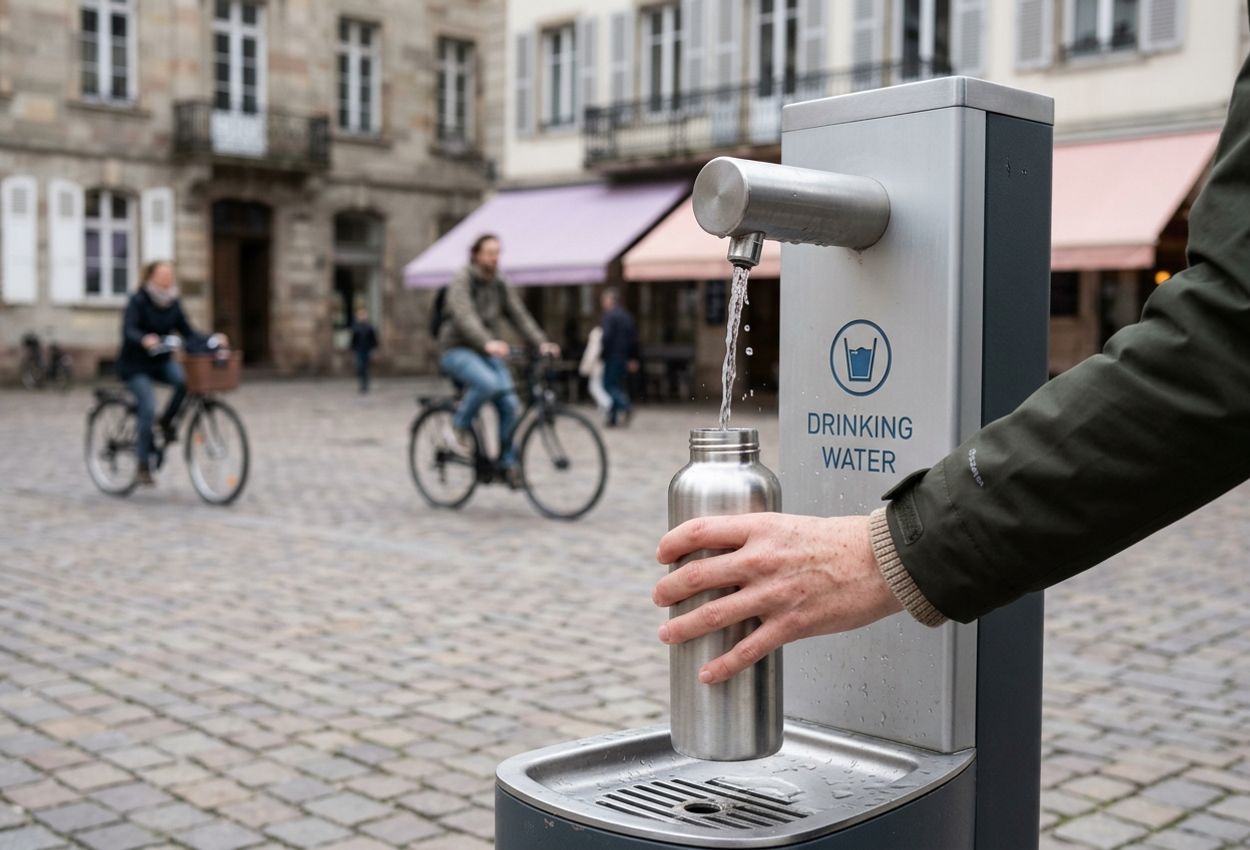
Mindful consumption is less about rigid rules than about a subtle shift in attention. When you pause before accepting a plastic-wrapped item, before running the tap a little longer, before turning the thermostat lower, you begin to see the hidden flows of resources that make travel possible. And once you see them, it becomes much easier — and more satisfying — to lighten your touch.
6. Offset Your Footprint: Invest in Carbon Reduction Projects
Even with the best intentions, some emissions are unavoidable. Long-haul flights, remote destinations with limited transit options, essential work trips — they all carry a carbon cost that cannot be reduced to zero through behavioral changes alone. This is where carbon offsetting enters the picture, not as a license to pollute, but as a pragmatic tool to address the emissions you cannot currently eliminate.
At its core, carbon offsetting means funding projects that either remove greenhouse gases from the atmosphere or prevent them from being emitted elsewhere, in quantities that roughly match your own emissions. You might support a reforestation program that plants and protects trees capable of absorbing carbon as they grow, or a renewable energy installation that displaces a coal-fired power plant. Done well, offsets can funnel money into communities and technologies on the front lines of climate action. Done poorly, they risk becoming little more than greenwashed indulgences.
The first step is to understand your footprint. Many reputable organizations and booking platforms offer carbon calculators that estimate the emissions of your flights, train journeys, car rentals, and hotel stays based on distance, class of travel, and vehicle type. You can also use independent tools to cross-check numbers and build a holistic picture of a trip’s impact. A transatlantic economy-class flight from New York to London, for example, may account for a significant portion of your annual travel emissions; a series of shorter rail journeys within a region will likely add only a fraction of that.
Once you have a sense of scale, choose offset providers with transparent methodologies and robust verification. Organizations dedicated to sustainable travel, such as those that specialize in tourism-related emissions, often curate portfolios of projects screened for additionality (meaning they would not have happened without offset funding), permanence, and social co-benefits. Look for certifications from recognized standards bodies, clear reporting on how funds are allocated, and accessible explanations of the underlying science. Some booking platforms allow you to add offsets at checkout, channeling contributions into vetted schemes.
Offset projects span a wide spectrum. Reforestation and afforestation initiatives work to restore degraded landscapes, sequestering carbon while improving biodiversity, soil health, and local livelihoods. Renewable energy projects — solar farms, wind parks, small-scale hydropower — replace fossil fuel generation, cutting emissions and often increasing energy access in underserved regions. Efficient cookstove programs reduce the amount of wood or charcoal families need to burn, lowering both carbon output and indoor air pollution. Methane capture at landfills or agricultural sites prevents a potent greenhouse gas from entering the atmosphere at all.
Yet offsets are not a panacea. They should be the last step in a hierarchy that begins with avoiding unnecessary travel, continues with reducing emissions through smarter choices (like those in the earlier sections), and only then uses offsets to balance what remains. Think of them as a way to take responsibility, not erase guilt. When you purchase offsets thoughtfully, you are effectively voting with your wallet for a future in which cleaner technologies and restored ecosystems are the norm rather than the exception.

One powerful habit is to build offsetting into your travel budget from the outset. When you price a flight, immediately add a small line item — the cost of offsetting that journey through a reputable provider — and treat it as non-negotiable, just like airport taxes or luggage fees. Over time, this practice both internalizes the true cost of your movements and steadily directs funds to the climate projects that need them most.
7. Respect Culture: Engage Responsibly with Local Communities
Carbon-conscious travel is not only about molecules of CO₂; it is also about relationships — between visitors and residents, between global forces and local traditions. A journey that lowers emissions but erodes cultural heritage or exploits local communities is, by any meaningful measure, unsustainable. To travel lightly on the earth is to tread gently through the lives of those who call your destination home.
Respect begins with curiosity and humility. Before you arrive, take time to learn about local customs, social norms, and recent history. In some places, modest dress is expected in religious sites and rural villages; in others, there are unwritten rules about greetings, table manners, or photography. Observing these nuances is more than etiquette — it is a way of acknowledging that you are a guest. Ask permission before taking close-up photos of people, especially children, and be prepared to accept a polite refusal. Avoid reducing complex cultures to backdrops for social media; instead, aim for exchanges rooted in mutual dignity.
One of the most rewarding ways to engage responsibly is to seek out experiences designed and led by local communities themselves. In Kyoto, Japan, for instance, numerous small workshops and cultural centers offer classes in traditional arts — tea ceremony, calligraphy, kimono dressing, even vegetarian temple cooking — taught by practitioners whose families have often carried these skills for generations. Choosing a session run by a neighborhood tea house rather than a mass-market operator ensures that your participation directly supports cultural bearers and their apprentices.
In coastal villages and mountain towns around the world, community-based tourism initiatives invite travelers to stay in homestays, join guided walks, or participate in seasonal activities like harvesting olives or helping with grape picking. These programs are typically designed to keep decision-making and revenue within the village, with clear guidelines to protect ecosystems and sacred sites. When you book through them, you are helping to create economic alternatives to more destructive industries such as mining, logging, or unsustainable mass tourism.
Example of Responsible Experience: On the outskirts of Ubud in Bali, a number of small, Balinese-run collectives offer walking tours through rice terraces followed by hands-on workshops in offerings-making and gamelan music. Participants learn how the subak irrigation system — a centuries-old network of water temples and canals — has shaped both the landscape and the island’s cooperative culture. Rather than staging performances solely for tourists, these groups often channel a portion of proceeds into temple maintenance, environmental projects, or scholarships for local children, weaving visitor interest into the ongoing life of the community.
Respect also entails recognizing limits. Some destinations and communities are buckling under the weight of overtourism, their streets clogged, their housing markets distorted, their rituals turned into spectacles. If you choose to visit these places, consider doing so outside peak seasons, staying longer rather than dropping in for a frantic weekend, and spending time in lesser-known neighborhoods rather than congregating only in the most-photographed squares. Even better, look for alternative destinations that share similar landscapes or cultures but are actively seeking visitors as part of balanced development.
Language, even in small doses, is a powerful bridge. Learning a handful of phrases — greetings, thank you, please, sorry — signals that you are willing to meet people halfway. In many countries, elders in particular respond warmly to such efforts, and you may find doors opening, stories shared, and invitations extended that would never appear on an itinerary. These micro-moments of understanding are, in their own way, a renewable resource: they foster the goodwill and cross-cultural empathy that make sustainable travel politically and socially viable.

Ultimately, respectful engagement is a form of carbon consciousness because it nurtures the social fabric that underpins environmental stewardship. Communities that feel heard and fairly compensated are far more likely to support conservation measures, to resist destructive development, and to welcome visitors as partners rather than extractive interlopers. When you listen, learn, and contribute rather than merely consume, you are not just offsetting carbon — you are co-creating a model of travel that has a future.
As you plan your next journey, imagine each decision — route, suitcase, meal, bed, refill, offset, interaction — as a thread. Woven together, they create a tapestry not only of memories but of impacts, rippling outwards long after you have returned home. You do not need to be perfect to matter. You only need to begin, to keep adjusting, and to travel with the awareness that every choice carries weight. The beauty of this approach is that, in lightening your carbon footprint, you often deepen your experience — and that is a trade any traveler can embrace.