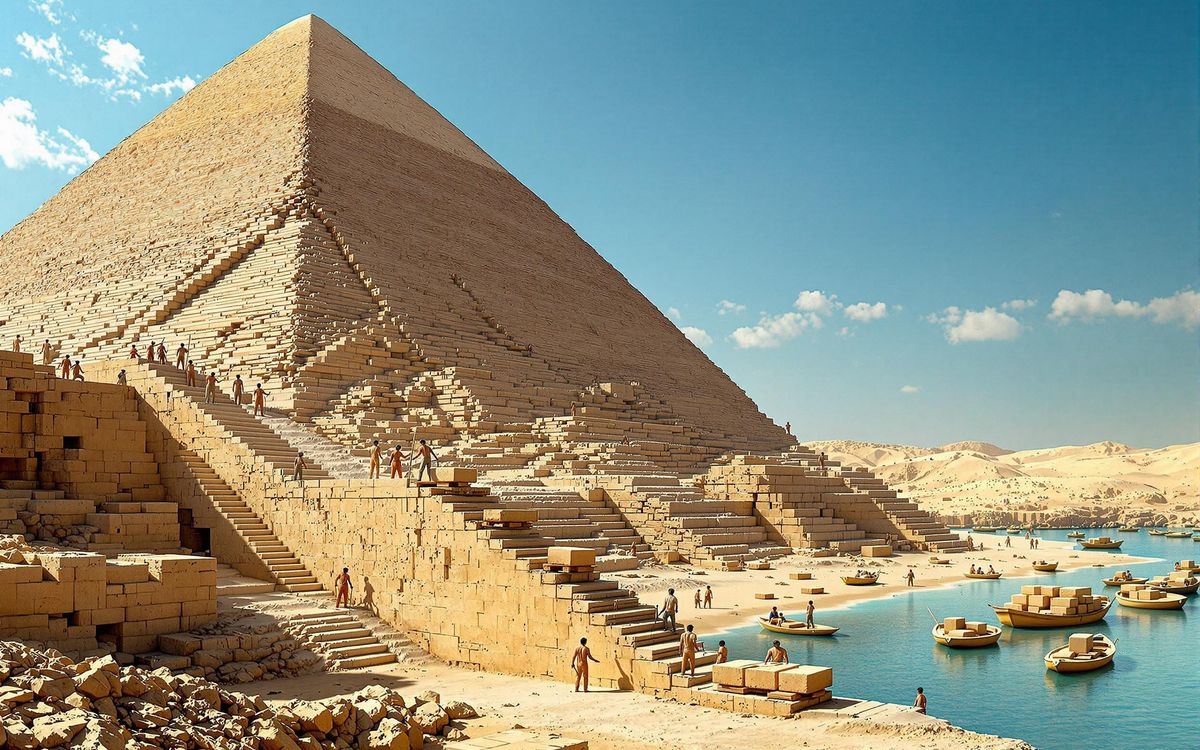
The pyramids of Egypt stand as testaments to the ingenuity and skill of the ancient Egyptians, captivating the world with their enigmatic construction.
How did they manage to erect these colossal structures with the tools and knowledge available at the time? This article delves into the intricate engineering techniques and technological innovations that made the pyramids possible, exploring the meticulous planning, quarrying methods, transportation strategies, and lifting mechanisms employed by these ancient master builders.

Laying the Foundation: Site Selection and Preparation
Selecting the perfect site for a pyramid was a critical first step, demanding meticulous planning and precise execution. The ancient Egyptians sought locations that offered stable geological foundations, capable of supporting the immense weight of these monumental structures. The ideal site needed to be relatively level or easily leveled, minimizing the risk of structural instability over time.
The most iconic pyramid sites, such as those at Giza and Saqqara, demonstrate this careful consideration. These locations provided the necessary geological stability and proximity to resources, such as limestone quarries and the Nile River, which were essential for construction.
Once a site was chosen, the Egyptians embarked on an elaborate preparation process to ensure a perfectly level foundation. One technique involved creating a grid system on the ground, using precise measurements to mark out the pyramid's base. They then excavated a series of trenches, which were filled with water to create a level surface. By measuring the water level at various points, they could identify and remove any high spots or fill in any low spots, achieving remarkable accuracy. The base of the Great Pyramid of Khufu, for example, is level to within just a few centimeters, a testament to their skill.
Equally important was the alignment of the pyramid with the cardinal points: north, south, east, and west. The Egyptians possessed a sophisticated understanding of astronomy, using the movements of the sun and stars to determine true north. They would observe the rising and setting points of specific stars, or the sun's shadow at different times of the year, to calculate the precise direction of north. This alignment held deep symbolic significance, connecting the pyramid to the cosmos and the pharaoh's place within it.
Quarrying the Giants: Extracting and Shaping the Stone
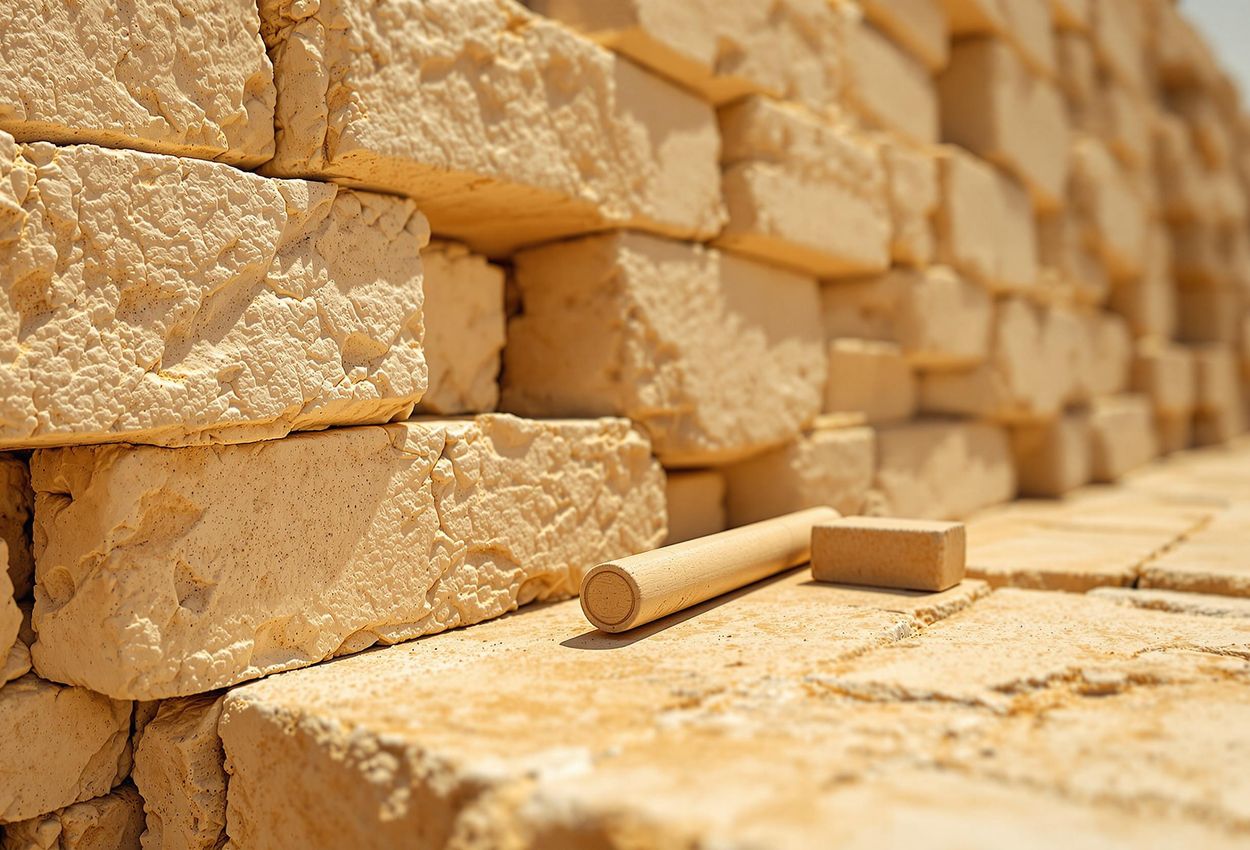
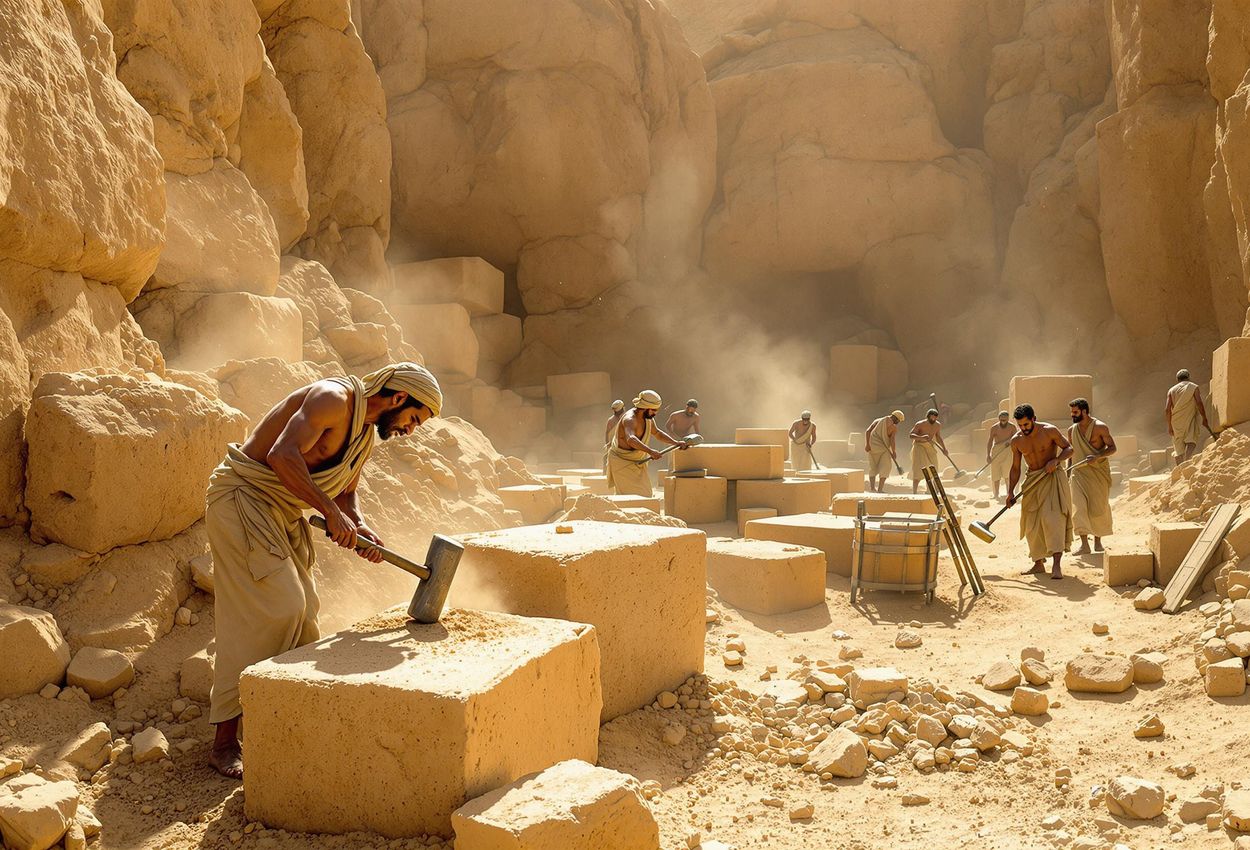
The construction of the pyramids required vast quantities of high-quality stone, primarily limestone, granite, and basalt. The ancient Egyptians developed sophisticated quarrying techniques to extract these materials from the earth, employing a combination of skill, ingenuity, and sheer manpower.
Limestone, the primary building material for many pyramids, was typically quarried from locations near the construction sites, such as Tura. Granite, prized for its strength and durability, was sourced from more distant locations, such as Aswan, hundreds of kilometers to the south.
The quarrying process began by identifying suitable rock formations and removing the overlying layers of sand and debris. Workers then used a combination of tools to cut the stone blocks free. Copper chisels, often hardened through repeated hammering, were used to create slots and channels in the rock. Dolerite hammers, made from a hard, dark volcanic rock, were used to pound the chisels and break away larger pieces of stone. Wooden wedges, soaked with water, were inserted into cracks and then expanded, splitting the rock.
Once a block was freed from the quarry face, it was carefully shaped and dressed to the desired dimensions. Skilled stonemasons used a variety of tools, including chisels, hammers, and stone pounders, to smooth the surfaces and create precise angles. The blocks were then inspected to ensure they met the required specifications before being transported to the construction site.
The ancient Egyptians also developed techniques for quarrying harder stones, such as granite. This involved using fire to heat the rock, followed by rapid cooling with water, which caused the granite to crack. They then used stone tools to further break apart the rock, extracting the desired blocks.
Nile's Embrace: Transporting Stones by Water
With the massive stone blocks extracted from the quarries, the next challenge was transporting them to the pyramid construction sites. Given the weight and size of these blocks, the ancient Egyptians relied heavily on the Nile River as a primary transportation route.
The Nile provided a natural highway, connecting the quarries with the construction sites. To facilitate the movement of stones, the Egyptians constructed canals that extended from the river to the pyramid sites. These canals allowed boats to navigate directly to the base of the pyramids, minimizing the distance the stones had to be transported over land.
The boats used for transporting the stones were specially designed to carry heavy loads. They were typically constructed from cedar wood, imported from Lebanon, and were equipped with strong ropes and sturdy platforms to secure the blocks. The stones were carefully loaded onto the boats, often using ramps and levers, and then transported along the Nile to the pyramid sites.
Navigating the Nile was not without its challenges. The river's currents and seasonal floods could pose significant obstacles. To overcome these challenges, the Egyptians developed sophisticated techniques for steering and maneuvering the boats. They used oars and sails to control the boats' direction and speed, and they carefully monitored the river's water levels to avoid running aground.
Once the boats arrived at the pyramid sites, the stones were unloaded using a combination of ramps, levers, and manpower. The stones were then placed on sledges and dragged to their final positions on the pyramid.

Ramps of Ascension: Lifting Stones to Great Heights
One of the most debated aspects of pyramid construction is how the ancient Egyptians lifted the massive stone blocks to such great heights. While no definitive answer exists, several theories have been proposed, each with its own strengths and weaknesses.
The most widely accepted theory involves the use of ramps. These ramps, constructed from a combination of earth, brick, and stone, provided a gradual incline that allowed workers to drag the stones to higher levels of the pyramid. Several types of ramp systems may have been used, including straight ramps, which ran directly up the side of the pyramid; spiral ramps, which wrapped around the pyramid's exterior; and internal ramps, which were built inside the pyramid itself.
Straight ramps offered a simple and direct method for lifting the stones, but they required a significant amount of material to construct and became increasingly difficult to use as the pyramid grew taller. Spiral ramps, on the other hand, required less material but made it challenging to maintain the pyramid's precise geometry. Internal ramps, while potentially solving the space and geometry issues, would have been difficult to construct and navigate.
Archaeological evidence supports the use of ramps at the Great Pyramid of Giza and other pyramid sites. However, the exact configuration and method of use remain a subject of ongoing debate. Some researchers suggest that the ramps were lubricated with water to reduce friction, while others propose the use of wooden rollers or sledges to ease the movement of the stones.
Another theory suggests that a hydraulic lift system might have been used to float the heavy stones up the middle of Egypt's oldest pyramid using stored water.

Leverage and Ingenuity: Simple Machines at Work
In addition to ramps, the ancient Egyptians likely employed a variety of simple machines to aid in the construction of the pyramids. These machines, including levers, pulleys, and wedges, allowed them to multiply their force and move heavy objects with greater ease.
Levers, consisting of a rigid bar that pivots on a fixed point, could have been used to lift and position the stone blocks. By applying force to one end of the lever, workers could lift a much heavier load on the other end. Pulleys, which use a rope or cable that runs over a wheel, could have been used to lift stones to higher levels. By pulling on the rope, workers could raise a heavy load with less effort. Wedges, consisting of a triangular-shaped object, could have been used to split rocks and lift stones. By driving the wedge into a crack or crevice, workers could exert a tremendous amount of force, breaking apart the rock or lifting the stone.
While the exact methods of using these simple machines remain a subject of speculation, their potential role in pyramid construction is undeniable. The ancient Egyptians possessed a deep understanding of mechanics and physics, and they likely applied this knowledge to develop innovative solutions for moving and lifting heavy objects.
The construction of the pyramids stands as a testament to the ingenuity, skill, and determination of the ancient Egyptians. By combining meticulous planning, innovative techniques, and a mastery of simple machines, they were able to erect these colossal structures, leaving behind a legacy that continues to inspire awe and wonder. The mysteries of pyramid construction may never be fully solved, but the ongoing research and exploration continue to shed light on the remarkable achievements of this ancient civilization.