Embark on a celestial journey to discover the top 5 ancient observatories around the world, where history and astronomy intertwine to reveal the secrets of the cosmos.
From the Americas to Europe and Asia, these sites offer a unique glimpse into the astronomical knowledge of ancient civilizations, inviting you to explore the wonders of the universe through the eyes of our ancestors. Prepare to be amazed by the ingenuity and dedication of those who sought to understand the heavens, leaving behind legacies that continue to inspire awe and wonder.
Each of these ancient observatories stands as a testament to humanity's enduring quest to understand the universe, offering a unique blend of historical significance and astronomical insight. Whether you're an avid stargazer, a history enthusiast, or simply seeking a unique travel experience, these sites promise an unforgettable journey through time and space.
Get ready to explore the cosmos through the lens of ancient civilizations, discovering the secrets of the stars and the ingenuity of those who sought to unravel them.
Chankillo's Thirteen Towers: A Peruvian Sky Calendar
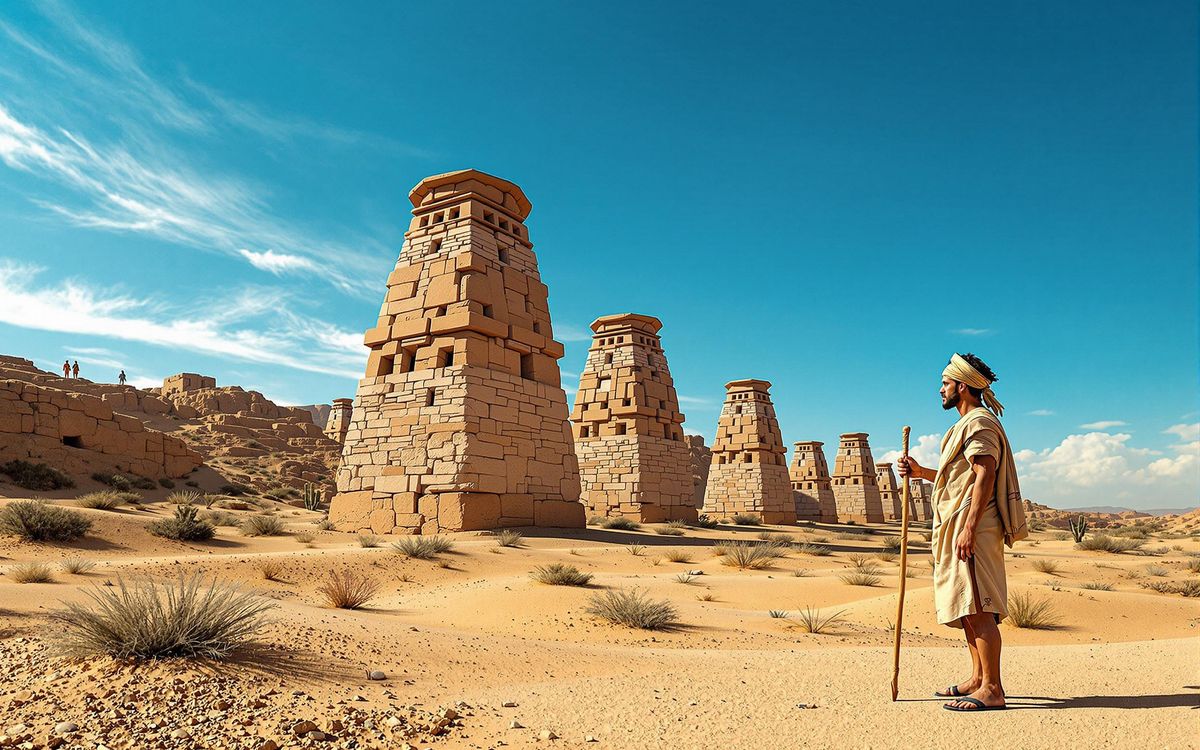
Discover the oldest astronomical observatory in the Americas at Chankillo, Peru, a marvel dating back to the 4th century BCE.
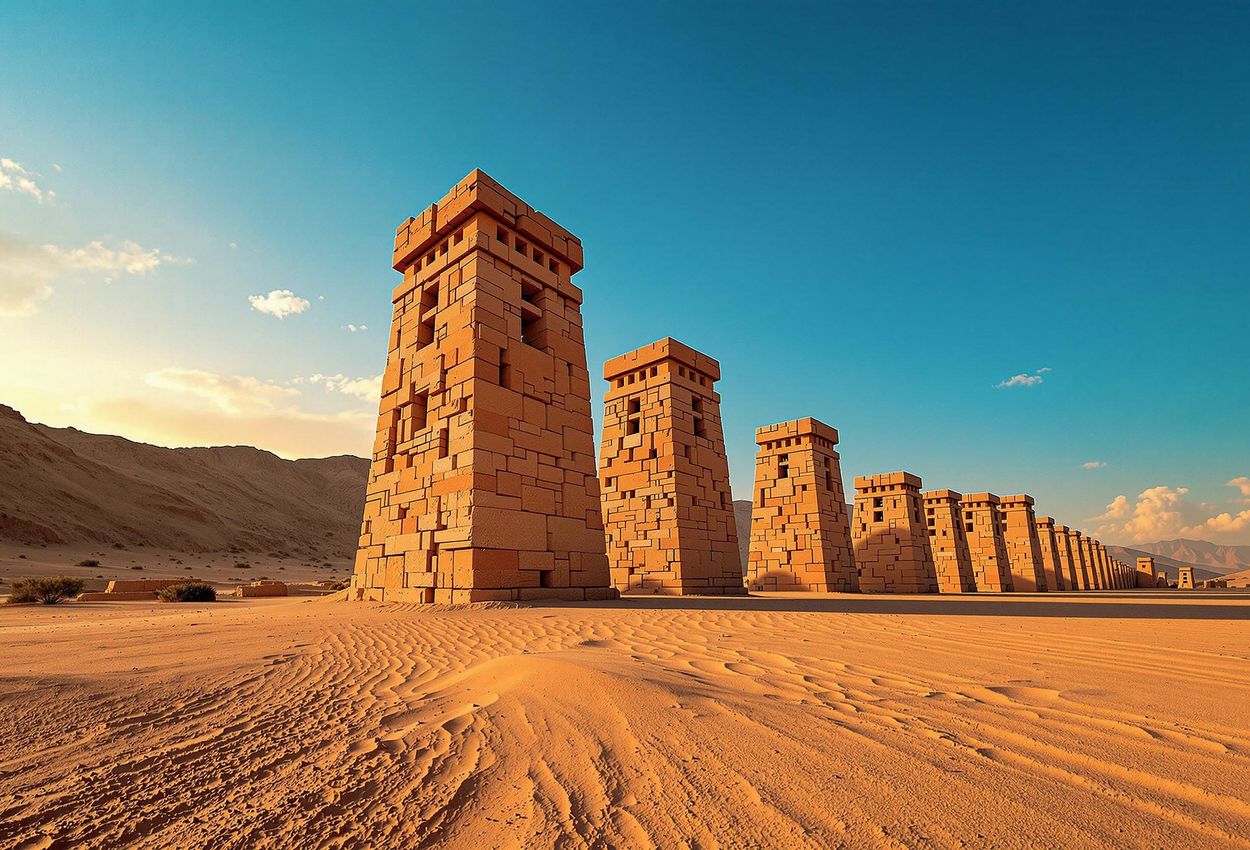
Located in the Casma Valley, about 365 kilometers north of Lima, Chankillo offers a fascinating glimpse into the astronomical knowledge of the Chavín culture. The site's most distinctive feature is the thirteen towers stretching across a hilltop, which served as a solar calendar with remarkable precision. These towers meticulously map the solar cycle, allowing ancient observers to determine the dates for agriculture and religious festivals.
The thirteen towers of Chankillo span the horizon, their positions corresponding closely to the rising and setting positions of the sun throughout the year. From two lookout platforms, one to the east and one to the west, the Chankillo inhabitants could track the passage of time with an accuracy of two to three days. This enabled them to regulate planting and harvest times, as well as schedule religious ceremonies. The towers cast shadows that align with specific points on the horizon during solstices and equinoxes, creating a mesmerizing visual spectacle.
While exploring Chankillo, don't miss the on-site museum, which showcases artifacts related to astronomy and everyday life in the ancient settlement. The museum provides valuable context for understanding the significance of the site and the people who inhabited it. As you wander through the ruins and examine the exhibits, you'll gain a deeper appreciation for the ingenuity and sophistication of the Chavín culture.
Planning your visit to Chankillo requires some consideration. The dry season, from April to October, is generally considered the best time to visit. However, it's always a good idea to check the forecast and pack accordingly, as weather conditions can vary. The site is located in the Casma-Sechin Oasis, and reaching it may require organized transportation. Several tour companies offer itineraries that include visits to Chankillo and other nearby archaeological sites.
Local Tip: Unlike other ancient observatories, Chankillo features multiple observation points, providing a unique perspective on the solar cycle.
The multiple observation points set Chankillo apart from other similar sites in Peru, most of which only feature one point of astronomical alignment. This unique feature allowed the inhabitants of Chankillo to track the passage of time over an entire year with remarkable accuracy. As you explore the site, take the time to appreciate the ingenuity and precision of the ancient astronomers who designed and built this remarkable solar observatory.
El Caracol: Unveiling Mayan Cosmic Secrets in Chichen Itza
Step into the world of Mayan astronomy at El Caracol in Chichen Itza, a testament to the civilization's profound understanding of the cosmos.
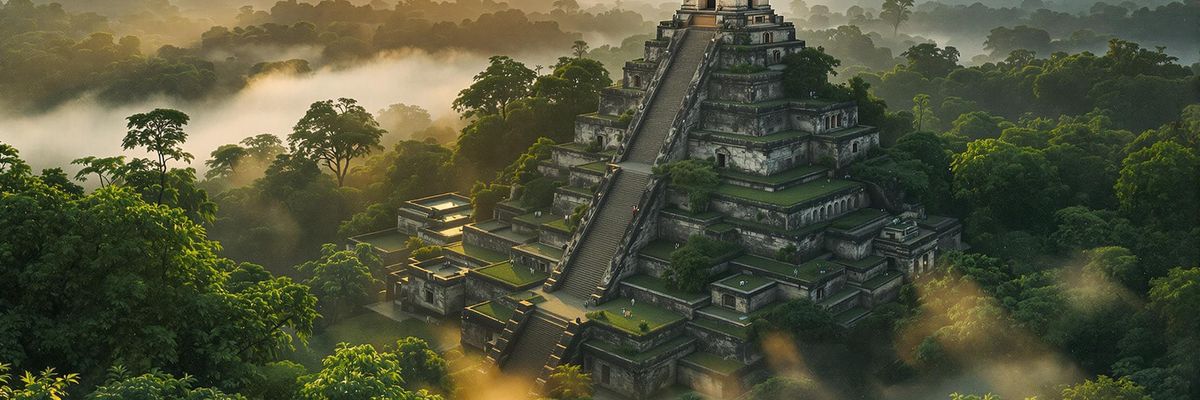
Built around 906 AD, El Caracol, meaning 'snail' in Spanish, served as an observatory for studying celestial movements, particularly Venus. The Mayans tracked Venus's cycles and their relation to the solar year, incorporating this knowledge into their rituals and daily life. The strategic alignment of the tower's windows with astronomical phenomena like equinoxes and solstices highlights the Mayans' architectural skill and mathematical precision.
El Caracol's design is unique within Mayan architecture, featuring a circular base that rises in a spiral. The winding staircase inside the tower gives the observatory its name, and the structure is believed to be built on three superimposed buildings. The tower's height provides unobstructed views above the Yucatan Peninsula's dense vegetation, allowing Mayan astronomers to observe the sky with clarity. The Mayans combined art, science, and spirituality in the construction of El Caracol, demonstrating their deep connection with the cosmos.
The Mayans knew from naked-eye observations that Venus appeared on the western and disappeared on the eastern horizons at different times of the year, completing one cycle in 225 days. They also knew that five Venus cycles equaled eight solar years, allowing them to predict Venus's appearances at the northerly and southerly extremes at eight-year intervals. El Caracol has sight lines for 20 of 29 possible astronomical events of interest to the Mesoamerican residents of Chichen Itza.
Visiting El Caracol offers a glimpse into the world of Mayan astronomy and the civilization's sophisticated understanding of the heavens. As you explore the observatory, imagine the Mayan priests studying the firmament in search of divine signs, using their knowledge of celestial movements to maintain control over the ceremonial and political life of Chichen Itza. The site is easily accessible and considered a major tourist attraction in Mexico.
Local Tip: The platform height of El Caracol provides unobstructed views above the Yucatan Peninsula's dense vegetation, allowing for clear observations of the sky.
El Caracol stands as a monument to the architectural skill and advanced astronomical understanding of the ancient Maya civilization. Its unique design and strategic alignment with celestial phenomena make it a must-see destination for anyone interested in astronomy, history, and Mayan culture.

Jantar Mantar: Jaipur's Celestial Instruments of Harmony
Enter the world of Jantar Mantar in Jaipur, India, a testament to the astronomical prowess of the early 18th century.
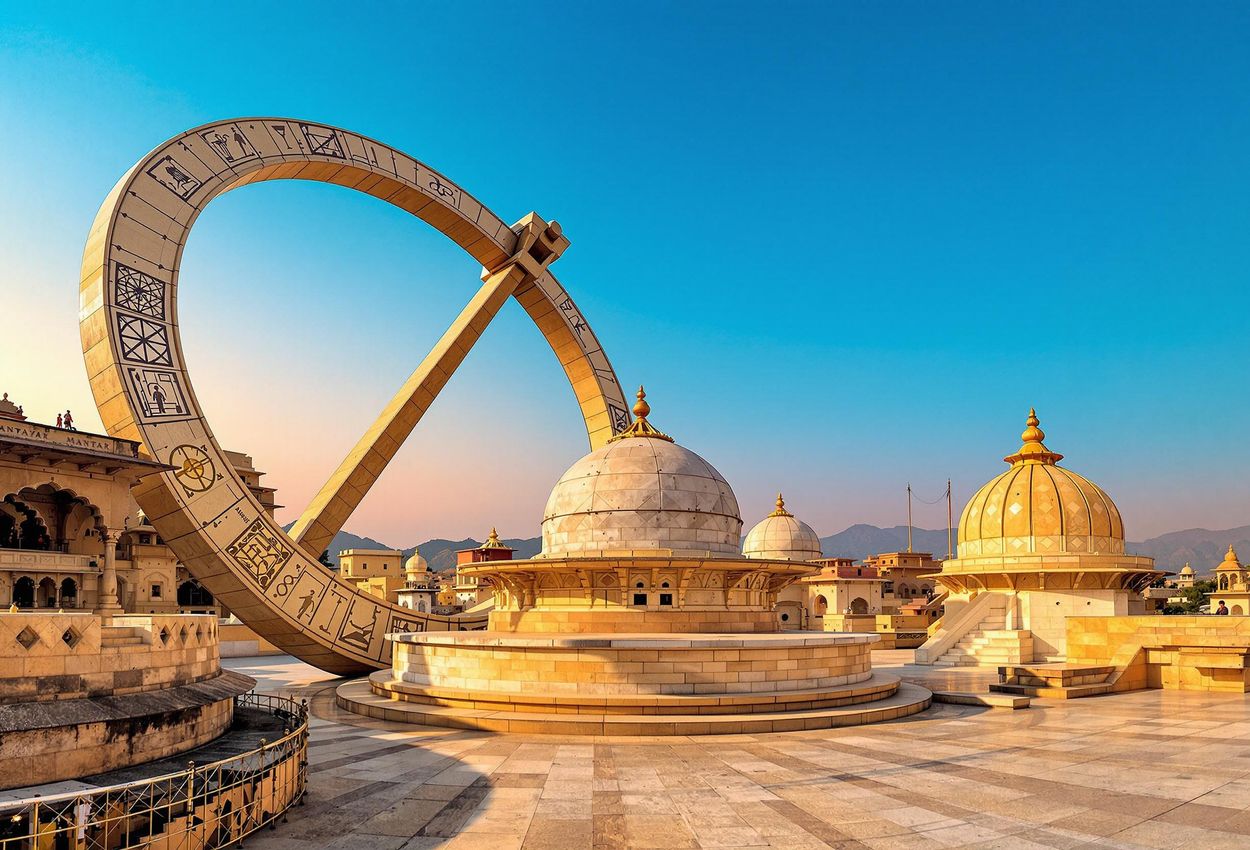
Built by Maharaja Sawai Jai Singh II, Jantar Mantar is the most significant and well-preserved of India's historic observatories. The collection comprises approximately 20 fixed instruments designed for naked-eye observation. These instruments were used to predict the movements of the Sun, Moon, and planets. The large scale of the instruments was intended to increase their accuracy.
The Vrihat Samrat Yantra, the world's largest stone sundial, stands as a centerpiece of Jantar Mantar. This impressive structure measures time with remarkable accuracy, using the shadow cast from sunlight to measure time in intervals of 2 seconds. Other key instruments include the Ram Yantra and Rashi Valaya Yantra, each designed for specific astronomical observations.
The instruments at Jantar Mantar operate in each of the three main classical celestial coordinate systems: the horizon-zenith local system, the equatorial system, and the ecliptic system. The Kanmala Yantraprakara is one instrument that works in two systems and allows transformation of the coordinates directly from one system to the other. The site showcases important architectural and instrumental innovations, making it a unique and valuable historical landmark.
Exploring Jantar Mantar offers a glimpse into the astronomical skills and cosmological concepts of the court of a scholarly prince at the end of the Mughal period. The monument was damaged in the 19th century but has been restored several times, most recently in 2006. Today, Jantar Mantar is a UNESCO World Heritage Site and a testament to India's rich astronomical heritage.
Local Tip: The instruments' large scale was intended to increase their accuracy, allowing for precise naked-eye observations.
As you wander through Jantar Mantar, take the time to appreciate the ingenuity and dedication of the astronomers who designed and used these remarkable instruments. The site stands as a symbol of humanity's enduring quest to understand the universe and our place within it.
Goseck Circle: Germany's Neolithic Gateway to the Sun
Uncover the mysteries of the Goseck Circle in Germany, one of the oldest known solar observatories in the world, dating back to around 4900 BCE.
Discovered in 1991, the Goseck Circle offers a fascinating glimpse into the astronomical knowledge of Neolithic societies. The structure includes a concentric ditch, palisade rings, and entrances aligned with sunrise and sunset during the winter solstice. This alignment suggests that the circle was used to track the sun's movements and mark important seasonal events.
The Goseck Circle lies on the same latitude as Stonehenge, suggesting a shared interest in celestial observation among different Neolithic cultures. The site's discovery and subsequent excavation have revealed remnants of ritual fires and human bones with cut marks, indicating that the circle was not just for stargazing but also for ritual practices. The significance of the winter solstice alignment points to its use in ancient rituals and ceremonies.
One of the most intriguing aspects of the Goseck Circle is its possible connection to the Nebra Sky Disk, a bronze disk dating from 1600 BC. The disk is the oldest portable representation of the cosmos found to date, depicting a crescent moon, a circle (probably a full moon), and a cluster of stars interpreted as the Pleiades constellation. The angle between the solstice gates at Goseck corresponds with an angle on the Nebra Sky Disk, suggesting a shared astronomical understanding.
Visiting the Goseck Circle allows you to step back in time and imagine the lives of Neolithic people who sought to understand the cosmos. The site's alignment with the winter solstice and its possible connection to the Nebra Sky Disk make it a unique and valuable historical landmark.
Local Tip: Goseck Circle lies on the same latitude as Stonehenge, suggesting a shared interest in celestial observation among different Neolithic cultures.
As you explore the Goseck Circle, consider the ingenuity and dedication of the ancient people who built this remarkable solar observatory. The site stands as a testament to humanity's enduring quest to understand the universe and our place within it.
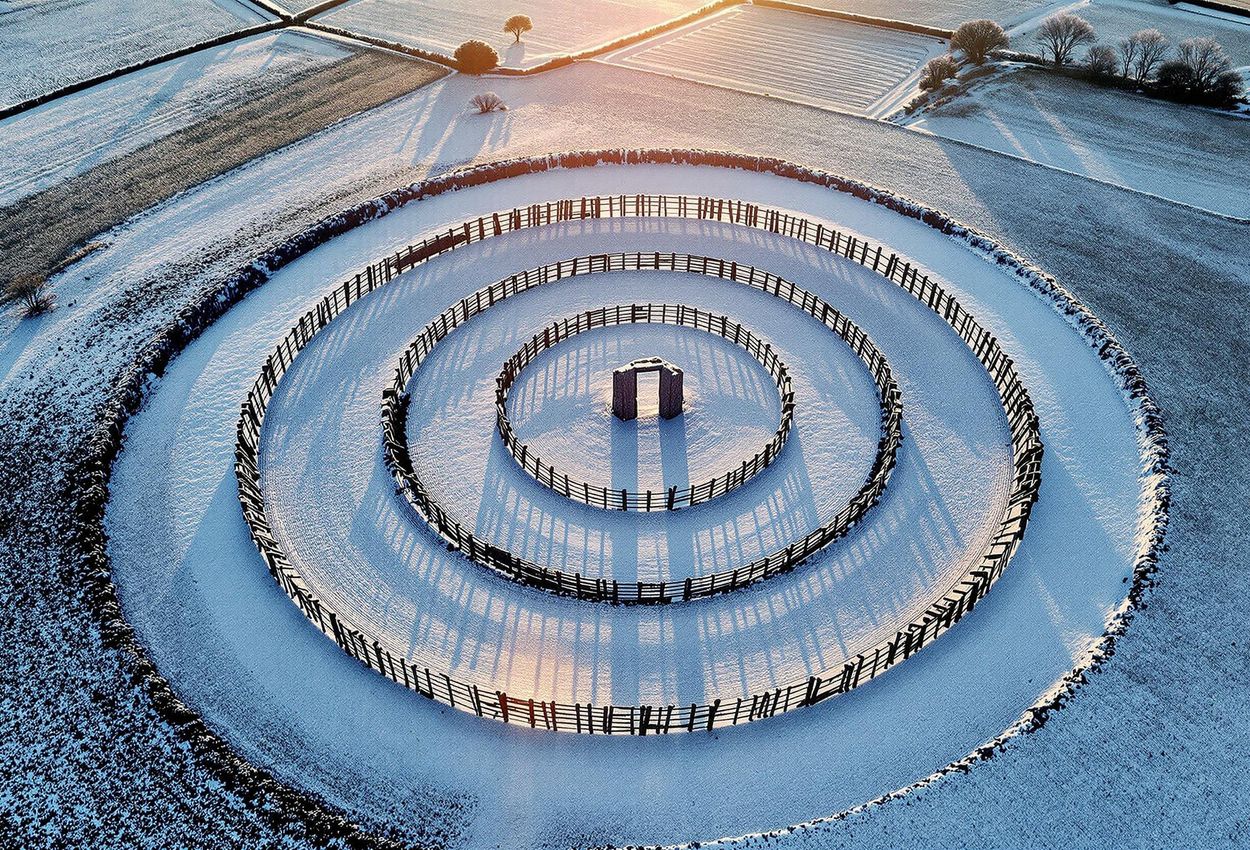
Stonehenge: Aligning with the Cosmos on Salisbury Plain
Journey to Stonehenge in the UK, an iconic monument that aligns with the cosmos, particularly the summer solstice sunrise.
On June 21, the sun rises directly over the Heel Stone, creating a straight line to the circle's center. This alignment has made Stonehenge a gathering place for thousands of years, especially during the summer solstice. The site also has lunar alignments, suggesting its function as a complex calendar. Nearby locations like Woodhenge and Cley Hill offer additional opportunities for stargazing.
The upcoming Major Lunar Standstill, a phenomenon that occurs every 18.6 years, may hold significant clues to Stonehenge's design. During this event, the moon reaches its most extreme northern and southern positions in the night sky. Researchers are currently studying the stones of Stonehenge to determine if they mark the 'major lunar standstill,' a phenomenon that only occurs every 18.6 years. The four Station Stones at Stonehenge align with two of the Moon's extreme positions, and there is much debate as to whether this was deliberate, and if so, what might have been the purpose.
Visiting Stonehenge during the summer solstice is a unique experience, as thousands gather to witness the sunrise over the Heel Stone. The winter solstice also offers a special view, as the sun sets in a particular alignment with the stones. The site's connection to both solar and lunar events highlights its importance as an ancient astronomical observatory.
Local Tip: The upcoming Major Lunar Standstill and its potential significance to Stonehenge's design offer a unique opportunity to witness a rare celestial event and explore the monument's mysteries.
As you stand among the stones of Stonehenge, consider the ingenuity and dedication of the ancient people who built this remarkable monument. The site stands as a testament to humanity's enduring quest to understand the universe and our place within it.

These five ancient observatories offer a glimpse into the astronomical knowledge of civilizations past. From the solar calendar of Chankillo to the lunar alignments of Stonehenge, each site showcases the ingenuity and dedication of those who sought to understand the cosmos. Whether you're an avid stargazer or a history enthusiast, these ancient observatories promise an unforgettable journey through time and space.