There are journeys you take to see the world, and there are journeys you take to finally see yourself. A true self-love trip is less about ticking off sights and more about moving at the pace of your own heartbeat, letting landscapes, rituals, and fleeting encounters become mirrors for who you are becoming.In a world that measures worth in productivity and constant connection, choosing to travel alone in the name of self-love is an act of quiet rebellion. It is a promise you make to your own well-being, a decision to trade notifications for birdsong, commutes for coastal paths, and small talk for the deeper, more tender conversations you have with yourself. The destinations that best support this kind of journey are not simply beautiful; they are places where nature and culture conspire to soften your defenses, where ancient traditions invite you to slow down, and where solitude is not loneliness but a warm, expansive space you get to inhabit fully.
The seven destinations that follow are scattered across the globe, yet they share a subtle kinship. In each of them, you will find landscapes that soothe, spiritual practices that ground, and experiences designed for travelers arriving solo and open-hearted. From the red-rock vortexes of Sedona to the mist-veiled rice terraces of Ubud, from Kyoto’s raked gravel gardens to the steaming hot springs of Iceland, these are places that invite you to step out of your old stories and into a gentler, more generous way of seeing yourself.
Think of this not as a checklist but as a compass. You might be called to one destination or to several over the course of years. You may arrive burned out and brittle, or quietly content but craving deeper connection with your inner life. However you land, these places are ready to hold you. All you have to do is say yes, and begin.
Sedona's Mystical Embrace: Find Yourself Among the Red Rocks
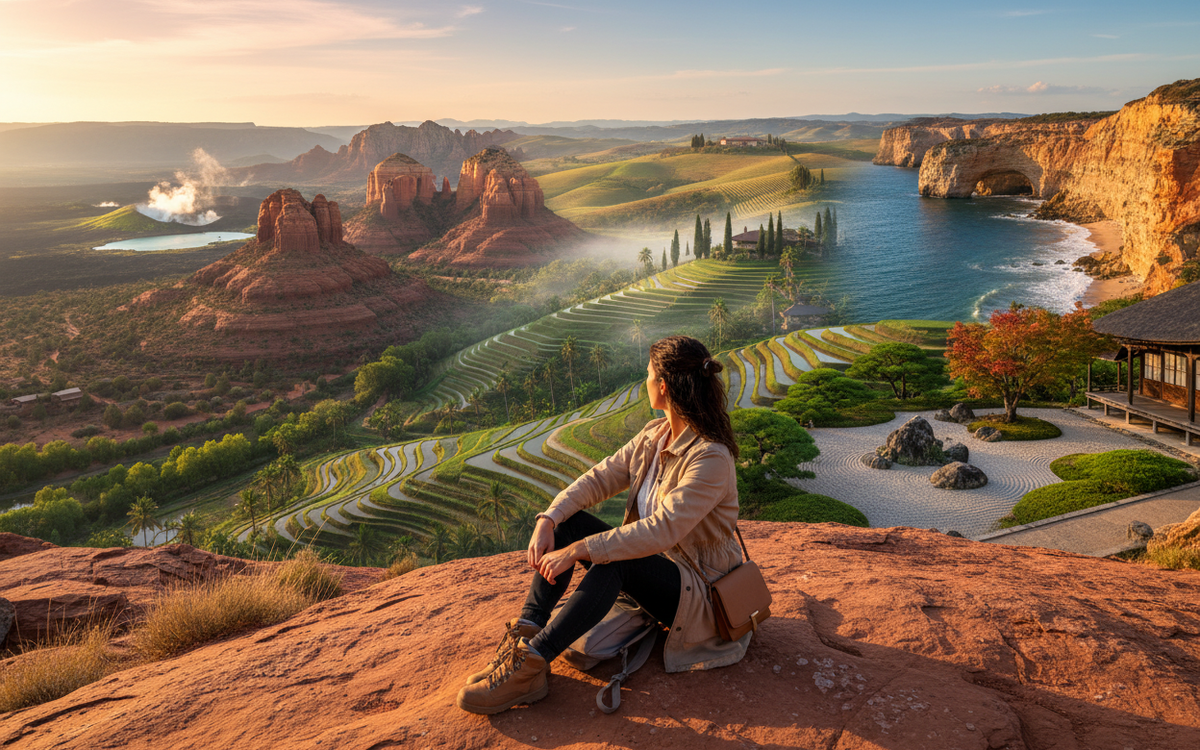
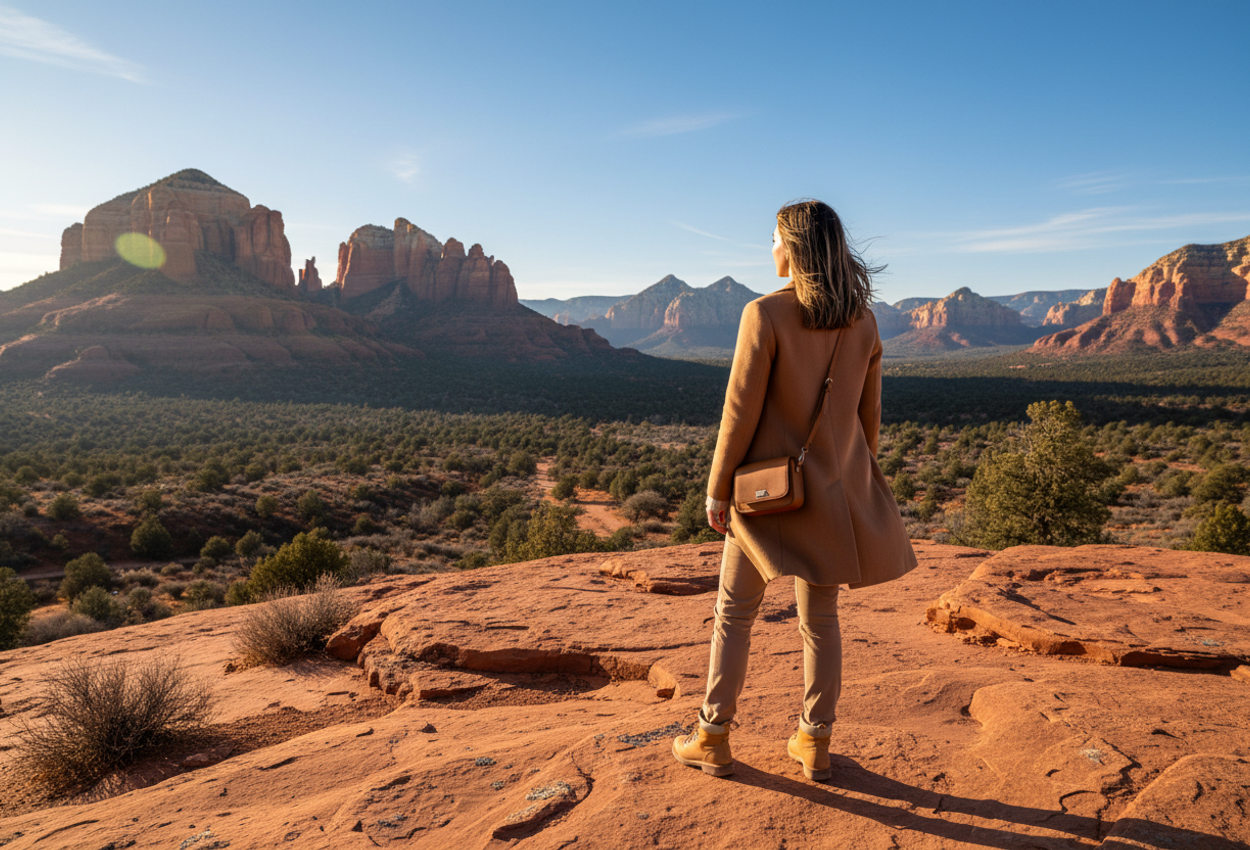
As you round the final curve on the drive into Sedona, Arizona, the land seems to exhale. The highway unwinds into a valley of towering red buttes and cathedral-like rock faces, their layers of sandstone glowing russet and rose in the dry desert light. It is a landscape that feels both ancient and startlingly alive, as if the earth itself is awake and listening. People come here for the hiking and the views, but many also come for something less tangible: the feeling that this is a place where the soul can finally hear itself think.
The famous vortex sites are where that sensation is at its most palpable. At Airport Mesa, you climb a short, dusty trail from the roadside and step onto a broad, flat outcrop open to every direction. Below you, the town of Sedona is a scatter of adobe and green cottonwoods along the creek, while in the distance, formations with names like Cathedral Rock and Coffeepot Rock stand guard. The wind here has a curious, spiraling quality, tugging at your clothes and hair. Locals will tell you that this is a site of balanced masculine and feminine energy; hikers simply notice the way their shoulders drop and their breathing slows as they sit on the warm stone.
Further south along Highway 179, Bell Rock rises from the desert floor like a terracotta bell frozen mid-ring. Trails loop around its base and snake gently upward along ledges where juniper trees cling to the rock. This is a perfect place for a self-guided meditation hike. Start early, when the air is still cool and the only sounds are the crunch of red dust under your boots, the distant call of ravens, and your own breath. Choose a perch with a view over the adjacent Courthouse Butte, set a timer on your phone, and give yourself ten or fifteen minutes to be still. Feel the sun gradually warming the stone beneath you, notice how your thoughts race and then slowly settle, and allow whatever questions you carried here to float up and rearrange themselves.
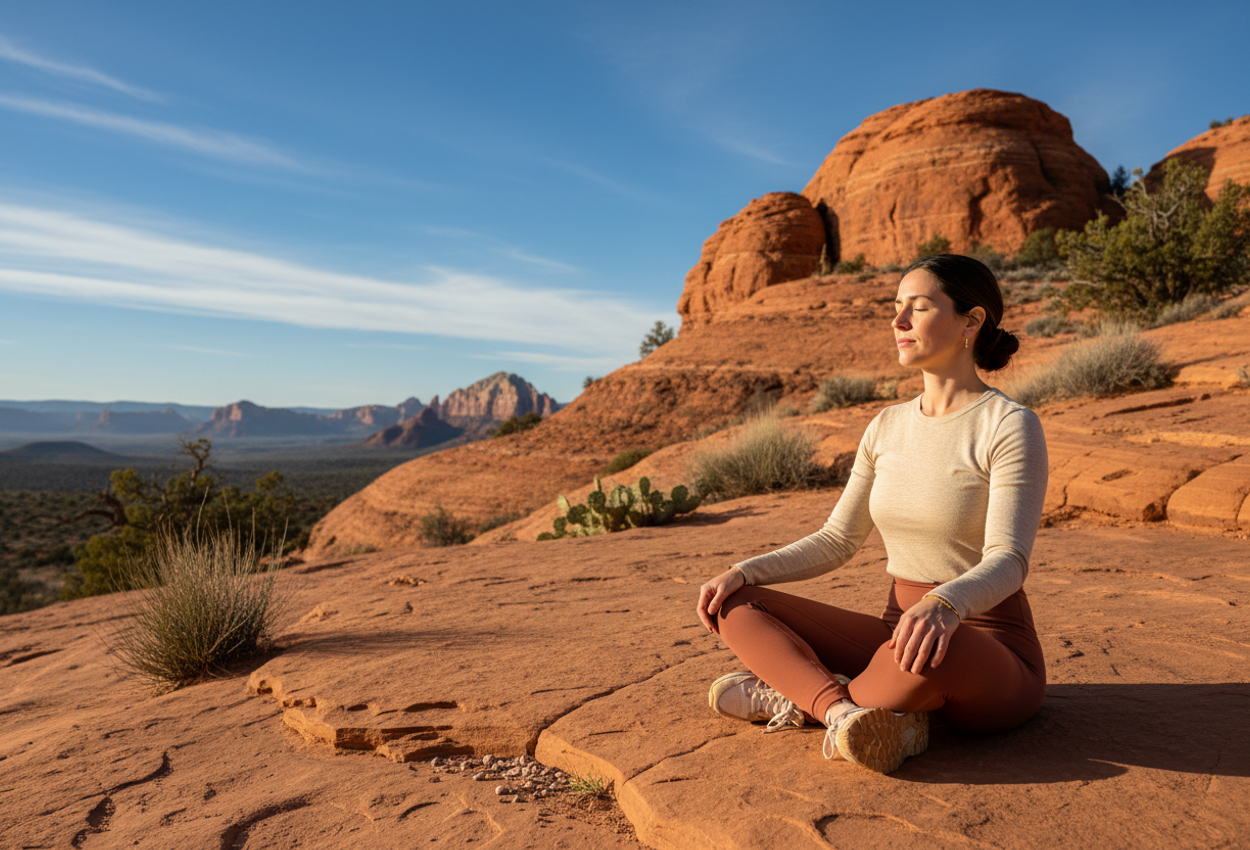
If you prefer a little guidance, Sedona is rich with practitioners who mix outdoor exploration with gentle inner work. Join a small-group vortex tour that leads you to sites like Boynton Canyon or the saddle below Cathedral Rock, pausing along the way for breathwork, visualization, or simple journaling prompts. With the scent of sun-baked sagebrush and pine resin all around you, you may find yourself admitting truths you had managed to outrun back home. The red rocks, unwavering in their presence, seem to offer wordless permission to let something heavy slip from your shoulders.
For a more cocooned form of healing, step into one of Sedona’s crystal shops or holistic wellness centers for a sound healing session. In a dim room scented with palo santo and lavender, you stretch out on a padded mat surrounded by quartz crystal bowls. As the practitioner coaxes sound from the glass with a slow, circling motion, shimmering tones expand and layer over one another, vibrating through your chest and limbs. You may feel images rise unbidden, or simply notice a deepening sense of spaciousness inside your own body. Emerging back onto the street, where the afternoon sun glitters off windshields and the red cliffs burn copper against the sky, the world feels subtly retuned, as if some internal static has been turned down.
Many solo travelers choose to stay in family-run inns or casita-style hotels perched on the hillsides, where balconies look directly onto the red rock panoramas. Waking before sunrise, you can unroll a yoga mat on your private terrace as the first light streaks the sky in soft coral and violet. A local teacher can join you for a private session, guiding you through grounding postures and heart-opening backbends that mirror the arc of the cliffs around you. By the time the sun clears the horizon, you will feel both worked and washed clean, ready to greet the day not as a list of tasks but as a sequence of quiet, intentional choices.
Local Tip: Stop by a small metaphysical bookstore or café in Uptown Sedona late in the afternoon, order an herbal tea infused with desert botanicals, and spend an hour writing a letter to your future self. Slip it into your journal. Months from now, when the red dust has long since been washed from your shoes, reading those words will return you instantly to the clarity you felt under the Arizona sky.
Bali's Tranquil Temples: Immerse in Spiritual Serenity
The road into Ubud, the cultural heart of Bali, threads past seas of terrace upon terrace of rice paddies, so green they look almost neon beneath the shifting veil of tropical clouds. Scooters buzz by in lazy swarms, shrines draped in black-and-white cloth peek out from courtyards heavy with frangipani blossoms, and the humid air carries a drift of incense from the morning’s canang sari offerings left at every doorstep. This is a town that moves to a distinctly spiritual cadence. Here, even the most mundane errands are punctuated by ritual: women balancing baskets of flowers on their heads as they cross temple thresholds, men in sarongs chatting quietly as gamelan music chimes from somewhere just out of sight.
For a solo traveler on a self-love journey, Ubud offers an unusually gentle landing. Many guesthouses are family compounds turned small-scale sanctuaries, where your room opens onto a shared garden brimming with heliconia and banana trees, and breakfast is brought to your terrace on a tray: thick wedges of papaya and pineapple, a stack of banana pancakes, a pot of local coffee rich and earthy on the tongue. The day stretches before you like a blank page, time no longer measured in meetings but in the play of shadow and light across rice fields.
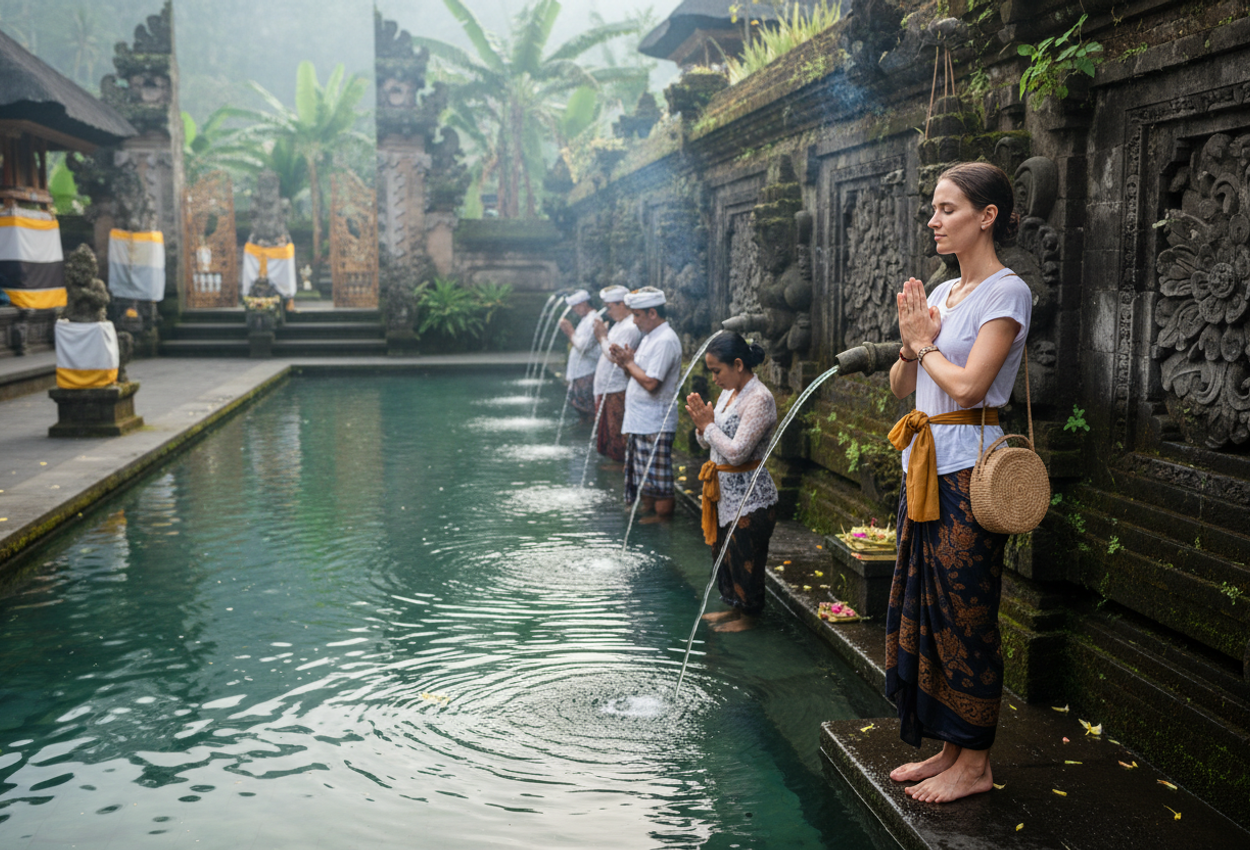
One of the most powerful experiences you can gift yourself here is a purification ritual at Tirta Empul Temple, a sacred water temple northeast of Ubud. Wrapped in a borrowed sarong, you step barefoot over the cool stone into a courtyard where a rectangular pool shimmers with spring water. Carved spouts line one side, each spilling a steady ribbon of liquid silver. Locals and visitors alike queue calmly, hands pressed together, before ducking under each spout in turn. The water pounds against your crown, streams into your eyes and ears, roars in your skull. With each immersion, you are invited to release something you no longer wish to carry: an old resentment, a story about your body, a fear that has narrowed your life. When you emerge, clothes soaked and skin goose-pimpled despite the tropical heat, there is a sudden lightness in your chest, as though a knotted rope inside you has begun to loosen.
Back in town, Ubud’s yoga studios and retreat centers offer a different kind of cleansing. Some are nestled above the river gorges, open-sided pavilions where ceiling fans hum lazily and palm fronds flicker at the edges of your vision as you move through sun salutations. Others sit in the middle of rice paddies, reachable only by narrow paths where ducks waddle and farmers in conical hats tend to the waterlogged earth. Many have designed specific self-love or emotional healing programs, combining daily yoga and meditation with workshops on self-compassion, journaling circles, and Ayurvedic-inspired spa treatments using coconut oil and crushed herbs.
Between classes, you can wander Ubud’s cafés, many of them airy, plant-filled spaces serving smoothie bowls jeweled with dragon fruit, turmeric-ginger shots, and crisp gado-gado salads. Eating alone here is not an act of defiance but an accepted part of the landscape; around you, other solo travelers sit with notebooks and dog-eared paperbacks, their bare feet curled under them as afternoon rain begins to drum on the roof. You notice how easy it is, in this town, to simply be.
For a hidden layer of connection, sign up for a traditional Balinese cooking class focused on nourishing, plant-forward dishes. Often held in a family compound or a small village kitchen just outside Ubud, these classes begin with a trip to the morning market. The stalls overflow with glossy green chilies, lemongrass stalks that release a citrusy perfume when bruised, baskets of shallots and garlic, and mounds of fresh coconut. Back in the open-air kitchen, you learn to grind bumbu spice paste by hand in a stone mortar, your arms working in rhythmic circles as your instructor chats about the Balinese philosophy of balance between the seen and unseen worlds. As you stir coconut milk into simmering vegetables or wrap fish in banana leaves for steaming, you realize that this, too, is a form of self-love: learning to feed yourself with attention and respect, turning the act of cooking into ritual.
As evening falls, take yourself to a traditional dance performance in the courtyard of a local temple, where oil lamps flicker and the air is thick with incense. Sitting on the worn stone, you watch dancers in gilded headdresses move with deliberate precision, every finger and eye movement encoded with meaning. The music is hypnotic, a metallic constellation of gongs and xylophones that seems to slow your pulse. Under the velvet Balinese night, with stars barely visible through the humidity, you may feel a strange kinship with the generations of people who have sat in this exact spot, letting story and rhythm remind them that they are part of something larger than their own worries.
Kyoto's Zen Gardens: Discover Inner Peace in Japan
Arriving in Kyoto after the rush of Tokyo feels like stepping into an older, quieter version of Japan’s soul. The city is threaded with narrow lanes where wooden machiya townhouses lean close together, their lattice fronts casting striped shadows at dusk. Temple bells toll softly in the distance, and the air often carries a trace of incense and tatami straw. In early spring, a pale froth of cherry blossoms hovers over the Kamogawa River; in autumn, maples ignite the hillsides in russet and gold. But whatever the season, Kyoto’s enduring gift to the solo traveler is space: space to contemplate, to pare life down to essentials, to rest in beauty without needing to possess or explain it.
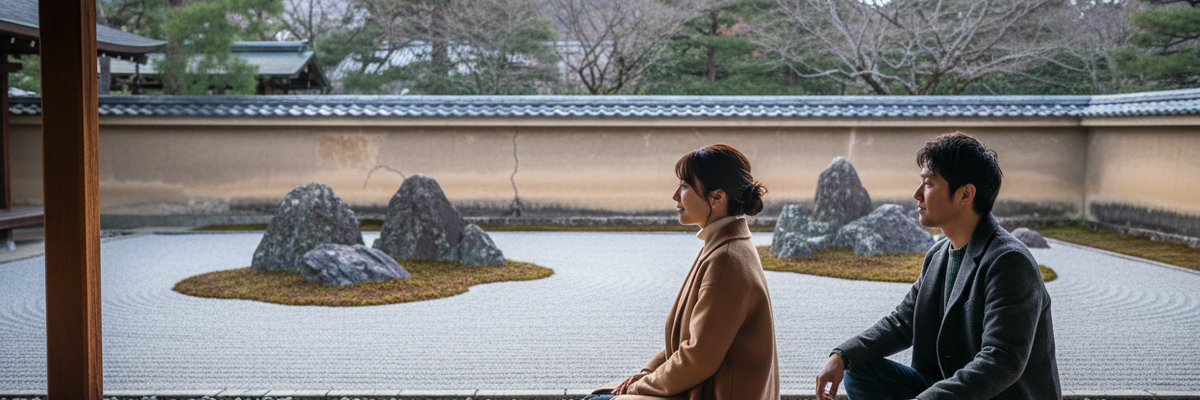
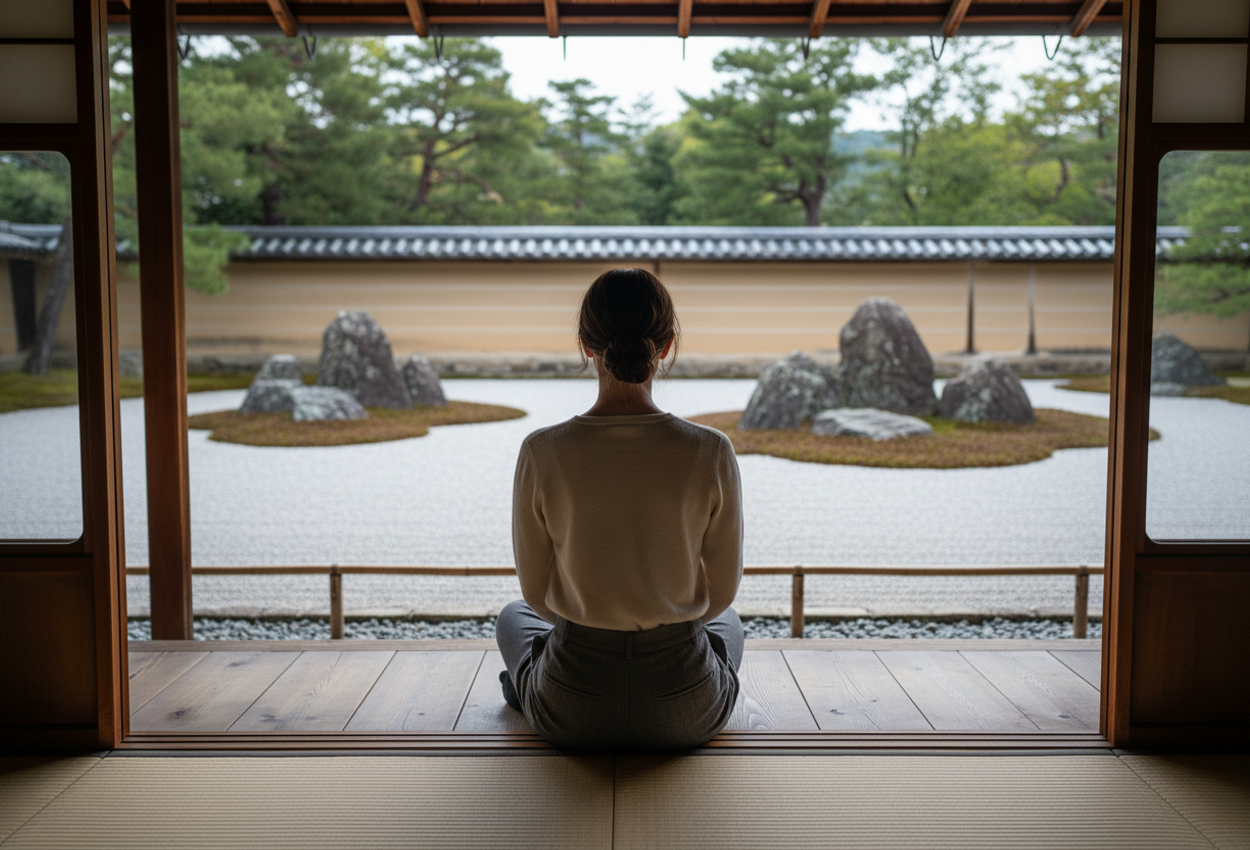
Nowhere is this more evident than at Ryoan-ji Temple, home to Japan’s most famous Zen rock garden. You slip off your shoes and step into the cool wooden hall overlooking the garden, then kneel or sit cross-legged on the tatami. Before you stretches a rectangle of meticulously raked white gravel, its surface combed into delicate ripples around fifteen moss-covered rocks arranged in small clusters. There are no flowers, no splashing fountains, no obvious symbolism, and yet the longer you look, the more the garden seems to expand inward. The hush is so complete that you can hear the rustle of your own clothing, the faint creak of the floorboards as another visitor shifts their weight. Thoughts come and go like clouds across a pale sky. In this distilled landscape, you are left face to face with yourself.
From Ryoan-ji, it is a short bus ride or a contemplative walk to other temples with gardens that invite the same kind of inner settling. At moss-laden Saiho-ji or the shimmering ponds of Ginkaku-ji, you trace paths that twist between sculpted pines and stone lanterns, the air damp and earthy after rain. Each turn reveals another carefully composed vignette: a single maple tree flaring red against green, a crooked bridge arching over dark water, a stone basin catching the drip of a bamboo pipe. Moving slowly, you begin to sense the gardeners’ intention not to impress but to invite: to draw your eye into a conversation with impermanence and restraint.
To deepen your experience of Kyoto’s contemplative culture, seek out a traditional tea ceremony. In a small tea house tucked behind a temple or along a side street in the Higashiyama district, you kneel on tatami mats while a host in a simple kimono prepares matcha before you. Every movement is unhurried and precise, from the way she folds the silk cloth to clean the tea scoop to the gentle whisking motion that transforms powder and hot water into a bowl of vivid green foam. The silence in the room is attentive rather than stiff; you can hear the soft thud of ceramic on wood, the faint hiss of the kettle, perhaps the distant call of a crow outside. Receiving the bowl with both hands, you turn it, admire its irregular glaze, and take a sip. The tea is bittersweet and velvety, its warmth spreading through your chest. The ceremony is less a performance than a meditation on presence, on the beauty of things done well simply because they deserve your full attention.
For a more hands-on way to meet yourself in this city of craft and care, try a calligraphy or ikebana workshop. In a quiet studio, you sit before a sheet of pristine white paper while your instructor demonstrates how to load the brush with ink, how to breathe before drawing the first stroke of a kanji character. Your lines will likely wobble, the ink bleeding where you pressed too hard, yet there is something deeply soothing in the repetition, in watching your concentration slowly smooth into a kind of stillness. In an ikebana class, you might choose three branches and a single lily or chrysanthemum, trimming leaves and stems until the composition feels unexpectedly balanced. Both arts are lessons in acceptance: of imperfection, of transience, of the fact that beauty often arises not from control but from allowing what is already there to show itself.
At night, retreat to a traditional ryokan in the hills of Arashiyama or near the temples of eastern Kyoto. Sliding open the shoji screens, you step into a room furnished with little more than a low table, cushions, and a futon rolled away in the closet. The minimalism is strangely liberating; without clutter, your mind follows suit. Some ryokan have their own onsen baths fed by natural hot springs, where you bathe naked in steaming mineral water, either indoors surrounded by cedar or outdoors beneath a scrap of sky. The etiquette—washing thoroughly before entering, keeping towels out of the water, moving quietly—becomes another meditative ritual. In the enveloping heat, muscles unspool, and the loneliness that sometimes shadows solo travel dissolves into a feeling of profound belonging: to your own body, to the moment, to the wide, wordless night.
Iceland's Soothing Hot Springs: Rejuvenate in Nature's Embrace
Touching down in Reykjavík, you look out over a landscape that seems borrowed from another planet. Lava fields stretch to the horizon in undulating waves of black rock carpeted with pale green moss. The air has a wild clarity to it, cool and salty, tinged with the faint mineral scent of sulfur. In Iceland, the earth is constantly exhaling—steam vents plume from cracked ground, rivers run warm in their beds, and geothermal pools glow turquoise against the stark, volcanic backdrop. For a self-love journey, this is a place where nature does the holding, where you are invited to slip into hot water and let it work its slow alchemy on your tired body and overtaxed nervous system.
Many visitors begin at the iconic Blue Lagoon, about a half-hour’s drive from the capital. Enveloped in milky-blue water rich in silica and minerals, you float amid curls of steam while dark lava rocks rise around you like a protective wall. Silica masks are scooped from ceramic bowls at the water’s edge; you smooth the cool paste over your face until you resemble a ghost, then rinse it off in the warm pool, skin tingling and new. The lagoon’s design encourages languid drifting: there are quiet corners, small alcoves with in-water massages, and even a tucked-away area reserved for those seeking more seclusion. Order a fresh juice or herbal tea from the swim-up bar, cradle it in your wet hands, and watch as the ever-changing Icelandic sky—sometimes clear and hard blue, sometimes low and pewter-colored—reflects off the water’s shimmering surface.
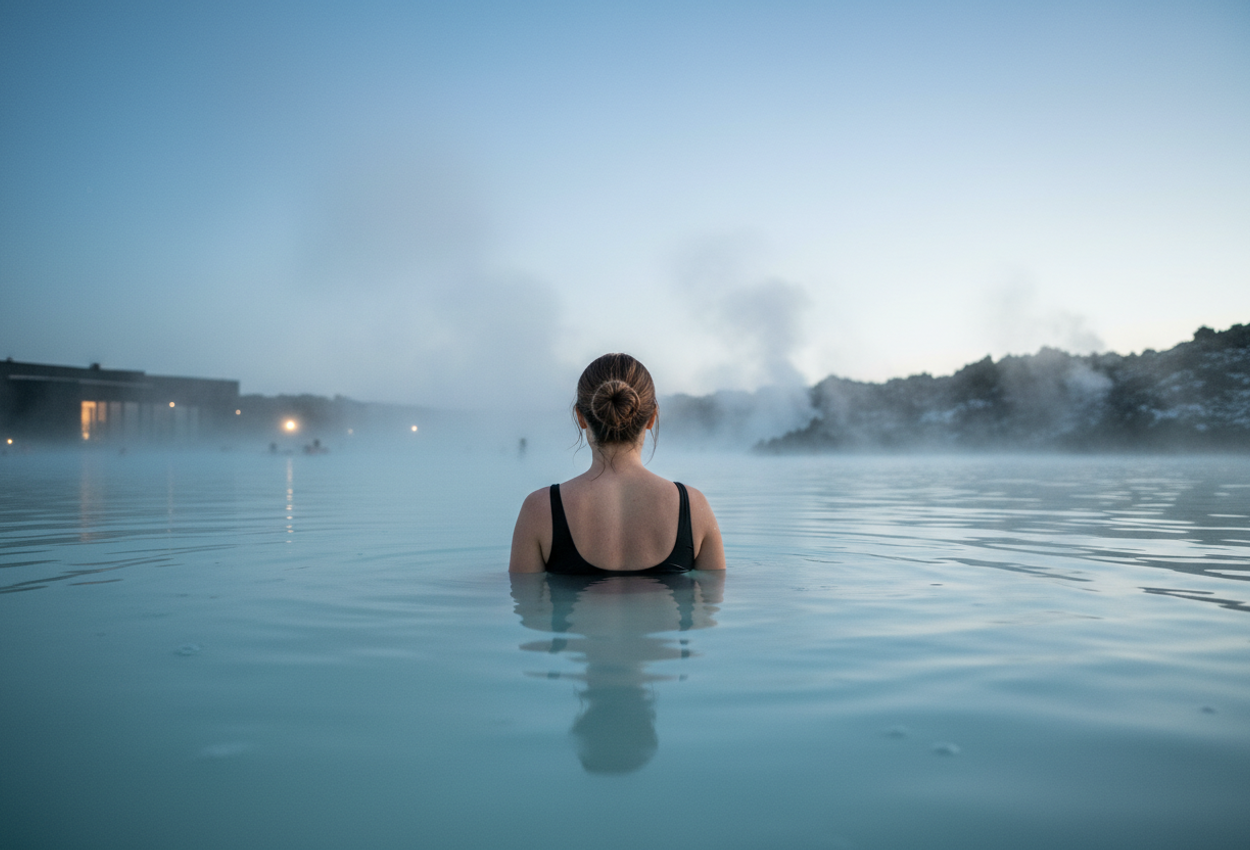
For a more rustic experience, head inland to the Secret Lagoon near the village of Flúðir. Here the pool is rough-edged and surrounded by grasses, its water fed by a nearby hot spring that gurgles and spits at regular intervals. There are no sleek concrete walls or architectural flourishes, just steam rising into the chilly air and the occasional plop of a water droplet falling from your hair back into the pool. In winter, snow often rims the lagoon; you slip through the near-freezing air from the changing room to the water, then sink gratefully into the liquid heat, watching your breath mingle with the steam. The contrast between the biting cold on your cheeks and the warmth cradling the rest of your body is delicious, a reminder that you can hold opposites at once: fragility and strength, sorrow and joy.
Iceland is also one of the best places on earth to witness the Northern Lights, a spectacle that can transform a wellness-oriented trip into something approaching the mystical. Joining a small-group night tour from Reykjavík or a countryside hotel, you bundle up in a thick parka, pull a woolen hat over your ears, and step out into the dark fields far from city lights. At first there is only the sharp glint of stars and the crunch of snow under boots. Then, if conditions are kind, a faint green smudge appears on the horizon, slowly unfurling into bands of light that ripple and twist overhead. Sometimes they shimmer quietly; other times they dance, cascading in curtains of emerald and violet. You stand there, neck craned, fingers numbing in your gloves, feeling very small and strangely protected under the celestial display. In that moment, your worries shrink to their proper size.
Between soaks and sky-watching, carve out time to explore Iceland’s geothermal wellness culture more deeply. In Reykjavík, small neighborhood swimming pools double as social hubs and sanctuaries. Locals move from hot pot to steam room to cold plunge, chatting softly or simply breathing in the bracing air. Joining them, you begin to see bathing not as an indulgence reserved for spa days but as a basic rhythm of life, a way to regularly reset. Consider investing in a hand-knit lopapeysa sweater from a local wool shop in the city center or a coastal town like Hveragerði. The traditional patterned yoke is more than a souvenir; its dense, slightly scratchy wool is built for Icelandic weather, and slipping it over your head on a gusty morning feels like being hugged by the island itself.
At the end of each day, back in your guesthouse or minimalist hotel, you listen to the wind worrying at the windows, the occasional hiss of passing cars. The landscape outside may be stark and dramatic, all sharp edges and wide horizons, but inside the hot pools and quiet rooms, a softer world emerges—one in which you are allowed, finally, to rest.
Tuscany's Rolling Hills: Indulge in Italian Self-Care
There is a moment, somewhere between leaving Florence and reaching the heart of Tuscany, when the landscape opens like a sigh. The city’s stone facades and tight streets fall away, replaced by undulating hills striped with vineyards and silvery lines of olive trees. Stone farmhouses crown distant ridges, their terracotta roofs glowing in the late-afternoon sun, while cypress trees punctuate the horizon like exclamation marks. The air here smells of warm earth, crushed herbs lining the roadside, and occasionally woodsmoke from a far-off kitchen where lunch is already being prepared.
For a self-love journey, few experiences feel as deeply nourishing as a stay in a Tuscan agriturismo, a working farm that opens its doors to guests. These properties, scattered around towns like Montepulciano, Pienza, or the Val d'Orcia, offer rooms or apartments tucked into historic farmhouses, with views that seem lifted straight from Renaissance paintings. You wake to the sound of roosters crowing and distant tractors humming, then wander downstairs for breakfast at a long wooden table: still-warm bread, local pecorino cheese, velvety ricotta drizzled with honey, bowls of figs and grapes picked from the property’s vines. There is no rush to be anywhere except exactly where you are.
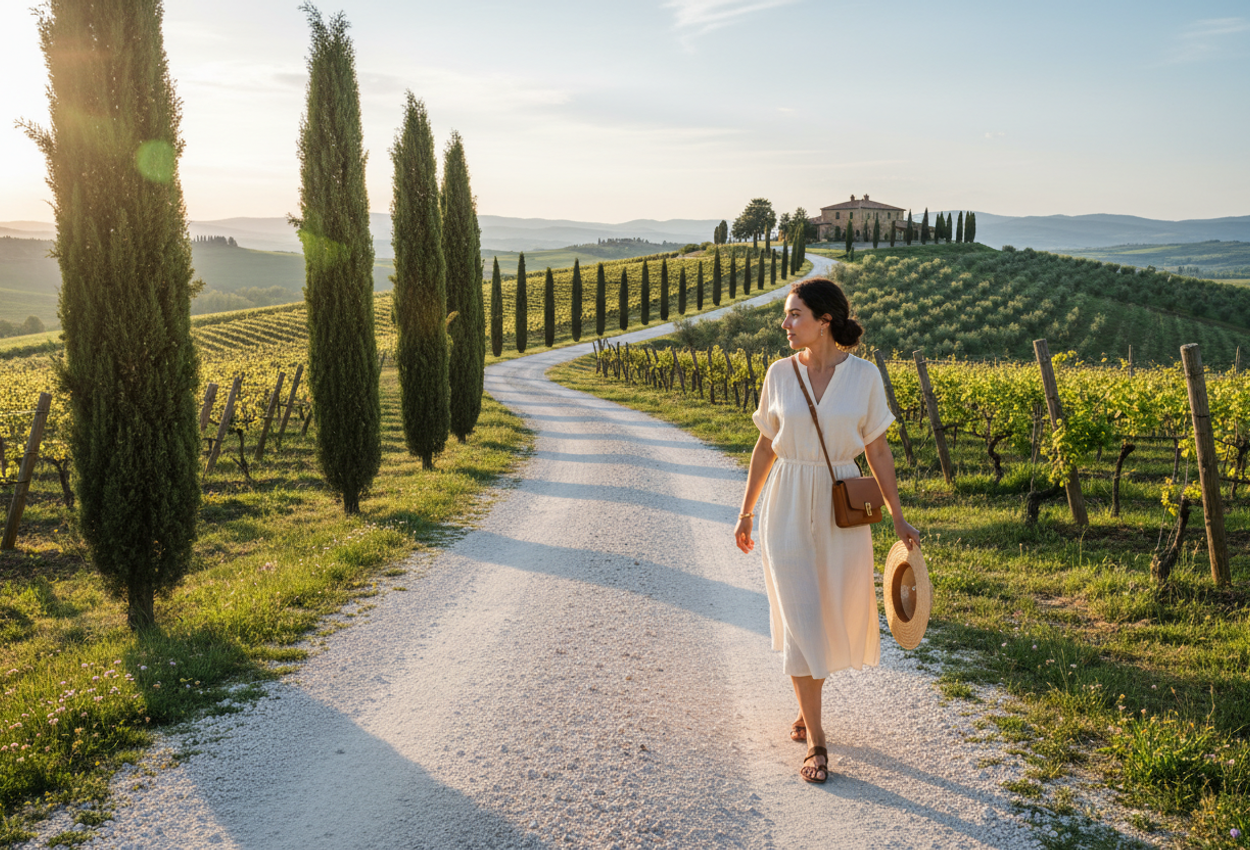
Mid-morning is the perfect time to wander the vineyards with a guide, learning how the stony soil and sun exposure shape the character of Sangiovese grapes destined to become Brunello di Montalcino or Vino Nobile di Montepulciano. The rows of vines roll away in orderly lines, leaves trembling lightly in the breeze. As you step between them, you run your fingers along rough bark, feel the warmth radiating off the soil, and begin to understand wine not as a luxury product but as a distilled expression of this particular patch of earth and the people who tend it. Later, in a cool stone cellar, you swirl a deep ruby liquid in your glass, inhale notes of cherry and leather and earth, and taste slowly, allowing the flavors to open. Drinking thoughtfully, alone, is its own form of meditation; you learn to trust your own palate, your own preferences, without deferring to someone else’s opinion.
Afternoons invite a slower tempo. Many agriturismi now incorporate wellness offerings—simple yoga sessions held on shaded terraces overlooking the hills, or small spa areas with jacuzzis and steam rooms carved into old stone outbuildings. Rolling out a mat on a patch of lawn, you move through gentle postures while bees drift lazily between lavender bushes nearby and swallows carve arcs through the blue sky above. The Tuscan sun, softer in the late hours, paints everything in honeyed light. You begin to understand that indulgence here is not about excess but about savoring: taking enough time with each sensation that it can register fully in your body.
Cooking classes are another portal into this region’s philosophy of pleasure and simplicity. In the farmhouse kitchen, with its broad wooden counters worn smooth by generations of use, you tie on an apron and learn to make fresh pasta by hand. Flour, eggs, and a pinch of salt become dough under your palms, elastic and warm. You knead until your arms ache pleasantly, then feed sheets of dough through an old-fashioned pasta machine, watching them stretch thinner and thinner until the light almost shines through. Later, you toss ribbons of tagliatelle with a slow-simmered ragù or swirl them in a glossy sage-and-butter sauce. Between courses, your host might bring out bruschetta rubbed with garlic and crowned with chopped tomatoes, or crostini smeared with local olive paté. Eating the meal you helped create, seated among strangers who quickly feel like friends, you taste not only the food but your own capacity for creation and care.
No Tuscan self-care journey would be complete without paying homage to the olive tree, that ancient emblem of resilience and nourishment. Visit a small family-run frantoio, or olive mill, during harvest season, when crates of glossy green and purple olives arrive from neighboring groves. You watch as they are washed, crushed, and pressed, the air thick with a vivid, almost peppery scent. In the tasting room, you sip the newly pressed oil from tiny cups or drizzle it on slices of plain bread. The flavor is unexpectedly complex: grassy, fruity, finishing with a pleasant bitterness at the back of your throat. As the producer explains the oil’s health benefits—rich in antioxidants, supportive of heart health—you realize that this is the kind of luxury that leaves you feeling not depleted but fortified.
In the evenings, step outside after dinner and stand beneath the broad Tuscan sky. Far from city lights, the stars erupt into view, the Milky Way a milky river overhead. Crickets sing, a dog barks in the distance, and the last warmth of the day lingers in the stone under your bare feet. You wrap a shawl around your shoulders, breathe deeply, and feel how far you are from the rush of your everyday life. Here, in this gentle, generous land, loving yourself looks like staying present: to the taste of ripe figs, the feel of sun on your forearms, the sound of your own quiet laughter echoing against the hills.
Kerala's Ayurvedic Healing: Find Balance in India's South
Fly into Kochi and the first thing you may notice is the smell: a humid mix of sea salt, diesel, and spices that shifts subtly as you travel deeper into Kerala. This lush southwestern state of India has long been known as the land of coconuts and backwaters, but it is also one of the cradles of Ayurveda, the ancient Indian system of medicine that views health as a delicate balance between body, mind, and spirit. For travelers seeking deeper healing than a standard spa weekend can offer, Kerala’s Ayurvedic retreats provide a rare opportunity to slow down under the guidance of centuries-old wisdom.
Many retreats are set along the Arabian Sea or tucked beside the serene backwaters near towns like Kumarakom or Alappuzha. On arrival, instead of a rushed check-in, you sit with an Ayurvedic doctor in a quiet consultation room perfumed with sesame oil and herbs. They take your pulse, ask gentle questions about your sleep, digestion, emotional state, and daily habits, and determine your dosha constitution—vata, pitta, kapha, or a combination. The process feels less clinical examination than compassionate curiosity, an invitation to tell the truth about how you really feel.
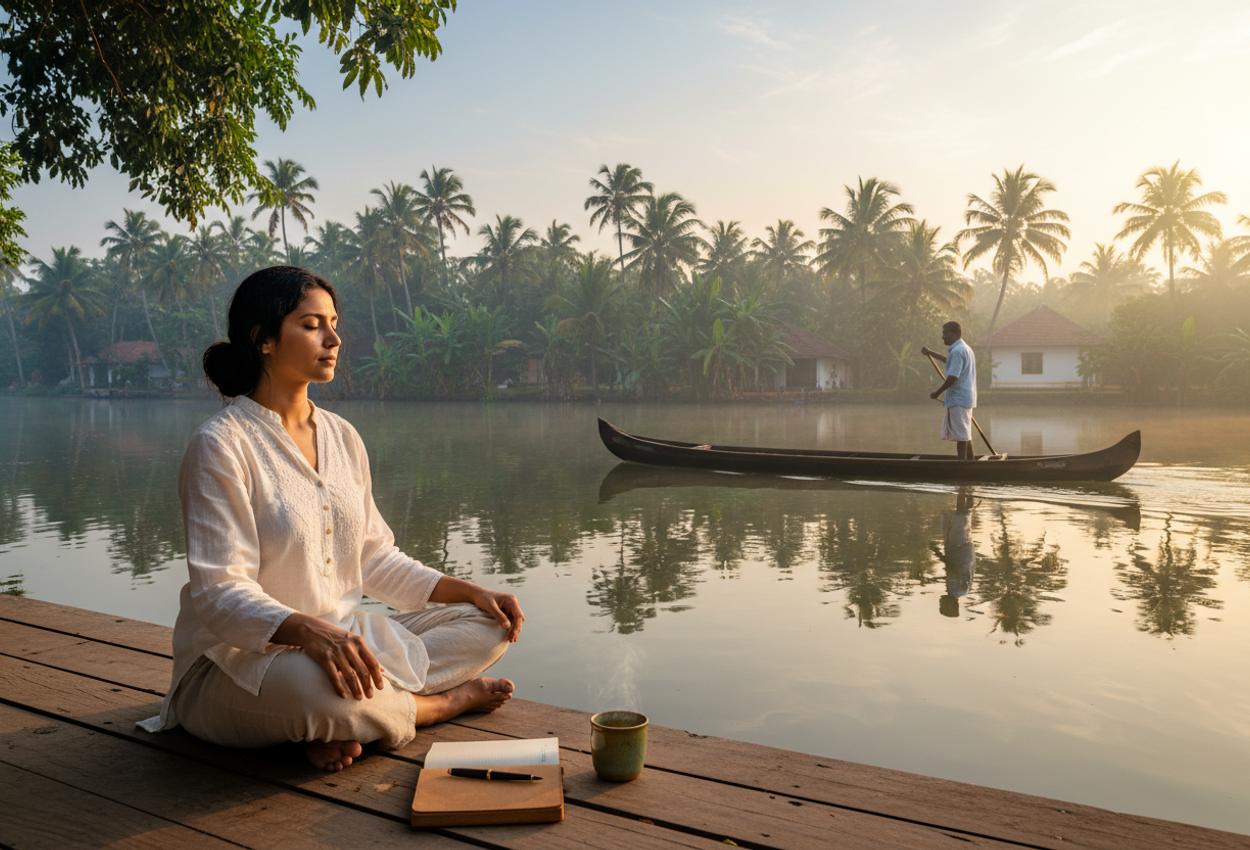
Over the following days, your schedule is shaped around treatments and practices tailored to bring you back into balance. Mornings might begin with a cup of warm herbal water and a yoga class held in an open pavilion overlooking palm-fringed gardens. The air is thick with birdsong and the faint slap of water against the banks of nearby canals. The sequences are often gentle but precise, emphasizing breath and alignment over acrobatics. Afterward, you sit for guided meditation, learning to observe your thoughts like passing boat traffic instead of jumping aboard each one.
Ayurvedic therapies themselves are a sensual immersion. In abhyanga, two therapists work in synchronized rhythm, pouring warm medicated oils over your body and massaging them into your skin with long, flowing strokes. The oil has a nutty, herbal aroma, and the table beneath you is solid and comforting. Your nervous system, so used to being on alert, gradually unwinds under the steady repetition of touch. In shirodhara, a continuous stream of warm oil or herbal decoction is poured onto your forehead, right at the point between your eyebrows. At first the sensation is strange, almost ticklish, then deeply soothing; your mind drifts into a liminal state between waking and sleep where long-buried memories or insights sometimes float to the surface. Treatments are often followed by rest and specific meals designed to support your digestion and detoxification, such as lightly spiced lentil stews, steamed vegetables, and rice cooked with ghee and medicinal herbs.
Beyond the treatment rooms, Kerala’s landscapes offer their own gentle medicine. Booking a night or two on a traditional houseboat along the backwaters, you step aboard a wooden vessel whose curved roof is woven from coir and bamboo. As the boat puts out from the dock, the world narrows to a ribbon of water bordered by leaning coconut palms and patches of emerald-green paddy fields. Kingfishers flash electric blue as they dive for fish; women in bright saris stand at the water’s edge washing clothes, their laughter carrying over the canals. On deck, you sit in a cane chair, sipping chai sweetened with jaggery, watching village life unfold at a pace that makes your usual schedule feel absurd. In the evening, as the boat moors in a quiet canal and the sky fades from apricot to indigo, frogs begin their chorus. You sleep in a small cabin rocked by the faint movement of the water, held by the darkness in a way that feels almost womb-like.
To connect with Kerala’s cultural heart, attend a Kathakali dance performance in Fort Kochi or at a local cultural center near your retreat. Before the show, you can watch the performers apply their elaborate makeup, layering vivid green, red, and white pigments onto their faces and attaching tiered headdresses that turn them into gods, demons, and heroes drawn from myth. On stage, the dancers communicate entire epics through the arch of an eyebrow, the flare of nostrils, the precise flick of a wrist. The accompanying drumming is insistent and hypnotic, echoing in your ribs. The art form is centuries old, yet the emotions it conveys—love, rage, grief, devotion—are as recognizably human as the questions you brought with you on this trip.
Another day, visit a nearby spice plantation. Walking between neat rows of cardamom, pepper vines wrapping around taller trees, and glossy-leafed nutmeg, you rub leaves between your fingers, inhaling their heady aromas. Your guide points out plants that soothe digestion, calm the mind, or ease joint pain. You begin to see your kitchen back home not just as a place for quick meals but as a kind of apothecary, each jar of spice a potential ally in caring for yourself.
By the time you leave Kerala, your skin will likely glow from all the oil, your digestion may feel steadier, and your sleep deeper. But perhaps the most profound change will be subtler: a renewed sense that your body is not an enemy to be disciplined but a wise companion to be listened to, oiled, stretched, and fed with reverence.
Portugal's Coastal Charms: Reflect by the Atlantic Waves
At the southwestern edge of Europe, where the land breaks off into cliffs and the Atlantic stretches unbroken toward the Americas, lies Portugal’s Algarve coast—a region of ochre headlands, hidden coves, and towns that seem perpetually bathed in golden light. For centuries, sailors set out from this coastline into the unknown. Today, solo travelers arrive for a different kind of exploration: one that turns inward, using the rhythms of sea and sky as guides.
Basing yourself near towns like Lagos or Sagres, you quickly fall into an elemental routine. Mornings begin with the smell of sea salt and espresso drifting through narrow cobbled streets. The whitewashed houses, trimmed in shades of blue and yellow, glow softly as the first sun spills over tiled roofs; bougainvillea spills in bright magenta cascades from balconies. Down at the harbor, fishing boats bob gently, their hulls faded from years of sun and salt, as seabirds wheel and cry overhead.
Many wellness retreats in the Algarve blend yoga and meditation with surfing, harnessing the ocean’s energy as both playground and teacher. At sunrise, you join a small group and drive out to a wild beach like Praia do Amado or Praia da Arrifana, where the sand is still cool underfoot and the waves roll in slow, consistent sets. Wriggling into a wetsuit, you feel momentarily awkward and constrained, but once you wade into the water with your board, the chill Atlantic shocks you fully awake. Between attempts at standing, you float on your board beyond the break, rising and falling with the swell. The horizon is a clean line; behind you, cliffs glow amber as the sun climbs. Whether you manage to ride for seconds or minutes, each small victory loosens something tight in your chest. You learn, quite literally, to fall and get back up, laughing as saltwater stings your eyes.
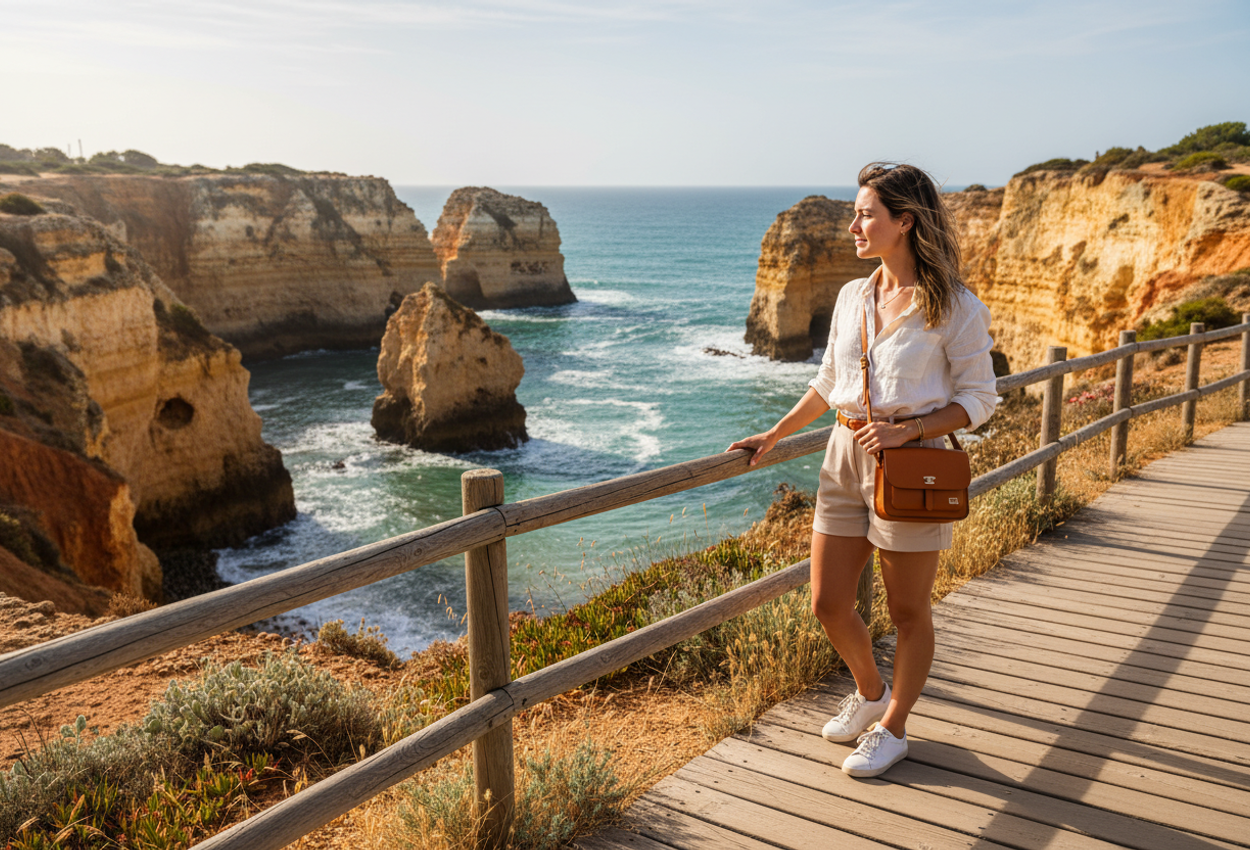
Back at the retreat center—perhaps a converted farmhouse tucked into the hills or a small eco-lodge with wooden decks facing west—you refuel on bowls of grilled vegetables, fresh sardines drizzled with local olive oil, and slabs of bread dipped into garlicky clam broth. Afternoons might include restorative yoga under a pergola wrapped in vines, a journaling workshop on self-worth, or simply free time to walk the coastal paths that stitch together beaches and cliffs. The trails are lined with wild rosemary and low shrubs that release a resinous scent when brushed; at each turn, another panorama appears: rock arches carved by the sea, secluded crescents of sand accessible only by steep stairs, waves detonating into clouds of white spray far below.
When you crave solitude, seek out quieter stretches of coast like Praia da Luz or hidden coves near Cabo de São Vicente, the southwesternmost point of mainland Europe. Here, standing at the edge of a high promontory, you feel the full force of the Atlantic winds pushing at your back, the roar of the surf echoing up the cliffs. The immensity of the ocean has a clarifying effect; worries that once felt all-consuming shrink to match your new sense of scale. You may find yourself talking aloud to the wind, not in desperation but in relief, voicing decisions you have been postponing or truths you have been too polite to admit.
For an intimate encounter with the coastline’s hidden curves, join a sunset boat tour from Lagos’ marina. The small vessel weaves between limestone stacks and into narrow grottoes around Ponta da Piedade, where the rock has been sculpted into improbable arches and turrets. As the sun sinks, the cliffs shift through shades of amber, ochre, and rust, their textures highlighted by slanting light. On calm days, the water inside the caves turns a surreal shade of aquamarine, rippling against the stone with soft slaps. You sit near the bow, hair whipped by the breeze, watching the captain expertly steer through tight passages. Conversation on board often drops to whispers, awe filling the spaces where small talk might have been.
To ground your journey in the region’s culinary abundance, consider a seafood cooking class in a local home or small school. You might start at the fish market in Lagos, where counters gleam with silver mackerel, squid, and the day’s catch of dourada and robalo. The smell is briny and clean, punctuated by shouts of vendors and the clatter of ice. Back in the kitchen, you learn to clean and marinate fish with lemon, garlic, and fresh herbs, to assemble a cataplana—Portugal’s iconic copper clam stew—layering tomatoes, peppers, chorizo, and shellfish in a domed pan that seals in aroma and steam. As the cataplana bubbles on the stove, filling the room with a savory scent, your instructor shares stories of coastal life: stormy winters, childhood beach games, the changing sea. Eating together at a simple wooden table, you taste the ocean in every bite and feel, perhaps, a little more at home in your own company.
As night falls on the Algarve, the sky dims from cobalt to ink, and the sound of the waves becomes a steady, soothing heartbeat. You stand barefoot on a terrace or the sand itself, the last warmth of the day slowly leaving the stones under your feet, and realize that in choosing to come here alone, you have not been lonely at all. The sea has kept you company, the cliffs have listened without judgment, and in the space carved out between tides and yoga mats and shared meals, you have begun to hear your own voice with new clarity.
In the end, a self-love journey is less about the stamps in your passport than the stories you rewrite about yourself along the way. Whether you are soaking in Icelandic hot springs, walking Kyoto’s temple paths, or paddling into a Portuguese wave at sunrise, each of these destinations offers the same quiet invitation: to treat your own presence as something worthy of time, tenderness, and awe. Accept it, and the journey will continue long after your suitcase is unpacked and the last traces of sand or red dust have disappeared from your shoes.