Romance does not live and die on a single night in February; it lingers in shared glances over café tables, in hands clasped on mountain paths, in the quiet of temple gardens and the glow of Tuscan sunsets. Around the world, every season offers a different kind of intimacy—if you know where to look, and when to go.In a culture that heaps pressure on one date circled in red, it is easy to forget that the most meaningful romantic getaways are often the unhurried ones. They are the long weekends booked in shoulder season, when crowds thin and prices soften; the trips planned because you two need a reset, not because a florist’s calendar says so. From the soft light of a spring morning in Paris to the first snow settling over the Swiss Alps, the world unfolds as an ever-changing backdrop for love. Think of this less as a holiday checklist and more as a year-round invitation: four seasons, four journeys, infinite ways to be together.
Consider aligning your escapes not with the dates everyone else is watching, but with the rhythm of your own relationship. Perhaps spring is when you feel most hopeful, ready to wander a city blooming back to life. Summer calls for lazy afternoons by vineyard pools and shared carafes of local wine. Autumn might suit your quieter side, with slow walks beneath turning leaves and dinners in tiny dining rooms where the chef still cooks in view of the tables. Winter, of course, brings an excuse to disappear into a snowbound village where the silence outside makes the crackle of the fireplace sound even sweeter. In each season, certain destinations shine, and with a little strategy, you can enjoy them at their most magical—and most affordable.
As you read, imagine not just where you will go, but when you will slip away. Off-peak flights, midweek hotel rates, and shoulder-season serenity can turn a romantic whim into a realistic plan. Whether you are celebrating an anniversary three months early or a Tuesday that suddenly feels like the perfect day to chase the sun, these four journeys prove that romance is far too expansive to be contained by a single date on the calendar.
Spring in Paris: A Parisian Fairytale
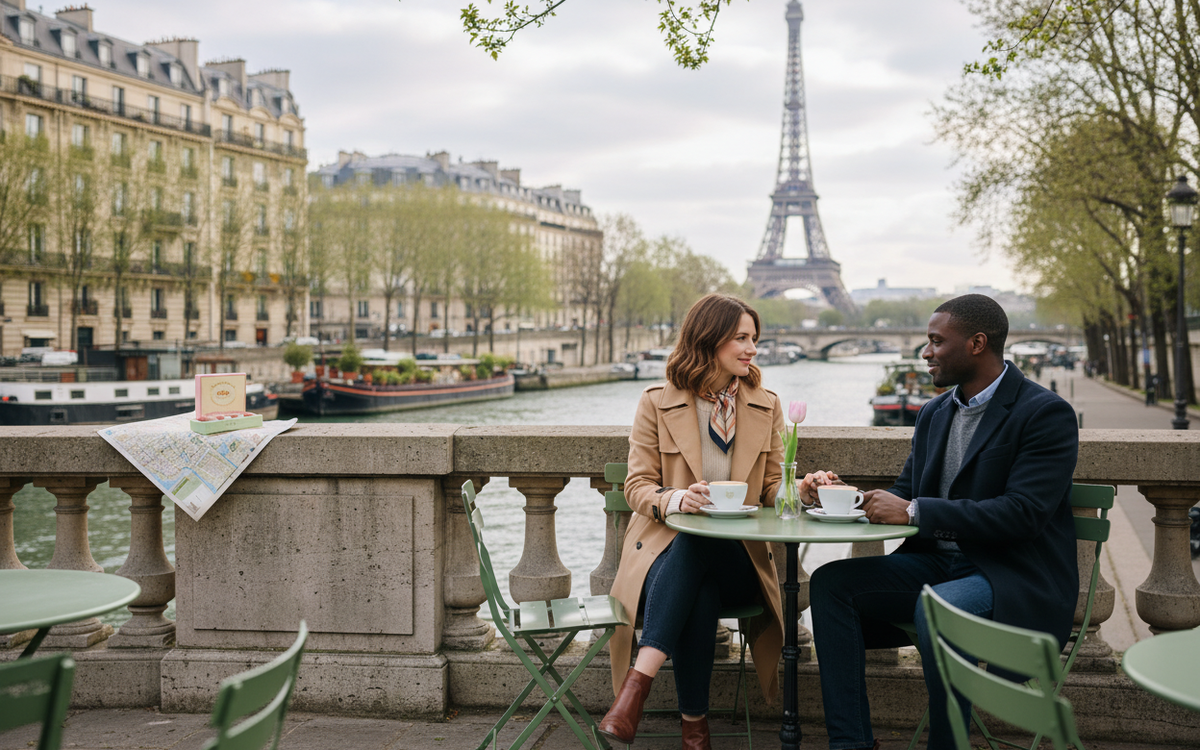
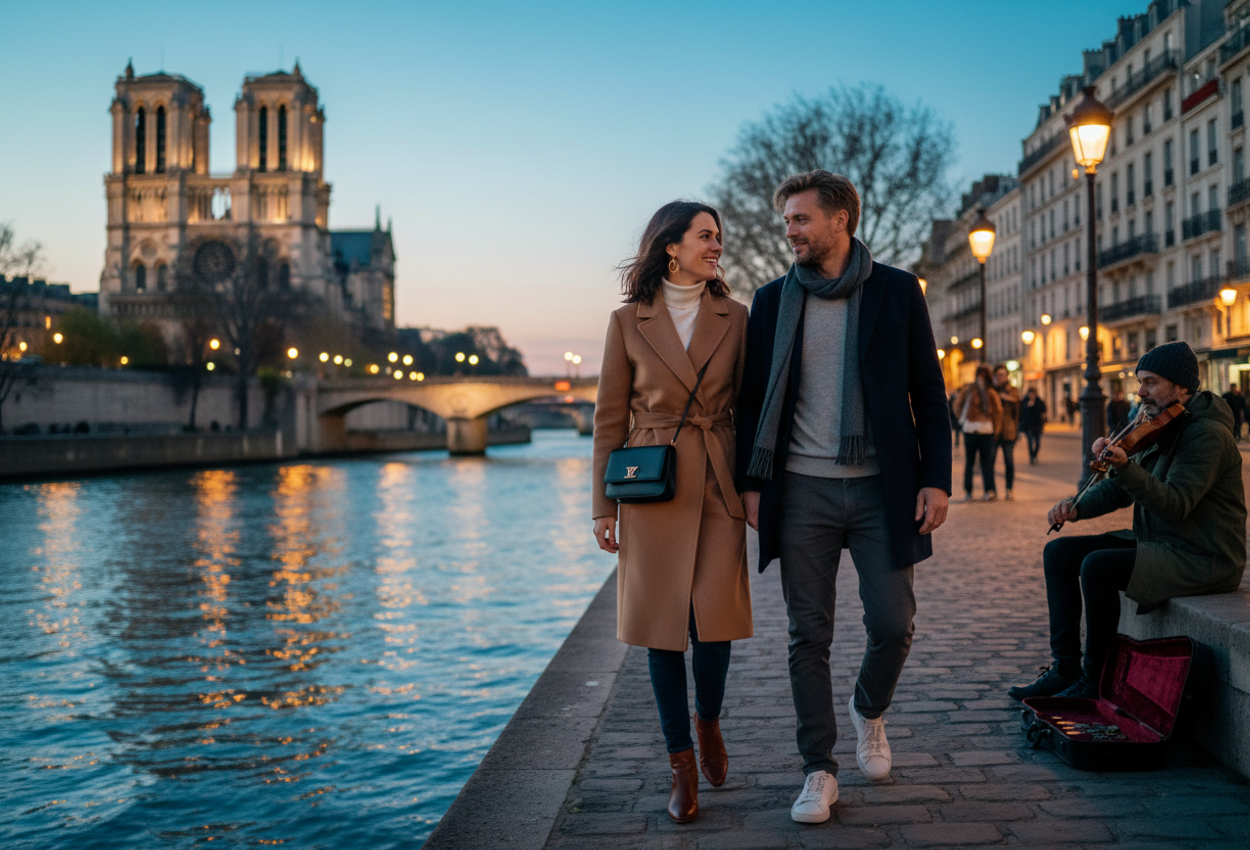
Spring in Paris arrives like a shy confession. One morning, after months of gray, the light sharpens and the air softens; café chairs spill once more onto sidewalks, and along the Seine, the bare plane trees mist over with the first green. This is the season when the city feels as if it is falling in love with itself again—and invites you to do the same. Instead of jostling through peak-summer crowds, you and your partner wake to a city still stretching, its streets scented with rain on old stone and the first blossoms in hidden courtyards.
Begin your day in the Tuileries Garden, where the wide gravel alleys are flanked by neat rows of trees just beginning to leaf. The scent here is a delicate layering: fresh-cut grass from gardeners’ early-morning work, the sweetness of blooming tulips and hyacinths, a faint trace of buttery pastry drifting over from a kiosk. As you walk, the crunch of gravel underfoot sets a gentle rhythm, punctuated by the laughter of schoolchildren on a field trip and the distant whirr of a carousel. You might pause on a green metal chair by the octagonal basin, listening to the clink of pétanque balls somewhere in the distance, feeling the city stir awake around you.
From here, drift toward the river. On the cobbled quays of the Seine, street musicians tune violins and bandoneons; a saxophone spills out a slow, aching melody that seems tailored to the angle of your joined hands. The breeze off the water is cool, still carrying a memory of winter, but laced now with something softer: the waxy scent of chestnut blossoms overhead and the mineral tang of the river itself. Bookstalls clap open; a bookseller slides a crate into place. You share a paper-wrapped crêpe, its edges crisp, the Nutella filling molten and just shy of too sweet, and feel the warm smear of chocolate at the corner of your lover’s mouth before you lean in to steal it away.
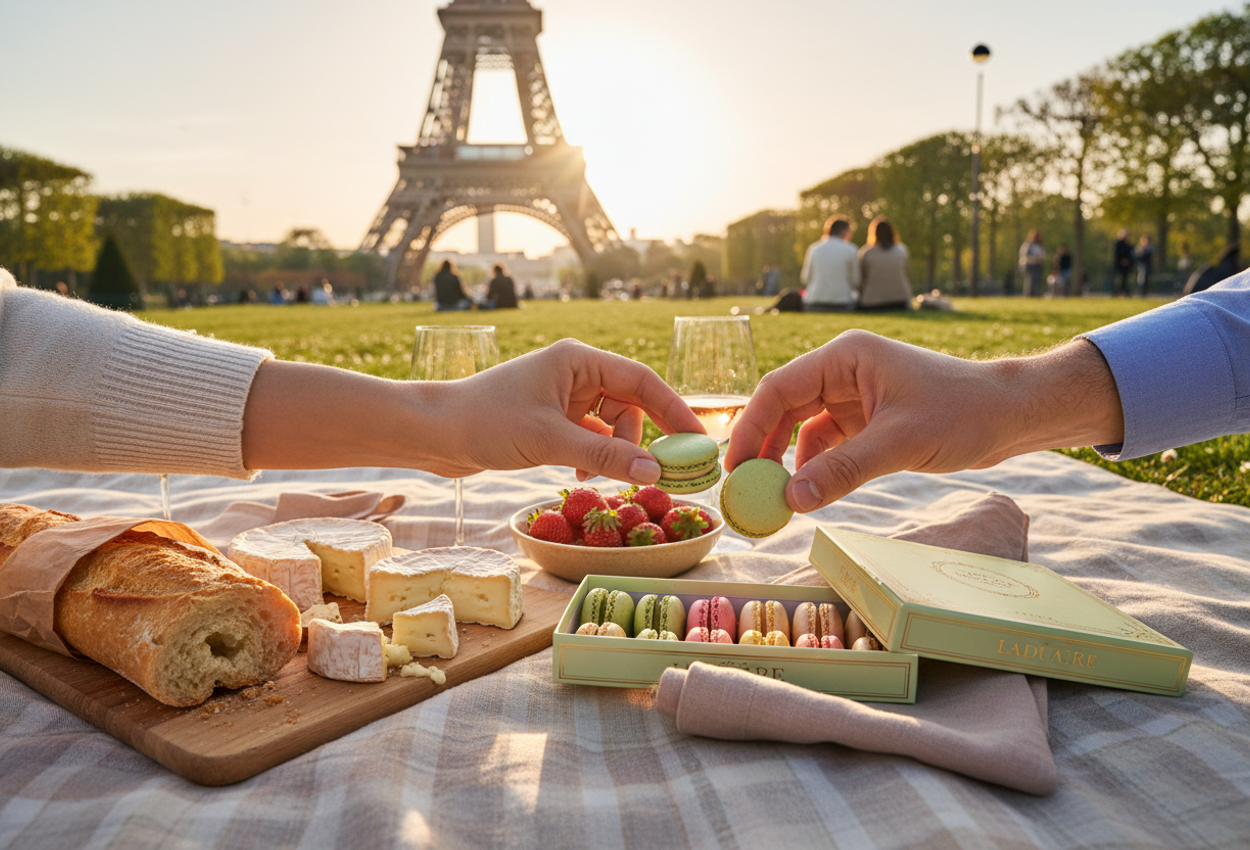
Afternoon is for indulgence. Step into Ladurée Champs-Élysées, where the air is cool and scented with vanilla, toasted almond, and the faint powder of sugar. The glass cases gleam with rows of macarons: rose, pistachio, salted caramel, violet. You choose a pastel box like a jewel case and take it with you, a treasure to be unwrapped later. Outside, as you walk along the Avenue des Champs-Élysées, the box knocks lightly against your leg with each step, a small reminder of the sweetness yet to come.
For a moment of quiet that feels stolen from a different century, seek out the sculpture garden of the Musée Rodin. Hidden behind high walls on Rue de Varenne, it is a world apart from the city’s bustle. Roses and camellias line the pathways; even in early spring, their buds hint at the riot of color to come. Here, bronze figures—The Thinker, The Kiss—stand among clipped hedges and pools that hold splintered reflections of the sky. The scent is earthy and green, with a hint of damp stone. You find a bench tucked beneath a tree, the murmur of other visitors drifting past like a foreign language you no longer need to translate. Time slows; you talk about everything and nothing, tracing with your eyes the contours of a sculpture that has witnessed a century of lovers pausing beneath it.
As evening gathers, there are decisions to be made: a languid cruise on the Seine as the city’s monuments flare into light, or a picnic beneath the iron lattice of the Eiffel Tower. On a mild spring night, spread a checkered blanket on the Champ de Mars lawn and unpack your provisions: a still-warm baguette from a neighborhood boulangerie, oozing rounds of soft cheese, fat strawberries that stain your fingers, a bottle of chilled Sancerre beading with condensation. Above you, the tower shimmers first in soft gold, then erupts into a constellation of lights at the top of the hour. The grass is cool through the fabric, the city’s low hum wraps around you, and each bite and sip becomes part of a slow-moving tableau you will recall for years.
Spring also brings deals, especially if you sidestep Easter holidays and major festivals. Look for midweek fares into Paris Charles de Gaulle Airport and boutique hotels on the Left Bank offering shoulder-season rates in March and early April. Smaller properties around Saint-Germain-des-Prés and Le Marais often include breakfast or museum passes to entice guests before peak season. Book a flexible fare for the first or second week of the month, and you may catch the first real warmth of the year alongside lower prices and fewer crowds.
Hidden Gem: A Secret Garden for Two
Within the grounds of the Musée Rodin, the quieter corners of the sculpture garden feel almost private, particularly in the late afternoon. Seek out a bench with a view toward the dome of Les Invalides, partly veiled by trees. Here, the only sounds are the soft rustle of leaves, the distant chime of church bells, and the faint splash of a fountain. It is the perfect place to sit shoulder to shoulder, sharing a macaron in companionable silence.
Summer in Tuscany: Rolling Hills and Vineyards
By June, when much of the world crowds into beach towns and cruise ports, the hills of Tuscany unfurl in velvety shades of green and gold. Here, romance is slower, anchored in the rhythms of farms and vineyards rather than fireworks and dinner reservations. The days stretch long and warm; nights are perfumed with jasmine, honeysuckle, and the faint smoke of distant grills. This is a place where you wake not to the blare of traffic, but to the soft clink of bottles in a cellar below, or the staccato song of cicadas in the olive trees.
Base yourselves in or around Florence, where the Duomo rises in terracotta and marble against a sky so bright it feels freshly painted. In the early morning, before heat shimmers on the piazzas, cross the Ponte Vecchio together, the river below still as blown glass. Goldsmiths lift shutters on tiny shops; the air carries a mingled scent of stone, metal polish, and the first espresso of the day. From here, a train or rental car leads you into the countryside, where the road curls through olive groves and cypress-lined ridges, and each turn reveals a postcard view that seems almost too composed to be real.
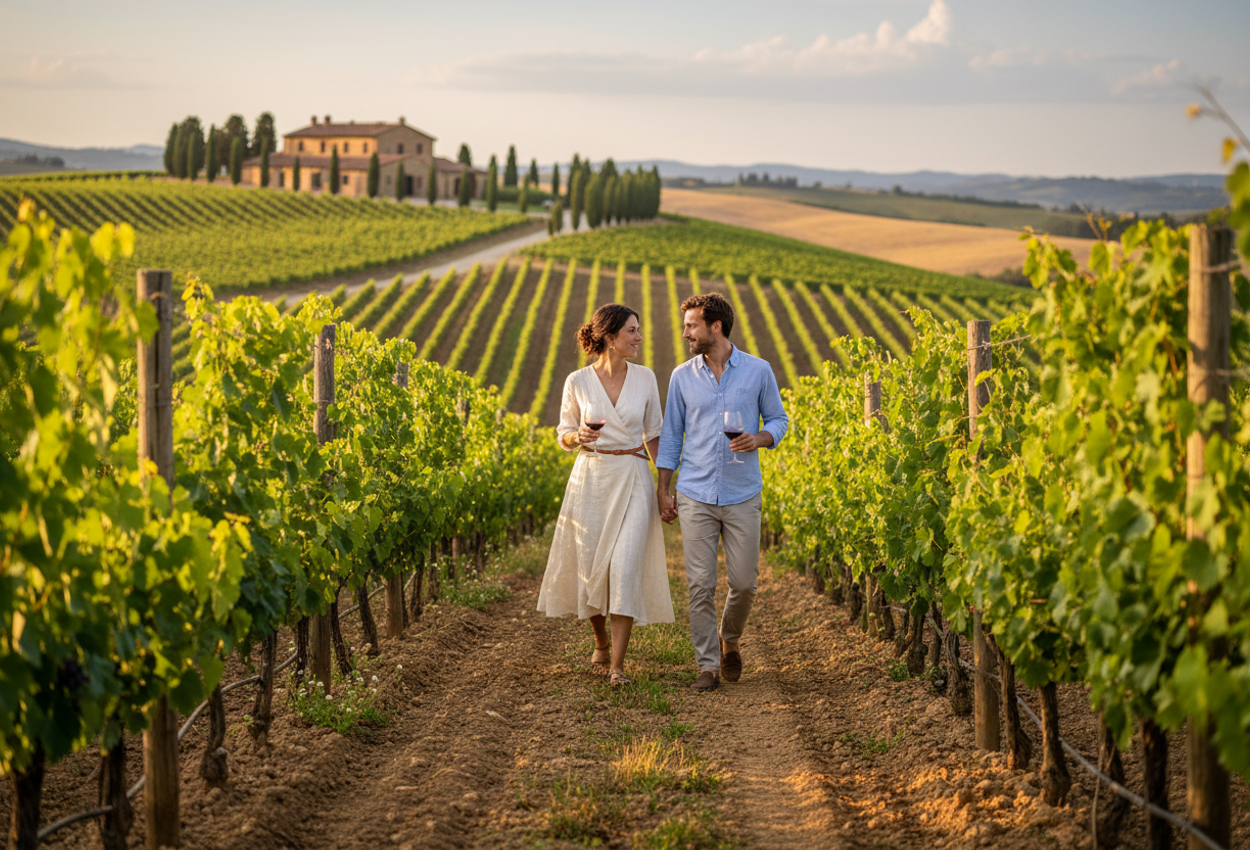
In the Chianti region, vines march in strict lines over rolling terrain, their leaves casting delicate shadows on rust-colored soil. You arrive at a boutique winery—a family-run azienda tucked off a gravel road—where your welcome is a carafe of water beaded with condensation and the smell of crushed grapes cooling in stone cellars. On a shaded terrace overlooking the vineyard, you sample ruby-red Chianti Classico, its tannins gripping and then softening on your tongue, paired with pecorino drizzled in local honey and slices of fennel salami. The winemaker, hands as weathered as old leather, explains how the slope of one hill gives a wine more structure, another more perfume. You and your partner share a knowing glance, recognizing that you, too, are shaped by the landscapes you pass through together.
Afternoons in Tuscany invite a different kind of intimacy: that of learning something side by side. In a farmhouse kitchen near Greve in Chianti or Radda in Chianti, you might take a cooking class focused on Tuscan cucina povera. The room is warm, fragrant with simmering tomatoes, sautéed garlic, and the grassy bite of newly pressed olive oil. Flour dusts the wooden table as you knead dough for pici or tagliatelle, your fingers brushing as you roll strands thinner and thinner. You taste spoonfuls of ragù as it bubbles down, the meat tender and wine-dark, and fight the urge to devour the bread meant for dinner. By the time you sit to eat what you have made—thick slices of grilled bread glossed with oil, a simple salad of bitter greens, pasta tangled with sauce—the sun outside has dropped to a low amber glow.
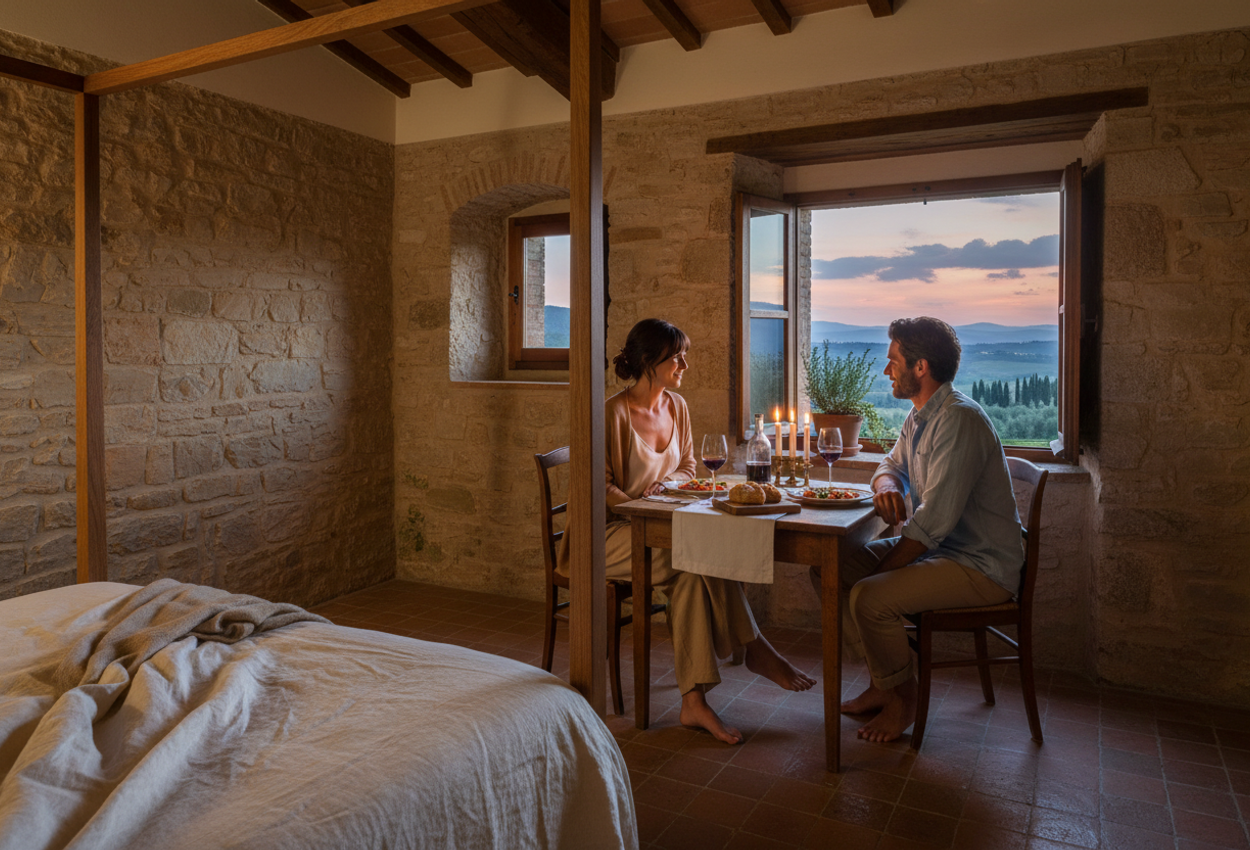
For a fairytale twist on the Tuscan escape, consider staying at Castello di Ristonchi, a thousand-year-old castle set on a hill amid forest and olive groves east of Florence. Passing through its iron gate feels like stepping out of time. Stone walls, etched with faint medieval markings, hold the cool of the night even on warm days. In the evenings, you might swim in a pool reflecting the last streaks of sunset, the air resinous with pine and the soft herbal notes of lavender and rosemary. Inside, vaulted ceilings, carved wooden doors, and heavy linen curtains make each room feel like part of a shared secret. Over dinner, often drawn from the property’s own gardens and olive trees, the taste of just-pressed oil on bread and honey from nearby hives has an immediacy that supermarket romance never could.
In the height of summer, when midday heat turns the fields languid, seek respite in a secluded thermal spring. Beyond the better-known pools, scattered through southern Tuscany and the Val d’Orcia are less publicized hot springs accessible via country lanes and short walks through scrub and oak. Here, mineral-rich water, warm but not scalding, pours into natural basins carved in limestone. Sink in until the water laps at your shoulders, your back pressing against smooth stone warmed by the sun. Steam feathers upward even in the heat, carrying a mineral tang and the faint scent of wild thyme. With only a handful of other bathers—if any—around, the sense of privacy is intoxicating. You lean against each other, listening to the soft rush of the spring and the cicadas’ steady chorus, and feel any remaining distance between you dissolve.
To keep such a trip within reach, time it for early June or September, when the days are still long but European school holidays have not yet reached their peak or are beginning to wane. Flights into Florence Airport or Pisa International Airport often dip in price midweek, and agriturismi offer better rates for stays of three nights or more, sometimes including dinners or tastings. Renting a small car for a few days—booked well in advance and picked up outside of city centers—gives you the freedom to chase sunsets along ridge roads and to linger at vineyards that feel particularly welcoming. Consider splitting your time between a couple of nights in Florence for art and gelato-filled evening strolls, and several more in the countryside where the loudest sound after dark is the rustle of olive branches.
Hidden Gem: A Thermal Soak at Dusk
Instead of joining daytime crowds at famous hot springs, aim for a smaller, lesser-known pool in the Tuscan countryside and arrive just before sunset. The cliffs glow apricot as the sky deepens from cobalt to indigo; swallows arc overhead, and the first stars emerge as you soak. Bring a light towel, a bottle of local white wine, and plastic cups. There is a particular pleasure in toasting each other with chilled Vernaccia or Trebbiano while warm water blurs the line between your bodies and the evening air.
Autumn in Kyoto: Temples and Tranquility
When summer’s intensity softens into autumn, romance takes on a hushed, introspective tone, nowhere more so than in Kyoto. As October deepens into November, the city’s maples ignite in gradients of crimson, vermilion, and gold, framing temple roofs and stone lanterns in a blaze of color that feels both dramatic and strangely calming. Mist hangs in the morning air; the nights grow crisp enough that you instinctively reach for each other’s hands. This is a season for walking slowly, for listening to the scrape of your own footsteps, for admitting aloud the things that are harder to say under summer’s glare.
Begin at Kiyomizu-dera, perched on a hillside with its wooden terrace jutting out over a valley of treetops. Arrive early, when the sky is still pale and the streets leading up to the temple are only just waking. The scent here is a medley: faint incense snaking from altars, the soft sweetness of red bean from a nearby stall, damp earth warming beneath stone. As you step onto the terrace, the city unfurls below you, while around and beneath the temple, maple leaves blaze in every shade of red, fluttering down onto moss and gravel. The air is cool enough that you see your breath; your partner’s scarf brushes your cheek as you lean in together over the railing. Words feel unnecessary in the face of such carefully tended beauty.
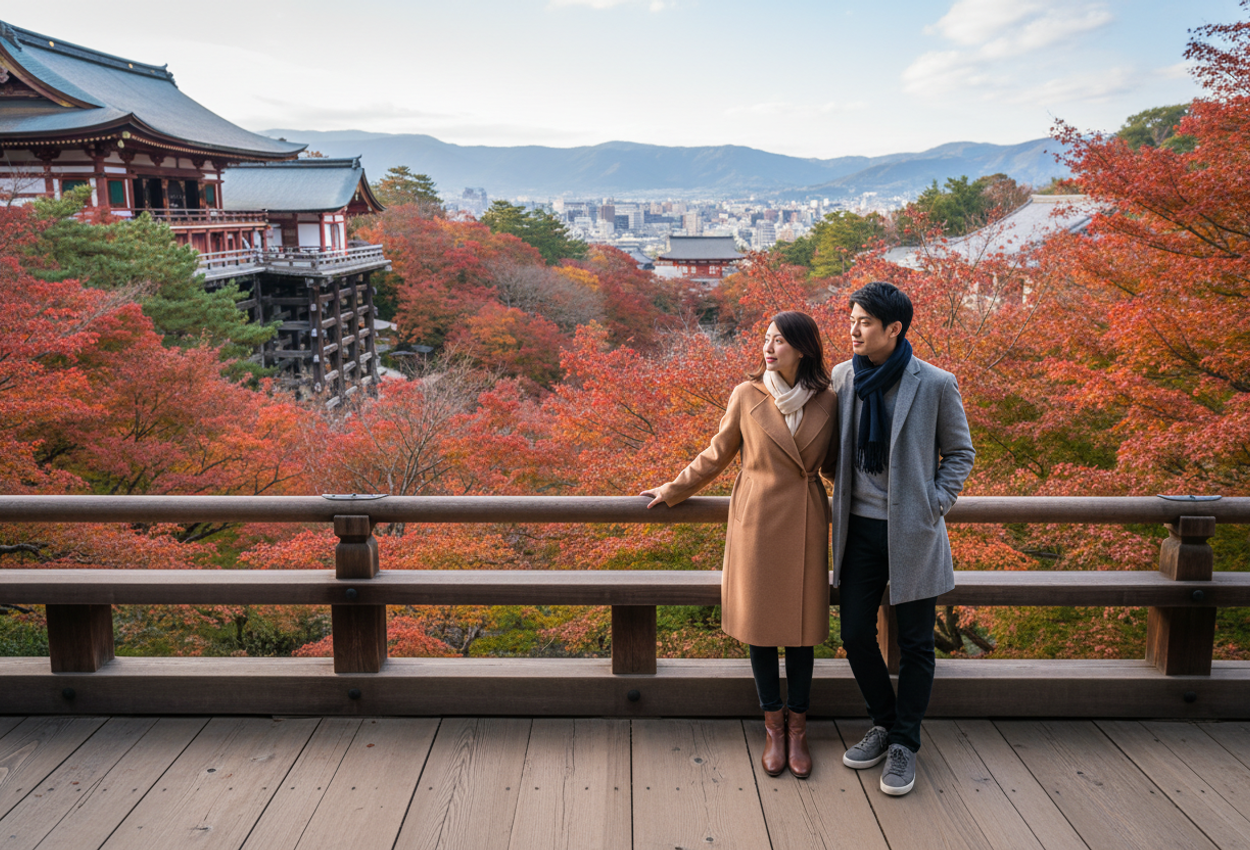
Later in the day, cross the city to the shimmering serenity of Kinkaku-ji, the Golden Pavilion. Set beside a still pond, its gold leaf exterior seems to float upon the water, doubled in an almost-perfect reflection broken only by the glide of a koi or a drifting leaf. Here, the aroma is of pine and cedar needles warming in the filtered sun, the faint metallic tang of the pavilion itself, and the subtle smokiness of incense carried on a breeze. You move along the prescribed path, stopping to watch a maple branch, aflame with color, dip toward the mirrored surface. The murmur of other visitors forms a soft backdrop, yet pockets of quiet abound: a stone lantern half-hidden by ferns, a small shrine off to the side where, with a shared look, you each make a wish.
No romantic trip to Kyoto is complete without surrendering to the slow ritual of a traditional tea ceremony. In a machiya townhouse or a small tea house near Gion, you sit seiza or side by side on tatami, the smell of straw matting and cedar framing the moment. A tea master moves with balletic precision, every gesture called forth by centuries of practice: ladle dipping, whisk turning, sleeves whispering. Steam coils up from the chawan, carrying the grassy intensity of matcha. When the bowl is placed before you, its ceramic surface is warm under your fingers; the first sip is thick, vivid, slightly bitter, yet somehow profoundly soothing. Sharing that bowl—turning it slightly, wiping the rim, passing it on—becomes a quiet act of trust.
In Arashiyama, on the western edge of the city, the famous bamboo grove draws visitors in all seasons, but in autumn its towering culms take on an even more ethereal presence. Step into the path, and the city’s noise falls away, replaced by the creak and sigh of bamboo in the wind. Light filters down in narrow bands, casting a greenish hue over everything; the air feels cooler here, touched with the scent of damp leaves and distant river water. As you walk single file along the path, you watch your partner’s silhouette ahead, outlined in soft jade light, and feel as if you are moving together through a dream.
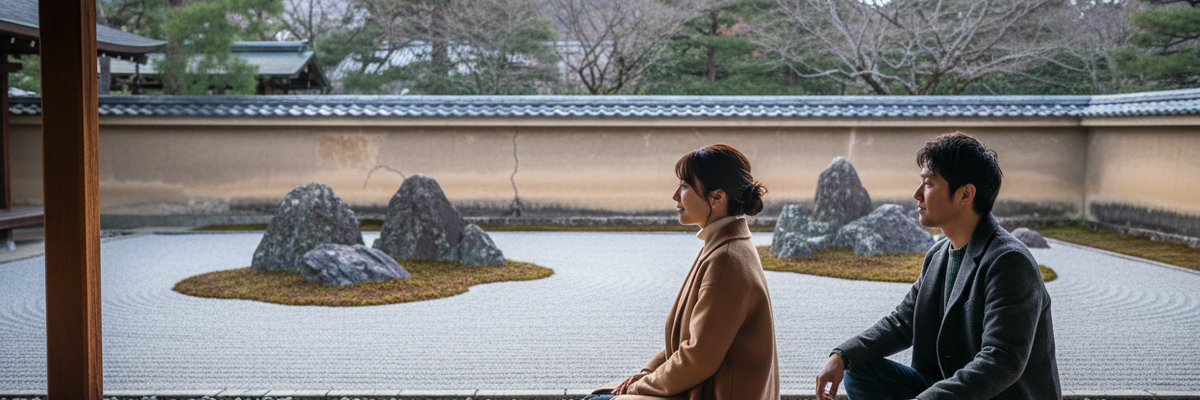
Not far away, quiet Zen gardens offer another kind of togetherness. In a temple such as Ryoan-ji, you sit side by side on a wooden veranda, looking out over a raked gravel garden punctuated by carefully placed rocks and tufts of moss. There is no overt spectacle, only the gentle scrape of a rake somewhere out of sight, the rustle of a robe, a crow calling in the distance. Yet as you sit, the garden’s minimalist design begins to work on you, coaxing your thoughts into slower orbits. You may find yourselves talking in murmurs or not at all, letting the silence do its own kind of mending.
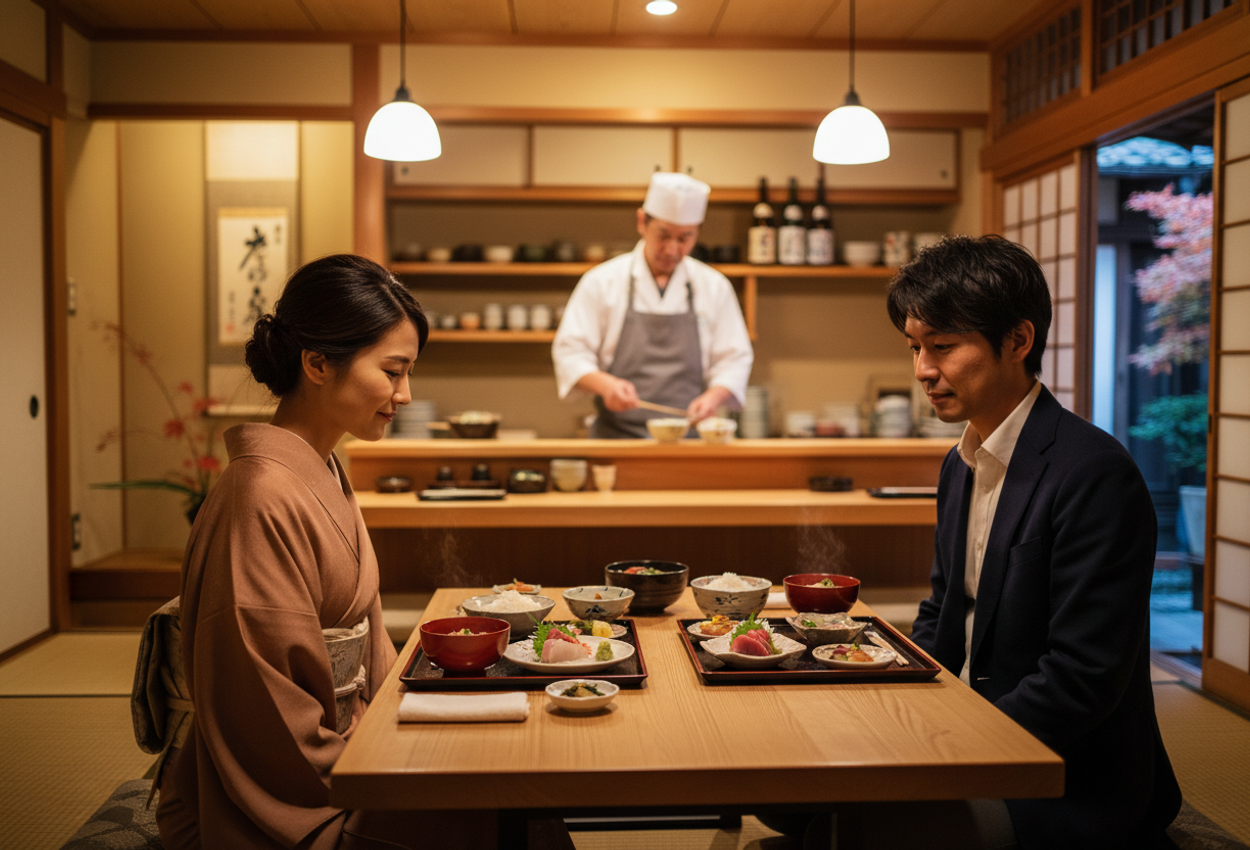
As evening deepens and the air cools, seek out a small, family-run restaurant for an intimate meal of kyo-ryori, the refined cuisine of Kyoto. On a narrow side street, a wooden door with a modest lantern might lead into a room with just a handful of low tables. The tatami smells faintly of straw and time; walls are hung with a single ink painting, perhaps a branch of maple rendered in three strokes. Here, the menu might be set: tiny lacquered dishes arriving in a hushed procession. A cube of sesame tofu crowned with a dab of wasabi; sashimi gleaming like stained glass; grilled river fish with skin blistered and crisp; simmered vegetables that taste more intensely of themselves than you thought possible. Each bite is a study in balance: salty and sweet, soft and crisp, hot and cool. You pour each other sake from a chilled carafe, the cup light and cold in your hand, the drink smooth and slightly floral on your tongue. The chef might glance up from behind a small counter, catching your murmured appreciation with a quick, proud nod.
To make this trip feasible, aim for the shoulder of autumn foliage season—late October or early November—when airfares from North America and Europe can be more forgiving than in peak weeks. Flying into Kansai International Airport and taking the train to Kyoto Station is often more economical than routing through Tokyo. Look for smaller ryokan or boutique hotels slightly removed from major sightseeing districts; they may offer better rates for multi-night stays and occasionally include dinner and breakfast, turning your room into an all-inclusive cocoon. Booking trains and some temple visits in advance can help you avoid lines, leaving more time for quietly wandering side streets and riverside paths.
Hidden Gem: A Local Table, A Shared Feast
In residential pockets of Kyoto, down streets lit by single lanterns and vending machines, you can still find tiny, family-run eateries where the menu is handwritten and the welcome is warm. Seek out one that specializes in seasonal kyo-ryori and seats no more than a dozen guests. Here, you may be the only foreigners; the clatter of chopsticks and low hum of conversation wrap around you. The owner might kneel by your table to explain, with gestures and smiles, how the pickles are made or which fish came in from the market that morning. The intimacy of sharing such a meal in such a small room—where every nod and laugh feels magnified—can be more romantic than any candlelit banquet.
Winter in the Swiss Alps: Skiing and Snuggling
By the time the calendar tips into winter, the pressure to perform romance has usually ebbed, leaving space for something gentler and more genuine. In the Swiss Alps, that gentleness is written in snowdrifts and chimney smoke, in the muffled quiet that falls over a village after dark. Here, love is less about spectacle and more about shared warmth: the way you tuck a scarf around a neck reddened by the cold, the satisfaction of peeling off damp gloves at the same hearth, the heady contrast between frozen air and steaming fondue.
Arrive in Andermatt, a once-sleepy mountain town transformed into a discreet hub for skiers and sybarites. The train journey itself feels like a prelude: carriages winding through valleys, past half-buried barns and frozen waterfalls, the windows frosting at the edges. Step onto the platform with your bags and feel the crisp alpine air bite at your cheeks, carrying the scents of pine, woodsmoke, and faint diesel from a departing locomotive. Above the town, white peaks rise in sculpted folds; their shadows lengthen as afternoon slips toward evening.
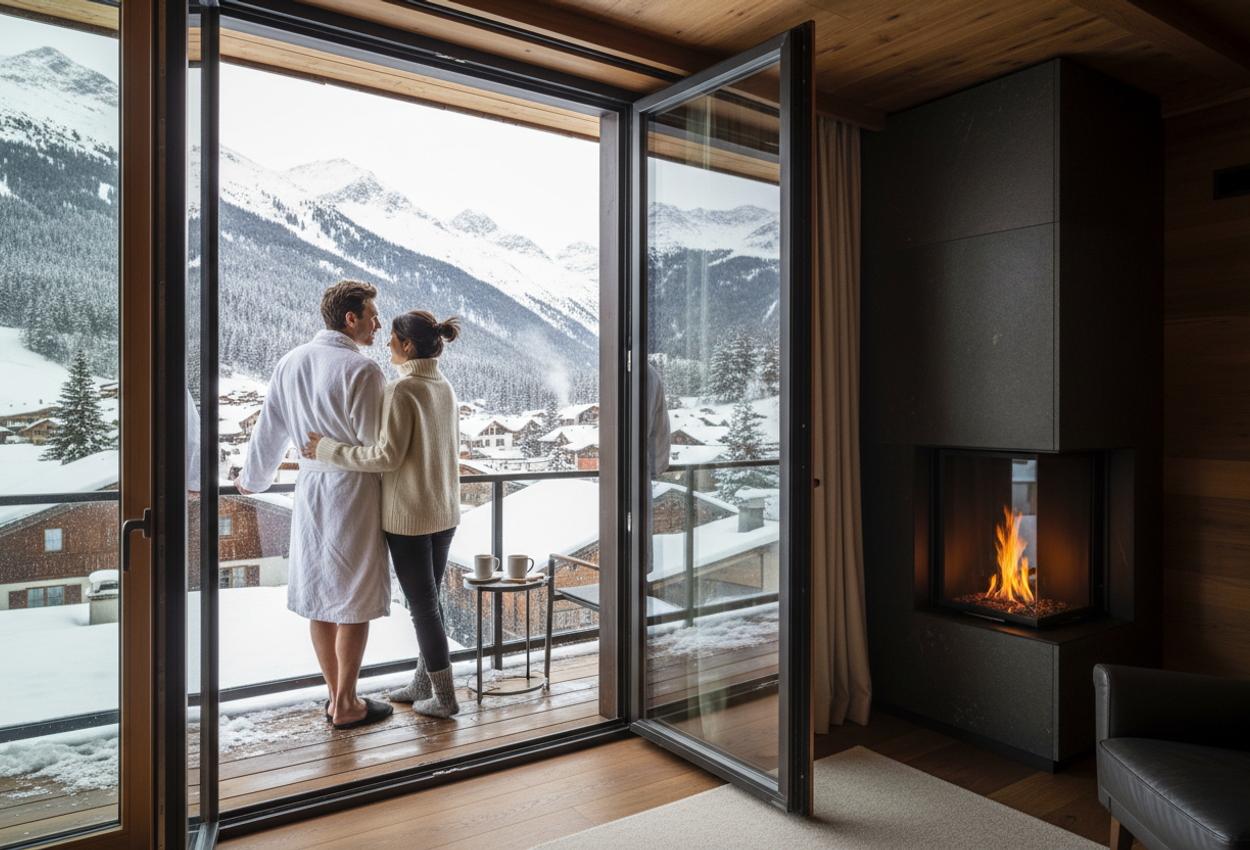
Check into The Chedi Andermatt, a hotel that unites Asian-inspired serenity with alpine coziness. Inside, dark woods, glowing fireplaces, and soaring ceilings create a sense of refuge. The lobby smells of cedar, beeswax, and something floral and elusive. Staff move quietly, as if unwilling to disturb the heavy hush that snow lays over everything. In your room, a fire flickers behind glass at the touch of a button, casting reflections on polished floorboards and a bed draped in thick duvets. You open the balcony door for a moment; a rush of cold, clean air pours in, along with the distant jangle of cowbells and the soft whoosh of skis on nearby slopes.
Days here can be as active—or as languid—as you choose. On skis or a snowboard, you glide along groomed runs above the treeline, the snow beneath your edges shifting from chalky to powder-soft as the light changes. The only sounds are your own breath, the rhythmic scrape of metal on snow, and the occasional whoop from a distant skier dropping into a steeper pitch. At a quieter, lesser-known run—tucked away from the main arteries of the resort—you might find yourselves almost alone on the mountain, following a ribbon of snow that curves through stands of fir and larch. Each turn kicks up a small plume of powder that hangs glittering in the cold air long after you pass. When you stop, chests heaving, the silence is nearly absolute, broken only by the muffled thud of snow sloughing from a branch.
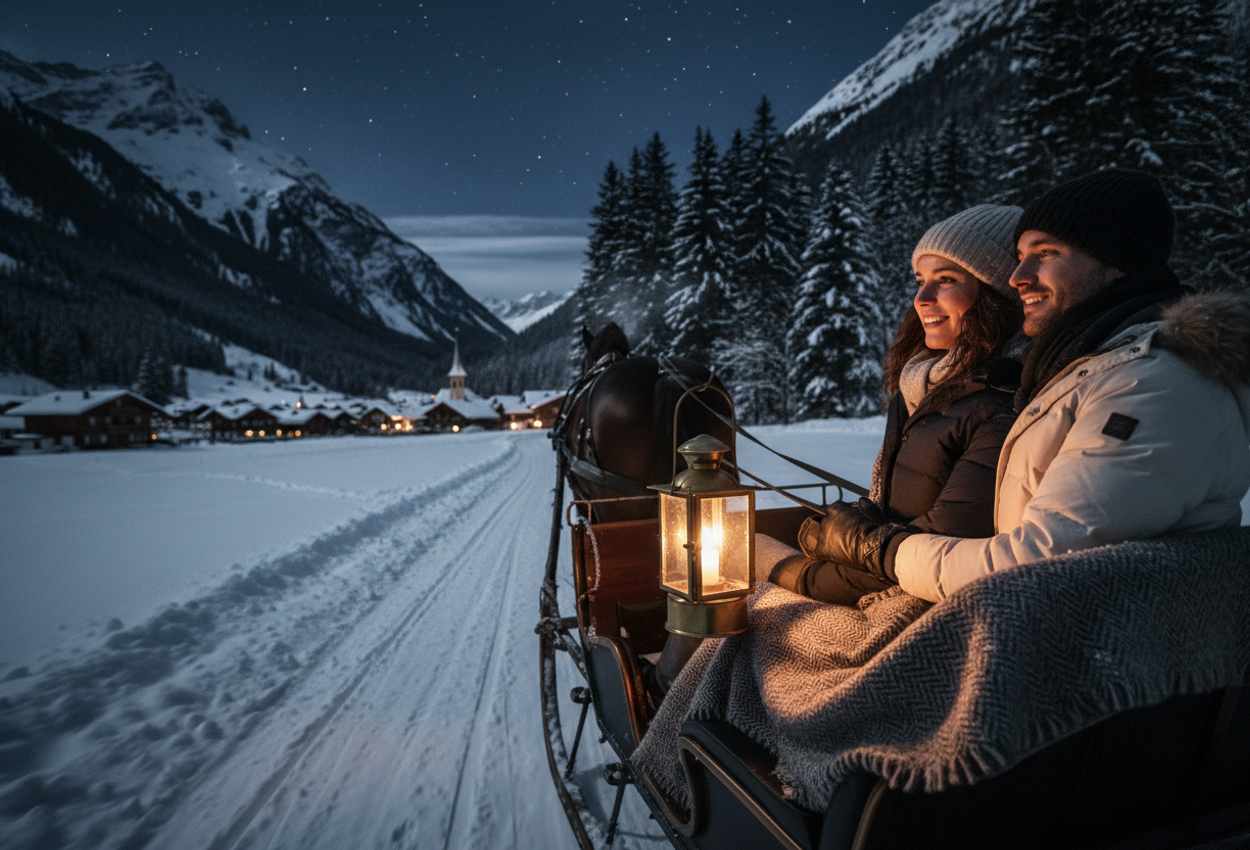
For all the exhilaration of the slopes, some of the most romantic moments in the Alps happen at a slower pace. One afternoon, wrap yourselves in blankets and climb into a horse-drawn sleigh in a valley where the snow lies deep and undisturbed. The horse’s breath steams in the frigid air; the leather harness creaks; the runners hiss softly over compacted snow. Trees rise on either side, their branches burdened with white; somewhere far off, you might hear the faint rush of a river under ice. You sit close enough that your shoulders press; your shared blanket traps warmth up to your chins. As the sleigh glides forward, the village recedes into a cluster of warm lights behind you, and the sky overhead blooms with stars so bright they seem almost within reach.
Back at The Chedi Andermatt, the spa is an entire world unto itself. Floor-to-ceiling windows frame mountains turning mauve and blue as evening falls, while inside, the air is heavy with the scents of eucalyptus, cedar, and chamomile. A long indoor pool stretches like a dark, reflective ribbon; slip in and feel delicious warmth embrace skin still tingly from the cold outside. In a couples’ treatment room, candles flicker against stone walls as therapists work in synchronized silence, coaxing knots from shoulders and calves with firm, practiced hands. Oils infused with alpine herbs sink into your skin, leaving a faint, grounding aroma. When you emerge, wrapped in thick robes, the sense of bodily ease translates easily into emotional softness; conversation flows, or the two of you simply sit together in a relaxation lounge, sipping herbal tea and watching snowflakes spin past the glass.
Evenings are for fondue by a fire, because some clichés exist for a reason. In a cozy wood-paneled restaurant in the village or a snug corner of the hotel, you sit beneath low beams, the table lit by candlelight that glints off wine glasses and the copper sheen of a fondue pot. The air smells powerfully of melted cheese, white wine, and nutmeg, with an undercurrent of toasted bread. As you spear cubes of crusty baguette and swirl them through the bubbling mixture, strands of cheese stretch, glistening, back toward the pot. Each bite is hot, salty, and rich, chased by sips of crisp Fendant or another local white wine that cuts through the indulgence. There is something undeniably intimate about sharing a single pot, negotiating the best browned edges, laughing as a piece slips off a fork and disappears into the depths.
To make a winter Alps retreat more affordable, sidestep Christmas and New Year and look instead to late January or early February, before many school holidays, or toward March when daylight lingers and prices often soften. Midweek stays can yield more competitive rates at even top-tier properties. Package deals that combine lift passes, breakfast, and spa access can offer excellent value, particularly for couples who plan to ski in the mornings and indulge in wellness in the afternoons. Booking rail passes in advance for travel from Zurich Airport to Andermatt can also trim costs while keeping the journey romantic: there is a particular pleasure in sharing a window seat, watching the landscape outside turn whiter and wilder with each passing mile.
Hidden Gem: A Quiet Run of Your Own
Every major resort has its secret slopes: lesser-known runs that locals favor on busy weekends. Ask a ski instructor or a bartender—not the front desk—for tips on quieter pistes or side valleys where you can ski or snowshoe with hardly another soul in sight. Set out early, when the snow is still velvet-smooth and the sky a fragile blue. Sharing that first descent, with untouched corduroy under your skis and no other tracks ahead, feels like starting a fresh page together—no hearts-and-flowers holiday required.
In the end, the most romantic journeys are rarely the ones that fall exactly on the fourteenth of February. They are the ones that unfold in the in-between: on a foggy morning in Paris when the tulips are just opening, on a dusty Tuscan lane where the sunset lingers long past dinner, on a Kyoto side street where maple leaves collect in quiet drifts, on a mountainside in Switzerland where snow dampens every sound but your shared laughter. Choose your season, choose your place, and let the calendar catch up to you. Love, after all, keeps its own time.