In Buenos Aires, passion is not an accessory to daily life; it is the language the city speaks, pulsing through every tango chord, every clink of Malbec glasses, every stolen glance on a cobblestoned corner.Seductive Steps: Mastering Tango in San Telmo
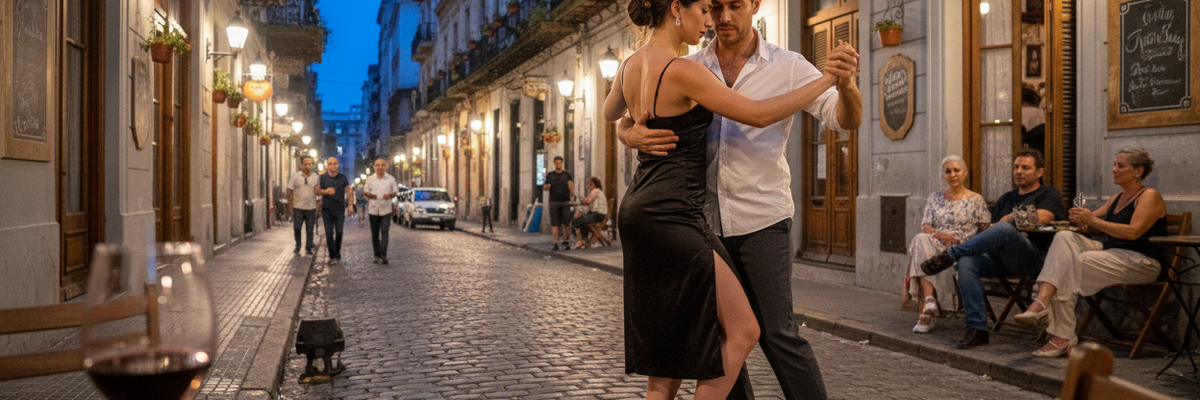
Even before the sun has fully slipped away, the streets of San Telmo begin to hum with anticipation. Antique street lamps flicker on above uneven cobblestones, throwing amber halos over wrought-iron balconies and aging facades. Couples drift toward doorways lit by red bulbs and hand-painted signs, all of them lured by the same magnetic promise: tango. This isn’t a staged performance for passing tour buses; this is the city’s heartbeat, rising from the old working-class barrios where the dance was born.
Step inside a traditional milonga and the air changes. At a beloved institution like La Viruta, the scent of floor wax and espresso mingles with the faint musk of cologne and the metallic whisper of bandoneón reeds warming up. Wooden chairs line the walls, where seasoned dancers sit with a stillness that borders on ritual, eyes scanning the room for potential partners. Overhead, a fan stirs the warm air while the DJ threads together recordings that span almost a century of tango history, from scratchy orchestras to lush contemporary arrangements.
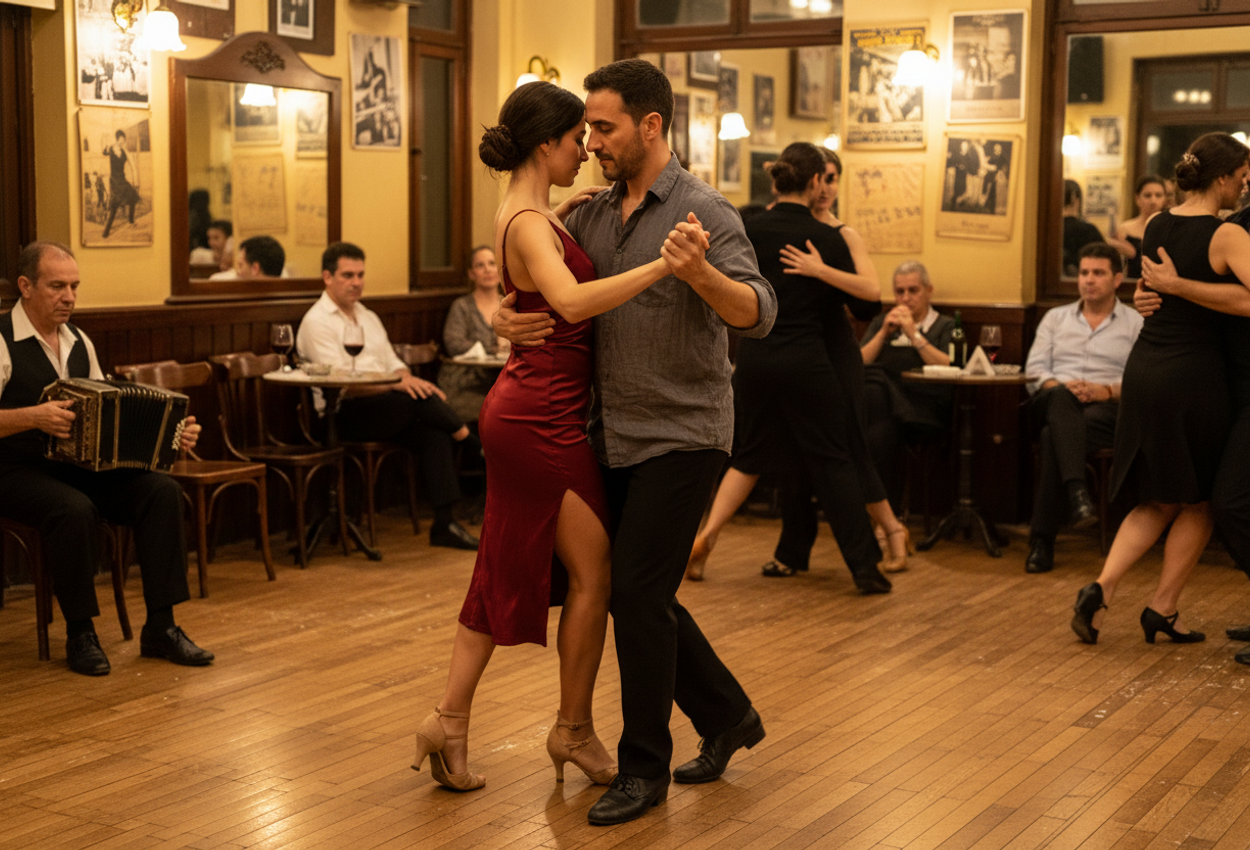
For a first-timer, the prospect of stepping onto that polished floor can be almost paralyzing. At a tango school such as Premier Tango Academy in San Telmo, instructors understand this mix of exhilaration and fear. They begin not with complicated footwork, but with the embrace. One hand at the center of the back, the other nestled in your partner’s, a shared axis between two chests: it is both intimate and strangely formal, a silent agreement to move as one. The teacher asks you to close your eyes and simply walk, feeling the weight transfer from heel to toe, sensing how a subtle shift of the torso guides your partner without words.
As you circle the room in slow, tentative steps, the history of tango seems to seep up from the floorboards. Born at the turn of the twentieth century in the portside arrabales, it was shaped by European immigrants and Afro-Argentine rhythms, by loneliness and longing in crowded tenements. It was once the dance of dockworkers and drifters, of men dancing with men in cramped courtyards to practice for the rare chance of impressing a woman. Today, that same melancholy can still be heard in the bandoneón’s cry, but the milonga has softened the rough edges into something tender, romantic, and deeply communicative.
There is no strict dress code here, only an unspoken desire to look and feel like the best version of yourself. Women might arrive in simple slip dresses or tailored trousers, hair swept up so it won’t cling to a sweaty nape. Men wear pressed shirts or well-loved T-shirts, sleeves rolled to the elbow, shoes with soles that glide but do not slip. High heels are common among experienced dancers, but novices often begin in low, comfortable shoes or even socks, sliding cautiously across the floor until their confidence catches up with their enthusiasm.
As the evening progresses and your basics solidify, the room transforms around you. Someone laughs at a misstep, a couple glides past in a blur of black and scarlet, the singer’s voice rasps through the speakers, rich with untranslatable ache. Between songs, you return to your table, hands trembling slightly from adrenaline, sipping a glass of Malbec or a simple soda while you watch others interpret the same music with different bodies, different stories. At some point, without quite realizing when, you cross an invisible threshold: tango stops being a foreign pattern and becomes a conversation, a flirtation, a romantic language you are just beginning to speak.
Outside, the night in San Telmo is thick and warm, the echo of bandoneóns spilling through open windows. Walking back along the cobbled streets, your muscles hold the ghost of each ocho and giro, the soft press of a stranger’s hand at your back. In this city, you learn quickly that romance is not confined to candlelit dinners or grand gestures; sometimes it is simply the courage to step onto a crowded dance floor and let someone lead you into the unknown.
A Culinary Affair: Romantic Restaurants in Recoleta
If San Telmo is all shadow and smoke, Recoleta is candlelight reflected in polished silver. Here, Belle Époque mansions gaze down grand avenues, balconies frosted with stone balustrades and iron lace. It is in this district of quiet affluence that Buenos Aires most vividly reveals its European soul, and nowhere more so than inside its romantic dining rooms, where conversations stretch late into the night over bottles of inky Malbec.
At the Palacio Duhau – Park Hyatt Buenos Aires, Los Salones del Piano Nobile occupies what once were aristocratic reception rooms. Entering feels like stepping into a private residence where time is unhurried. High ceilings bloom with chandeliers, parquet floors glint beneath your shoes, and tall windows open toward manicured terraces and a sculpted garden. Couples sink into velvet-backed chairs while waiters move silently between tables, balancing trays of delicate amuse-bouches and crystal glasses that catch the golden light.
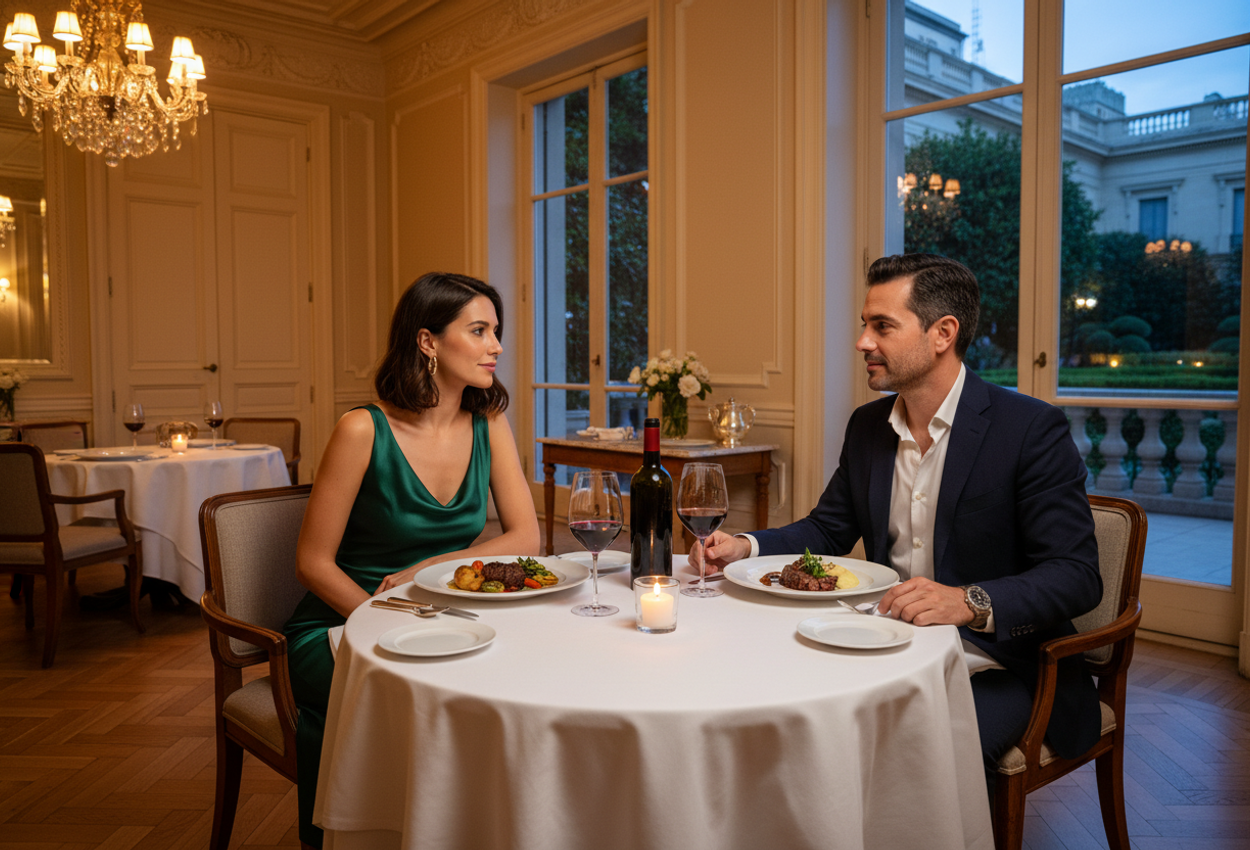
The menu is an elegant conversation between Argentina and the wider world. You might begin with paper-thin slices of local beef carpaccio, marbled and tender, scattered with shards of Parmesan and peppery arugula. A basket of pan de campo arrives still warm, the crust crackling as you tear it open, releasing steam tinged with the scent of toasted grain. Paired with a glass of Malbec from Mendoza, the first sip inky and plummy against your tongue, it is an initiation into the country’s culinary obsessions: good meat, good bread, and wine that tastes like sun and stone.
Later, in the hushed dining room of the Alvear Palace Hotel, romance shifts into a more formal register. The hotel’s polished marble, gilded mirrors, and soft, patterned carpets evoke the grand hotels of Paris, an echo the city wears proudly. In the restaurant, white tablecloths pool gracefully over table edges, silverware gleams in perfectly aligned rows, and the murmur of conversation merges with the faint notes of a piano drifting in from the bar. Here, dinner unfolds as a ceremony. Waiters present plates with a discreet flourish: perhaps a perfectly grilled ojo de bife, charred at the edges and ruby at its center, or a delicately layered dessert of dulce de leche and crisp meringue that shatters like glass beneath your spoon.
For couples who seek something more daring, Aramburu Relais & Châteaux, tucked into a quiet corner of the city, elevates dinner into a kind of theater. The 19-course tasting menu is an intimate procession of flavors and textures, each dish a small, edible work of art. A single oyster arrives cloaked in a veil of foam that smells faintly of the Atlantic; a bite of Patagonian lamb is paired with a smear of smoky purée that recalls evenings around an asado; miniature vegetables are arranged like a garden on black ceramic plates. The lighting is soft, the tables well spaced, encouraging whispered commentary and shared astonishment. You look across at your partner, both of you grinning like co-conspirators in some delightful secret.
In Recoleta, even the streets between these landmarks invite lingering. After dinner, you might wander along Avenida Alvear, where designer boutiques slumber behind wrought-iron gates and the night smells of jacaranda trees and faint perfume. A passing taxi splashes light across the wet pavement, reflecting the ornate facades back at themselves. It is in these quiet, in-between moments—sharing the last bite of dessert, linking arms as you walk back toward your hotel—that Buenos Aires reveals its most romantic truth: passion here is not loud or ostentatious. It is a steady flame, tended carefully over hours of conversation and good wine, burning long after the plates have been cleared.
Palermo's Pulse: Nightlife that Ignites the Soul
By the time midnight approaches in Palermo, other cities might be winding down. Buenos Aires, however, is only just taking a deep breath. The wide avenues and leafy plazas of this sprawling neighborhood—divided into personality-packed sub-barrios like Palermo Soho and Palermo Hollywood—buzz with expectation. Street art glows beneath the sodium lamps, bar doors swing open and closed like lungs, and somewhere, always, a DJ is cueing the next track.
In Palermo Soho, cobbled streets and low-slung buildings painted with bold murals create a bohemian stage set. Fashion-forward locals drift from café to bar, all sharp boots and languid confidence, their conversations ping-ponging between Spanish and English. Small cocktail dens hide behind unmarked doors or down narrow passageways fragrant with grilled provoleta and cigarette smoke. Music spills out of every opening—disco, reggaeton, rock nacional—stitched together into a single, throbbing soundtrack.
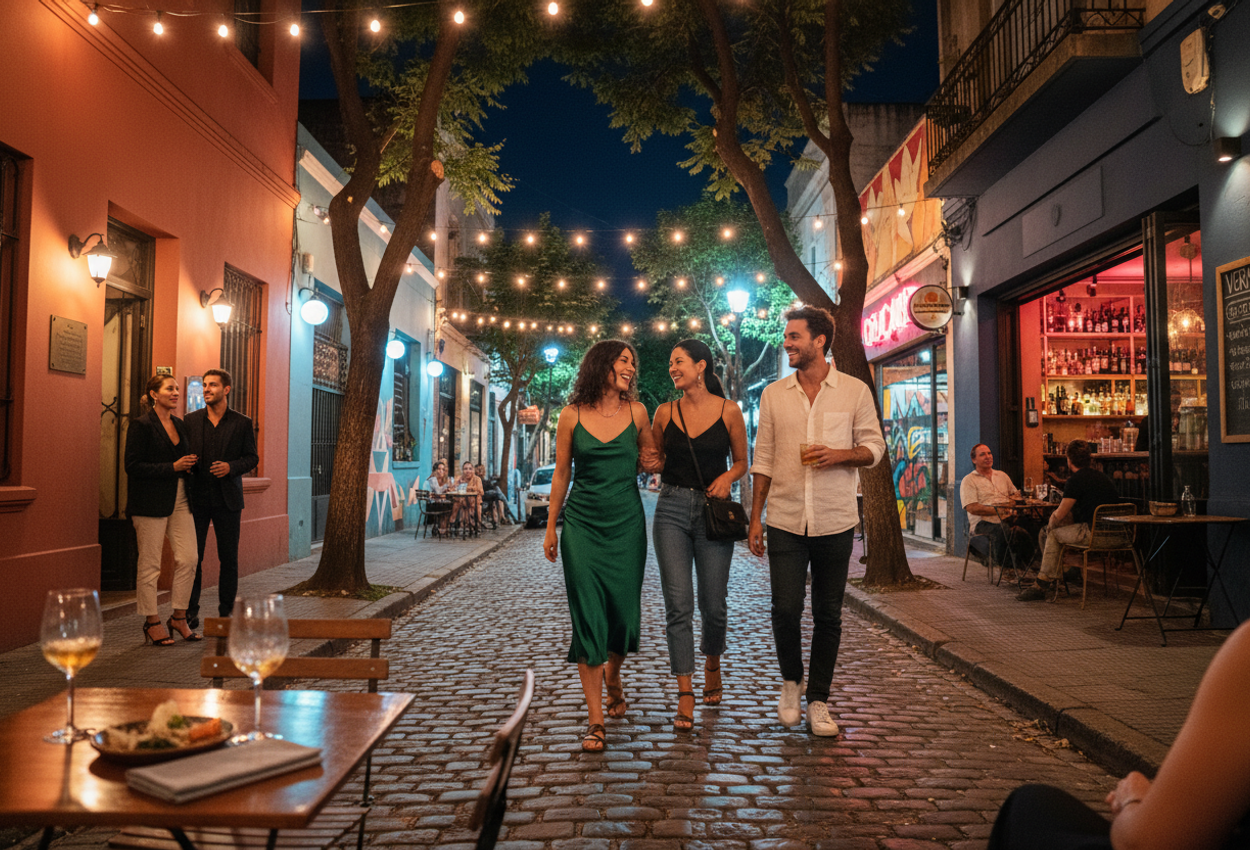
Nearby, Palermo Hollywood flexes a more cinematic energy, home to television studios and some of the city’s most inventive bars. One of its legends is Frank’s Bar, a speakeasy that transforms the simple act of getting in into a flirtatious game. From the street, you find an unassuming façade and, beyond it, a small, retro phone booth. A secret code, often obtained via social media or a whisper from someone in the know, must be tapped into the rotary-style dial. With a soft click, a hidden door swings open to reveal a dimly lit sanctuary of velvet, cut crystal, and dark wood. Couples lean close over drinks that arrive in ornate glassware: smoky mezcal concoctions crowned with torched citrus, or delicate gin infusions perfumed with fresh herbs.
Further along, at Niceto Club, the bass can be felt long before you reach the entrance. Inside, the space is cavernous, black walls pulsating with strobe lights and projections. Live bands and DJs share the stage on different nights, the crowd surging in waves of raised arms and moving bodies. Lovers lose themselves in the anonymity of the dance floor, drawing close in the neon haze, shouting lyrics together or simply moving in sync without speaking. In the upper gallery, where it is marginally quieter, you can pause to watch the scene unfold below: a sea of silhouettes, each one carrying their own story, all temporarily united by rhythm.
No matter how buzzy the night gets, Palermo still has corners where romance can catch its breath. A few blocks away, a rooftop bar—perhaps atop a chic boutique hotel—offers a different perspective on the city. From here, the skyline of Buenos Aires flickers into view, a jagged line of towers punctuated by the dark lace of tree canopies. Warm summer air brushes your cheeks, heavy with the scent of grilled meat from distant parrillas and the sweetness of blooming jasmine. You wrap your fingers around a cool glass of Torrontés, its floral nose rising to meet the soft night, and feel the city’s energy from a safe, suspended distance.
As the hours slip toward dawn, the streets below begin to calm, but they never fully sleep. A couple emerges from a late-night pizzeria, sharing a slice straight from the cardboard box. A taxi idles at the curb, radio murmuring tango classics while the driver waits. In Palermo, romance is not confined to candlelit corners; it pulses in the crosswalks, in the laughter of friends spilling out from a bar at 4 a.m., in the way strangers’ shadows briefly intersect under a streetlamp before continuing in opposite directions.
European Elegance: Exploring Avenida de Mayo
When you step onto Avenida de Mayo, it is as if someone slid a sepia-toned filter over Buenos Aires. This grand boulevard, linking the Casa Rosada with the Palacio del Congreso, was conceived at the height of the city’s European fever dream, when architects imported styles from Madrid and Paris to craft a capital that could rival any on the continent. Today, domes crowned with copper, ornate cornices, and sculpted façades rise above bustling sidewalks, their details softened by decades of sun and protest banners.
As you stroll beneath the dappled shade of plane trees, the avenue unfurls like a living museum of architecture. Neo-baroque mansions share the block with Art Nouveau apartment buildings adorned with sinuous balconies and stained glass. Here and there, a bookshop spills its wares out onto the pavement: dog-eared novels, local poetry, and heavy tomes on Argentine history stacked beside glossy postcards of tango dancers and political icons. Street performers—a guitarist with a weathered instrument, a mime coaxing giggles from passing children—add their own color to the scene.
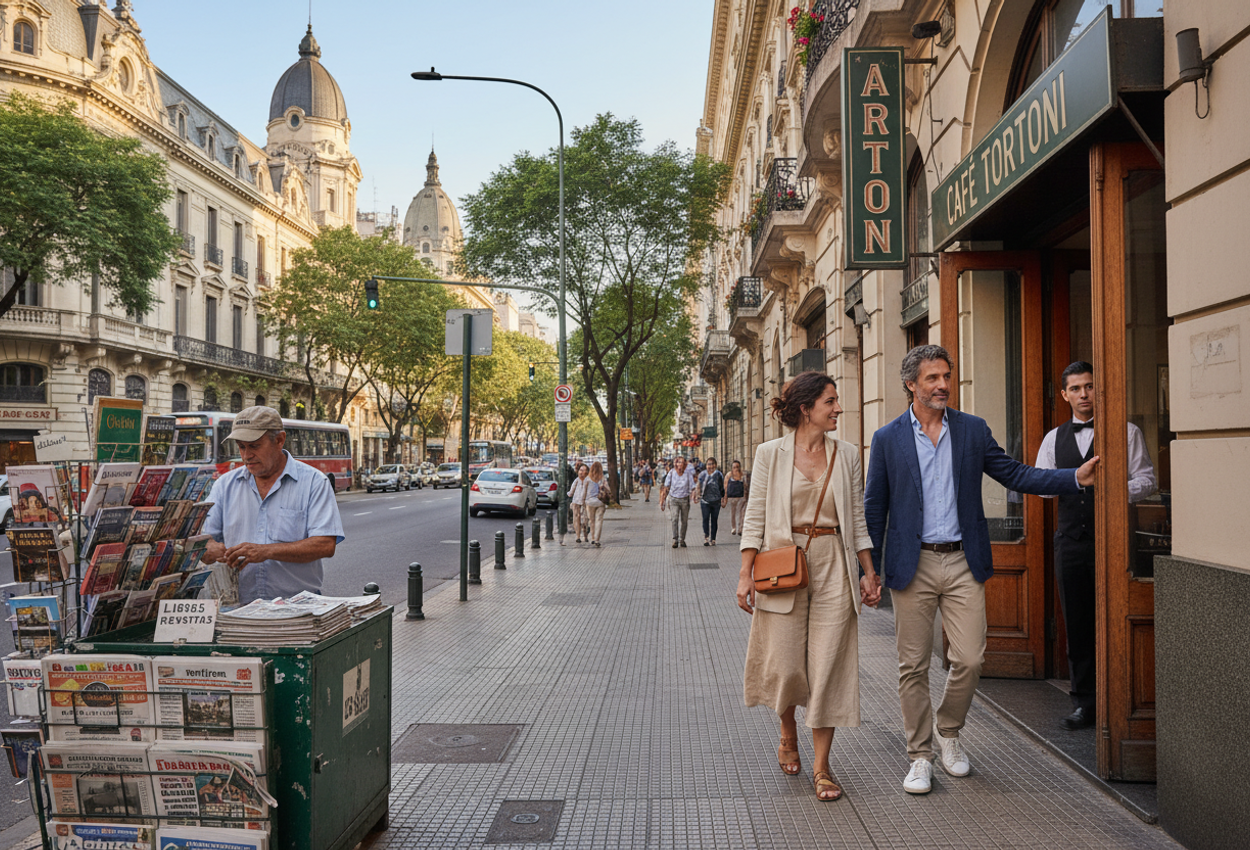
No pilgrimage along Avenida de Mayo is complete without a pause at Café Tortoni, the city’s oldest café and a shrine to its intellectual past. Step through its revolving door and the clamor of traffic falls away, replaced by the low murmur of conversations and the clink of porcelain. Marble-topped tables stretch out beneath stained-glass skylights, while dark wood paneling and brass fixtures retain the glow of thousands of evenings. You slide into a banquette where, decades before, writers and artists gathered to argue politics and aesthetics over endless cups of coffee.
The waiter, in a crisp white shirt and black vest, sets down a steaming cortado and a plate of churros dusted with sugar. The coffee smells robust and slightly nutty, its crema swirling as you stir in a spoonful of sugar. Nearby, a small stage occasionally hosts tango shows or poetry readings, but even in its quiet moments, the café vibrates with the weight of stories. Couples lean over shared newspapers, fingers brushing as they turn the pages; solo patrons gaze into the middle distance, lost in thought but never entirely alone.
Further along the avenue, the Palacio Barolo rises in a flurry of allegory and stone. Inspired by Dante’s Divine Comedy, the building’s levels are said to represent Hell, Purgatory, and Heaven, culminating in a lighthouse that once guided ships on the Río de la Plata. From the street, its ornate façade, dotted with arches and sculpted reliefs, invites both contemplation and curiosity. Guided tours lead visitors up narrow staircases and through echoing halls, the city gradually unfurling outside the windows like an intricate map. From the upper floors, Buenos Aires looks both monumental and intimate, a grid of stories and secrets.
Back at street level, Avenida de Mayo maintains a gentle, romantic rhythm. You might duck into a small librería to browse local authors, the scent of paper and dust and ink a comforting constant. Or pause at a corner kiosk to buy a newspaper and a chocolate alfajor, the biscuit layers crumbling softly between your teeth as you continue your walk. The avenue invites lingering: on a bench in a small plaza, watching commuters weave around each other; at a crosswalk where the glow of a sunset pools in the windows of passing buses. It is here, among facades shaped by distant continents and stories rooted in local soil, that Buenos Aires’ fusion of Latin warmth and European elegance feels most immediate.
Whispers of Love: A Stroll Through El Rosedal
When the city noise grows too insistent, El Rosedal offers a reprieve as gentle as a lover’s whisper. Nestled within the Bosques de Palermo, this storied rose garden is a romantic sanctuary where time seems to slow to the pace of a leisurely hand-in-hand walk. On late summer afternoons, the light softens to a honeyed glow, sliding across the lake and filtering through the leaves of soaring trees, while the scent of hundreds of rose varieties hangs in the air, sweet and almost intoxicating.
You enter across one of the park’s graceful white bridges, its arches reflected in the still water below. Rowboats drift lazily on the lake, their oars dipping rhythmically, leaving trails of ripples that catch the light. The soft slosh of water blends with the rustle of leaves and the distant laughter of picnicking families, but here, among the roses, the mood is quieter, more intimate. Couples stroll slowly along the gravel paths, pausing to read the small plaques that name each variety: some in Spanish, others in French or English, like tiny love letters from distant lands.
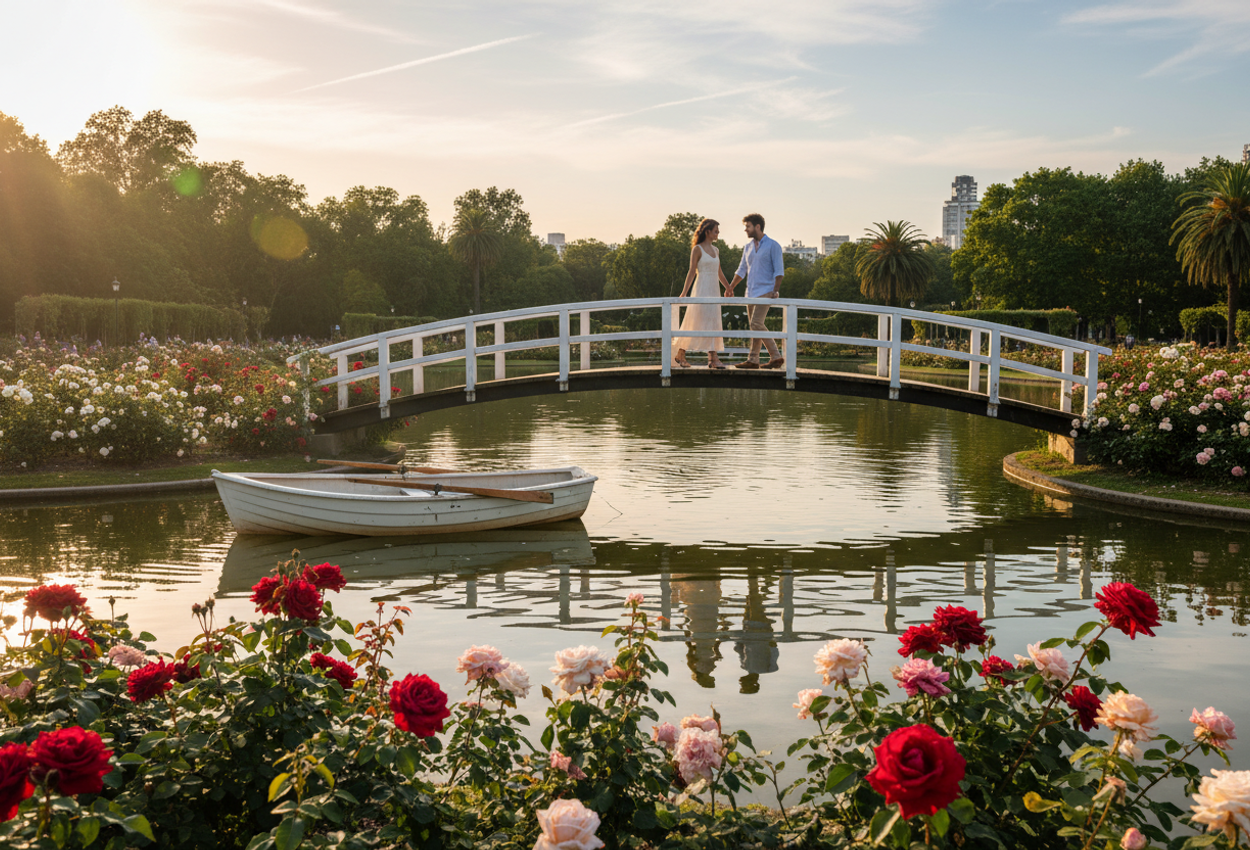
The roses themselves are a study in seduction. Blush-pink petals unfurl like secrets, while deep crimson blooms seem to burn from within, almost velvety to the touch. Others are cream-colored with edges tinged in apricot or coral, catching the sun along their fringes. In the heat of the day, their fragrance intensifies, a layered perfume of honey, citrus, and something indefinably green. Walking between the beds, you can feel the gravel crunch softly underfoot, hear the faint buzz of bees drunk on nectar, and sense the stillness that descends when a place is loved and carefully tended.
Hidden among the blooms are small sculptures and pergolas, each corner offering a new composition of shadow and light. A stone bust peeks from behind a hedge; a wrought-iron gazebo beckons for a moment of shade and quiet conversation. Benches invite lingering—perhaps to share a thermos of mate, the national ritual of passed gourd and metal straw, the bitter herbal steam rising in little clouds. The act of sipping from the same vessel, of accepting and returning it in unspoken rhythm, can feel almost as intimate as the tango embrace you might have learned in San Telmo.
As you continue your leisurely circuit, the city occasionally seeps in at the edges: the distant honk of a car, the silhouette of high-rises beyond the trees. Yet in El Rosedal, these intrusions feel softened, as if the roses have draped gauze over the world beyond. Late in the day, when the sun sinks lower, the garden takes on a cinematic glow. Petals become translucent, backlit halos of color; the lake mirrors the sky’s oranges and purples; long shadows stretch across the lawns. It is the perfect hour for quiet confessions, for promises made over the scent of flowers and the chorus of birds settling in for the night.
Eventually, you might find a quiet bench facing the water, where the air feels cooler and the sounds more muted. Here you can sit shoulder to shoulder with someone you love, watching the boats return to their docks and the last joggers make their way along the paths. In the heart of a metropolis of millions, El Rosedal offers a rare kind of intimacy: the chance to simply be, together, while the city moves at its frenetic pace just beyond the ring of trees.
Artistic Encounters: Discovering La Boca's Passion
Where the city brushes up against the river in the south, La Boca bursts into view in a riot of color. Once the gritty, working-class neighborhood of Genoese immigrants, it has reinvented itself as Buenos Aires’ most flamboyant canvas, a place where walls wear paint the way dancers wear sequins. The heart of this transformation is Caminito, a short, pedestrianized street that functions as both open-air museum and perpetual stage.
As you turn onto Caminito, it feels like stepping inside a painting. Corrugated metal houses—once patched together from leftover materials at the nearby shipyards—have been daubed in electric blues, yellows, greens, and reds. Balconies tilt over the street like theater boxes, some occupied by mannequins dressed as folk heroes and tango legends, others draped with laundry that flutters flag-like in the breeze. The cobblestones underfoot are worn smooth by decades of dancers’ shoes and tourists’ footsteps.
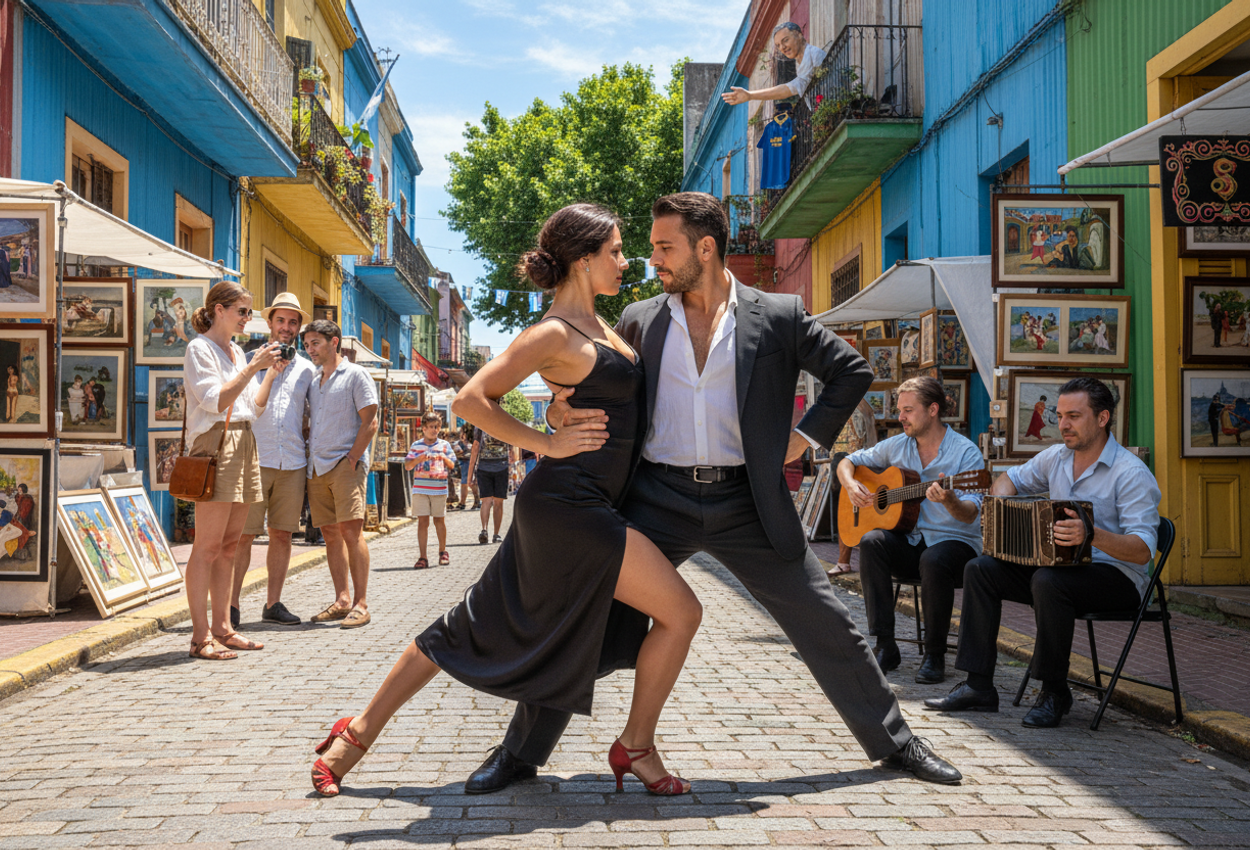
Music is constant here. Bands set up on corners, bandoneóns wheezing and guitars strumming as singers belt out tangos that echo with loss and desire. On makeshift stages, dancers in form-fitting dresses and sharp suits swirl through dramatic poses: a leg hooked high on a partner’s hip, a sudden stillness followed by a lightning-fast flick of the foot. You can stand and watch, drawn in by the chemistry between them, or be coaxed into a photo, a borrowed hat placed on your head as you attempt a credible tango stance beside a professional.
Beneath the theatricality runs a deep vein of history. La Boca was once the city’s portside melting pot, a place where newly arrived immigrants carved out a precarious existence in conventillos, communal tenements layered around shared courtyards. Their struggles, and their longing for homes left behind, fed directly into the creation of tango and into the neighborhood’s artistic identity. Today, many of those courtyards have been transformed into galleries and studios. Step through a painted doorway and you might find a quiet patio strung with lights, canvases propped against peeling walls, and an artist patiently explaining the symbolism behind a series of murals that reimagine local myths.
Street art here is not merely decorative; it is storytelling in bold strokes. One wall might depict football idols from nearby La Bombonera stadium, another a rendition of working-class life in stark black and white, punctuated by a single splash of red. The smell of grilled chorizo drifts from nearby parrillas, mingling with the acrid tang of fresh spray paint. Vendors spread out tables of hand-painted fileteado signs, their swooping letters and ornate flourishes a uniquely porteño art form, while others sell leather goods, handmade jewelry, or tango-themed prints.
As you wander, you might strike up a conversation with a local painter perched on a stool, brush in hand. They talk about how the neighborhood has changed, about the tension between its tourist-friendly façade and the realities that lie just beyond the most photographed corners. Their pride, however, is unmistakable. For all its bright colors and postcard angles, La Boca remains a place of real, beating-heart passion, where art is woven into daily life rather than kept behind museum glass.
Toward late afternoon, when the sun slants low and shadows deepen the colors, Caminito takes on an almost theatrical richness. The music grows a little louder, the dancers more daring, as if trying to outrun the coming dusk. You leave carrying not only souvenirs but also an impression of a neighborhood that has turned its history of hardship into an exuberant declaration of identity. It is romantic in a different register: less about candlelight and roses, more about the raw magnetism of a community that wears its heart, quite literally, on its walls.
A Gaucho Escape: Horseback Riding in the Pampas
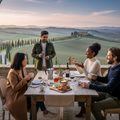
To understand the Argentine soul, you must, at least for a day, trade the city’s avenues for the endless horizon of the Pampas. Just thirty-five minutes from the edges of Buenos Aires, the urban sprawl gives way to a landscape of open fields, wind-tousled grasses, and sky so wide it feels like a revelation. At a ranch like Caballos A La Par, time slows to the rhythm of hooves, and romance is measured not in candlelit dinners but in shared silences broken only by birdsong and the soft creak of leather saddles.
Arriving in the morning, the air is cool and carries the scent of damp earth and eucalyptus. Horses graze lazily in fenced paddocks, their tails flicking away flies, while dogs weave between your legs, tails wagging in enthusiastic welcome. The gauchos, dressed in bombachas—loose riding trousers—and berets or straw hats, greet you with an easy warmth. Their hands bear the calluses of lives spent outdoors, but their touch is gentle as they help you adjust stirrups and reins, ensuring that even absolute beginners feel secure in the saddle.

The first moments on horseback can be tentative, your muscles tight with unfamiliar effort as the animal beneath you shifts its weight. The gaucho rides alongside, offering calm instructions: keep your heels down, your back straight, trust the horse. Gradually, your body and the animal’s begin to find a shared rhythm. Each step becomes less jarring, more like a rolling wave. The reins feel less like a control mechanism and more like a line of communication, a way of asking rather than demanding.
Once everyone is comfortable, the group sets off across open fields that seem to unspool toward the horizon. The grass brushes against the horses’ fetlocks; a light breeze lifts dust and the faint, sweet smell of wildflowers. Above, a hawk circles lazily. Conversation drops away as the landscape takes over, your senses tuning into new frequencies: the soft thud of hooves on packed earth, the creak of leather, the occasional snort or whinny from your mount. Riding side by side with someone you love, there is space for both quiet contemplation and shared wonder, for pointing out a distant farmstead or the sudden flash of a hare darting through the grass.
Midway through the ride, the group pauses at a shady grove or near a simple ranch house. Here, a rustic table might be laid with local treats: still-warm facturas—sweet pastries glazed with sugar or filled with custard—and baskets of empanadas, their golden crusts blistered from the oven. You bite into one and taste spiced beef or creamy humita, the corn-sweet filling offset by the flaky pastry. Washed down with a sip of Malbec or a cup of strong black coffee, the flavors feel honest and elemental, as if they too have been shaped by sun and wind.
Practicality tempers the romance just enough to keep you grounded. You are grateful for the jeans that guard your legs from brush and insects, for the long sleeves that shield you from both sun and the occasional impatient mosquito. A wide-brimmed hat becomes more than an accessory as the day warms, casting your face in shade while you scan the horizon for a lone tree or a small herd of cattle in the distance. Yet even these small details, these acknowledgments of nature’s unpredictability, only deepen the sense of connection—to the land, to the traditions of the gauchos, and to the person riding beside you.
By the time you return to the ranch, the sun has begun its slow descent, casting a golden wash over everything it touches. Dust glows in the air like suspended glitter; the horses’ coats gleam with a light sheen of sweat. You swing down from the saddle with legs that feel a little unsteady, as if the ground has forgotten how to stay still. Over a final mate shared with your hosts, you look out at the now-familiar fields and realize that Buenos Aires’ romance does not end at the city limits. It stretches out into the Pampas, where passion is expressed in a quieter language of care for animals, respect for the land, and the simple joy of a day spent under an enormous sky.
Urban Oasis: Serenity in the Japanese Garden
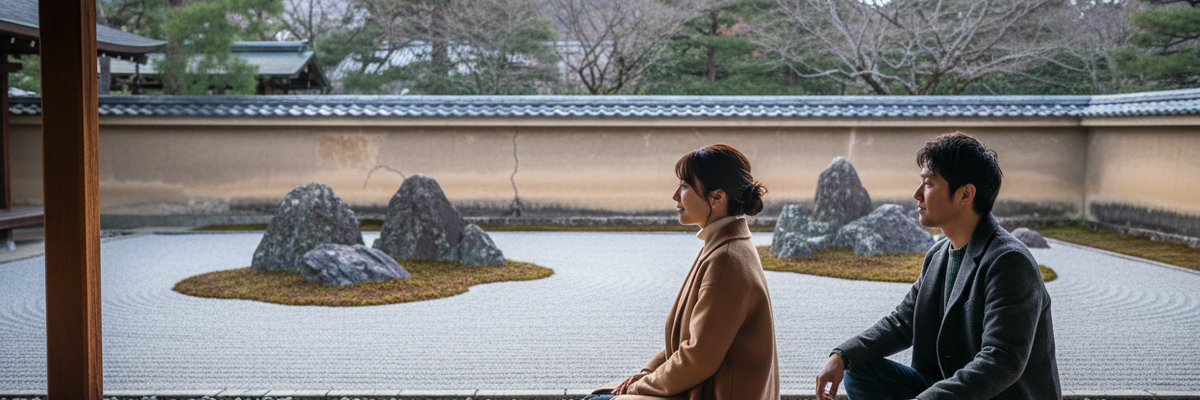
Back in Palermo, where traffic roars and high-rises jostle with leafy parks, the Japanese Garden offers a portal to another world. Conceived as a gesture of friendship between Argentina and Japan, this meticulously designed space folds an entire philosophy of harmony and contemplation into a few precious hectares. Stepping through its gates, you feel the city’s tension slip from your shoulders, replaced by an almost immediate sense of calm.
The garden is open daily from mid-morning until early evening, and a modest entrance fee helps to preserve its tranquility. Inside, winding paths lead you past manicured lawns, clipped shrubs, and trees shaped with deliberate care. A central pond, home to flashes of orange and white koi, mirrors wooden bridges and stone lanterns on its surface. The air smells of damp earth and pine, with faint floral notes depending on the season, while the gentle trickle of water over rocks provides a soothing, background lullaby.
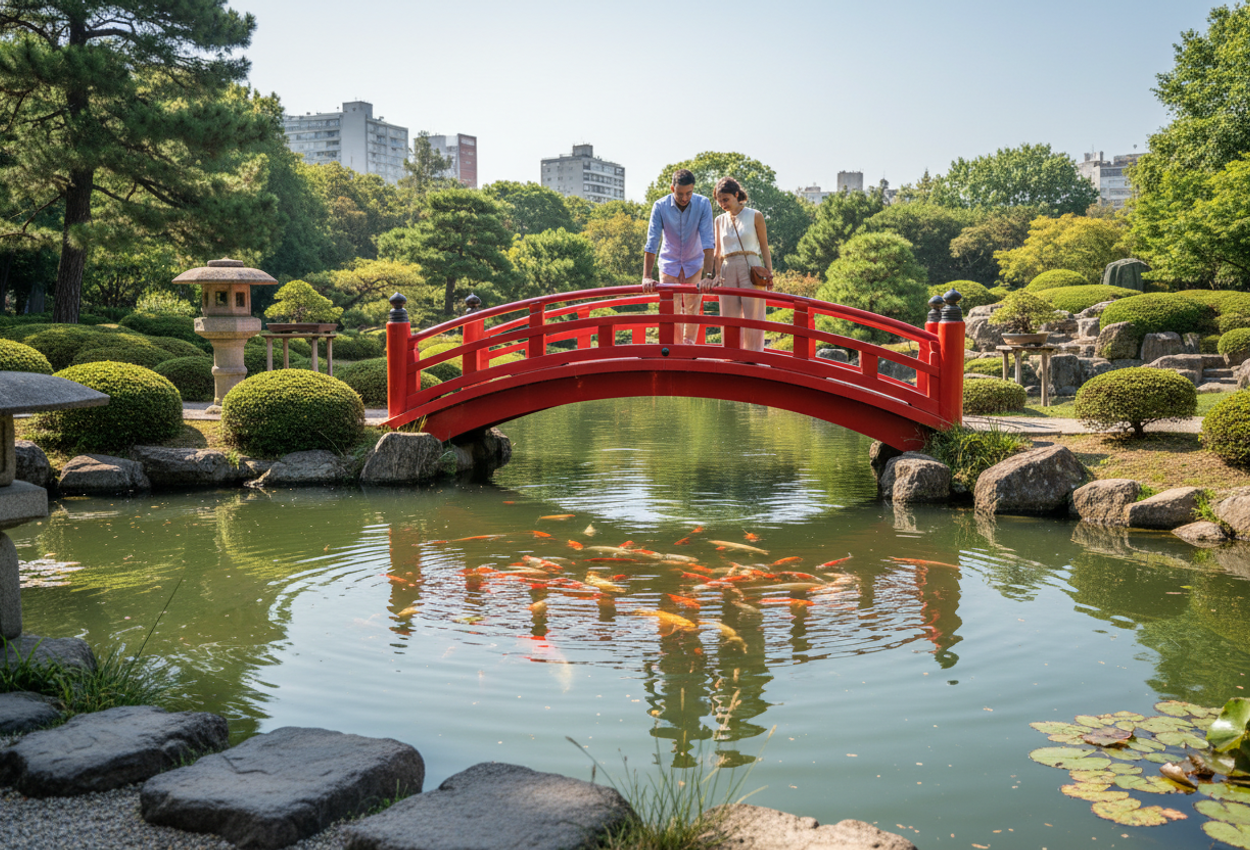
Cherry trees line sections of the path, their branches a delicate tracery against the sky. When they bloom, petals fall like soft confetti, collecting in drifts along the edges of the pond and on the shoulders of delighted visitors. Even out of blossom season, their graceful forms lend the garden an ethereal quality. Bonsai trees, each one a miniature saga of patience and precision, are displayed on pedestals, their twisted trunks and carefully balanced branches inviting quiet study. Stone lanterns stand sentinel at key viewpoints, their weathered surfaces bearing the marks of rain and wind.
Crossing a gently arched red bridge, you pause at the crest to take in the panorama: reflections rippling below, a small island anchored by sculpted pines, couples strolling slowly along the opposite bank. Somewhere, a camera shutter clicks, but the atmosphere remains hushed, as if the garden itself enforces a code of soft voices and respectful footsteps. Benches placed at strategic spots encourage you to sit and simply gaze—at the concentric circles expanding from a koi’s splash, at the interplay of shadow and light on raked gravel, at the contrast between this pocket of order and the city’s dynamic chaos beyond the fence.
Within the garden complex, a restaurant serves Japanese-inspired dishes—fresh sushi rolls, steaming bowls of miso, delicately flavored teas. Sitting by a window with a view of the pond, chopsticks in hand, you become both observer and participant in this carefully choreographed setting. The clean, umami-rich taste of salmon sashimi, the comforting warmth of green tea between your palms, the faint clink of ceramic against wood: all of it contributes to a sensory experience that is as much about serenity as it is about flavor.
Practical details here are simple but important. Opening hours generally begin at 10:00 in the morning and extend into the early evening, with last entry slightly earlier to allow visitors time to wander before closing. Admission is tiered for residents and non-residents, and children under a certain age or seniors often enter free or at reduced cost. But beyond these logistics, what matters most is the decision to step inside and grant yourself an hour or two of curated peace with someone dear to you.
As you leave the Japanese Garden and re-enter the broader sprawl of Palermo, the city’s noise rushes back in: bus brakes hiss, horns punctuate the air, conversations swirl around you. Yet you carry a fragment of the garden’s stillness within you—a shared memory of koi shimmering in jade-green water, of bridges arching gracefully over reflections, of a world slowed to the tempo of quiet breaths. In a city defined by its fervor and its sleepless nights, this cultivated calm reveals another face of romance: one where passion is expressed not through volume, but through presence.
Together, these moments—learning tango in San Telmo, dining by candlelight in Recoleta, chasing the night in Palermo, wandering the elegance of Avenida de Mayo, inhaling roses in El Rosedal, soaking in color in La Boca, riding across the Pampas, and finding quiet in the Japanese Garden—weave a portrait of Buenos Aires that is both fiery and tender. It is a city that invites you to feel deeply, to move your body and open your heart, to let urban romance seep into every sense. Long after you have left, you may find its rhythms lingering in your step, its flavors on your tongue, and its particular brand of passion stirring just beneath the surface of your everyday life.