Romance has long been measured in rose petals on crisp hotel sheets and the clink of crystal flutes at sunset, but a new generation of couples is quietly rewriting the script, trading throwaway getaways for journeys that leave the planet—and their relationship—richer than before.Love Letters to the Earth: Why Sustainable Romance Matters
On a moonlit shoreline in French Polynesia, a couple walks barefoot along the tideline, the lagoon breathing in and out at their feet. The villa lights behind them are soft, almost shy, powered mostly by solar panels that spend their days drinking in the sun. Somewhere beyond the reef, a sea turtle glides through clear water monitored by marine biologists who, earlier in the day, invited these same guests to help survey coral health. This is what modern romance increasingly looks like: not an escape from the world, but an embrace of it.
In the past, romantic travel was often defined by excess—long-haul flights for long weekends, overwater bungalows built with little thought to reef systems, sprawling buffets where more food was wasted than eaten. Today, a quiet but powerful shift is underway. Couples are asking different questions. Who built this resort, and who benefits from it? How much energy does our indulgence consume? What happens to the communities that welcome us, after we leave with our selfie reels and suntans?
Across the travel industry, demand for sustainable options has surged, and couples are at the heart of that change. Global surveys of travelers now consistently show that a significant majority say they want their trips to be more sustainable and are willing to pay more to ensure that. Romantic travelers in particular are seeking destinations where they can feel that their anniversary escape or honeymoon is not only unforgettable but also aligned with their values. They may still want the plunge pool and the champagne, but they want reassurance that the champagne bottle will be recycled, the pool filtered with minimal energy use, and the staff fairly paid and locally hired.
This evolving consciousness is reshaping what luxury itself means. Traditional markers—marble-clad lobbies, endless air-conditioned hallways, nightly fireworks displays—are giving way to subtler, more grounded forms of opulence. A zero-waste tasting menu crafted from an island’s organic gardens. A bedroom cooled by seawater-powered air conditioning rather than noisy compressors. A private deck shaded by native trees that were spared, not sacrificed, for the sake of a view. Couples are discovering that the most enduring luxury may be the feeling of belonging to a place, rather than consuming it.
There is also a distinctly emotional dimension to this change. Traveling ethically adds a shared purpose to the well-worn script of romantic escape. It transforms a trip from a temporary retreat into a chapter in a couple’s joint story of how they move through the world. Planting mangrove seedlings side by side, learning how a village has revived its ancestral farming practices, sitting with a local elder who speaks about the river as a relative rather than a resource—these are the kinds of memories that linger longer than any room upgrade.
Perhaps that is why so many younger couples, especially, are approaching trip planning with an almost curatorial eye. They are editing their bucket lists, crossing off destinations whose ecosystems are buckling under overtourism in favor of those that cap visitor numbers, invest in conservation, and invite travelers to participate. They are asking their travel advisors about eco-certifications, community-owned lodges, and regenerative tourism projects rather than simply requesting the most Instagrammable overwater villa.
Romance itself feels different against this backdrop. When you know that your candlelit dinner funds a scholarship program or that your beachfront suite was built to LEED standards, intimacy is no longer sealed off from the world beyond the resort gates. Instead, the world seeps in—and, paradoxically, that connection can make time alone together feel even more precious. The future of romantic travel is not about guilt; it is about a more expansive definition of pleasure, one that includes the health of coral reefs, the resilience of coastal villages, and the dignity of the people pouring your wine.
Love, in this emerging paradigm, is not just what happens between two people. It is also how those two people choose to show up in the places that host their most cherished moments. A honeymoon becomes a promise not only to each other, but to the planet that stages their celebration. An anniversary trip becomes an act of gratitude, a love letter written not only on hotel stationery but on the landscapes and communities encountered along the way.

As the travel industry races to position itself for a more sustainable future, couples are proving to be some of its most discerning, demanding, and inspiring protagonists. They are reminding us that romance has always been about more than flowers and fine dining; it is about vision, commitment, and the kind of long-term thinking that is, at its heart, profoundly environmental.
Eco-Chic Sanctuaries: Romantic Eco-Lodges Around the Globe
For couples ready to turn their ethics into an itinerary, a new generation of eco-lodges has emerged as the stage on which these future-focused love stories unfold. These are places where environmental innovation sits comfortably beside four-poster beds, and where the soundtrack of the stay might be both the clink of cutlery on hand-thrown ceramics and the whirr of solar inverters quietly turning sunlight into electricity.
On the private atoll of Tetiaroa in French Polynesia, The Brando has become something of a north star for couples seeking carbon-light luxury. Villas are tucked discreetly behind palms, their sandy paths leading to a lagoon that gleams like liquid glass. Each villa is a cocoon—expansive decks with plunge pools, open-air bathtubs perfumed with local flowers, linens that feel like cool water against sun-warmed skin. Yet beneath this softness lies a rigorously sustainable infrastructure: more than half of the resort’s power comes from thousands of solar panels laid along the airstrip, while a pioneering sea water air conditioning system pulls icy water from the deep ocean to cool the buildings, slashing energy use for air-conditioning.
In the evening, a couple might share a tasting menu that draws on the resort’s own organic gardens, where food waste is transformed into compost within a day and returned to the sandy soil to nourish herbs, tropical fruits, and vegetables. Between courses, barefoot staff—most of them local—share stories of atoll ecology or invite guests to join researchers from the on-site environmental station the next morning. It is entirely possible to spend a day here tracing green turtles with marine biologists, then return to your villa to find your plunge pool turned into a private cinema under the stars.
Half a world away, in the Koh Rong Archipelago off the coast of Cambodia, Song Saa Private Island offers a different but equally compelling romance. Here the villas rise on stilts above a lagoon or nestle in thick jungle, their timber reclaimed from disused fishing boats and local materials. Waking up is an exercise in sensory immersion: the low rumble of waves beneath your overwater deck, the scent of lemongrass and kaffir lime drifting in from the kitchen, the first brush of humid air as you step outside, coffee in hand, to watch fishermen in long-tail boats glide across the dawn-silvered sea.
Song Saa’s story is as much about social and ecological regeneration as it is about seclusion. The resort helped catalyze the creation of the country’s first private marine reserve and continues to fund a foundation that runs coral-reef monitoring, coastal clean-ups, and health and education programs in nearby villages. For couples, that translates into experiences with unusual depth: snorkeling excursions led by conservationists who can point out the difference between a recovering reef and a struggling one, or village visits where guests learn how waste management initiatives have transformed daily life on the islands. Later, back on the resort, spa rituals rooted in Buddhist philosophy and local botanicals invite you to recalibrate body and spirit in tandem.

On the remote shores of Northern Mozambique, where baobab trees punctuate the skyline and the Indian Ocean rolls in with hypnotic constancy, Nuarro Lodge is the kind of place you reach after several journeys and a gentle surrender to a slower pace. Built in partnership with the local community, the lodge’s thatched chalets sit lightly above a sweep of pale sand, their construction intentionally low-impact. There is no glossy uniformity here; instead, each room feels handcrafted, with woven mats underfoot, mosquito nets billowing like veils in the sea breeze, and wide verandas that frame the bay like a living painting.
Nuarro’s romance lies in its sense of frontier intimacy. By day, couples might plunge straight from shore into some of the healthiest coral gardens in the region, guided by dive staff who grew up along these very beaches. The water here holds a spectrum of blues—turquoise near the shallows, deep lapis over drop-offs—where schools of fish move like confetti around sea fans. On land, the staff, many of whom helped build the lodge, greet returning guests more like family than clients. Shared stories around the bar turn into impromptu dance lessons to local rhythms, or quiet conversations about how sustainable tourism has funded schooling and employment opportunities in neighboring villages.
What unites places like The Brando, Song Saa, and Nuarro is not a single aesthetic but a philosophy: that the most seductive form of luxury is a sense of rightness. To slip between cool sheets in a villa whose energy footprint has been carefully considered, to toast a sunset over a protected lagoon, to know that your stay contributes directly to reef restoration or education programs—these are forms of pleasure that resonate long after departure. For couples, choosing such sanctuaries is a way of entwining their own love story with the arc of a landscape’s recovery.
Hidden gem for couples who care as much about connection as privacy: look for properties that talk openly about their environmental and social metrics—how much energy they generate from renewables, how many staff are hired from neighboring communities, what measurable conservation outcomes they support. True eco-chic romance reveals itself not only in the thread count but in the transparency.
Ethical Adventures: Activities That Give Back
There is a particular kind of intimacy that emerges not over candlelit dinners, but in the quiet focus of doing something good together. Hands muddy from planting seedlings, wetsuits dripping after a morning underwater with coral fragments, notebooks filled with observations from a wildlife survey—these are not the clichés of romantic travel, yet they are quickly becoming some of its most meaningful expressions.
Imagine dawn in Costa Rica, the air still cool enough to hold a hint of mist. You and your partner stand on the edge of a rainforest clearing, listening as a wildlife biologist explains how camera traps have helped track elusive jaguars. In a few minutes, you will hike into the forest to help check those cameras or work alongside rangers repairing a section of trail to prevent erosion. Later in the day, you might join a sea turtle patrol along a remote stretch of beach, learning how nesting sites are monitored and protected. Volunteering with conservation projects—whether for a single day or woven throughout a trip—offers couples a rare glimpse behind the postcard: an understanding of the fragile systems that make these landscapes so enchanting in the first place.
In Fiji, ethical adventure can take the shape of coral planting in the shallows of a translucent lagoon. Many resorts and marine NGOs here invite guests to help restore damaged reefs by attaching coral fragments to artificial structures or nursery frames. The process is delicate and strangely meditative; kneeling side by side in warm water, you and your partner might find yourselves speaking in low voices, the only other sounds the crackle of reef life and the soft slap of waves against your masks. Weeks or months later, long after you have returned home, photos from the project may arrive in your inbox, showing those same fragments diverging into new branches—living symbols of a shared commitment.
High in the hills of Nepal, community-based tourism initiatives offer another kind of shared purpose. In small villages stitched along trekking routes, homestays and locally run guesthouses have transformed the dynamics of who benefits from tourism. Couples who choose to stay in these homes rather than bypassing them for distant chain hotels are directly supporting family incomes and helping to keep younger generations rooted in their communities. Days here might unfold slowly: learning to knead dough for momos in a smoky kitchen, sipping butter tea on a rooftop as the Himalayas catch the first or last light, accompanying a local guide to visit a school that received solar panels through a tourism-funded project.
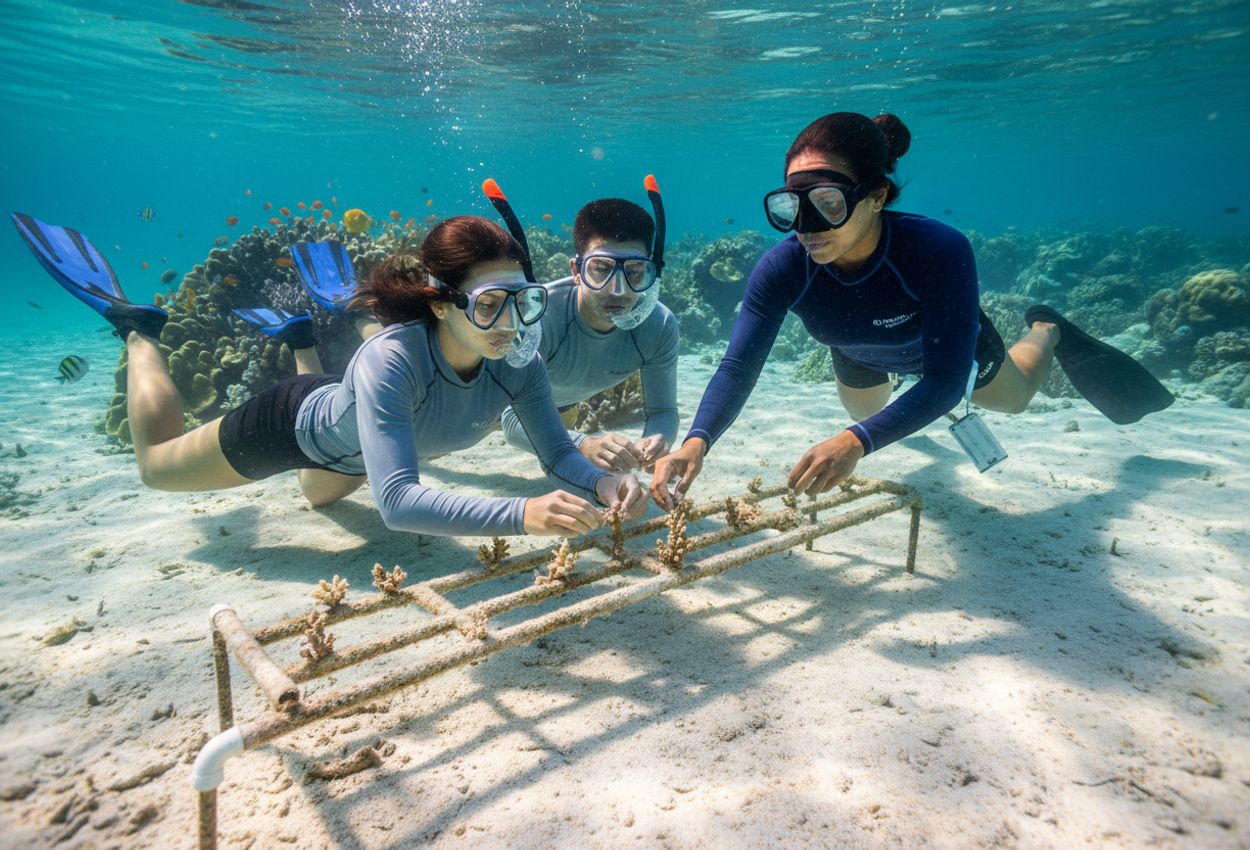
What makes these ethical adventures so potent for couples is their emotional texture. Shared altruism often reveals different facets of a partner: patience as you struggle to plant a mangrove in shifting mud, tenderness as one of you comforts a rescued animal, curiosity as you both ask questions about local customs or conservation science. There is a particular warmth that comes from collapsing into bed at the end of such a day, pleasantly exhausted, knowing that the tiredness in your bones is matched by a small, tangible contribution to something larger than yourselves.
These experiences also shift how you remember a place. Instead of recalling a destination solely by its sunsets and hotel pools, you begin to associate it with the names of the local guides who taught you phrases in their language, the scientist who showed you plankton through a microscope, the village elder who blessed your journey. Ethical travel, in other words, deepens the narrative of a trip, adding characters, conflicts, and resolutions that turn a simple vacation into a story of encounter and exchange.
Local tip for couples seeking such experiences: approach volunteering with humility and an eye for continuity. Choose organizations that employ local staff in leadership roles, prioritize long-term projects over quick photo opportunities, and offer clear explanations of how guest participation fits into broader strategies. The aim is not to play savior, but to become, briefly and respectfully, part of a community of care that existed long before your arrival and will continue long after your departure.
Done well, ethical adventures are not a sacrifice of romance but an expansion of it. They remind us that devotion can be outward-facing as well as inward, that love flourishes when it is given freely—to each other, certainly, but also to fragile coastlines, threatened species, and communities building more resilient futures.
Treading Lightly: Sustainable Travel Tips for Two
For couples dreaming of a future-proofed kind of romance, the most powerful gestures often happen far from the spotlight of social media or the rhetoric of resort marketing. They unfold in the quiet choices made while packing a suitcase, booking a flight, or deciding where to eat dinner. To travel sustainably as a pair is not to renounce pleasure; it is to design it more intentionally, to ensure that every indulgence has been thought through, not simply taken for granted.
The first decision comes before the plane ticket: where, and how often, to go. Rather than scattering long weekends across multiple continents each year, more couples are choosing fewer trips that last longer, allowing them to amortize the environmental cost of long-haul flights over deeper, more immersive experiences. This slow-travel mindset might mean spending two weeks exploring a single island chain by ferry rather than hopping between three countries, or returning to a beloved region in a different season to understand its rhythms more intimately.
Packing, too, becomes an act of care. A shared resolve to travel light—carrying only what you truly need—does more than ease the strain on your shoulders. Fewer, well-chosen items can reduce the overall weight of your journey, marginally lowering emissions while simplifying your days. Multi-use clothing that can move from mountain trails to candlelit dinners, reef-safe sunscreen that protects marine life as well as your skin, reusable water bottles and coffee cups, compact laundry lines to air-dry clothing rather than requesting energy-intensive hotel laundry services: each small choice, multiplied by millions of travelers, helps shift the baseline.
Once on the road, transportation decisions continue to shape your footprint. When possible, consider trains over planes for regional hops, and ferries or public boats over private transfers. In cities, walking hand in hand or renting bicycles not only cuts emissions but also slows you down enough to notice the details—a grandmother tending balcony plants, a corner bakery exhaling the scent of fresh bread—that might otherwise blur past a windshield. When you do need a car, opting for electric or hybrid rentals where infrastructure allows sends a signal to local providers that demand for cleaner mobility is real.

Where you stay and eat can amplify your impact, especially when you are traveling as two. Family-run guesthouses, community-owned lodges, and independent eco-hotels typically direct a higher proportion of revenue into local economies than large international chains. Spend time reading beyond the glossy photos: does the property publish information about local employment, waste management, energy sources? Do they encourage guests to conserve water—perhaps by offering linen changes on request only, or by installing low-flow fixtures—without placing the burden solely on visitors’ consciences?
Inside your room, simple habits become small rituals of respect. Turning off air-conditioning and lights when you head out, keeping windows closed while the cooling system is on, and limiting shower times are hardly romantic gestures in themselves, yet they free up resources for the places you love to remain habitable in a warming world. Sharing one large suitcase instead of two, using solid toiletries to cut down on plastic bottles, carrying a small travel filter or purification tablets to avoid buying endless single-use water bottles—these details may never appear in an anniversary toast, but they speak to a quieter kind of devotion: to each other’s future, and to the futures of those who call your destination home.
Equally important is what and whom you choose to support once you step outside your accommodation. Dining in locally owned restaurants, shopping in small artisan boutiques rather than global chains, and booking tours with guides who are licensed and fairly paid helps circulate money where it is most needed. Ask questions: where was this fish caught, and is it in season? Are these handicrafts locally made, and by whom? The conversations that follow often yield recommendations for hidden viewpoints, family recipes, or neighborhood festivals that no guidebook could match.
The heart of sustainable travel for couples, though, may lie in the art of saying no. No to elephant rides or wildlife selfies that compromise animal welfare. No to accommodations built on sacred or ecologically sensitive sites. No to haggling a street vendor down to a price that undermines their livelihood. Drawing these lines together can strengthen a relationship, clarifying shared values and setting a tone for how you will navigate larger decisions in life.
Ultimately, treading lightly is less about following a check-list than about adopting a posture of attentiveness. It is noticing when a community feels overwhelmed by visitors and choosing to step aside, when a coral reef bears the scars of careless fins and deciding to float rather than stand. For couples, this attentiveness spills over into the relationship itself: learning to read each other’s energy, to rest when tired rather than powering through another sight, to leave space for unstructured afternoons where connection takes precedence over content.
In an era where the climate crisis is no longer abstract, but visible in smoky horizons and bleached reefs, such choices matter. To travel mindfully as a couple is to cultivate the skills—flexibility, empathy, foresight—that any long-term partnership requires. The journey becomes both honeymoon and rehearsal, a practice ground for building a life that balances desire with responsibility.
Culinary Kindness: Savoring Local Flavors Responsibly
If romance has a language, it is often spoken at the table: a shared plate of something unfamiliar, a sip of local wine that tastes of the hills beyond town, a market stall snack devoured in three joyful bites. Food is the most immediate way couples encounter a destination, and also one of the most powerful levers they have to support sustainability and cultural continuity.
In coastal communities from French Polynesia to Mozambique, what lands on your plate has a direct relationship with the health of the surrounding sea. Choosing restaurants that prioritize local, seasonal, and responsibly caught seafood helps reduce pressure on vulnerable species and supports fishers who use traditional, low-impact methods. At The Brando, for example, much of the produce arrives not from distant refrigerated trucks but from organic gardens on the atoll itself, where composted kitchen waste feeds soil that in turn nourishes herbs, fruits, and vegetables. A couple savoring grilled lagoon fish with lime and vanilla may not see the full chain of circularity behind the dish, but they feel it in the freshness—the snap of just-picked greens, the brightness of sun-ripened citrus.
On Song Saa Private Island, dining becomes a kind of edible map of Cambodia. At the overwater Vista restaurant, fragrant broths steam with lemongrass, galangal, and local crab, while salads crunch with green mango and herbs grown in the island’s garden. To eat here is to trace the threads connecting smallholder farmers, fishers in the archipelago, and the resort’s sustainability team, which works to ensure that sourcing practices match the marine and community conservation work happening through its foundation. Couples can deepen this understanding by joining cooking classes that reveal the logic of Khmer flavors or by visiting nearby villages where much of the produce originates.

In many destinations, farmers’ markets offer perhaps the most immediate and joyful entry point into ethical eating. Strolling arm in arm through stalls piled high with seasonal abundance—lumpy heirloom tomatoes, glossy eggplants, bunches of greens still damp from morning harvest—couples can talk directly with the people who grow their food. A simple conversation about how long it takes to cultivate a certain crop can shift the way you taste it later at dinner, imbuing each bite with a sense of time, labor, and weather. Choosing to buy snacks, picnic ingredients, or souvenirs like spice blends or jams from these markets keeps money circulating in the local agricultural economy and helps preserve heritage varieties that might otherwise disappear.
Cooking classes, too, can become an unexpectedly intimate form of cultural exchange. In a village kitchen in Nepal, you might learn to roll momos under the patient eye of a home cook who explains which spices are used for winter warmth and which for summer cooling. In a coastal town in Costa Rica, a family might demonstrate how they marinate fish in citrus and herbs before grilling it over open flame, sharing stories of how recipes have evolved as climate change alters fishing seasons. In each case, the act of chopping, stirring, and tasting alongside a local host blurs the line between guest and participant.
Responsible culinary choices also extend to what you decline. Many regions now grapple with the paradox of tourists seeking out so-called authentic dishes that, in reality, put pressure on endangered species or involve exploitative labor practices. Couples can align their appetites with their ethics by researching which foods are best avoided, supporting restaurants that champion plant-forward menus or underutilized species instead, and declining offers of products like shark fin or bushmeat even when framed as cultural experiences.
There is deep pleasure to be found in choosing places that align taste with transparency—restaurants that list small farms on their menus, cafés that highlight fair-trade cooperatives, beachfront bars that serve cocktails with reusable or no straws at all. These details may seem minor, yet each choice signals a broader commitment to a food system that respects both land and labor. For couples, following this trail of conscientious eateries often leads them into neighborhoods they might not otherwise explore, where serendipity lurks behind unassuming facades.
In the end, culinary kindness is not about rigid purity but about attentiveness and curiosity. It is asking where your food comes from, listening carefully to the answer, and adjusting your choices accordingly. It is understanding that the sweetest souvenir of a journey might not be a jar of imported jam in your suitcase, but a recipe scribbled in your notebook, ready to be recreated back home. Cooking a dish learned on a trip—a Fijian coconut-based curry, a Cambodian amok, a Mozambican peri-peri marinade—for one another months or years later can instantly transport you back to the warmth of that particular kitchen, that market, that shoreline.
As the future of romantic travel bends toward sustainability and ethics, the table remains a potent place to practice those values. To raise a glass of locally produced wine or juice and toast not only to your love but to the farmers, fishers, cooks, and servers who made the meal possible is to recognize the full community that quietly supports your shared joy. In doing so, you turn every breakfast, lunch, and dinner into a small act of gratitude—a daily reaffirmation that the most delicious form of romance is the one that nourishes everyone at the table, seen and unseen.